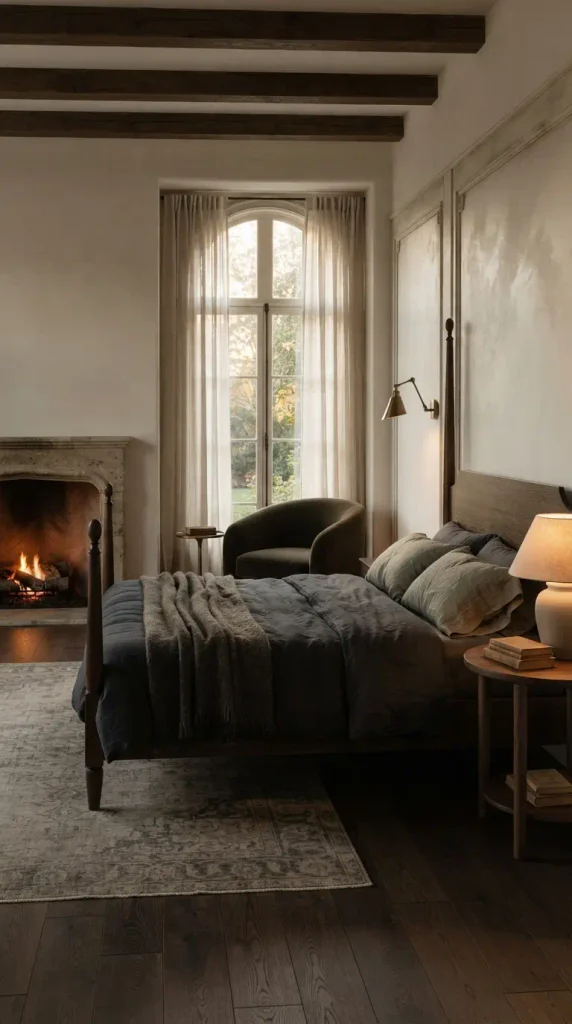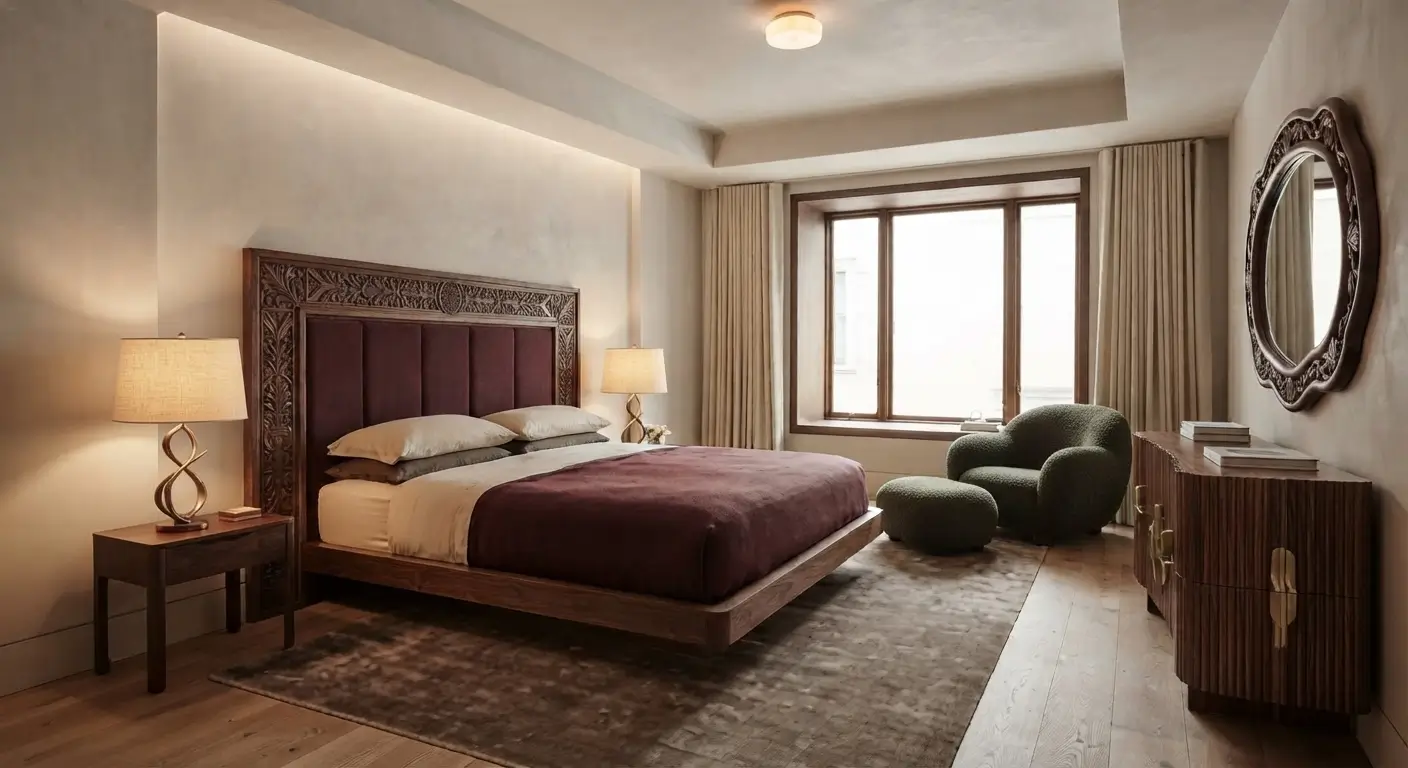
When exploring romantic bedroom ideas for couples, the most successful designs bypass obvious novelty decorations, artificial rose petals, and excessive red accents.
True intimacy in a shared bedroom is not born from themed accessories, but from thoughtful interior design.
A bedroom can feel deeply romantic, warm, and inviting through layered lighting, tactile fabrics, restrained color palettes, comfortable furniture proportions, and soft architectural details.
Rather than relying on stagecraft, creating a sophisticated retreat is about managing atmosphere, privacy, and visual calm.
This curated collection explores fifteen distinct design directions that help couples transform a shared bedroom into a quiet, restorative haven.
1. Build the Room Around Warm, Layered Lighting
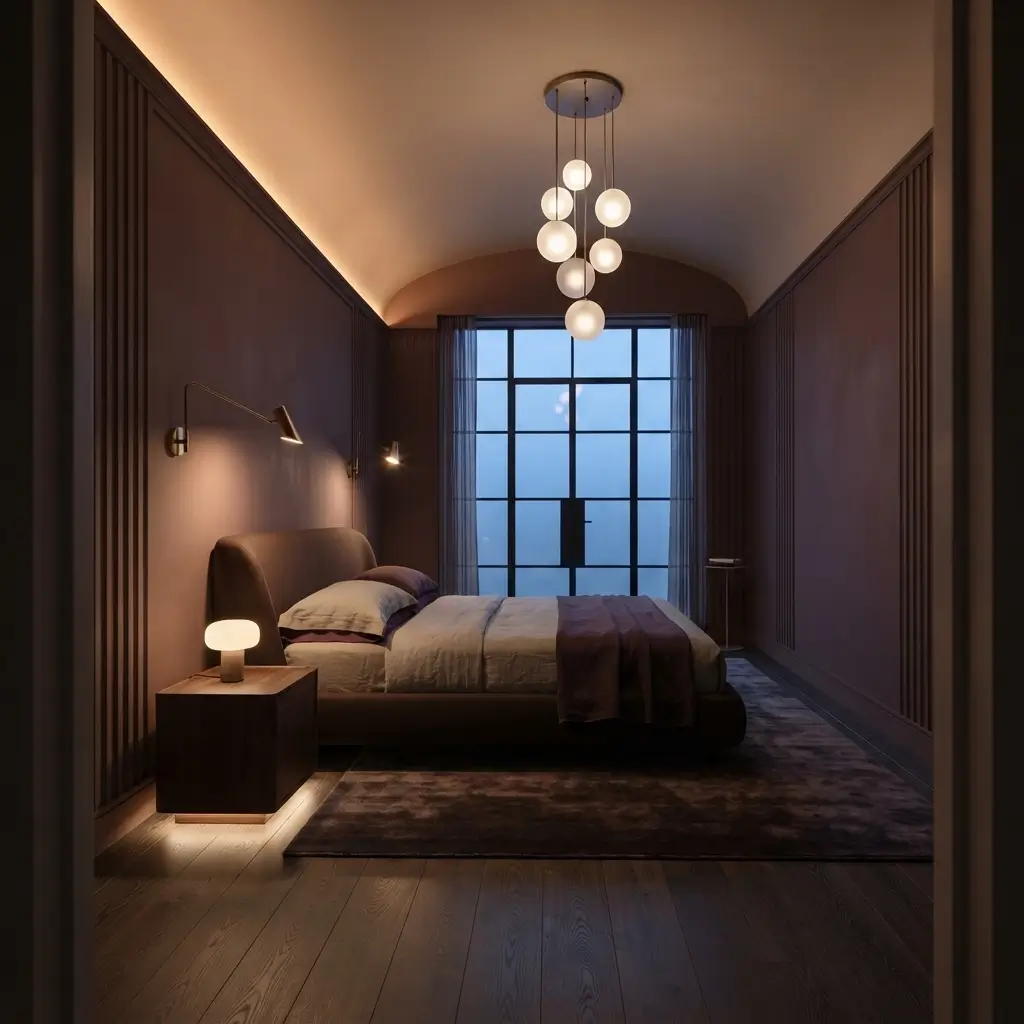
Lighting can change the character of a bedroom more dramatically than almost any decorative accessory. Instead of depending on one bright ceiling fixture, combine several softer sources at different heights.
Wall sconces beside the bed, small bedside lamps, concealed lighting behind architectural details, and a dimmable overhead fixture can create layers that work at different times of day.
Choose warm-temperature lighting so the room feels softer in the evening without becoming overly dark.
2. Use a Deep, Moody Wall Color
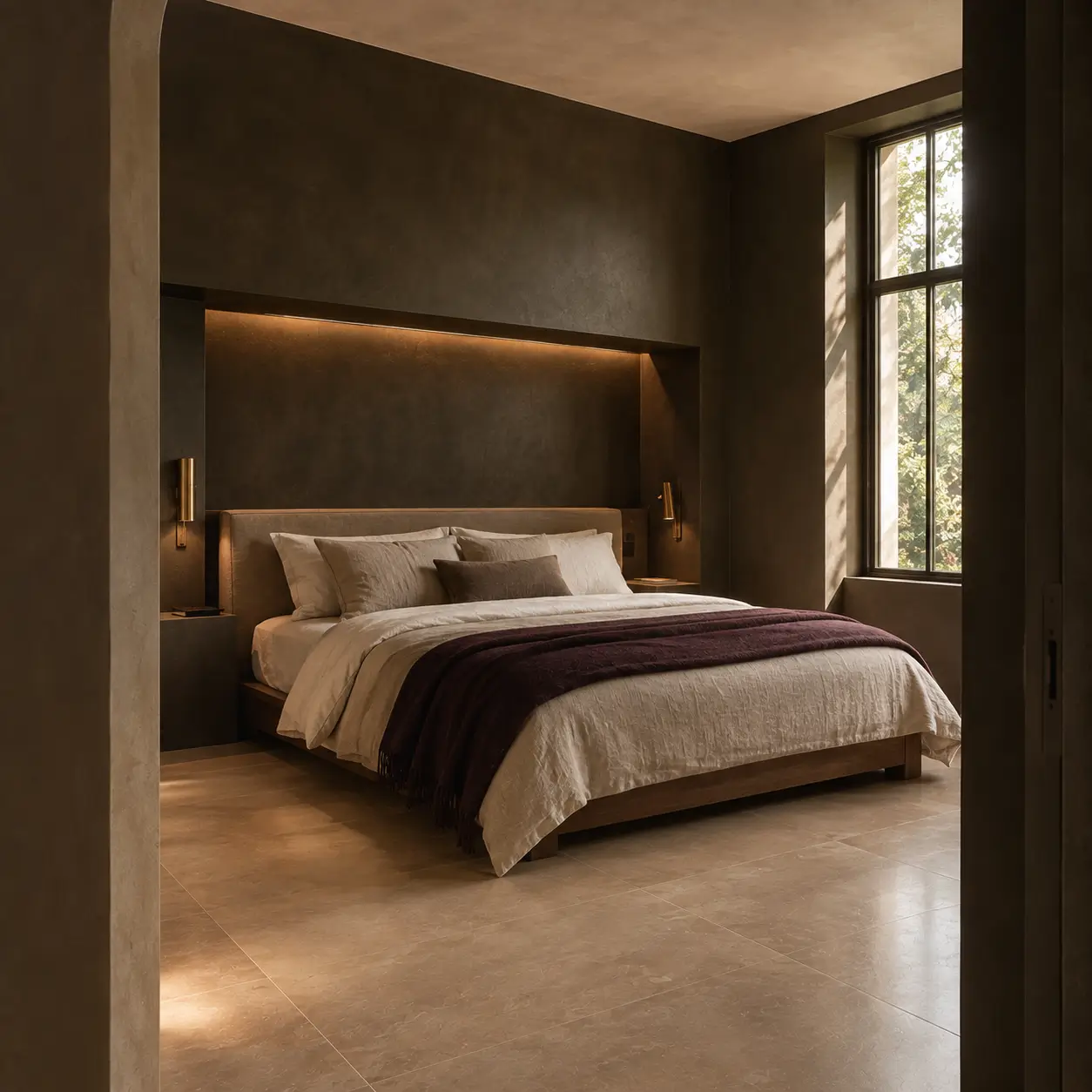
A bedroom with charcoal, deep olive, muted plum, warm brown, or blue-black walls can feel naturally cocooning. Rather than making the room gloomy, a dark architectural backdrop can give lighter bedding and furniture more visual definition.
For a sophisticated result, keep the rest of the palette controlled. Cream bedding, warm timber, aged metal, or muted upholstery can prevent the darker walls from feeling heavy.
This approach works particularly well when the room has generous natural light or when the dark color is balanced with lighter ceiling and flooring surfaces.
3. Soften the Palette With Blush and Warm Neutrals
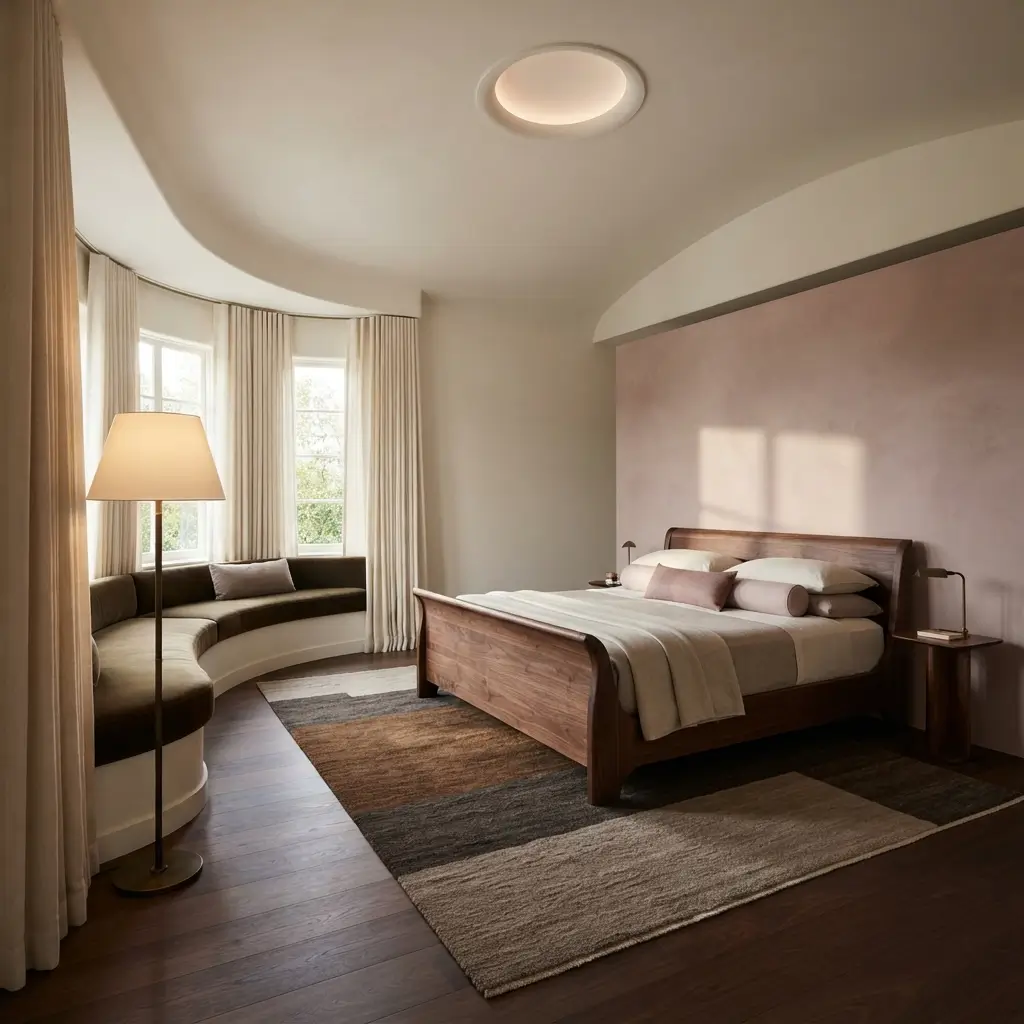
Blush can work beautifully in a shared bedroom when it is treated as an undertone rather than the dominant color. Pair dusty blush with warm ivory, taupe, cream, walnut, or muted bronze for a palette that feels grown-up and balanced.
Instead of painting every surface pink, consider using the shade on one architectural wall, upholstered furniture, curtains, or selected textiles. The surrounding materials should provide enough contrast to keep the room from feeling overly sweet.
The result is one of the more understated romantic bedroom decor approaches because the color suggests warmth without relying on obvious romantic symbolism.
4. Introduce Burgundy in a Restrained Way
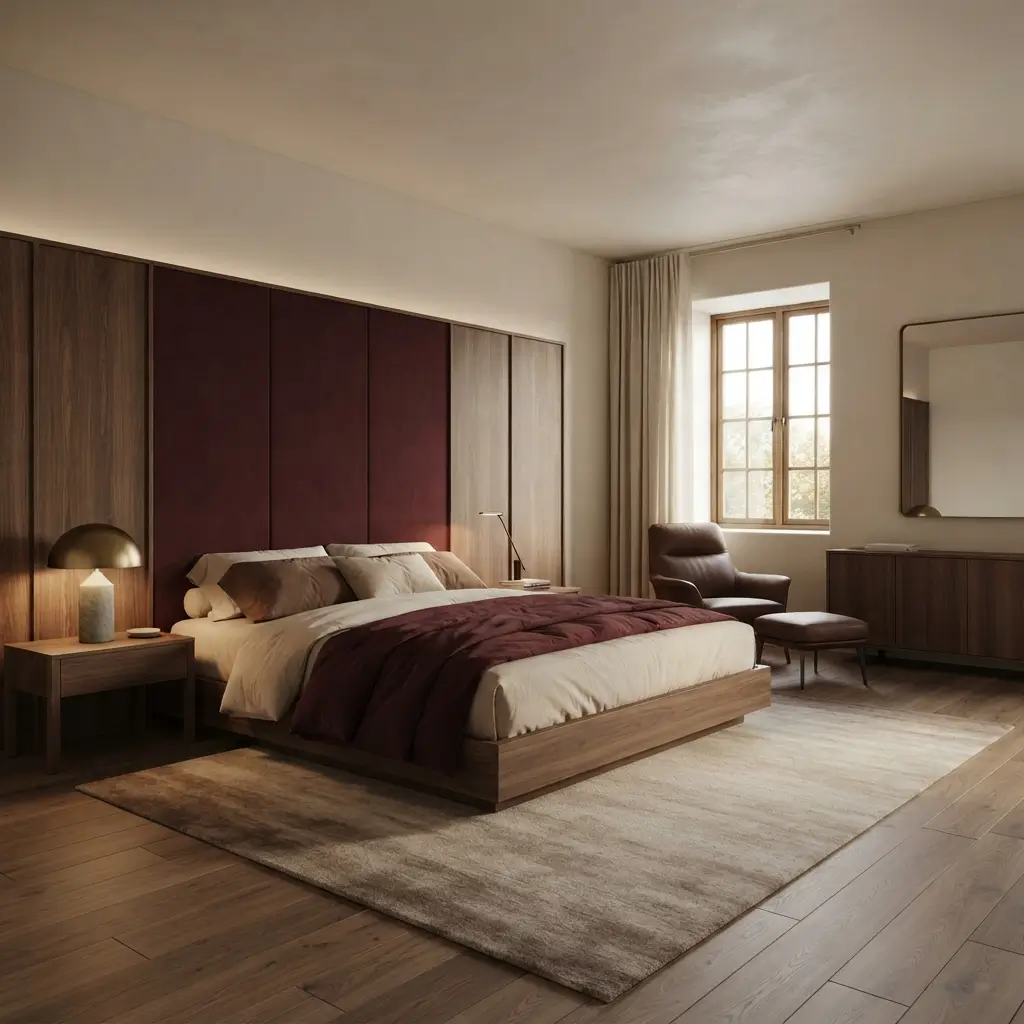
Deep burgundy and wine tones can add considerable depth without turning the bedroom into a traditional red-and-black romantic setting.
Use the color selectively through an upholstered headboard, substantial duvet cover, curtains, or a single painted wall. Pair it with warm ivory, walnut, aged brass, or soft brown rather than bright white for a richer overall composition.
The darker red works particularly well when its intensity is balanced by quieter surrounding surfaces. This makes the color feel architectural and sophisticated rather than theatrical.
5. Create Soft Enclosure With a Canopy Bed
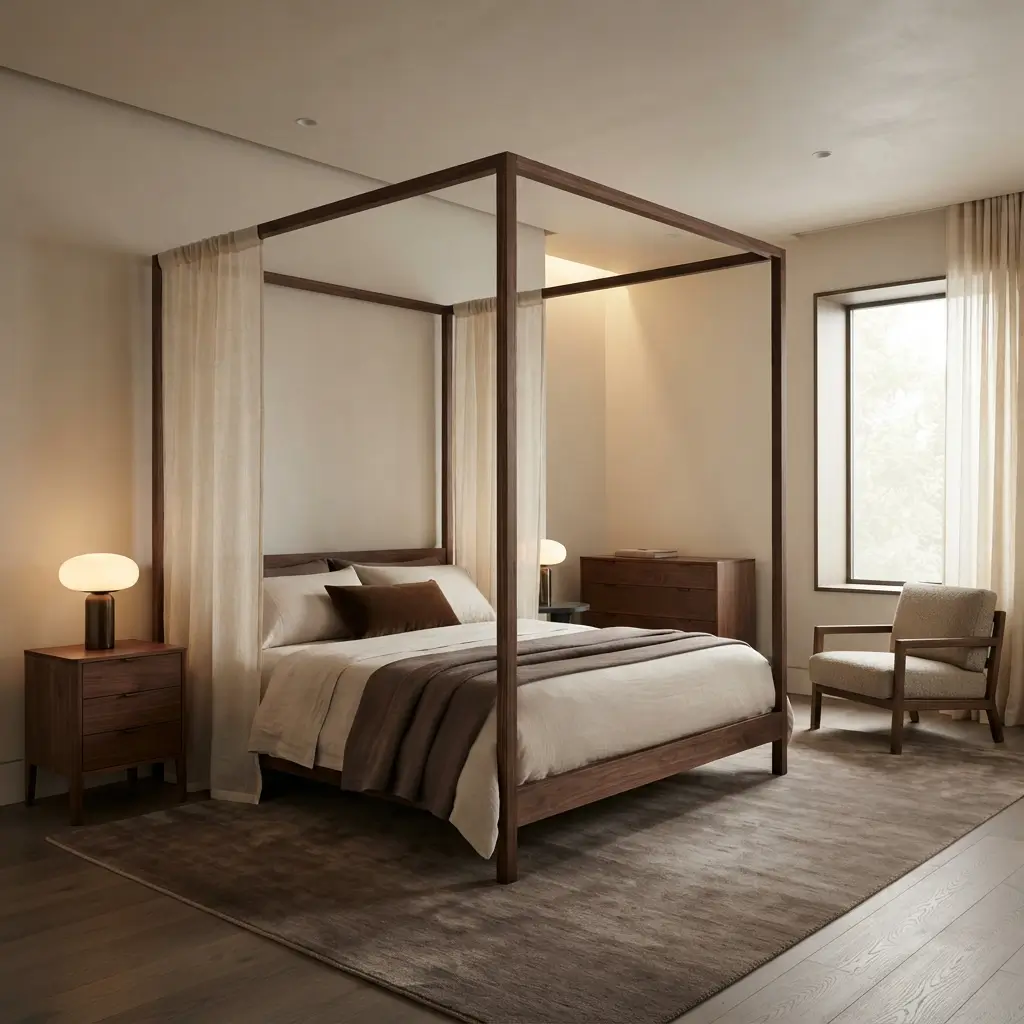
A canopy bed can make the sleeping area feel more defined without requiring extensive decoration. A contemporary four-poster frame in dark wood or slim metal can establish a strong architectural silhouette, while simple fabric panels can soften the structure.
The canopy does not need elaborate draping. Light linen panels or fabric positioned selectively around the bed can introduce softness while keeping the overall design current.
Keep the surrounding furniture relatively simple so the bed remains the clear focal point.
6. Layer the Bed Like a Boutique Hotel
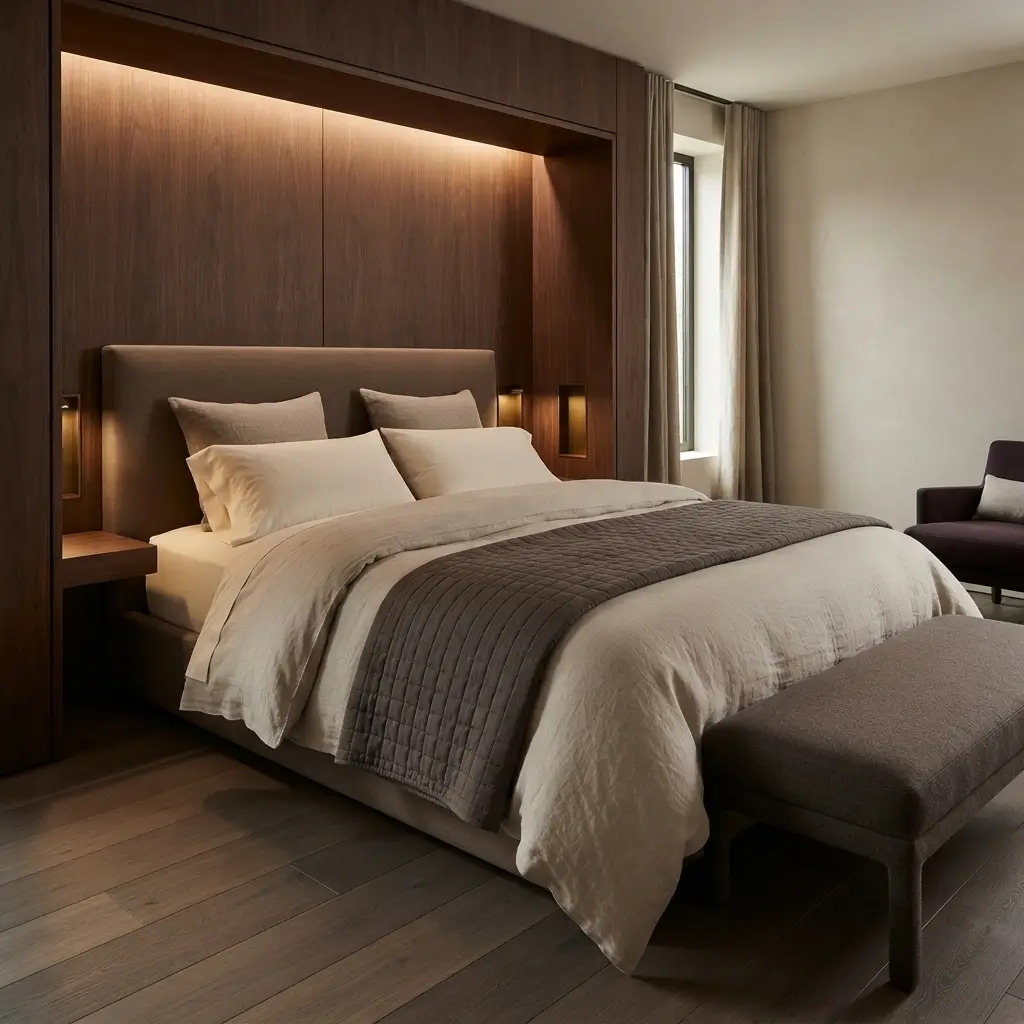
Beautiful bedding can make a substantial difference, but the effect comes from layers and texture, not from simply adding more pillows.
Combine a substantial duvet, crisp or softly textured sheets, a folded coverlet, and a restrained number of pillows in complementary fabrics. Linen, cotton, quilted textiles, and subtle woven textures can give the bed visual depth without making it look overstyled.
A neutral palette can work particularly well here because the interest comes from differences in texture and proportion rather than strong color contrast.
7. Combine Natural Wood With Tactile Fabrics
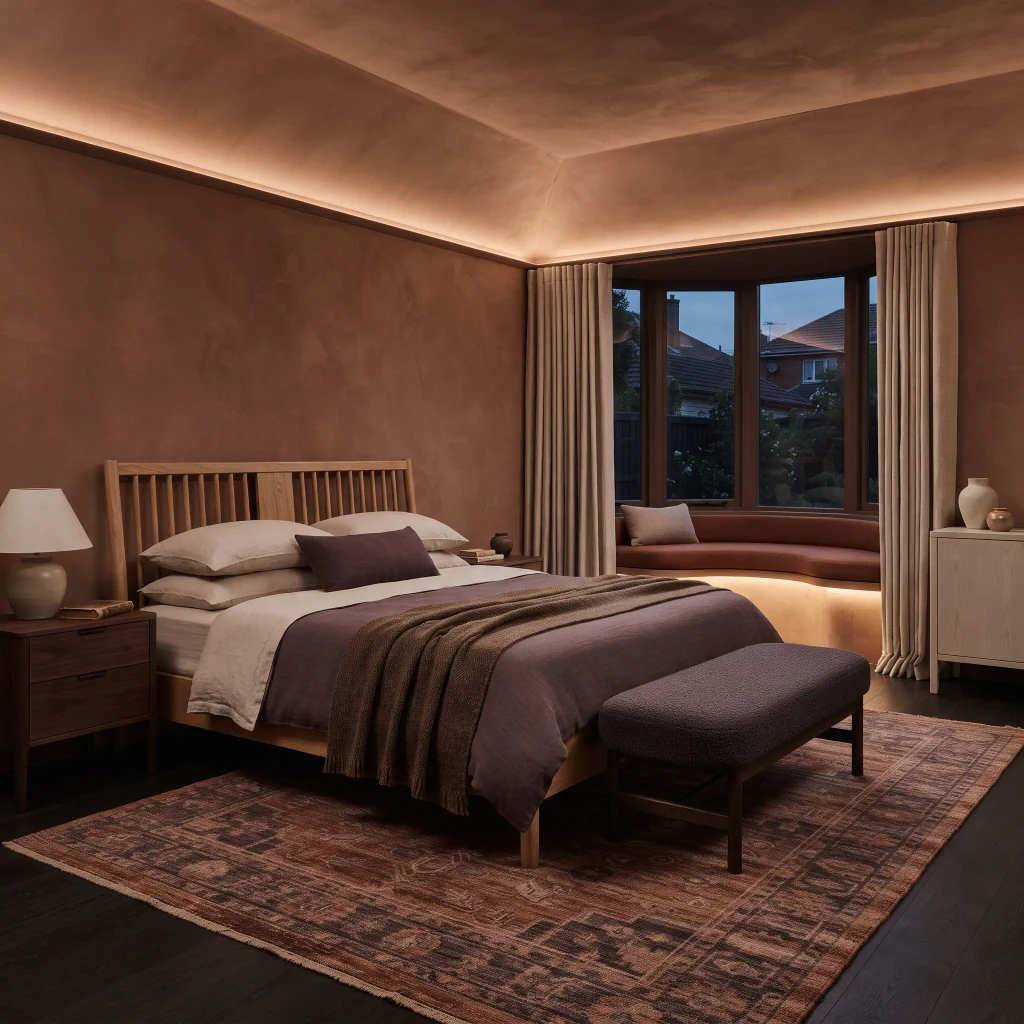
Warm timber brings a grounded quality to a bedroom, particularly when paired with soft fabrics. Consider a natural oak or walnut bed, timber nightstands, linen curtains, wool upholstery, and a textured rug.
The materials do not need to match exactly. Slight differences in grain, tone, and texture can make the room feel collected rather than coordinated as a matching furniture set.
This is a strong direction for couples who prefer romantic bedroom decor that feels warm and relaxed rather than traditionally decorative.
8. Let an Upholstered Bed Become the Focal Point
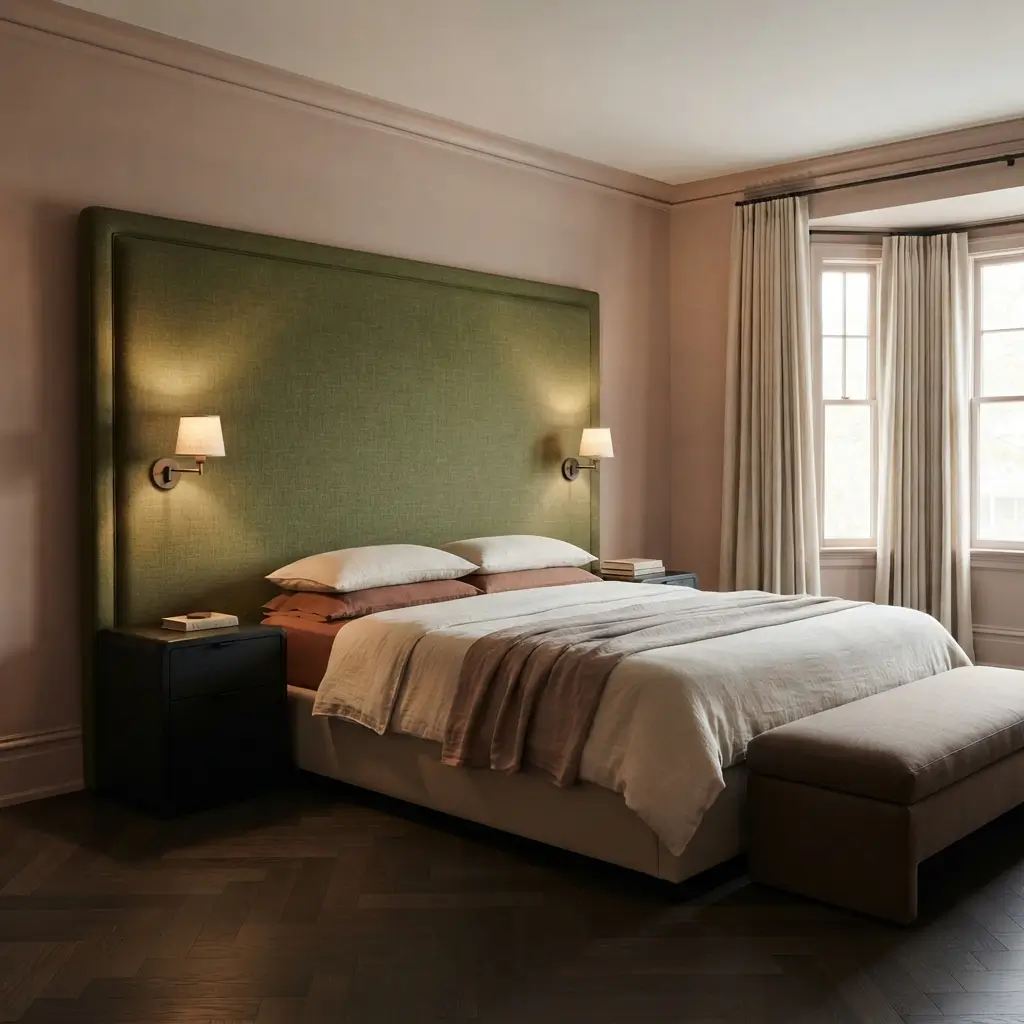
An oversized upholstered headboard can provide both softness and visual weight. Choose a substantial silhouette in linen, boucle, velvet, or another tactile fabric, then allow the rest of the room to remain comparatively restrained.
A curved headboard can make the bed feel softer, while a tall rectangular design creates a more architectural appearance. The shape matters as much as the fabric.
Keep the surrounding walls and furniture quiet enough that the bed remains the defining feature rather than competing with numerous decorative elements.
9. Make a Fireplace the Natural Focal Point
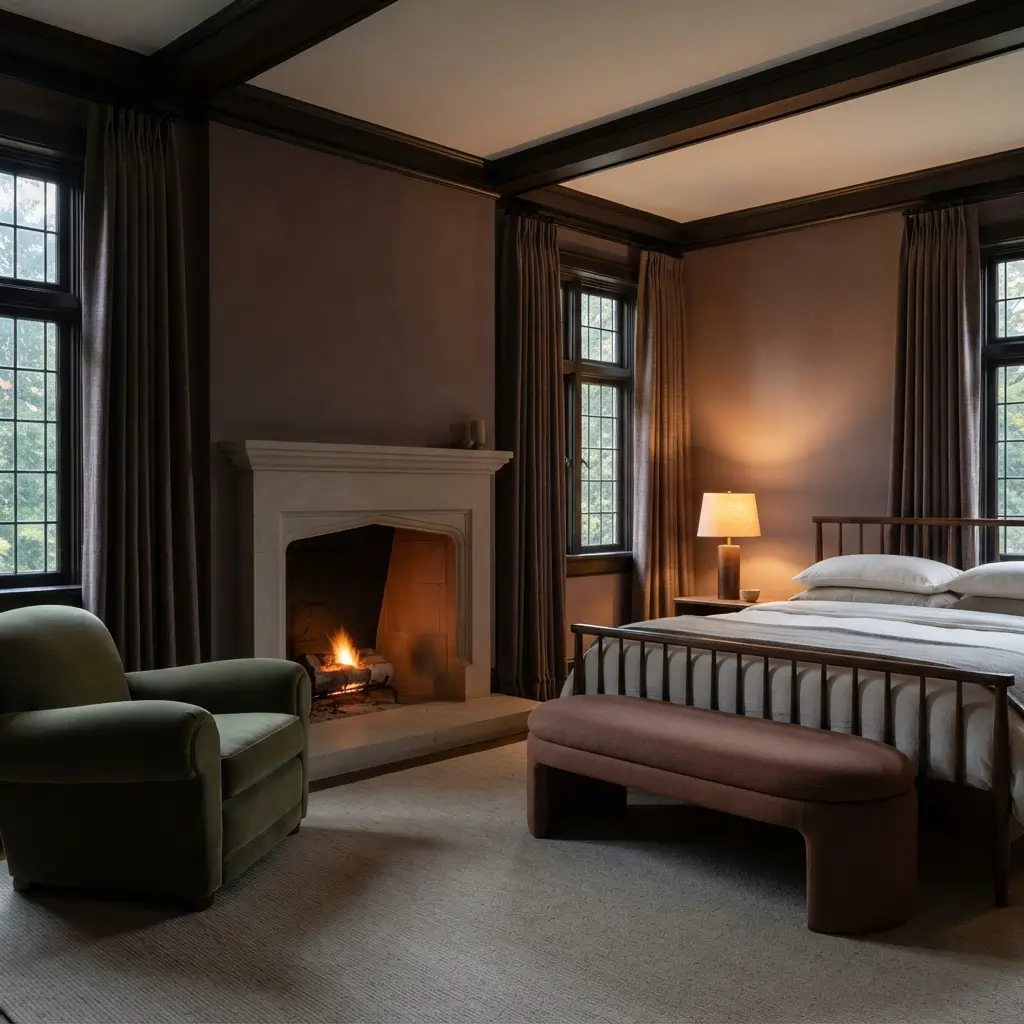
If the bedroom already has a fireplace, it can provide an effortless architectural center.
Arrange the bed and surrounding furniture so the fireplace contributes to the room’s visual balance without forcing the entire design around decorative accessories.
A simple stone, plaster, or traditional mantel can work with different styles. Pair it with substantial curtains, comfortable upholstery, and warm bedside lighting to reinforce the sense of warmth.
The fireplace should remain an architectural feature rather than becoming an excuse for excessive candles or themed decoration.
10. Try a Soft Earth-Toned Palette
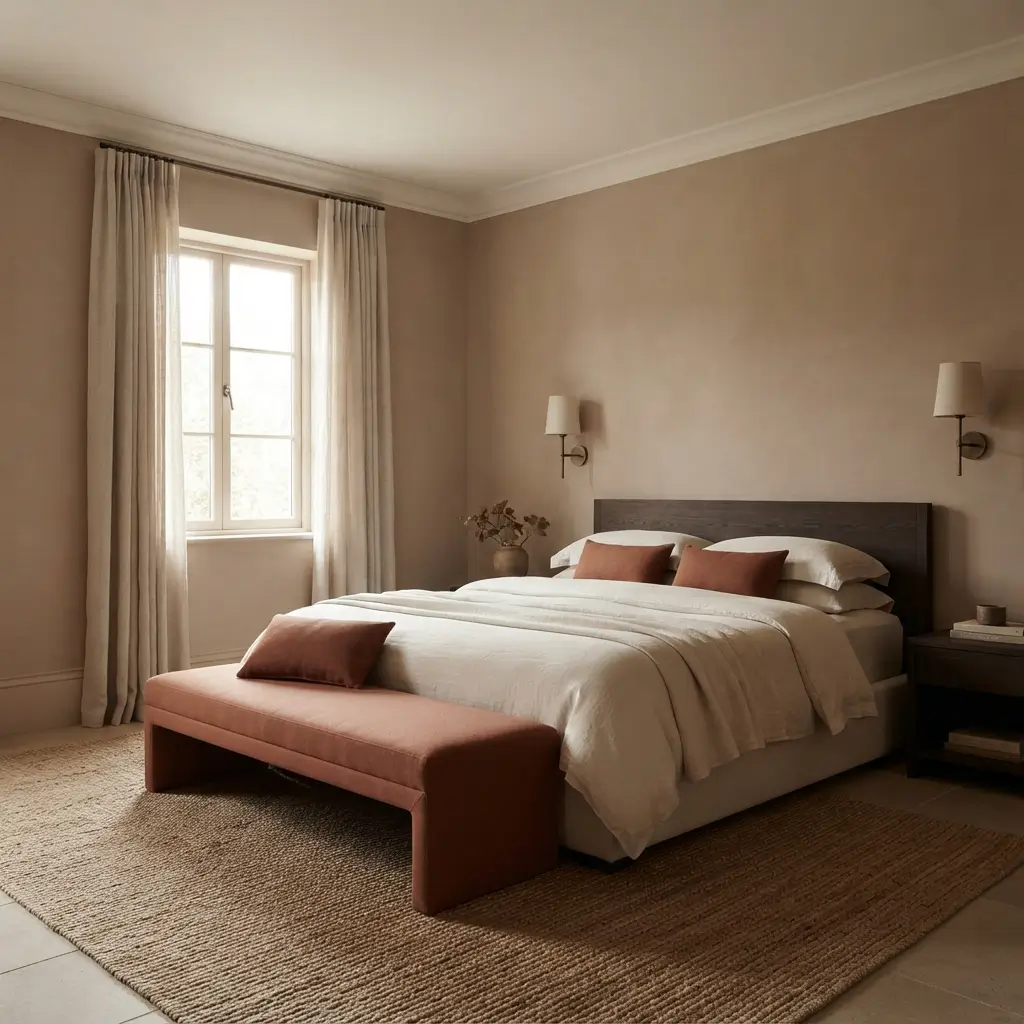
Romantic bedroom colors do not have to be pink or red. Clay, terracotta, warm taupe, muted brown, sand, and cream can create a much more grounded atmosphere.
One effective approach is to use a warm clay tone on the walls and balance it with cream bedding, dark timber, and woven textures. Another is to keep the walls neutral and introduce terracotta through upholstery or textiles.
Earth tones are especially useful when the goal is a cozy bedroom for couples that feels inviting throughout the year rather than specifically romantic on one occasion.
11. Create Drama With Dark-and-Light Contrast
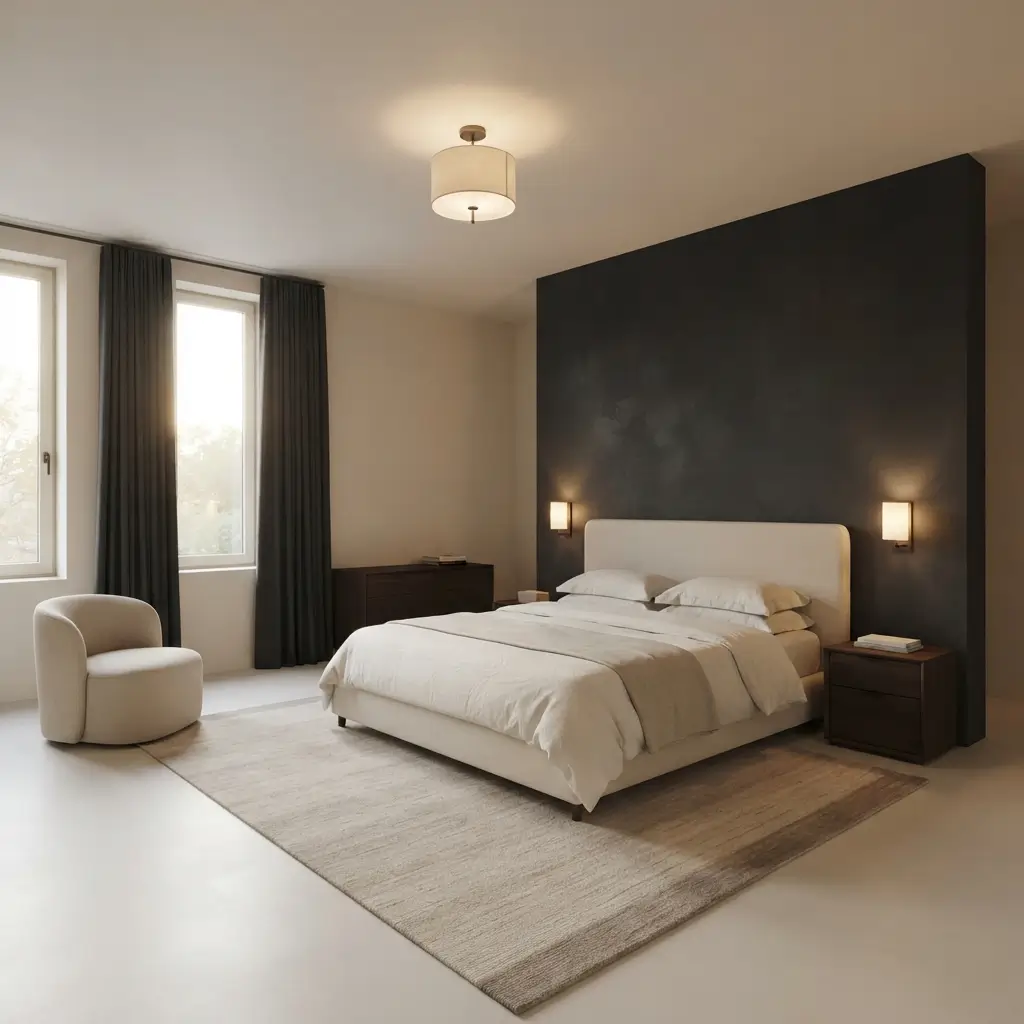
Strong contrast can give a bedroom a more sophisticated visual structure.
Consider a deep charcoal wall behind a pale upholstered bed, dark timber furniture against warm ivory walls, or dark curtains framing lighter architectural surfaces.
The important factor is proportion. Too many equally strong dark and light elements can make the room feel fragmented. Instead, establish one dominant dark element and allow lighter materials to provide visual breathing room.
This approach can also make relatively simple furniture feel more intentional.
12. Replace Hard Lines With Curved Forms
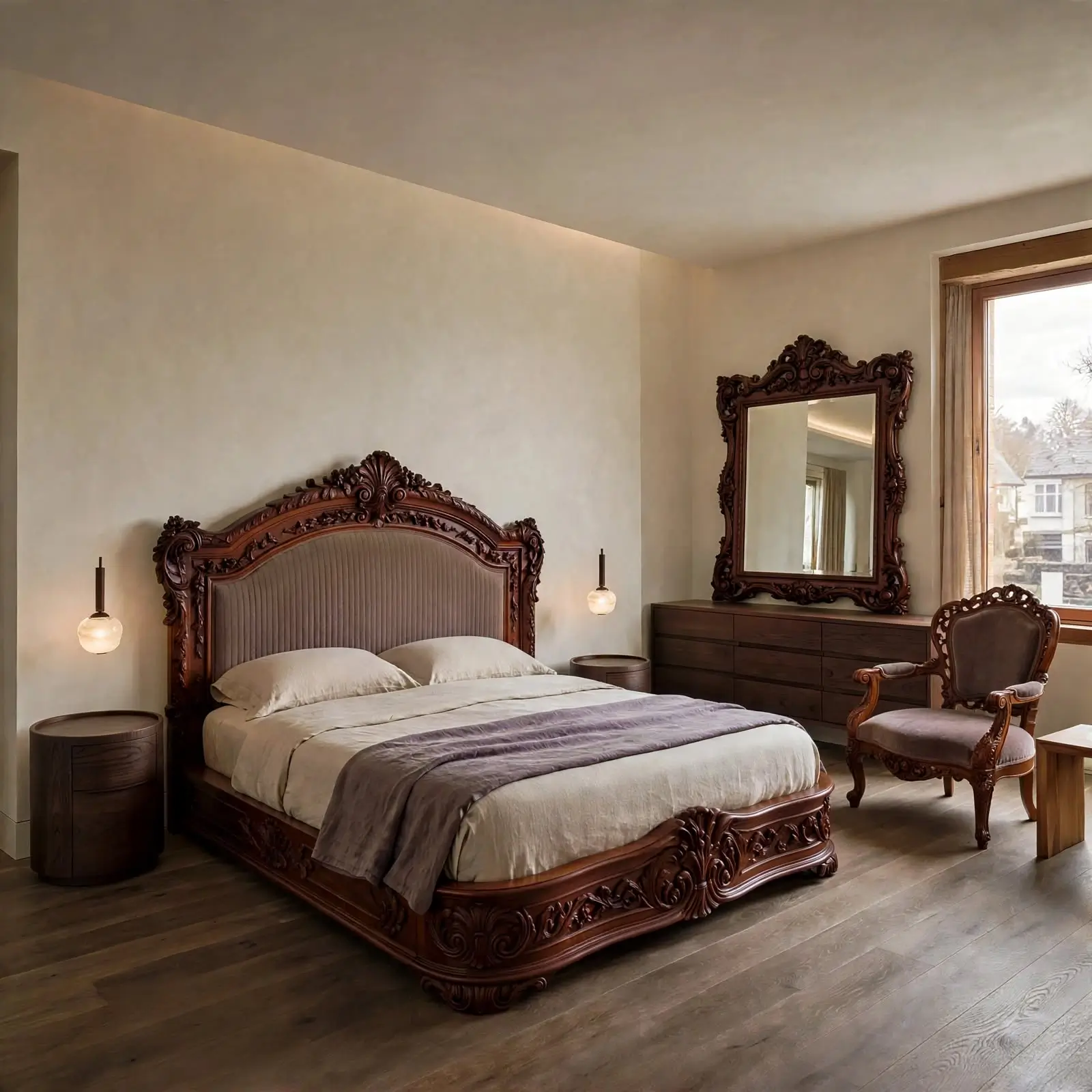
Curves can soften a bedroom without adding decorative clutter. Look for rounded nightstands, an arched headboard, curved benches, softly shaped pendant lights, or an occasional chair with a rounded back.
These forms can be particularly effective in rooms dominated by rectangular architecture because they introduce visual variation without requiring additional accessories.
Keep the palette relatively restrained so the shapes remain noticeable. A curved upholstered bed against a simple plaster wall can be more visually interesting than a heavily decorated headboard wall.
13. Add a Small Seating Area
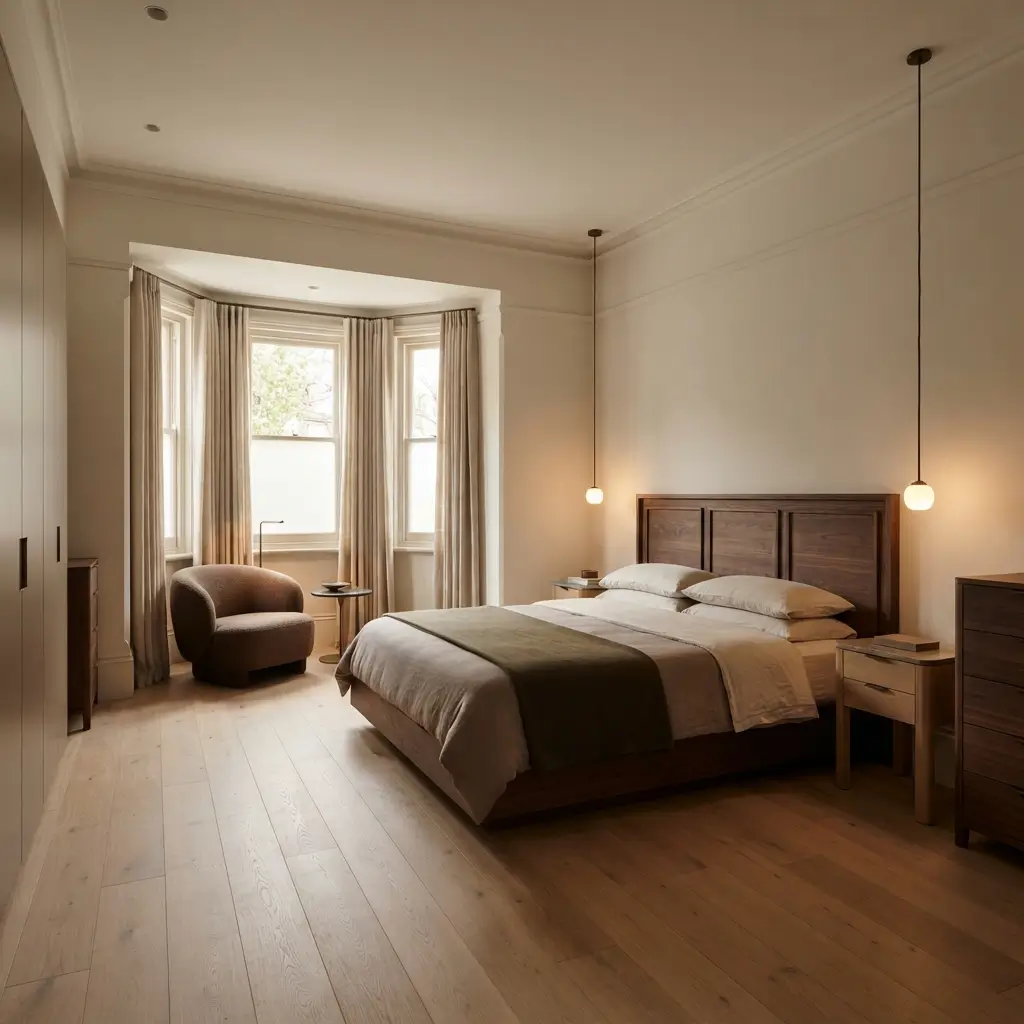
When space allows, a small seating area can make a bedroom feel more complete. Instead of filling the room with furniture, use one comfortable lounge chair and a small side table near a window, fireplace, or unused corner.
The seating area gives the room a secondary focal point while making the overall layout feel more generous.
In a larger bedroom, two compact chairs can establish a separate zone without competing with the bed. Keep the design focused on comfort and proportion rather than creating a staged lifestyle scene.
14. Keep the Romantic Bedroom Minimal
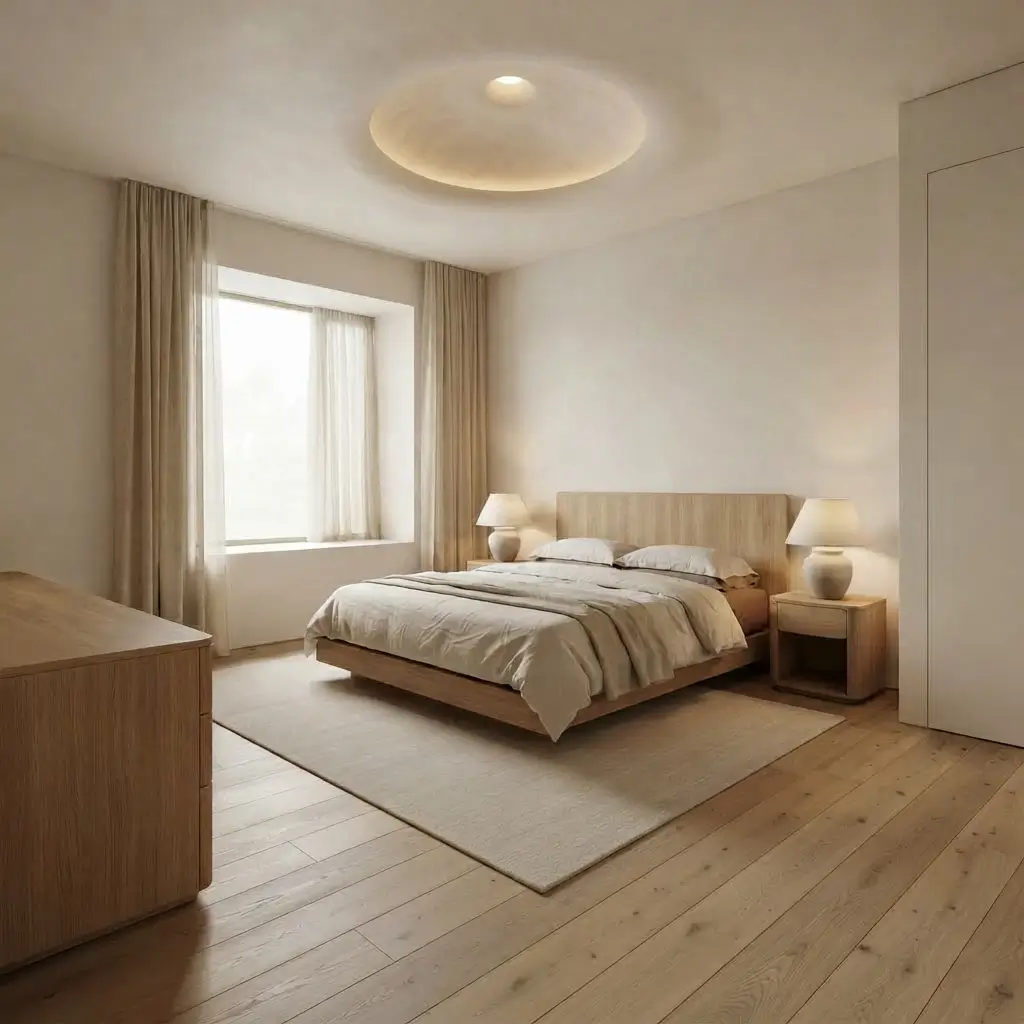
Romance and minimalism are not opposites. A restrained bedroom can feel especially inviting when every major element has been chosen carefully.
Use a simple bed, beautiful bedding, one or two substantial pieces of furniture, warm lighting, and high-quality natural materials. Leave enough open space around the furniture for the room to breathe.
A soft plaster wall, oak flooring, linen curtains, and warm bedside lighting may create more atmosphere than a room crowded with decorative objects.
The absence of visual clutter allows texture, proportion, and light to do more of the work.
15. Use Classic Architectural Details
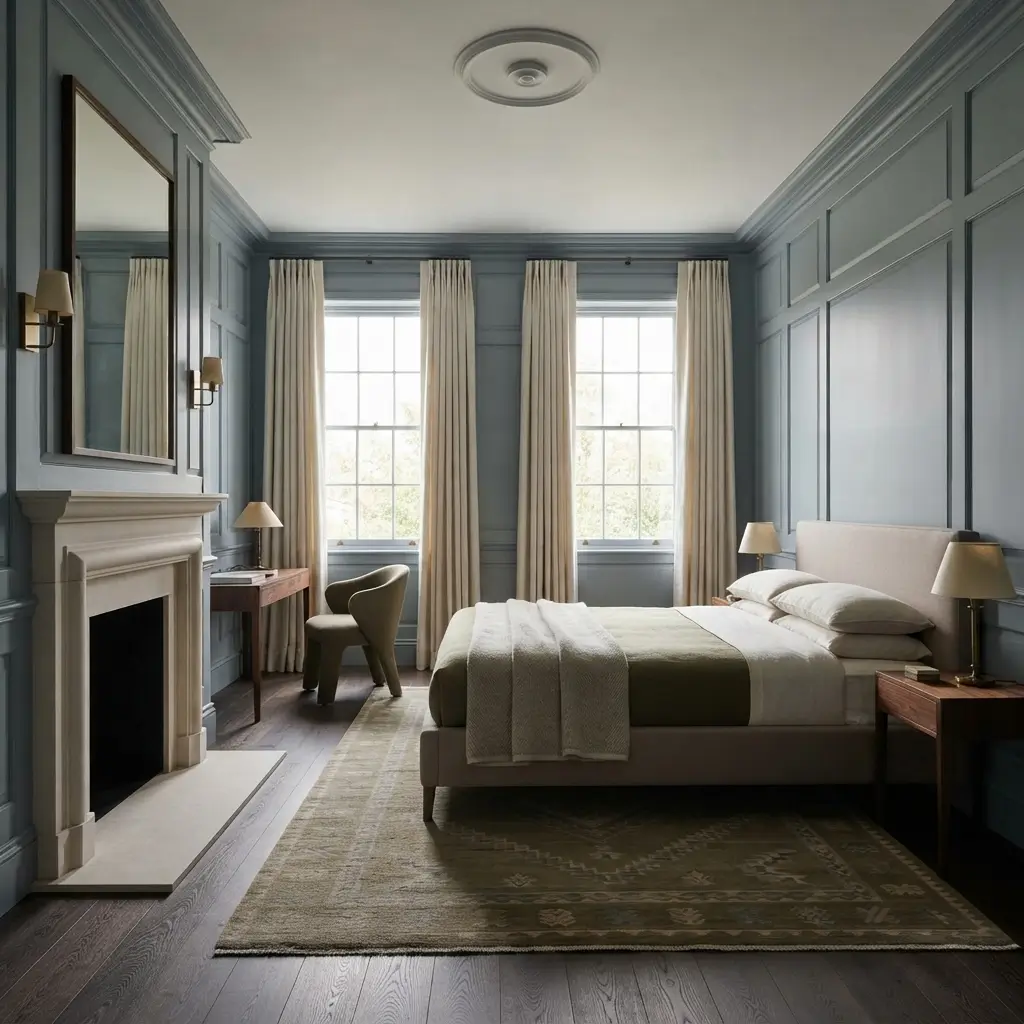
For a timeless interpretation, build the bedroom around architectural details such as wall paneling, crown molding, substantial curtains, traditional sconces, or a refined fireplace surround.
A muted palette of warm ivory, mushroom, taupe, dusty blue, or soft olive keeps the room current while allowing the architecture to provide character.
Modern bedding and streamlined furniture can prevent traditional detailing from making the room feel like a period set. The result is an elegant bedroom where romance comes from proportion, symmetry, texture, and architectural character.
Romantic Bedroom Colors That Feel Sophisticated
Romantic bedroom colors can range from barely-there neutrals to dramatically dark shades. What matters most is how the color interacts with the room’s natural light, artificial lighting, flooring, furniture, and surrounding materials.
Warm ivory and cream create a soft foundation and work particularly well with timber and natural fabrics. Dusty rose introduces warmth without the intensity of bright pink.
Muted terracotta and warm taupe bring earthy depth, while deep olive creates a quieter, more cocooning effect.
For a more dramatic room, consider chocolate brown, burgundy, muted plum, charcoal, or deep blue. These shades can feel especially rich when balanced with lighter bedding, warm metals, pale flooring, or natural wood.
Pay attention to undertones, too. A gray with a cool blue undertone can feel very different from a warm greige under evening lighting. Testing colors in both daylight and artificial light can reveal changes that are easy to miss from a small paint sample.
There is no single color that defines a romantic bedroom. The atmosphere comes from the relationship between color, light, texture, and materials.
Bedroom Lighting That Creates a More Romantic Atmosphere
A comfortable bedroom usually benefits from several softer light sources rather than one bright central fixture.
Bedside sconces are useful because they provide focused light without occupying nightstand space. Table lamps offer another layer, while pendant lights can introduce a stronger architectural element when positioned appropriately.
Choose warm-temperature bulbs and, where possible, dimmable fixtures. Indirect or concealed lighting can provide a subtle background glow, while dedicated reading lights keep the bed functional.
The goal is flexibility. Bright enough light is useful when dressing or reading, but softer illumination can make the same room feel considerably calmer later in the evening.
How to Make a Bedroom Feel Romantic Without Making It Themed
The easiest way to keep the room sophisticated is to treat romance as an atmosphere rather than a decorating theme.
Start with better lighting, comfortable proportions, richer textiles, and a considered color palette. Add natural materials such as timber, linen, wool, stone, or woven fabrics. Arrange the furniture so circulation remains easy and the bed has enough visual space around it.
There is rarely a need for excessive hearts, artificial petals, novelty signs, stereotypical romantic imagery, or large collections of candles. Those elements can make a bedroom feel temporary or staged.
Instead, let the room feel like a beautiful bedroom first. The romantic quality should emerge naturally from warmth, softness, privacy, and thoughtful design.
Making a Small Bedroom Feel Romantic and Cozy
A smaller bedroom does not need more decoration to feel inviting. In many cases, reducing visual clutter has a greater effect.
Wall-mounted sconces can free up valuable nightstand space, while streamlined bedside tables keep circulation clear. A storage bed can provide useful capacity without adding another large cabinet.
Visual continuity can also help. Using closely related tones across walls, bedding, curtains, and flooring can make the room feel less fragmented. A strategically positioned mirror may increase the sense of openness, provided it does not simply create more visual clutter.
Choose fewer furnishings, but give each one a clear purpose. A comfortable bed, good lighting, attractive bedding, and enough space to move around can be more effective than filling every corner.
FAQs
Q1. How can I make my bedroom feel more romantic?
Focus on warm layered lighting, comfortable bedding, tactile materials, thoughtful furniture placement, and a color palette that feels relaxing to both people. Architectural details such as an upholstered headboard or wall paneling can add character without themed decorations.
Q2. What colors are best for a romantic bedroom?
Warm ivory, cream, dusty rose, terracotta, taupe, olive, chocolate brown, burgundy, muted plum, charcoal, and deep blue can all work. The best choice depends on natural light, undertones, furniture, and the atmosphere you want.
Q3. How can lighting make a bedroom feel more romantic?
Use several softer sources instead of relying entirely on a bright overhead fixture. Bedside sconces, table lamps, pendants, warm bulbs, dimmers, and indirect lighting give you more control over the room’s atmosphere.
Q4. How do you make a small bedroom feel romantic and cozy?
Keep circulation clear, use streamlined furniture, consider wall-mounted lighting, and prioritize tactile bedding and warm light. A restrained palette can also make a small room feel more cohesive and comfortable.
Conclusion
The most successful romantic bedroom ideas for couples are rarely about adding obvious romantic decorations. They are about creating a room where light, color, texture, furniture, and architecture work together.
A dark painted wall can create a cocooning atmosphere, while warm timber and linen can make the room feel grounded. An upholstered bed can provide softness, architectural paneling can add character, and layered lighting can change the entire mood after sunset.
Whether your style is minimalist, traditional, earthy, dramatic, or contemporary, the underlying principle is the same: create a bedroom that feels comfortable, visually balanced, and genuinely enjoyable to spend time in. The romantic quality can then come naturally from the design itself.