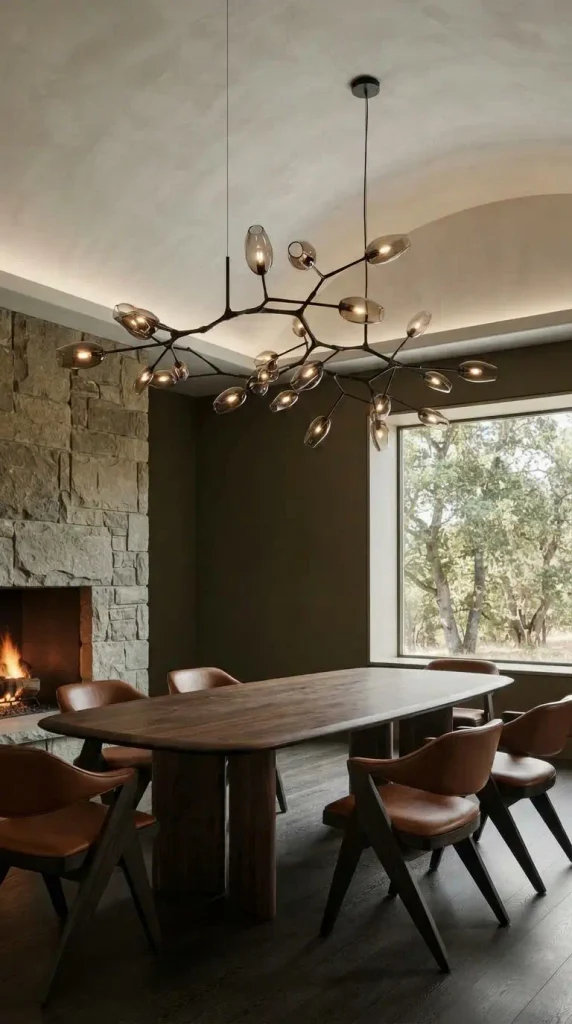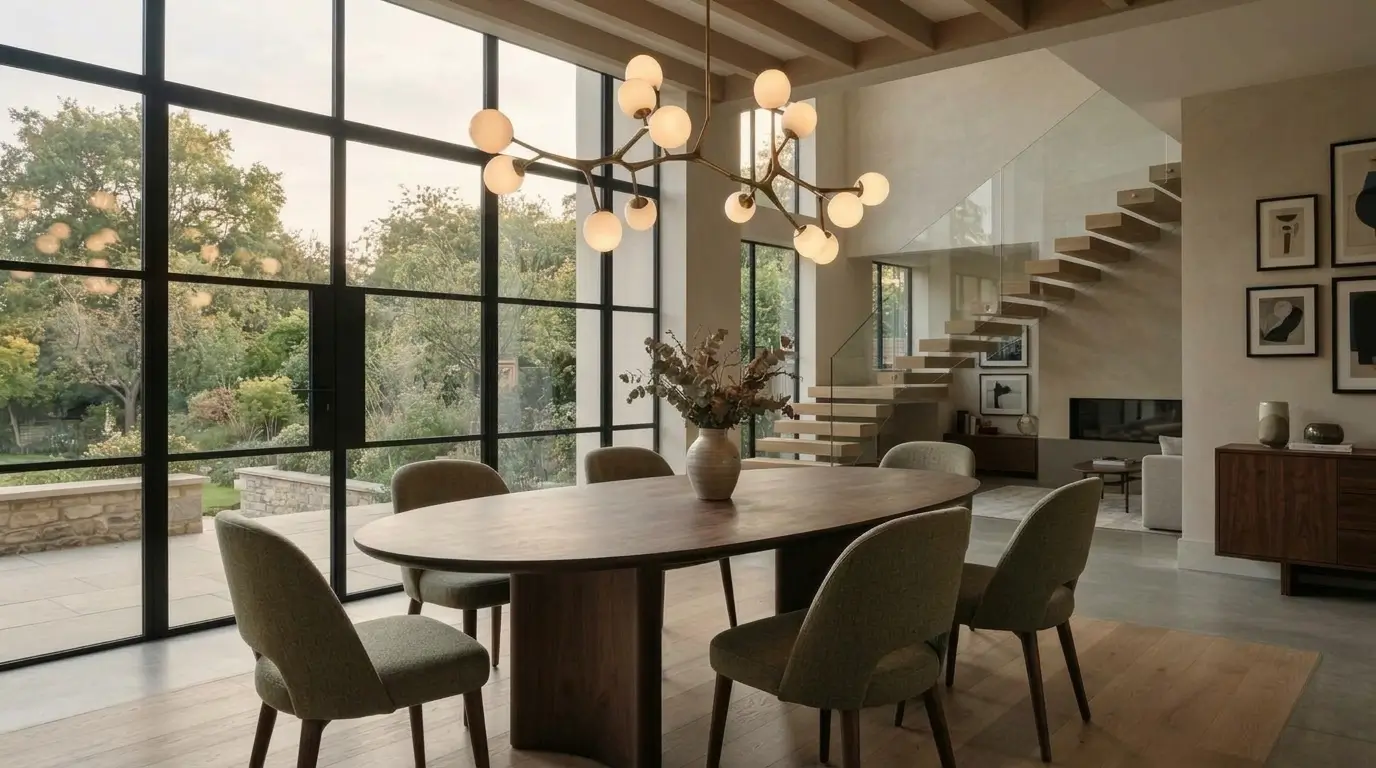
Modern dining room lighting ideas deserve attention because the fixture mediates table, ceiling, and architecture in one gesture.
A well-placed light defines the dining zone, sets comfortable illumination for meals, and reveals materials, from oak to plaster.
This article looks at how construction, proportion, and distribution work in real rooms rather than isolated products.
1. Linear LED Chandeliers Above Long Dining Tables
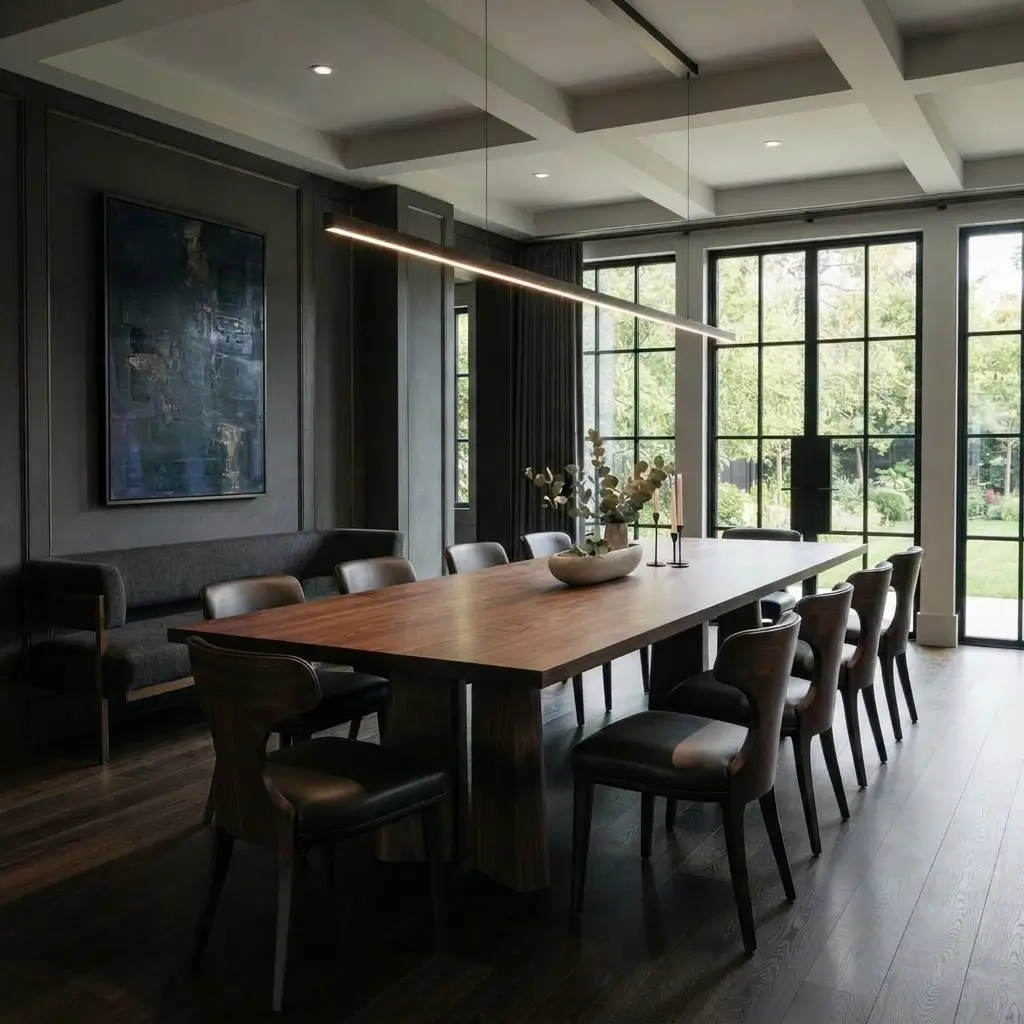
A linear LED chandelier follows the horizontal proportions of an elongated dining table, making it particularly effective in long dining rooms and open-plan interiors.
A slim black or brushed-metal fixture above a walnut table establishes a clear visual axis, especially in rooms with large windows or uninterrupted ceiling lines.
Integrated LED models provide a continuous source of illumination along the fixture’s length. Their performance depends on diffuser quality, output, and beam distribution.
Glare control deserves attention, particularly when the light source is visible from seated positions. Dimming capability and LED serviceability also vary between models.
2. Oversized Geometric Sculptural Pendants
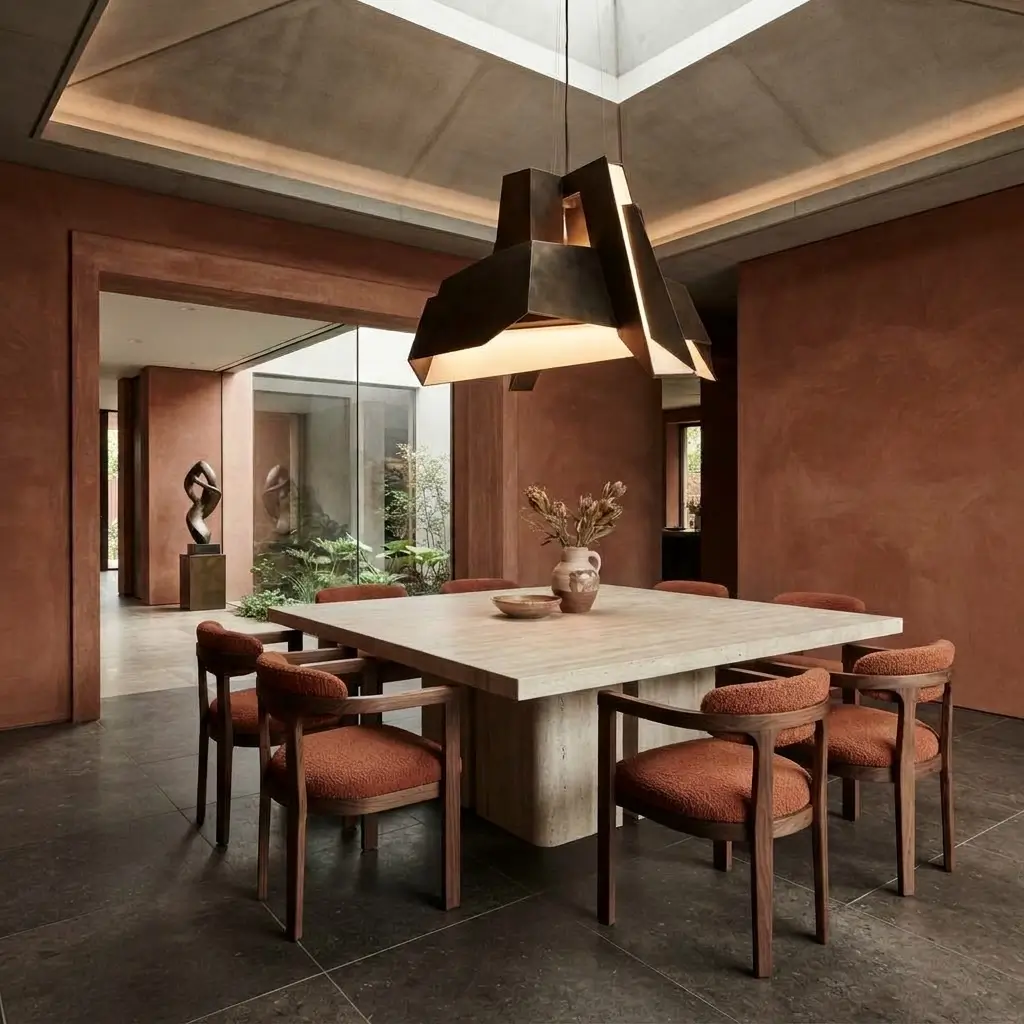
A substantial geometric pendant can serve as the defining architectural feature of a dining room.
Picture a large angular metal shade suspended above a square stone table in a contemporary room with smooth plaster walls and dark-framed windows.
Its strong outline contrasts with the table’s solid, grounded form.
The fixture’s physical size does not automatically indicate how much useful light reaches the table. Some sculptural shades direct illumination downward, leaving surrounding areas comparatively dim.
The diffuser, bulb arrangement, and actual light output determine its practical performance.
3. Multiple Pendant Lights in a Balanced Arrangement
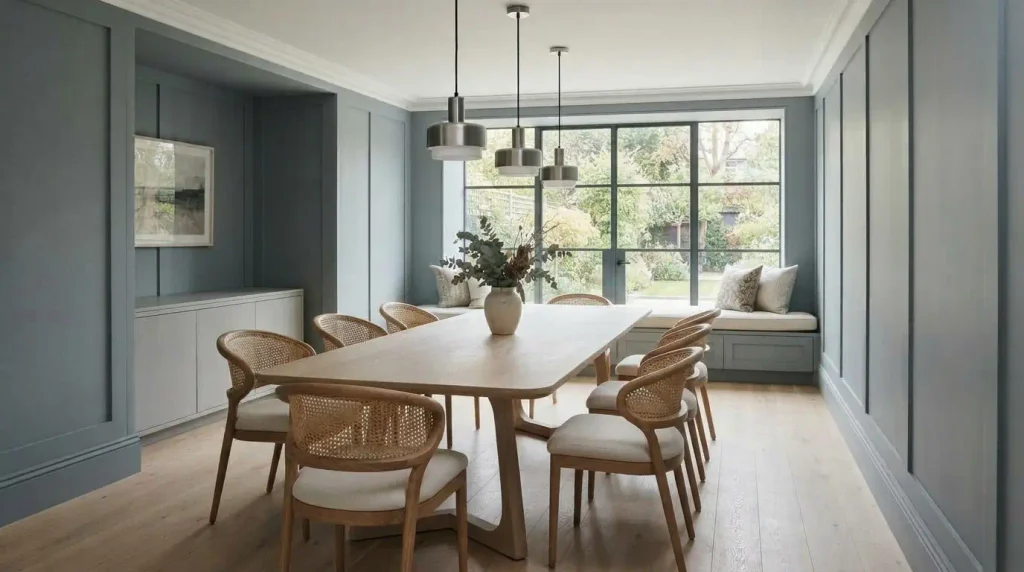
Three independently suspended pendants arranged in a straight sequence can distribute visual emphasis across a long dining surface.
In a narrow contemporary dining room, matching cylindrical or compact dome fixtures establish a consistent rhythm above an oak table, with each suspension point corresponding to a different section of the furniture.
Spacing is central to this arrangement. Fixtures placed too close together can appear crowded, and uneven positioning may interrupt the composition.
Their combined light output also needs to account for the table’s full length, particularly when the shades direct most illumination downward.
4. Contemporary Globe Chandeliers
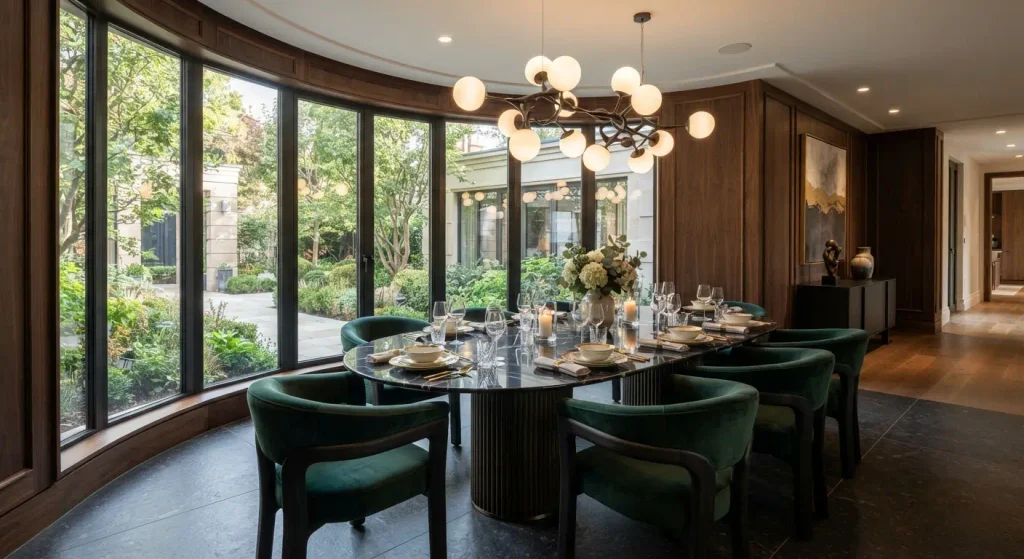
Globe chandeliers bring spherical forms into dining rooms through integrated arrangements of glass diffusers.
An asymmetrically balanced but unified fixture with several opal globes above an oval dining table offers a softer visual profile than a sharply angular pendant.
The surrounding interior might feature dark timber flooring, sculpted upholstered chairs, and warm-toned cabinetry.
Opal and frosted glass diffuse light, reducing the direct visibility of the source. Clear glass exposes the bulb and can produce more pronounced brightness or glare.
The number, size, and orientation of the globes also influence how evenly illumination reaches the dining area.
5. Organic and Asymmetrical Statement Chandeliers
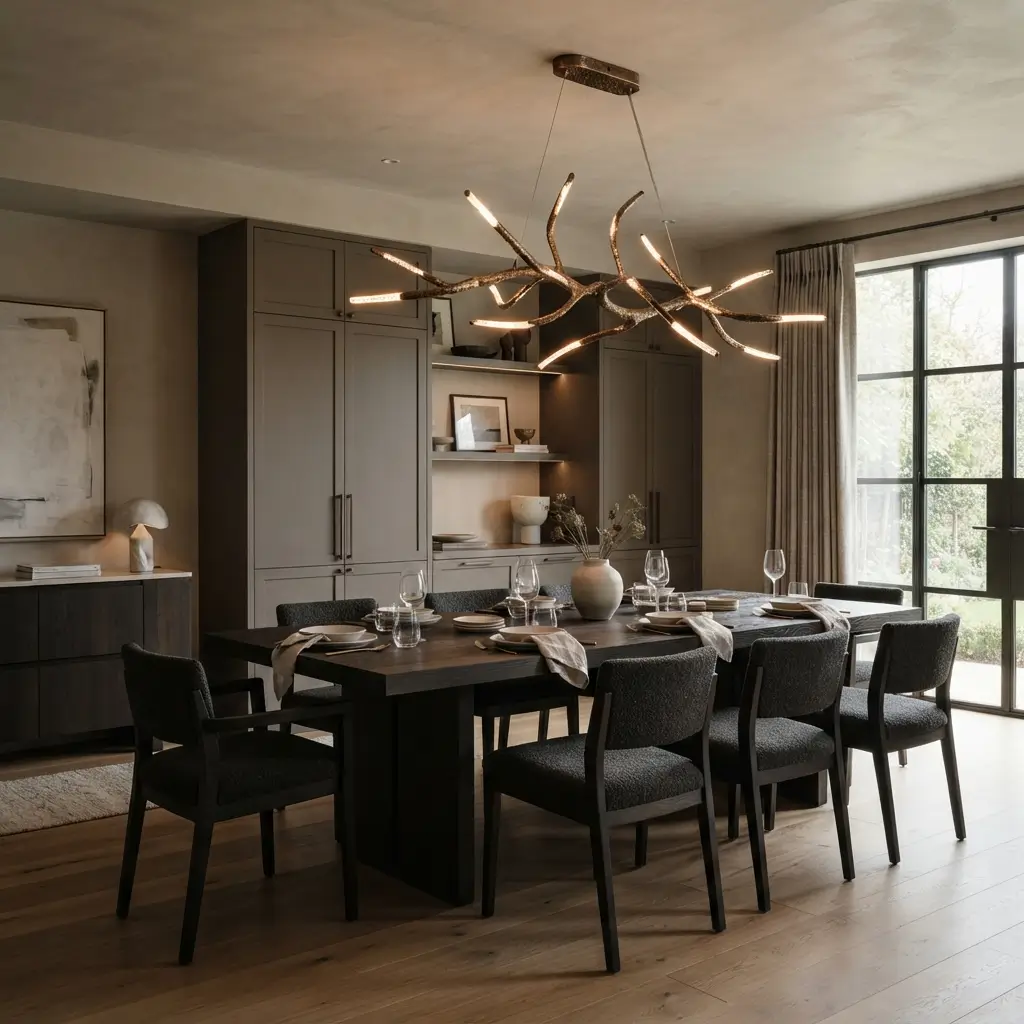
An irregular branching network of hammered bronze stems stretches across the ceiling plane of a transitional dining room, punctuated by small directional LED sources.
Positioned above a dark-stained ash table, the asymmetrical configuration breaks the rigid geometry of surrounding floor-to-ceiling cabinetry.
The sprawling metal structure creates dynamic visual movement, casting irregular patterns of light and shadow across textured lime-washed walls while maintaining functional task brightness on the dining surface below.
6. Modern Track Lighting for Flexible Dining Room Illumination
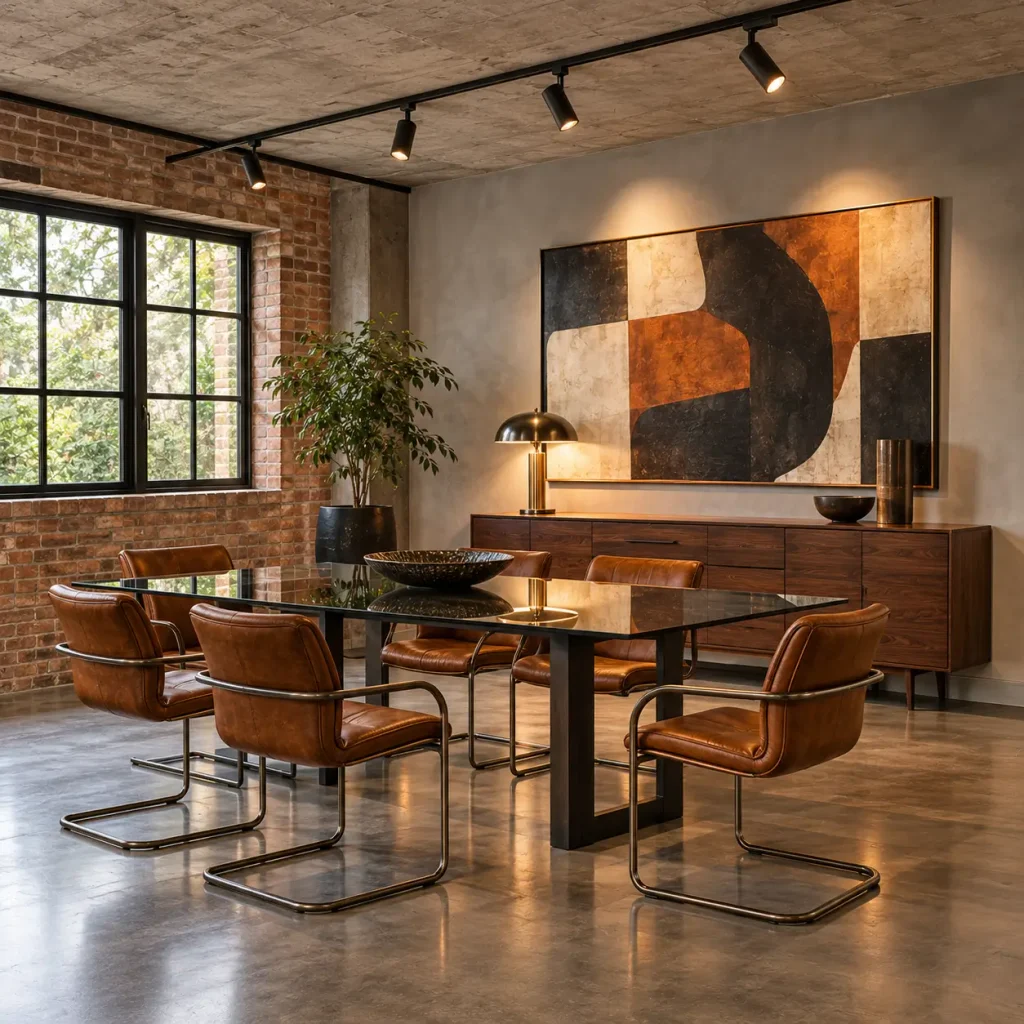
Track lighting provides a practical solution for dining areas requiring directional illumination.
A ceiling-mounted black track with adjustable heads can direct separate beams toward the dining table, a large artwork, and a built-in sideboard.
This arrangement works particularly well in open-plan spaces where the dining area shares its ceiling with a kitchen or living room.
Each head can be repositioned to address a particular surface or display. Beam angle and fixture direction influence the resulting light distribution.
Poorly aimed heads can produce reflections on artwork, glare across polished furniture, or uneven brightness on the dining surface.
7. Contemporary Brass and Bronze Multi-Arm Chandeliers
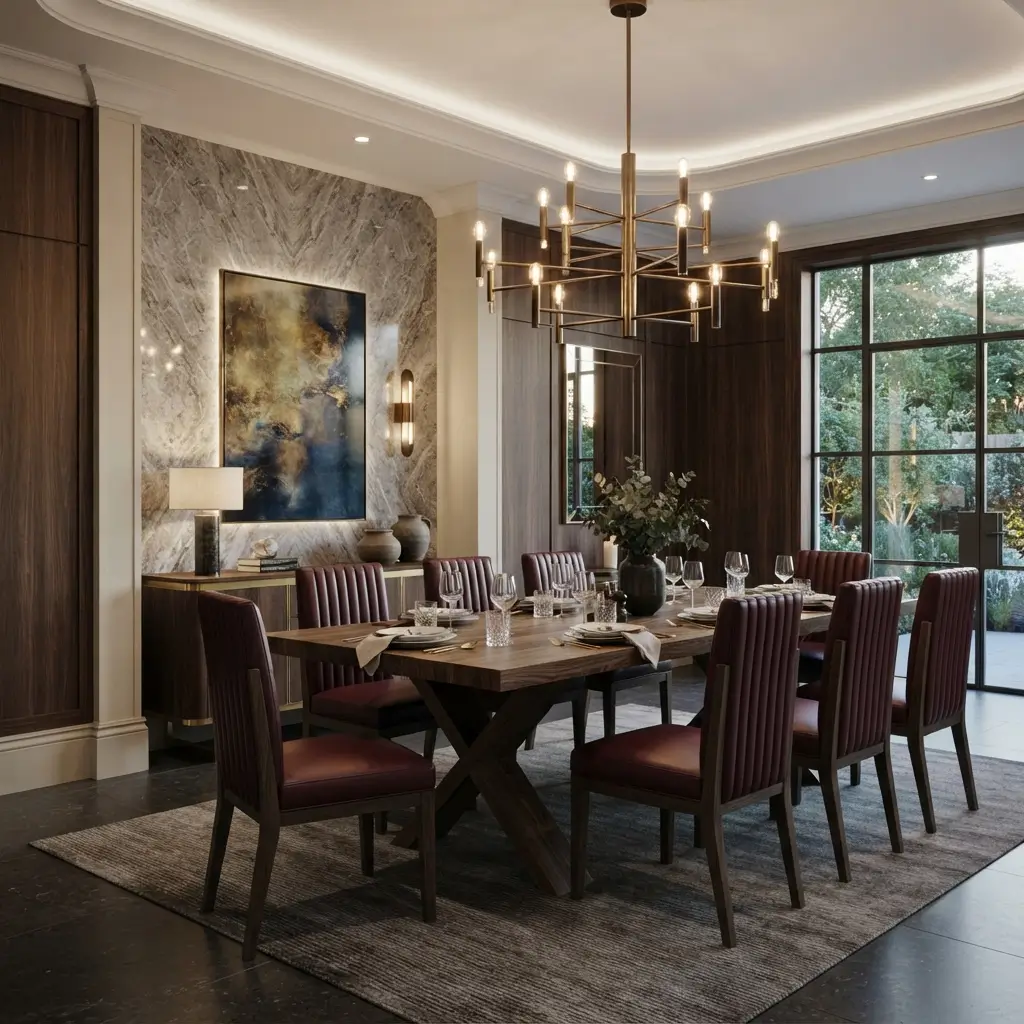
Balanced multi-arm chandeliers in brushed brass or bronze bring warm metallic detailing into contemporary dining rooms.
A symmetrical fixture with several extended arms and exposed light sources works particularly well above a dark walnut table, especially in an interior featuring textured wall panels and tailored upholstered chairs.
The arrangement of the arms determines the fixture’s overall proportions and how its light sources are distributed.
Brushed brass introduces a softer metallic finish, while darker bronze provides a more subdued contrast.
The fixture’s finish should relate naturally to other visible metal details without requiring every element in the room to match.
8. Geometric Ring and Circular Chandeliers
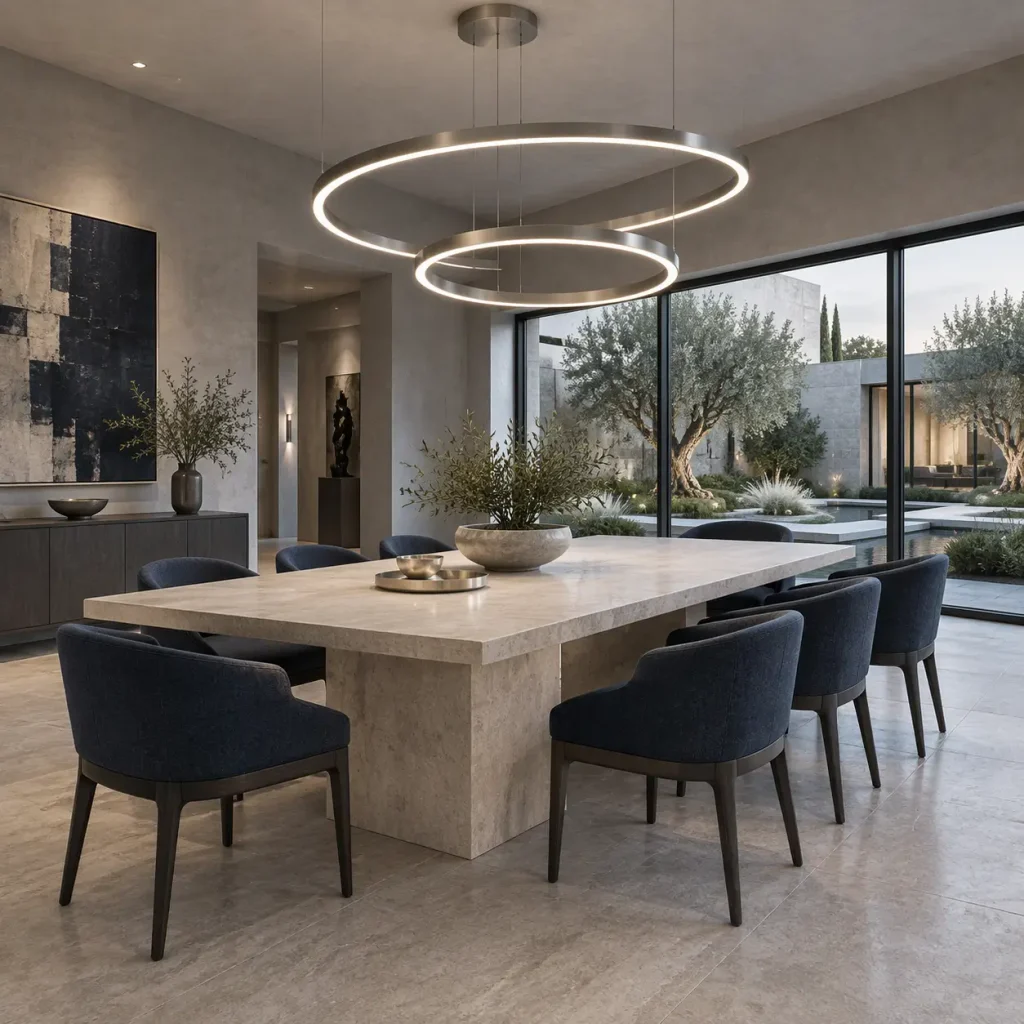
Circular and intersecting-ring chandeliers introduce open geometric forms into contemporary dining rooms.
A double-ring fixture suspended above a rectangular dining table can establish a strong overhead composition without the solid visual mass of a conventional shade.
The rings may sit horizontally, vertically, or at intersecting angles. Their orientation affects the fixture’s relationship with the ceiling and surrounding architecture.
Some models distribute illumination along the inner or outer edges of the rings, while others use integrated light sources with directional output.
The actual lighting specification matters as much as the visible geometry.
9. Recessed Ceiling Lighting with a Statement Fixture
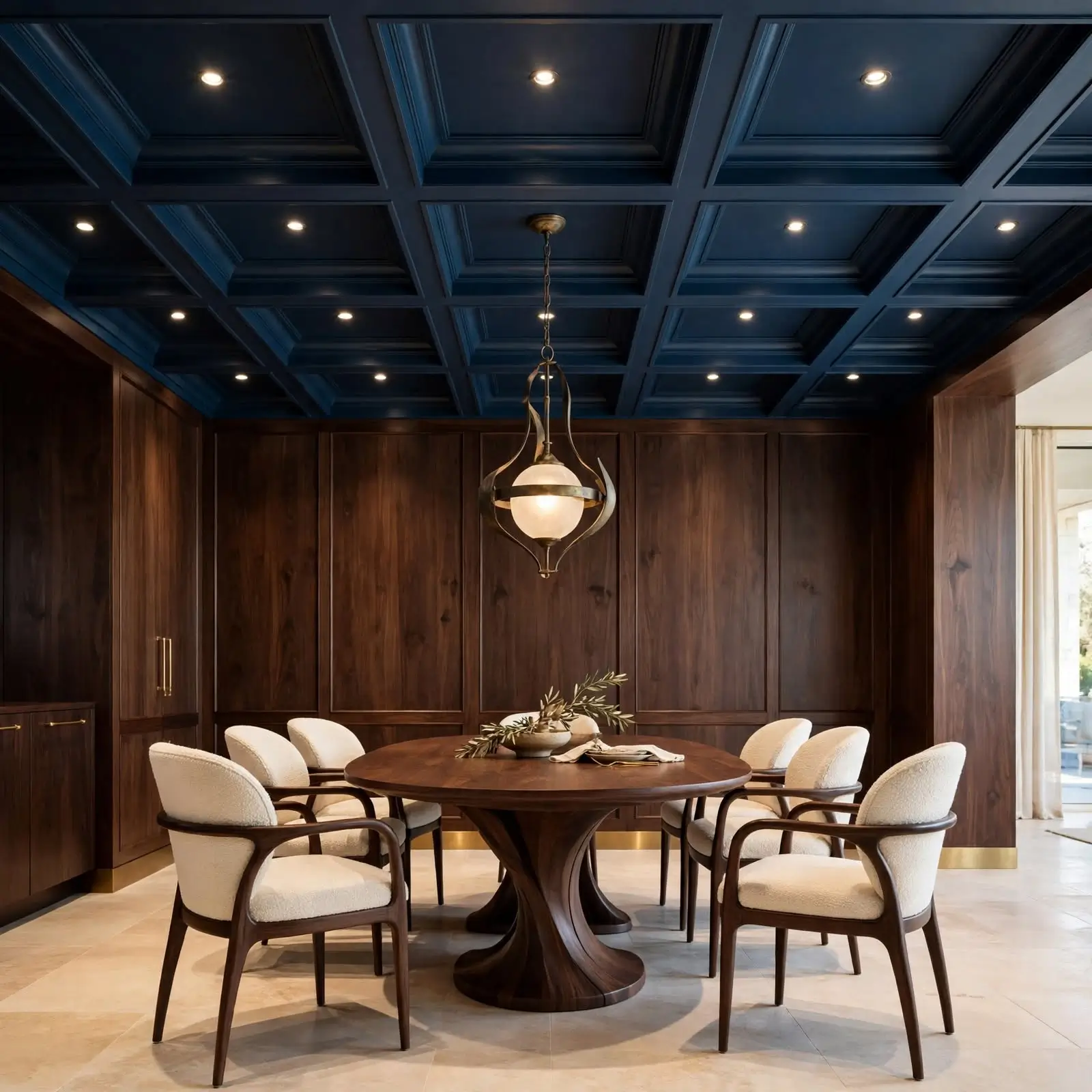
A combination of recessed ceiling lights and one decorative pendant provides two complementary sources of illumination.
In a contemporary dining room with a recessed ceiling and built-in cabinetry, discreet downlights can illuminate the wider area while a sculptural pendant concentrates attention above the dining table.
The placement of the downlights matters.
Fixtures positioned directly above seated occupants may cause uncomfortable glare, and poorly coordinated spacing can produce uneven illumination.
Separate controls for the recessed lights and pendant offer greater flexibility when adjusting the room for dining or other activities.
10. Wall Sconces as Part of the Dining Room Lighting Design
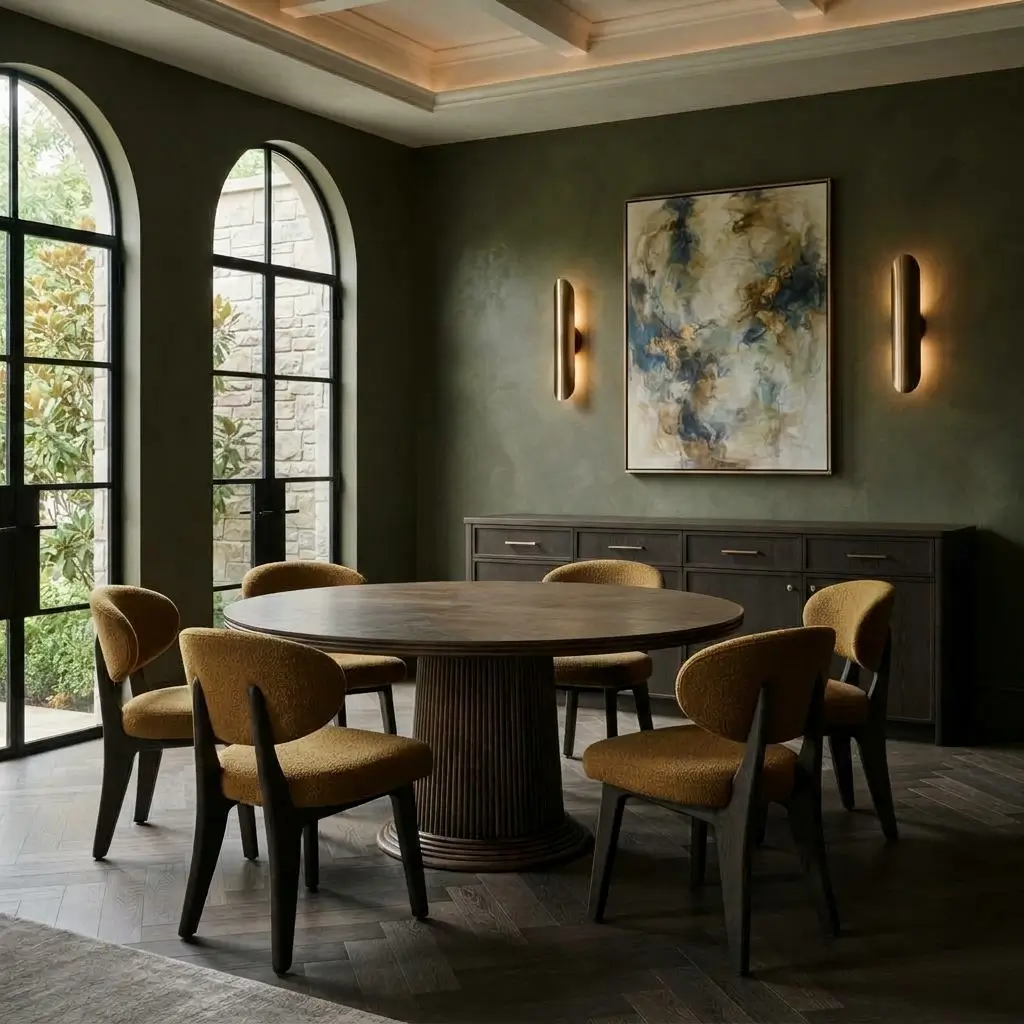
A pair of articulated brushed bronze wall sconces flank a low-profile buffet against deep olive-green walls of a compact dining room, operating alongside a simple ceiling pendant.
The adjustable arm extensions cast soft illumination horizontally across framed artwork and horizontal display surfaces, enriching perimeter depth.
By shifting visual weight away from the ceiling plane, these wall-mounted sources create an intimate atmosphere and provide functional task lighting for serving areas.
11. Cove and Indirect Architectural Lighting
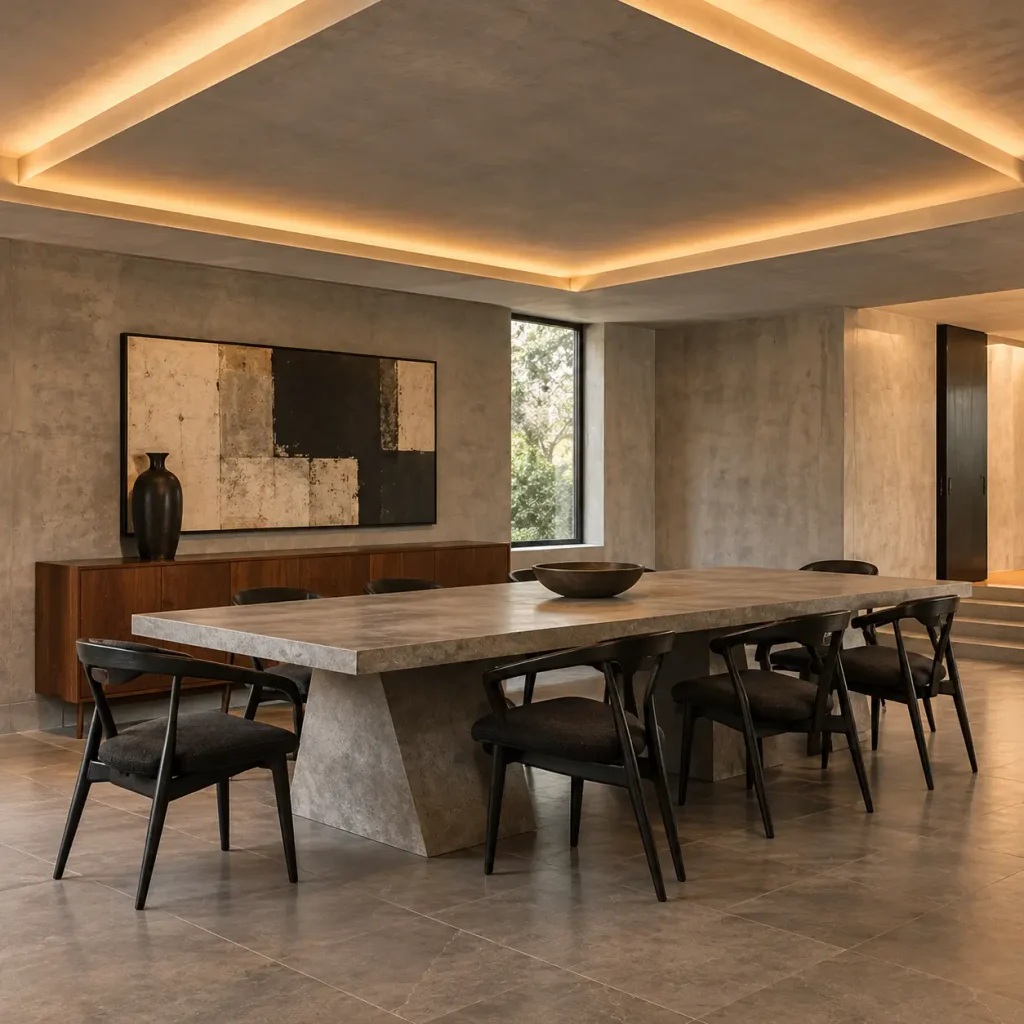
Concealed cove lighting integrates illumination directly into the architecture.
In a modern dining room with a recessed perimeter ceiling, hidden LED strips direct light toward the surrounding ceiling surfaces, producing reflected illumination without exposing the light source itself.
The quality of the result depends heavily on the ceiling design, the position of the concealed strip, and the reflectivity of nearby surfaces.
A carefully designed recess distributes light across the ceiling, while an inadequately concealed source can produce visible bright spots.
This approach is particularly relevant to interiors where the ceiling architecture is intended to remain visually prominent.
12. Statement Lighting in Dining Rooms with High Ceilings
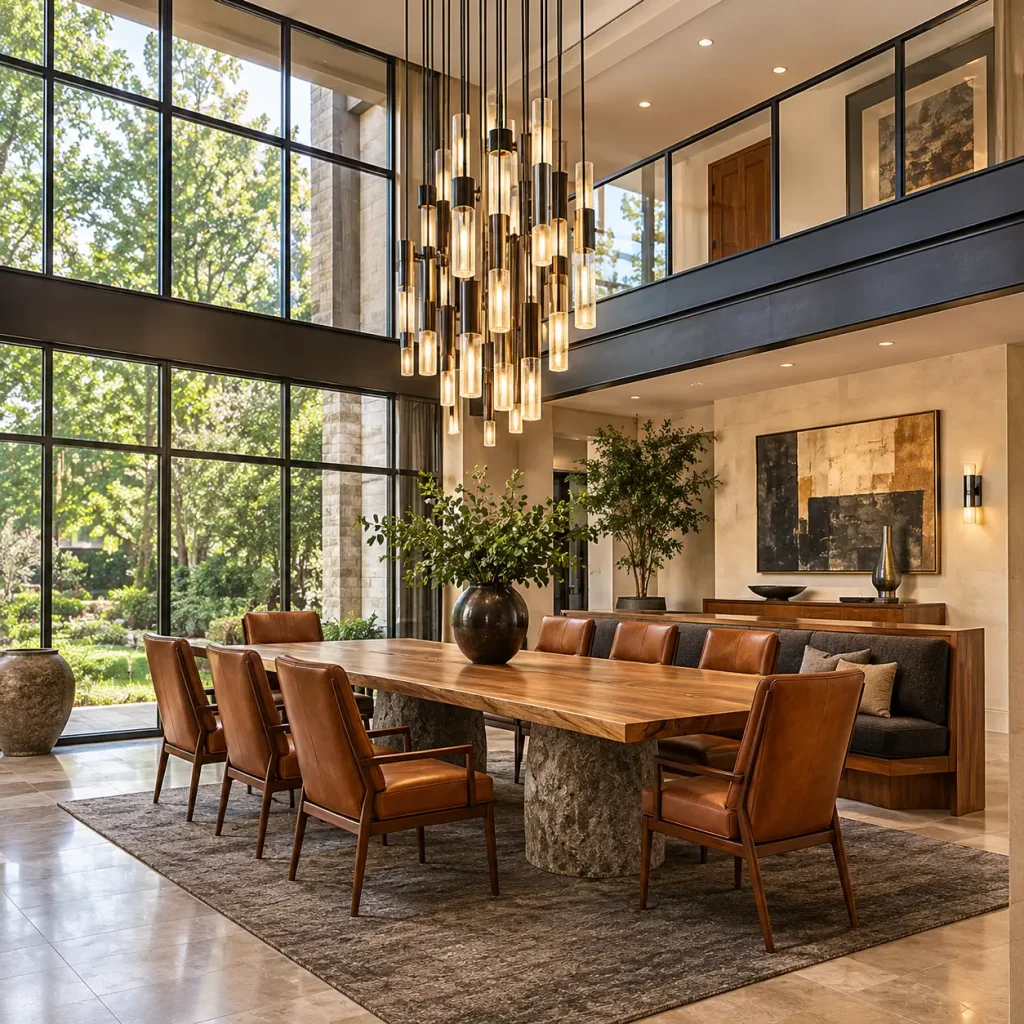
Dining rooms with double-height ceilings require fixtures that relate to the generous vertical space.
An elongated chandelier suspended above a substantial oak dining table can establish a connection between the dining area and the upper reaches of the room.
Tall windows, exposed structural beams, and a mezzanine provide additional architectural context.
Suspension length is particularly important.
A fixture that is too short may appear disconnected from the dining arrangement, while an excessively long installation can interfere with sightlines and movement.
The chandelier’s vertical dimensions, mounting position, and relationship with the table should be assessed together.
13. Modern Lighting Above Round Dining Tables
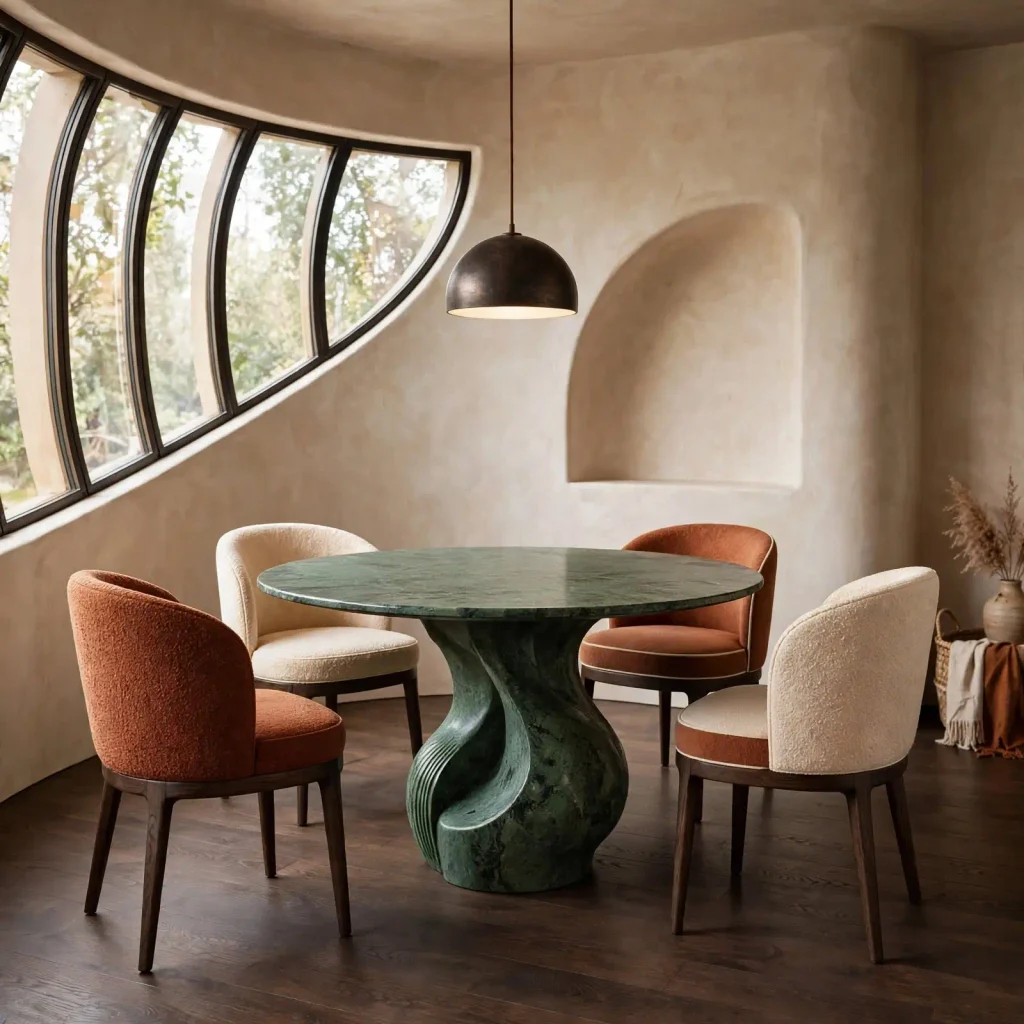
Round dining tables benefit from lighting arrangements that respect their central geometry.
A compact dome pendant positioned over a circular table can provide a clear relationship between the fixture and the seating arrangement.
In a contemporary apartment, a sculptural pendant above a dark round table might sit within a dining area defined by fluted timber cabinetry and curved upholstered chairs.
The fixture’s footprint should remain proportionate to the table diameter. A narrow shade may concentrate light in the center, leaving the outer seating positions less illuminated.
A diffuser with a suitable distribution pattern can provide more consistent coverage across the tabletop.
14. Natural-Material Pendant Lighting
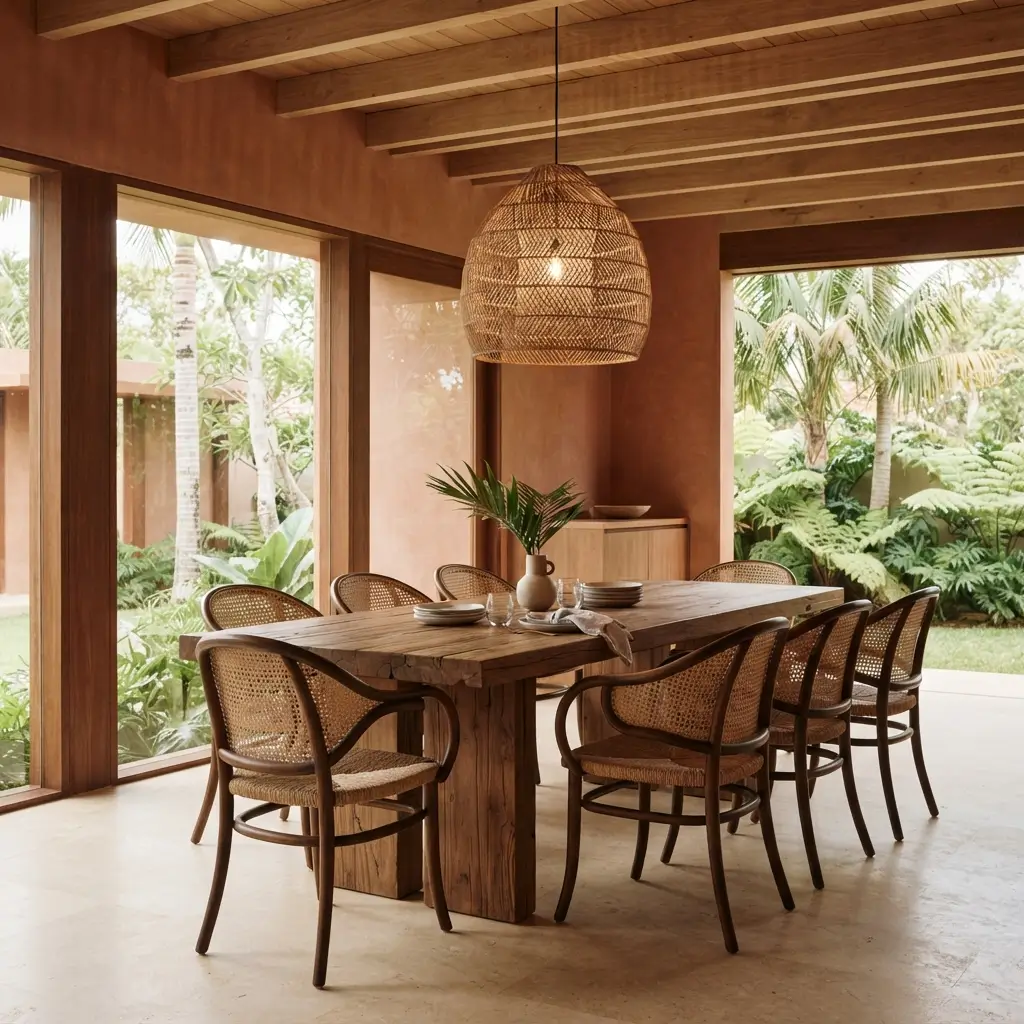
Natural-material pendants introduce texture through their physical construction.
A contemporary woven pendant above a solid oak dining table can bring together the tactile qualities of timber, woven fibers, and smooth plaster walls.
The result suits modern interiors that incorporate organic materials without relying on traditional rustic styling.
The weave determines how the fixture interacts with light.
Open patterns allow illumination to pass through the shade, producing visible light and shadow patterns on nearby surfaces.
Tighter constructions direct more light downward or partially conceal the source.
Material durability, cleaning requirements, and the manufacturer’s electrical safety specifications are also worth checking.
15. Flush and Semi-Flush Ceiling Lighting for Modern Dining Rooms
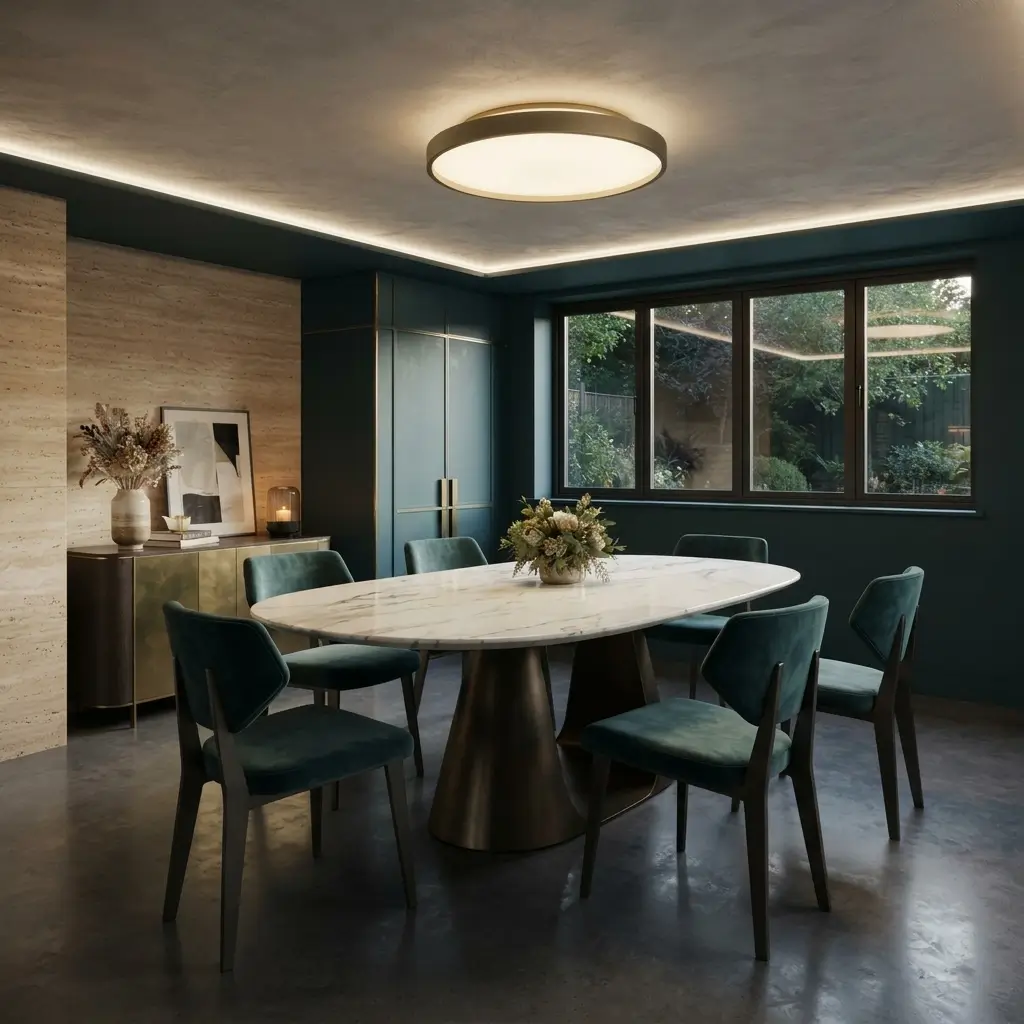
Low-profile ceiling fixtures offer an effective solution for dining rooms where long-suspended lights would interrupt the available headroom.
A contemporary semi-flush fixture with a broad diffuser can sit above a rectangular marble table in an apartment dining room with a relatively low ceiling and full-height windows.
Flush-mounted fixtures sit close to the ceiling, whereas semi-flush models extend slightly below it. Their reduced suspension makes them practical in rooms with limited vertical clearance.
Diffuser size and light distribution deserve particular attention because a compact fixture still needs to provide appropriate illumination for the dining area.
What to Consider When Choosing Modern Dining Room Lighting
Selecting appropriate illumination involves balancing physical scale, placement, and light quality.
The physical size and visual weight of a fixture must correspond with the dining table and room proportions; an undersized light feels lost above a large table, while an oversized piece overwhelms compact seating areas.
Hanging position requires careful calculation of table clearance and seated sightlines, ensuring diners can converse across the table without obstruction.
Light quality encompasses color rendering, brightness, and glare control, which directly impact comfort during meals.
Layering overhead fixtures with wall sconces or architectural sources provides flexibility for different occasions.
Dimmability allows the lighting to transition from bright daytime tasks to intimate evening dinners, provided the dimmer switch is fully compatible with the chosen bulbs or integrated LED drivers.
Finally, hardwired electrical installations and wiring modifications should always be completed by a qualified professional in accordance with local codes.
Frequently Asked Questions
Q1. What type of lighting is best for a modern dining room?
A statement pendant or chandelier positioned centrally over the table is generally most effective, combined with layered ambient and accent sources to provide balanced, adaptable illumination throughout the space.
Q2. Should dining room lighting be centered over the table?
Lighting should align with the physical center of the dining table rather than the room itself, as table placement dictates the functional focal point and ensures proper task illumination during meals.
Q3. Are pendant lights or chandeliers better for modern dining rooms?
Both work well depending on room architecture. Chandeliers offer structured multi-source illumination, while individual pendants allow for customized spacing and linear rhythm above elongated tables.
Q4. What color temperature works well for dining room lighting?
Warm-white light ranging between 2700K and 3000K creates an inviting, comfortable atmosphere that flatters skin tones, food presentation, and interior finishes during evening dining.
Conclusion
Modern dining-room lighting achieves its greatest impact when functional illumination and spatial architecture work in harmony.
By evaluating table dimensions, ceiling height, and the specific character of the room, homeowners can select lighting that defines the dining space with clarity, comfort, and enduring style.