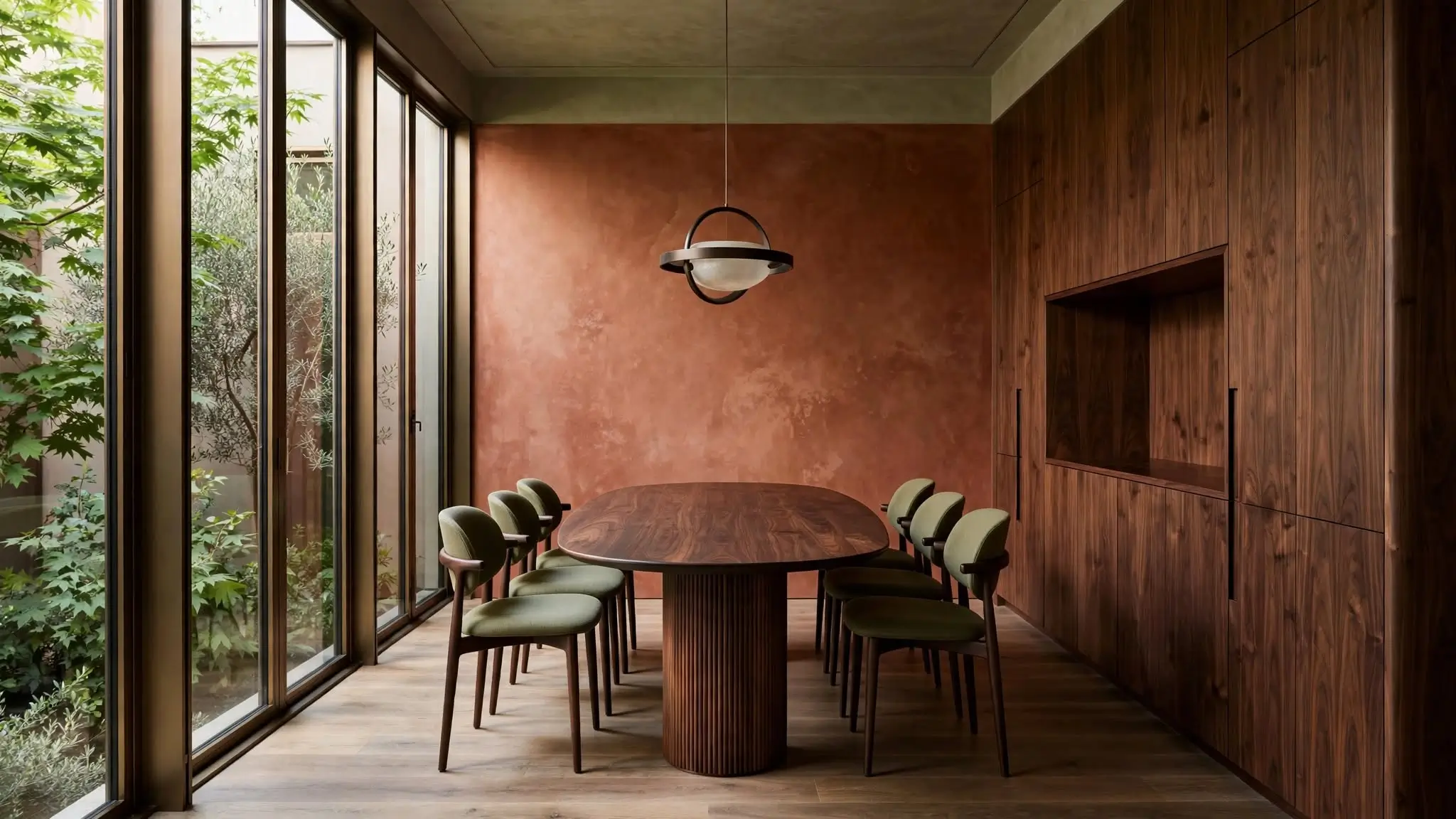
The best modern dining room ideas do more than update furniture or introduce a new color palette.
A successful dining room depends on how the table, chairs, lighting, materials, architecture, and circulation work together as a complete composition.
Whether the space is a dedicated dining room, a compact apartment corner, or part of an open-plan layout, thoughtful design decisions influence both appearance and everyday function.
Modern dining room design is remarkably diverse.
Some rooms are organized around a sculptural table, others rely on color, architectural contrast, or carefully edited minimalism.
The following contemporary dining room ideas illustrate twelve distinct approaches, each built around a different design priority.
Together, they show how furniture proportions, material choices, lighting strategies, and spatial planning can create dining rooms that feel purposeful, comfortable, and visually memorable.
1. Sculptural Dining Table as the Architectural Centerpiece
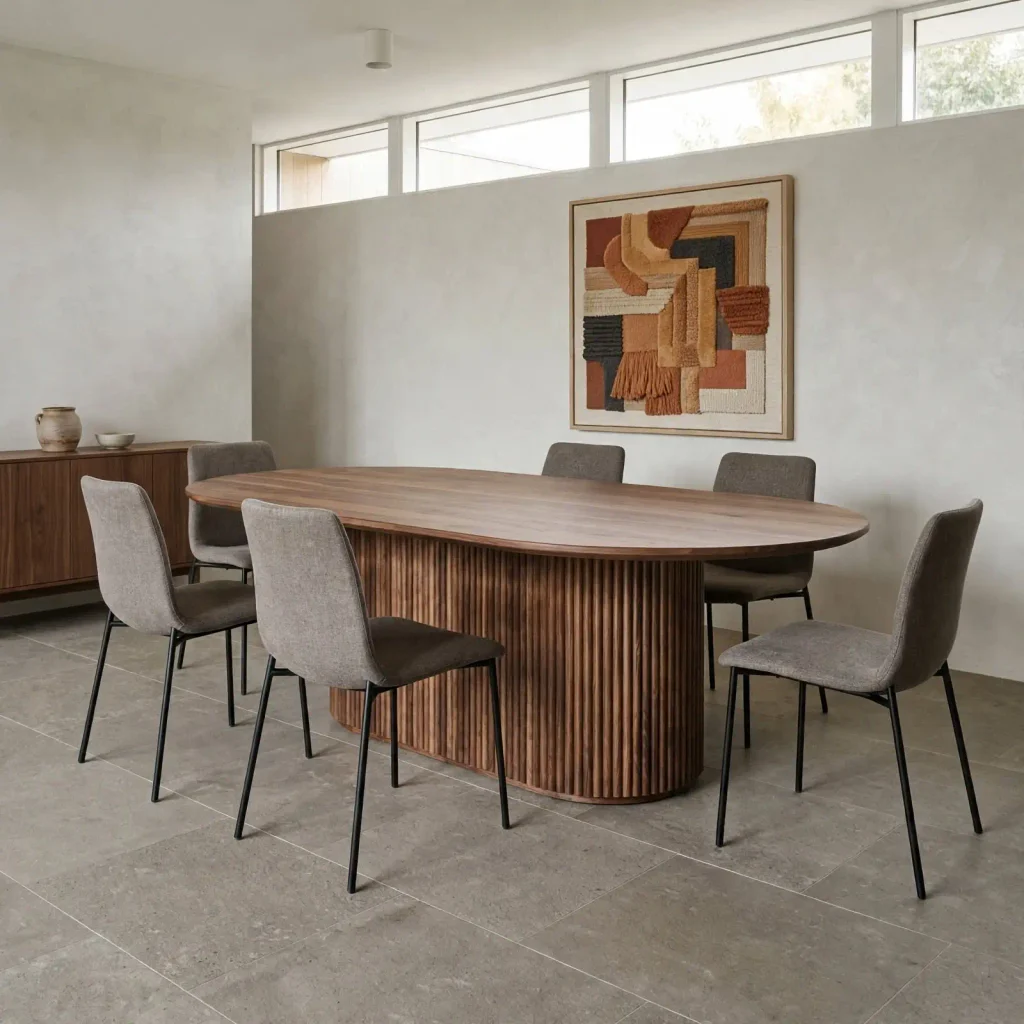
A sculptural dining table can define the entire room when its scale and form establish the visual hierarchy.
Consider a substantial oval timber table with a monolithic pedestal base positioned at the center of a rectangular dining room.
Its mass determines chair proportions, encouraging designs with refined frames and restrained upholstery that do not compete for attention.
Storage remains understated, often taking the form of a streamlined sideboard aligned with the room’s longest wall.
Lighting follows the table’s footprint, emphasizing its shape without introducing another dominant feature. Material choices remain disciplined, with walls, flooring, and textiles serving as a neutral backdrop.
In this arrangement, the table functions almost like a built-in architectural element, organizing furniture placement and defining the room’s identity.
2. Warm Minimalist Dining Room With Natural Materials
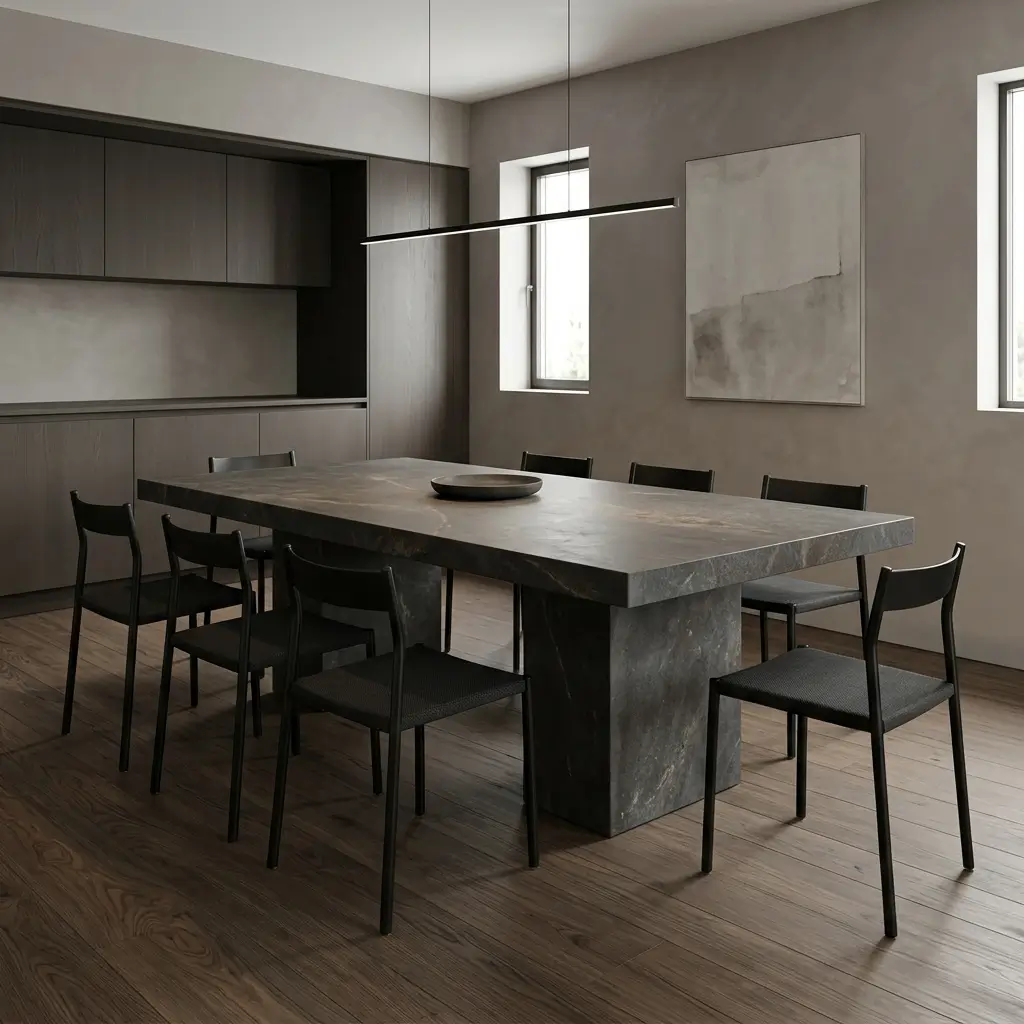
A warm minimalist dining room depends on careful editing rather than visual abundance.
A medium-sized rectangular timber table, simple upholstered chairs, and a discreet pendant establish the room’s core elements without unnecessary additions.
Empty wall space becomes an active part of the composition.
Texture replaces decoration. Wood grain, woven fabric upholstery, limewashed walls, and a matte stone vessel supply visual depth through surface variation rather than ornament.
Furniture placement remains deliberate, preserving generous open areas around the dining set.
The palette might combine smoked oak, muted clay tones, and black accents, yet every finish serves a purpose.
This approach succeeds because attention stays focused on proportion, spacing, and material quality rather than layered accessories.
3. Contemporary Dining Room With Bold Color
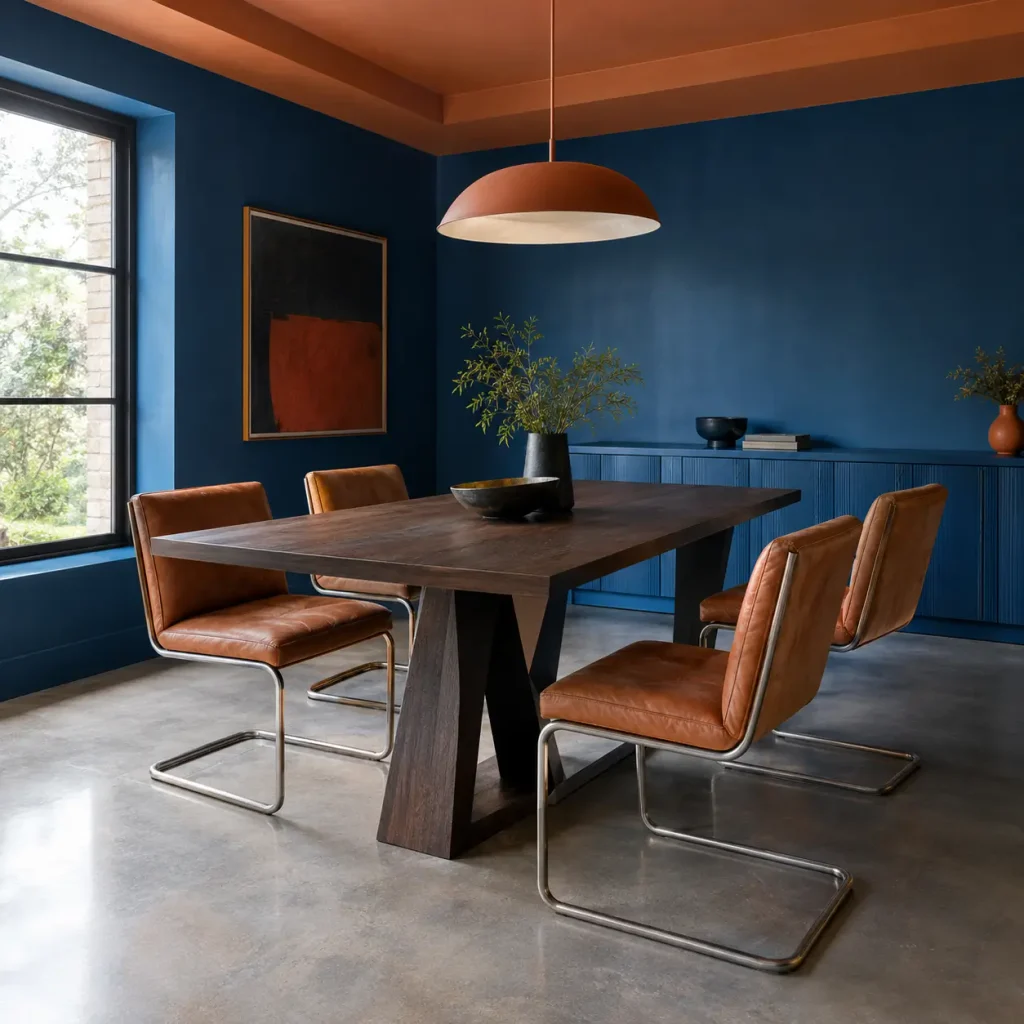
Color can become the main organizing principle of a modern dining room. Imagine deep cobalt walls paired with cognac leather chairs and a dark timber table.
The blue establishes a strong architectural backdrop, and the warm upholstery introduces a contrasting color with enough visual weight to stand alongside it.
The table should have a clear silhouette that remains legible against the painted walls. Keep additional finishes controlled so the palette does not become a collection of competing statements.
A neutral floor can provide a visual break between the saturated walls and darker furniture.
This strategy suits rooms that can accommodate a confident color choice without overwhelming adjacent spaces.
In an open-plan home, repeat one color in a smaller detail elsewhere to connect the dining area to its surroundings.
4. Modern Dining Room With a Statement Pendant
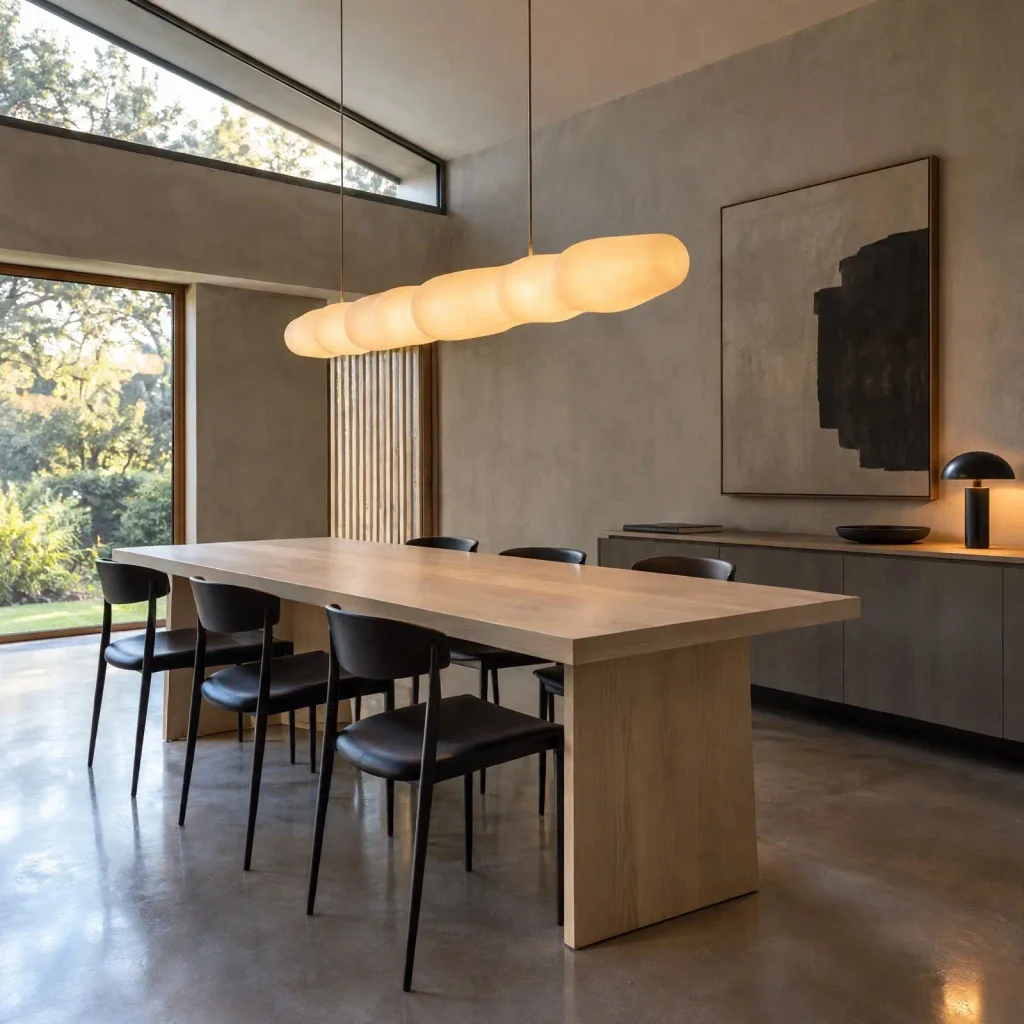
A statement pendant deserves a dining arrangement designed around its scale and position.
Over a long rectangular table, an elongated fixture can distribute light along the seating area and reinforce the table’s horizontal proportions.
A sculptural opaline glass design introduces a softer outline against a straightforward architectural setting. The fixture’s dimensions should correspond to the table and ceiling.
A compact dining area may suit a single pendant, whereas a longer arrangement can benefit from a linear suspension light.
Position the light to serve the table rather than the center of the room if those points do not align. Keep nearby furnishings visually uncomplicated.
The chairs, table, and wall finishes provide context for the fixture, leaving its shape and illumination as the main design consideration.
5. Modern Dining Room With a Round Table
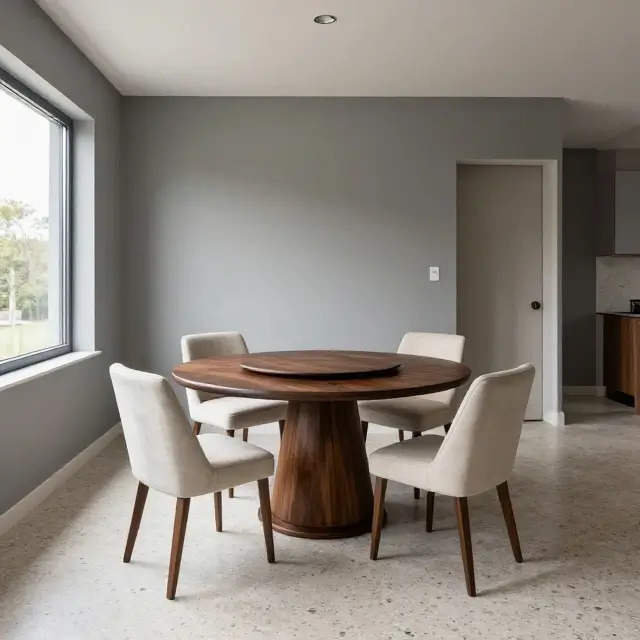
A round table changes how a dining room functions.
Without corners extending into circulation routes, movement around the table often becomes easier in square rooms or dining areas positioned near passageways.
The table diameter determines seating capacity and influences chair selection.
A central pedestal base generally offers greater flexibility than multiple legs, allowing chairs to be positioned comfortably around the perimeter.
Storage pieces remain secondary and are placed far enough away to preserve chair movement.
This arrangement works particularly well where several circulation paths intersect.
The geometry encourages balanced furniture placement and avoids awkward dead corners, producing a practical composition guided by spatial relationships rather than decorative themes.
6. Contemporary Dining Room With Architectural Contrast
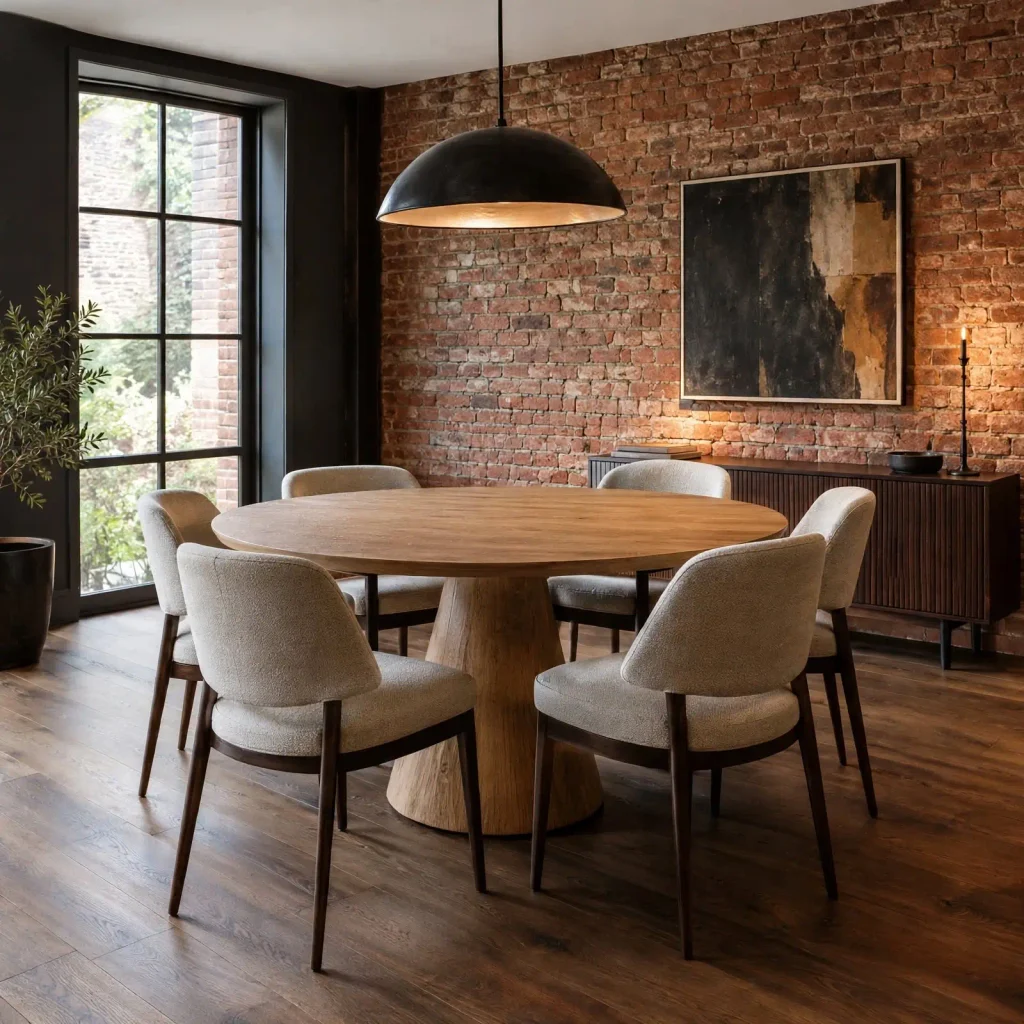
A contemporary dining room gains depth when modern furnishings engage with existing architecture. Imagine a room featuring an exposed brick wall from an older home renovation.
Rather than competing with its texture, contemporary furniture introduces cleaner forms and refined finishes.
A slim black dining table paired with upholstered chairs establishes a crisp counterpoint to the rough masonry surface.
Lighting remains understated, allowing the architectural feature to maintain prominence.
Material choices often echo subtle qualities found in the original structure, such as warm undertones in brick reflected through timber accents.
The dining arrangement is positioned to acknowledge the architectural element, creating a meaningful relationship between past and present rather than treating the feature as background scenery.
7. Organic Modern Dining Room With Curved Furniture
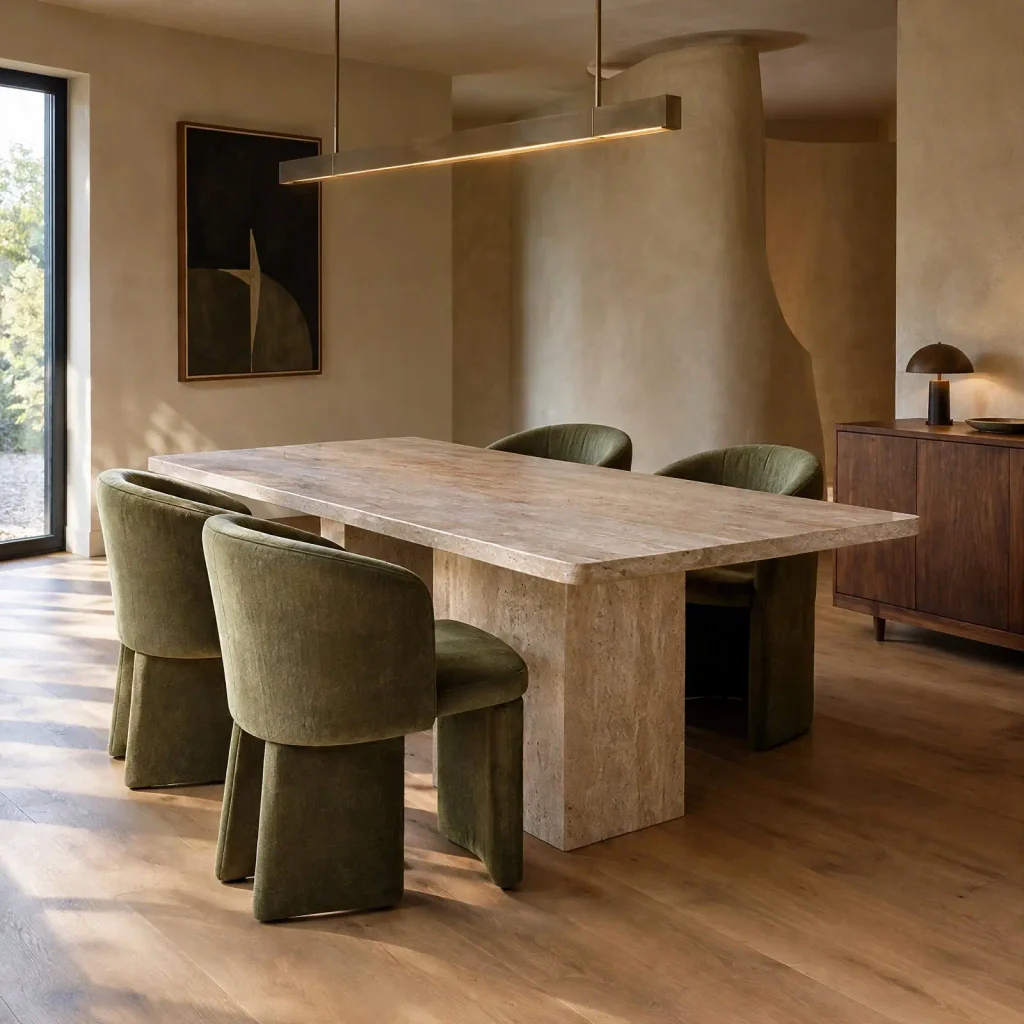
This organic modern dining room derives its identity from furniture profiles.
An elongated table with gently softened corners provides structure, but curved dining chairs establish the dominant visual language.
Rounded backrests and upholstered forms introduce a softer rhythm across the seating arrangement. The contrast between curved furniture and strong architectural lines becomes an important design tool.
Straight walls, large windows, and linear flooring patterns gain visual balance through the seating silhouettes. Materials remain grounded in natural finishes such as oak, wool, and textured fabrics.
Curves appear selectively instead of universally. Their controlled use prevents the room from becoming overly sculptural and creates a composition centered on comfort, proportion, and organic form.
8. Dark Modern Dining Room With Tonal Depth
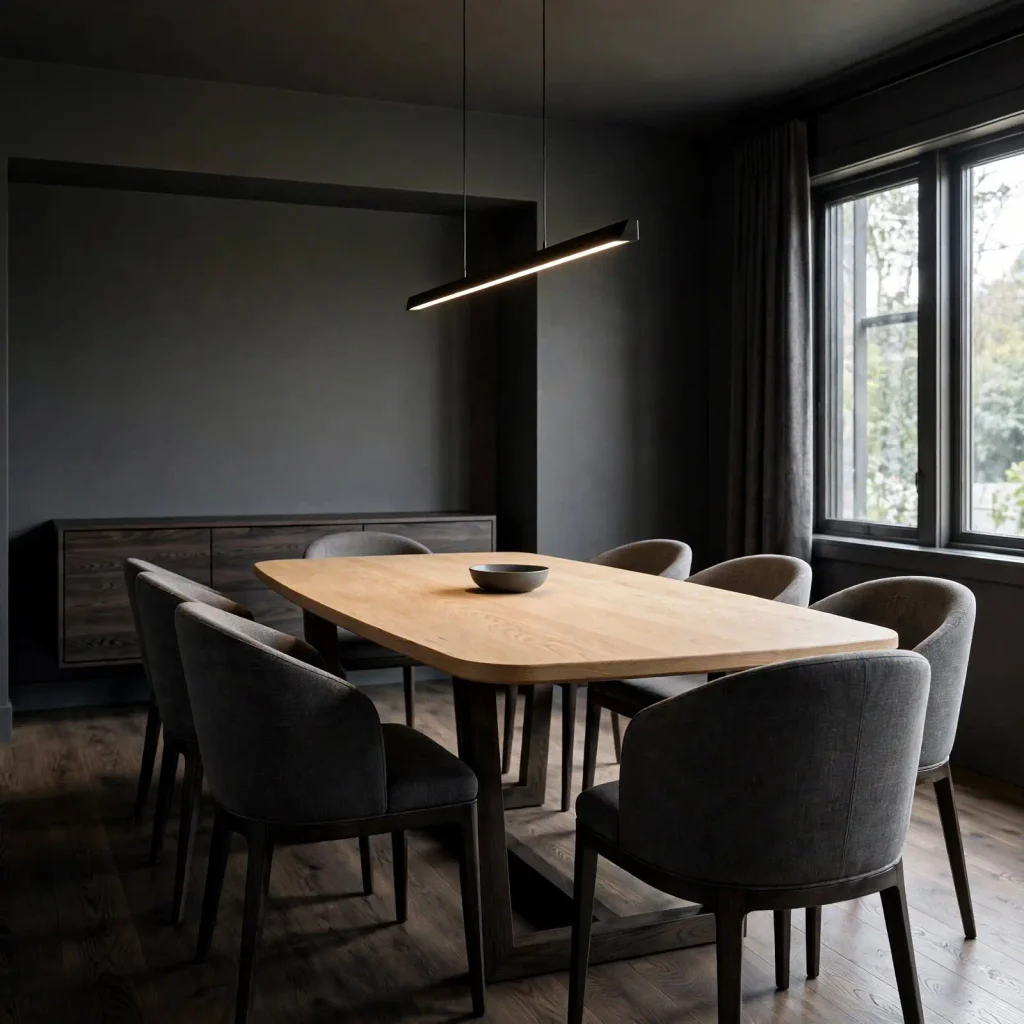
A dark modern dining room relies on subtle distinctions within a restrained palette.
Charcoal wall paint, dark walnut furniture, and graphite upholstery establish the foundation, yet each surface contributes a different visual quality.
Matte walls absorb light differently than polished table surfaces, creating depth without introducing bright accents.
Layering becomes essential. Upholstered dining chairs add texture, timber introduces grain, and carefully positioned lighting reveals variations between materials.
Illumination focuses on usability, ensuring diners remain comfortable and surfaces remain legible.
This approach avoids treating darkness as a theatrical effect. Instead, tonal variation and material definition provide the richness that keeps the room visually engaging.
9. Small Modern Dining Room With a Space-Efficient Layout
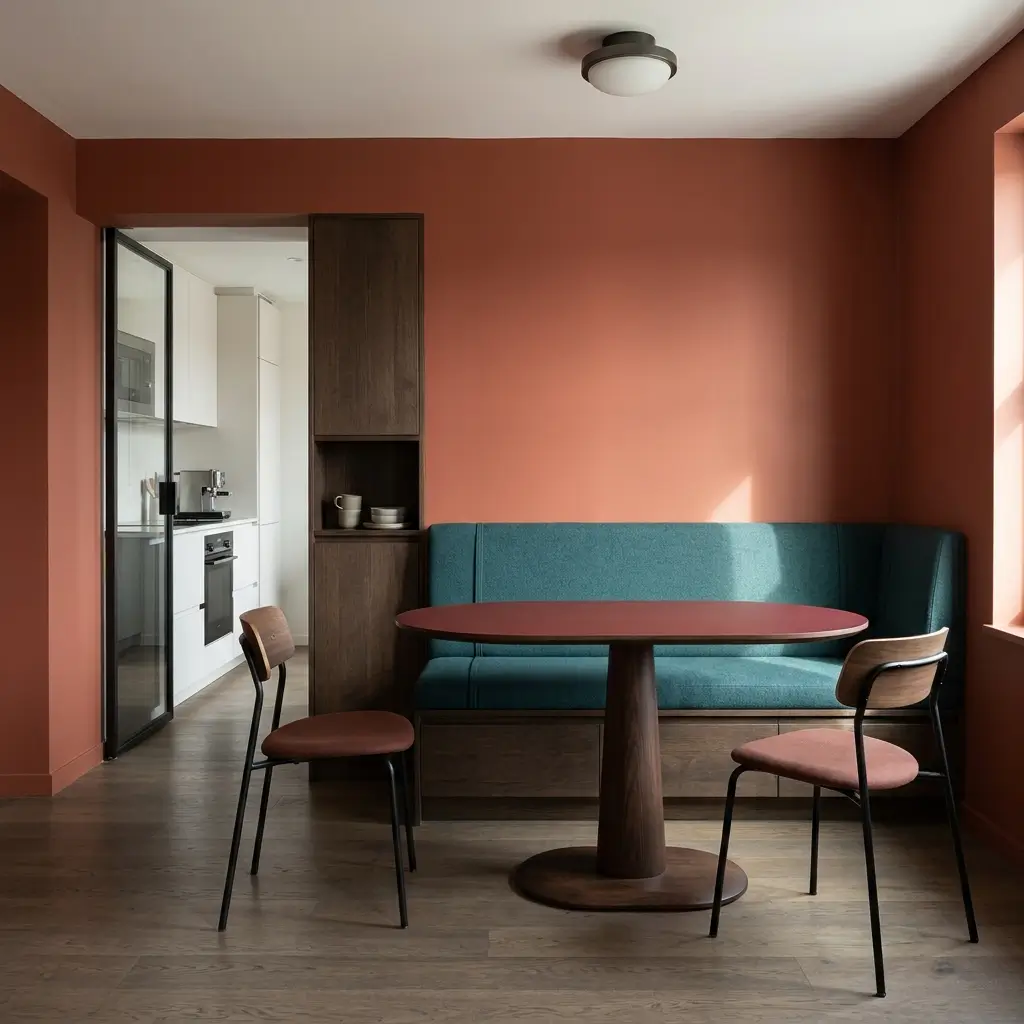
A small modern dining room begins with realistic planning.
Furniture dimensions respond directly to the available footprint rather than forcing a standard dining arrangement into a constrained area.
A compact rectangular or oval table placed adjacent to a wall often preserves essential circulation routes. Chairs with slim frames reduce visual density and allow easier movement.
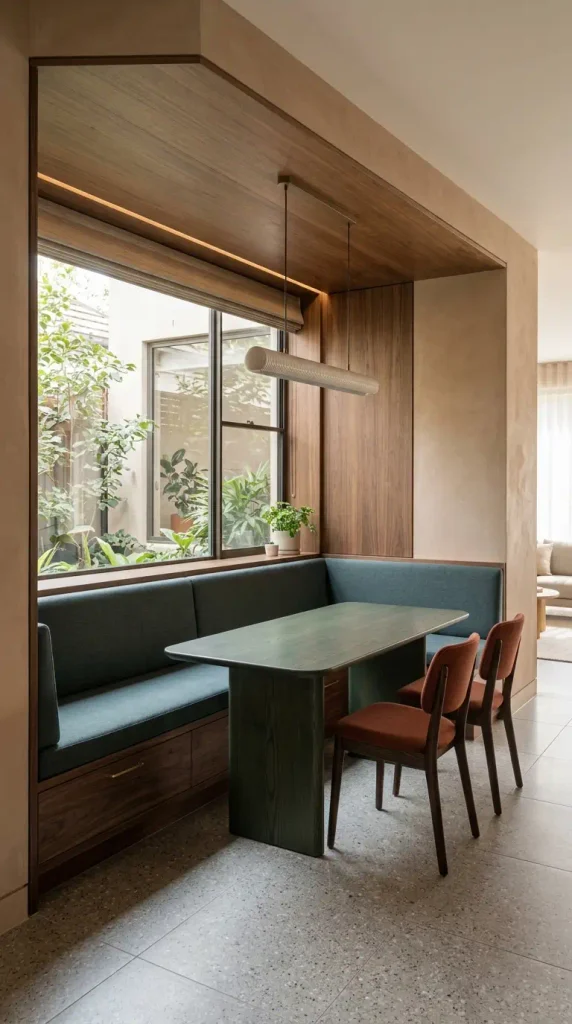
Built-in benches may provide additional flexibility where floor space is limited.
Storage frequently works hardest in these rooms, with sideboards, shelving, or integrated cabinetry serving multiple functions.
Color choices are secondary to layout decisions. Success depends on maintaining comfortable access to neighboring rooms, kitchen pathways, and seating positions without sacrificing the dining area’s daily usefulness.
10. Modern Dining Room With Mixed Materials
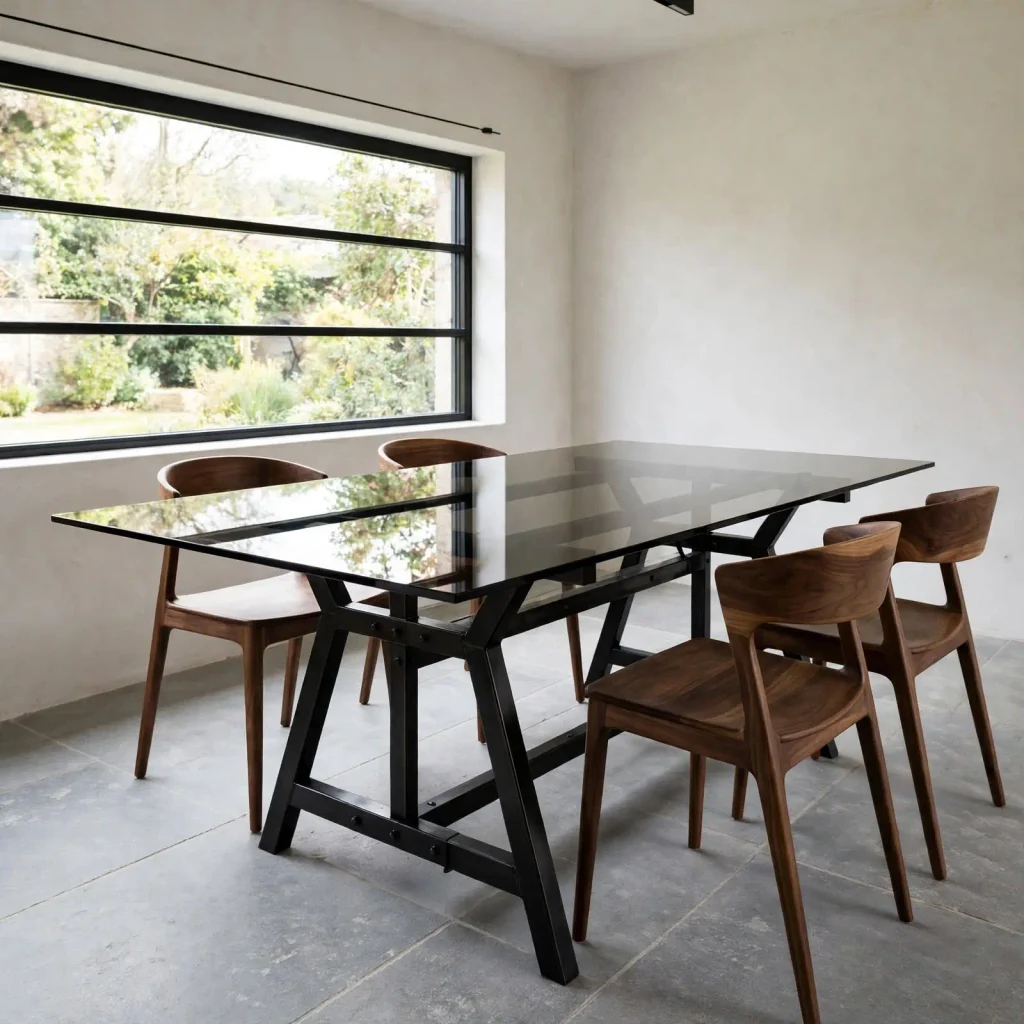
A mixed-material dining room depends on a clear hierarchy between contrasting surfaces.
A smoked-glass tabletop introduces reflectivity, a black steel base supplies a crisp structural outline, and walnut chairs contribute visible grain and a warmer color.
Each material has a different visual role within the same furniture grouping. The room should connect these finishes through a few deliberate choices.
A gray stone floor can relate to the darker metal, and a restrained wall color gives the timber enough contrast to remain visible.
Avoid adding multiple unrelated metals or heavily patterned surfaces that compete with the tabletop.
Practical considerations matter, too. Glass shows fingerprints more readily than many wood finishes, and stone flooring may require specific care.
Choose combinations that suit both the intended appearance and the household’s maintenance preferences.
11. Mid-Century Modern Dining Room With Contemporary Restraint
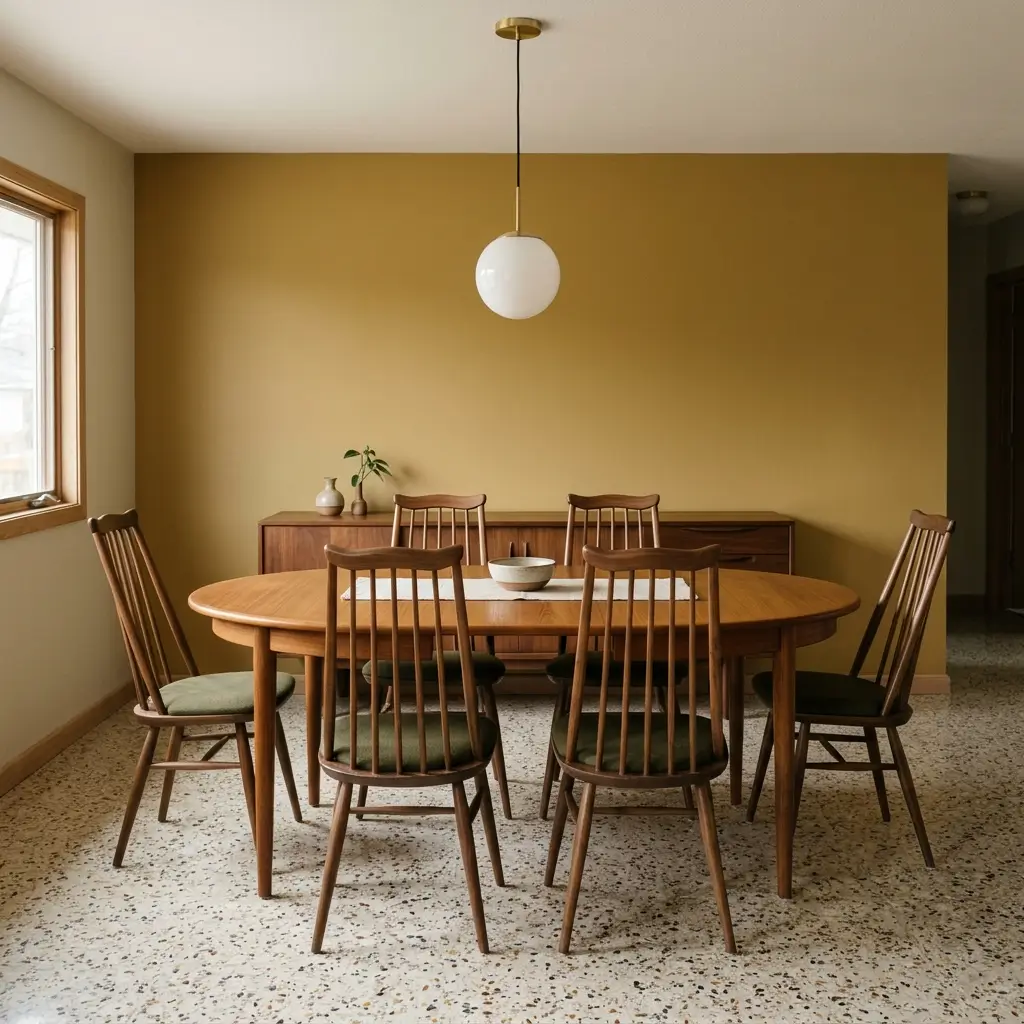
Mid-century influence appears through furniture geometry rather than nostalgic decoration.
An oval dining table with tapered legs, paired with chairs featuring sculpted timber frames, establishes the room’s visual vocabulary immediately.
Contemporary restraint prevents the space from feeling like a period recreation. Wall treatments remain simple, lighting adopts clean forms, and accessories are used sparingly.
The furniture carries the historical reference, allowing the broader environment to remain current.
Proportion is especially important here. Mid-century pieces often feature elegant silhouettes and lighter visual weight than many contemporary alternatives.
Their refined profiles create a dining room that feels timeless without becoming stylistically frozen.
12. Open-Plan Modern Dining Room With a Defined Identity
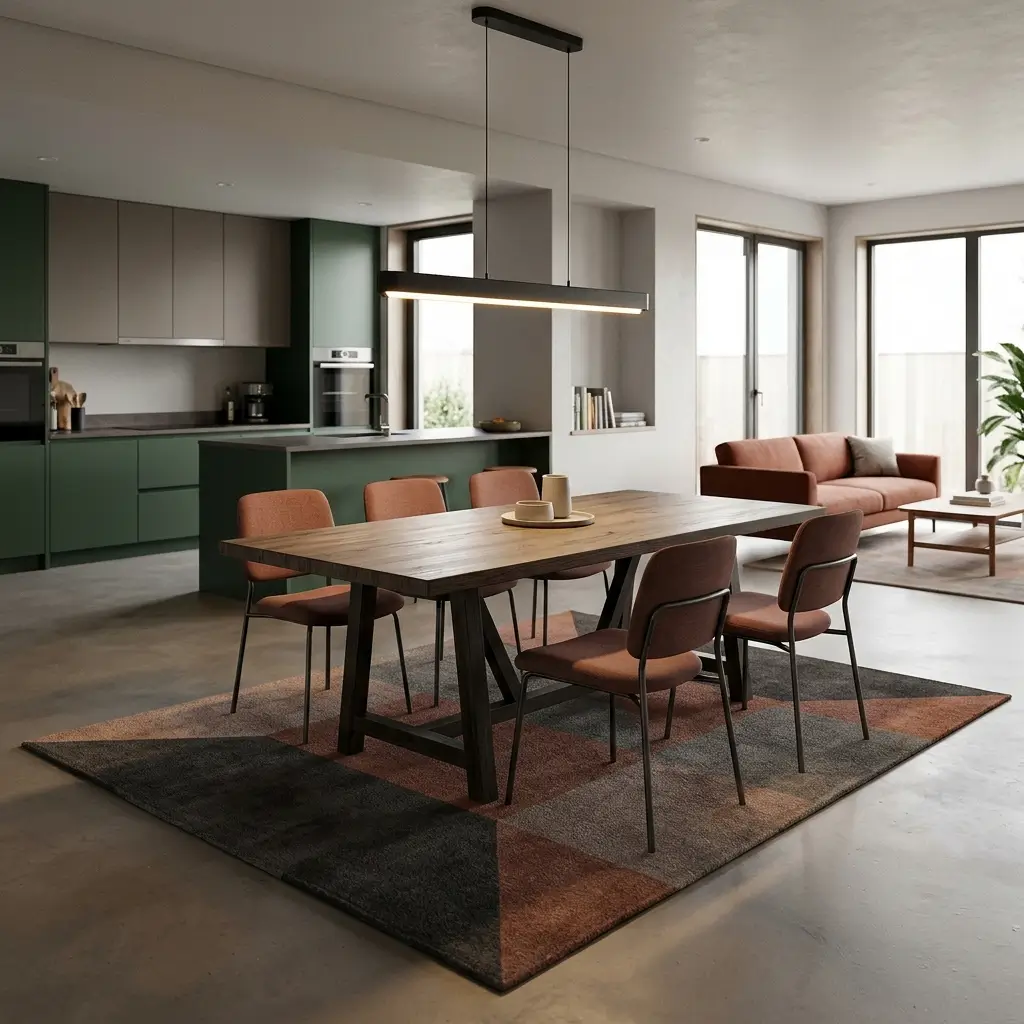
An open-plan modern dining room must function as part of a larger living environment while maintaining a recognizable presence.
Table placement often marks the transition between kitchen and living areas, establishing a dedicated dining zone without physical walls.
Lighting plays a key role. A fixture centered over the table signals the dining area’s purpose, and an area rug may further distinguish the zone when appropriate.
Material continuity connects the dining area to adjoining spaces, preventing visual fragmentation.
Circulation remains central to the design. People should be able to move comfortably between kitchen work areas, dining seating, and living room furniture.
The strongest open-plan dining rooms feel connected to the larger space yet possess a clear identity of their own.
What to Consider When Designing a Modern Dining Room
A successful modern dining room begins with understanding how the room will be used.
Table dimensions should suit both the available space and the number of people who typically dine there.
Chair size matters just as much because seating requires room for comfortable movement and pull-out clearance.
Lighting should relate directly to the table’s position, scale, and the room’s ceiling height.
Material selections benefit from practical consideration as well, especially in households where durability and easy cleaning are priorities.
Storage, serving surfaces, and connections to nearby kitchens or living spaces also influence usability.
The most effective designs balance visual goals with everyday routines, entertaining needs, and the realities of the home’s layout.
FAQs
Q1. What Makes a Dining Room Look Modern?
A modern dining room combines intentional furniture proportions, considered lighting, cohesive materials, and a clear design concept.
Contemporary spaces can range from minimalist to richly layered, but successful examples organize these elements into a composition that feels purposeful rather than decorative.
Q2. What Colors Work Best in a Modern Dining Room?
There is no single ideal palette. Neutral tones, natural wood finishes, saturated colors, and deep moody schemes can all work successfully.
The best choice depends on the room’s architecture, natural light, furnishings, and the atmosphere you want to create.
Q3. How Can I Make a Small Dining Room Look Modern?
Focus on appropriately sized furniture, efficient circulation, and visual clarity.
Compact tables, streamlined seating, integrated storage, and thoughtfully placed lighting usually have a greater impact than simply using lighter colors or removing functional furniture.
Q4. What Lighting Is Best for a Modern Dining Room?
The best modern dining room lighting relates to the table’s scale, the room’s dimensions, and ceiling height.
Pendants, suspension fixtures, and contemporary chandeliers can all work well when they distribute light effectively and fit the proportions of the dining arrangement.
Conclusion
The most successful modern dining room ideas are built on relationships: between table and chairs, lighting and architecture, materials and color, function and appearance.
Whether you prefer bold color, warm minimalism, organic curves, or a compact space-efficient layout, the strongest designs respond to the realities of how the room is used.
Identifying the principles that suit your home’s proportions and daily routines will lead to a dining room that feels both contemporary and practical.