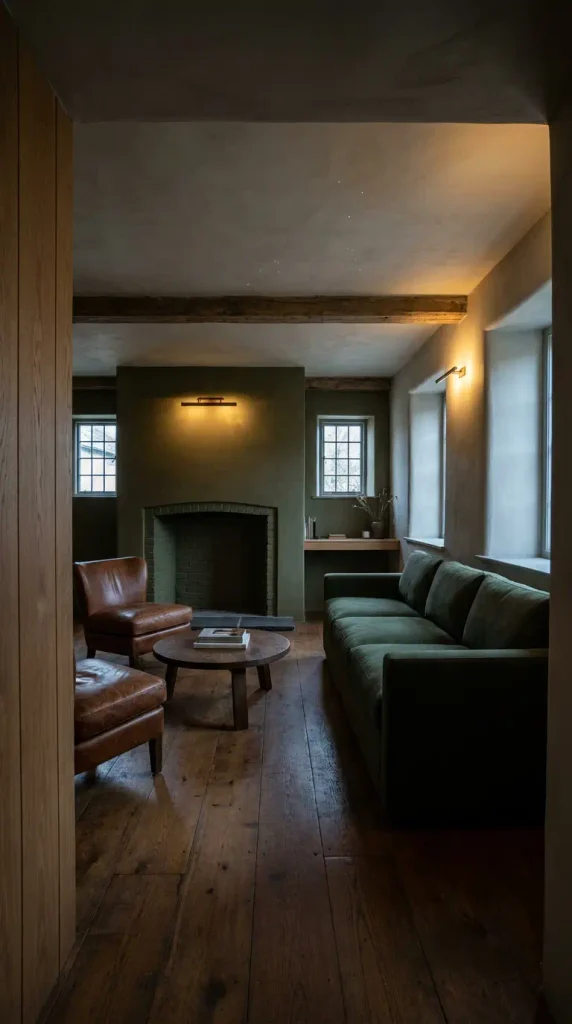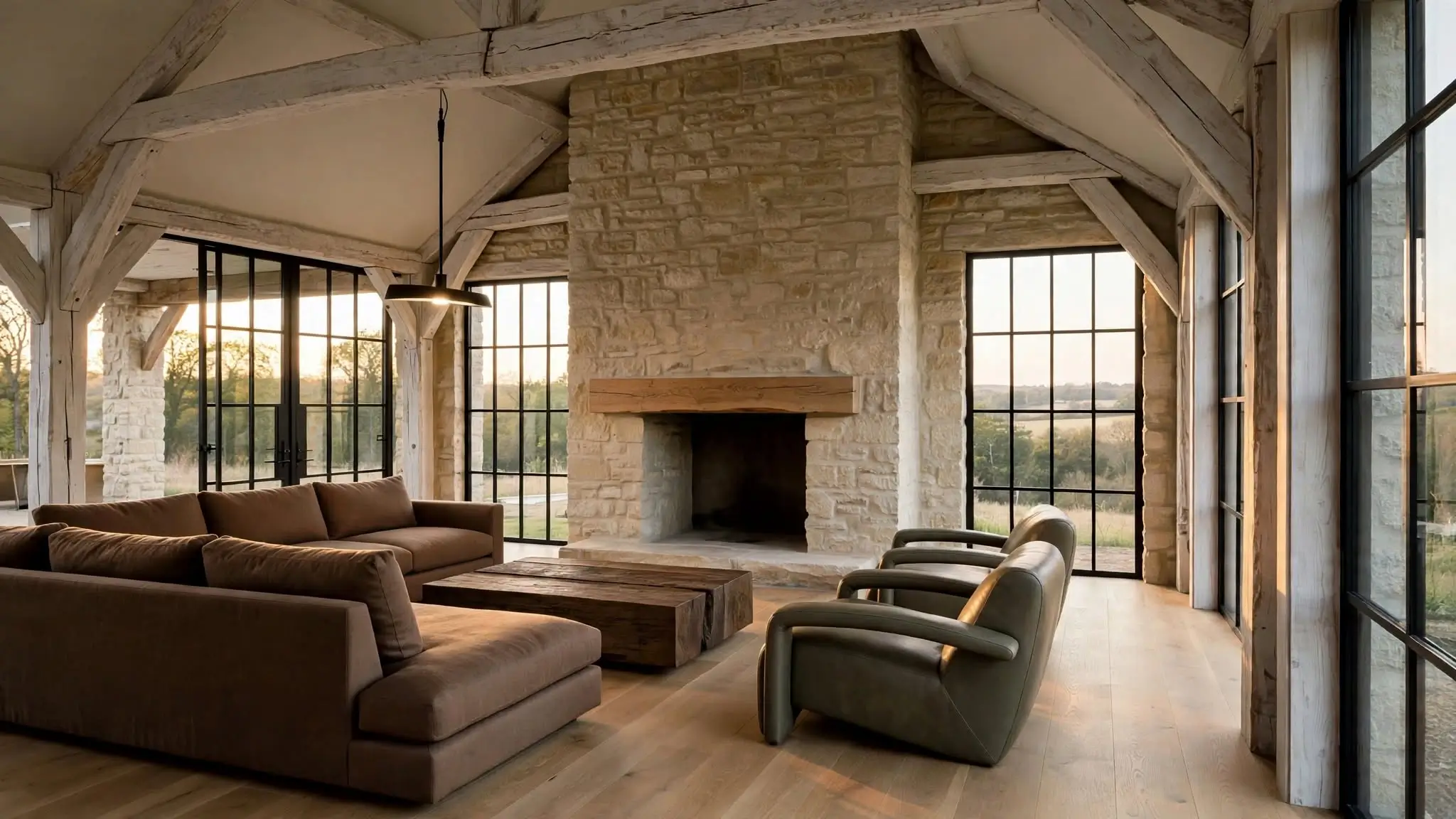
Modern farmhouse living room ideas can move far beyond the familiar white walls, distressed wood, and rustic accessories often associated with the style.
In a contemporary interior, farmhouse character comes from a considered combination of natural materials, traditional architectural references, relaxed proportions, and cleaner furniture silhouettes.
The result can be pale and understated, deeply tonal, strongly architectural, or richly textured without losing its connection to farmhouse tradition.
The 12 living rooms below interpret that balance in distinctly different ways. Some rely on warm oak and soft light, while others build their identity around stone, vaulted structure, integrated cabinetry, curved seating, or a darker palette.
What connects them is restraint: natural materials and familiar forms provide warmth, while contemporary proportions, lighting, and furnishings keep the rooms current.
1. Warm Oak and Soft White
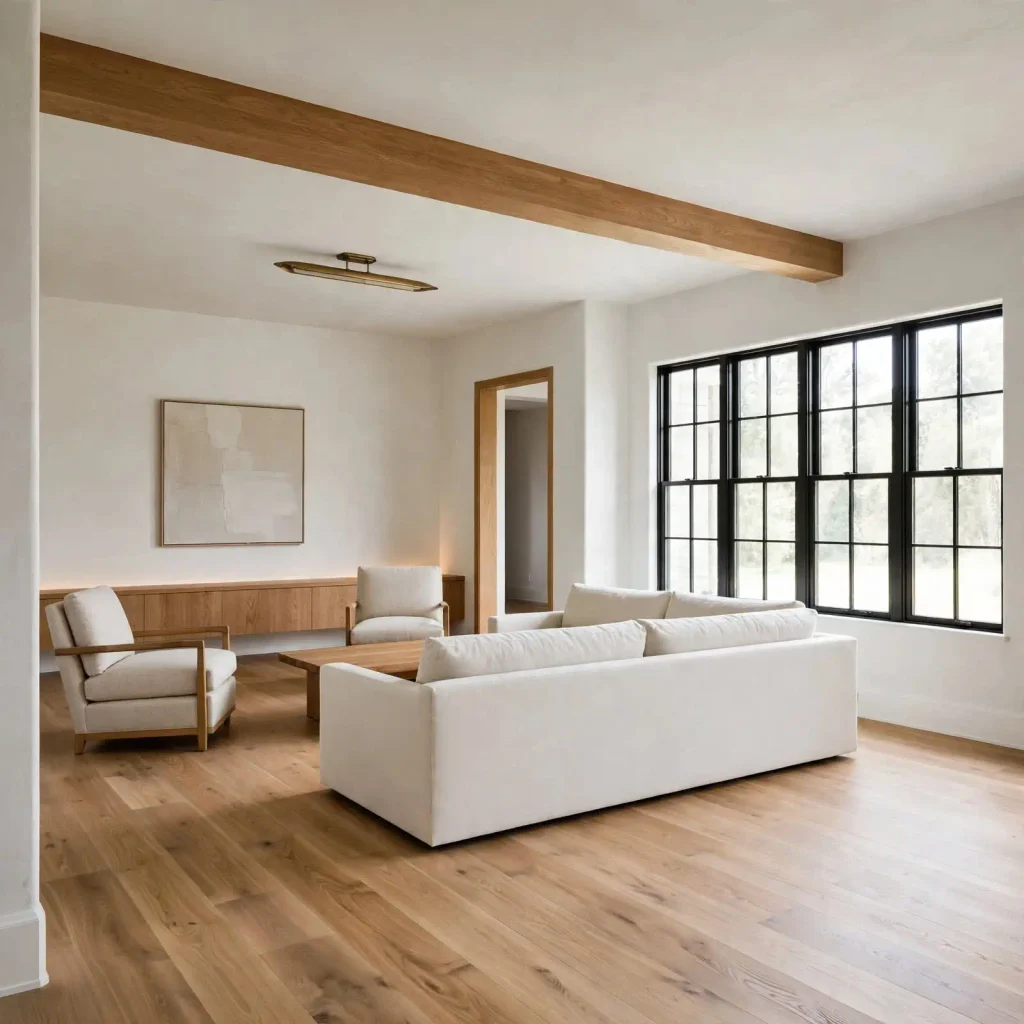
Warm oak gives this living room its farmhouse foundation, while the surrounding architecture remains deliberately clean.
Soft white walls meet natural oak flooring, with a restrained timber detail adding just enough traditional character to prevent the room from feeling generic.
Tailored upholstery in ivory and oatmeal keeps the seating crisp rather than rustic, while a low, substantial sofa balances the visual warmth of the timber.
The contrast is subtle but effective. Natural wood supplies variation and warmth, while the pale architectural envelope keeps the room visually open.
Farmhouse character comes through material honesty and proportion rather than decorative motifs.
2. Stone Fireplace as Architectural Character
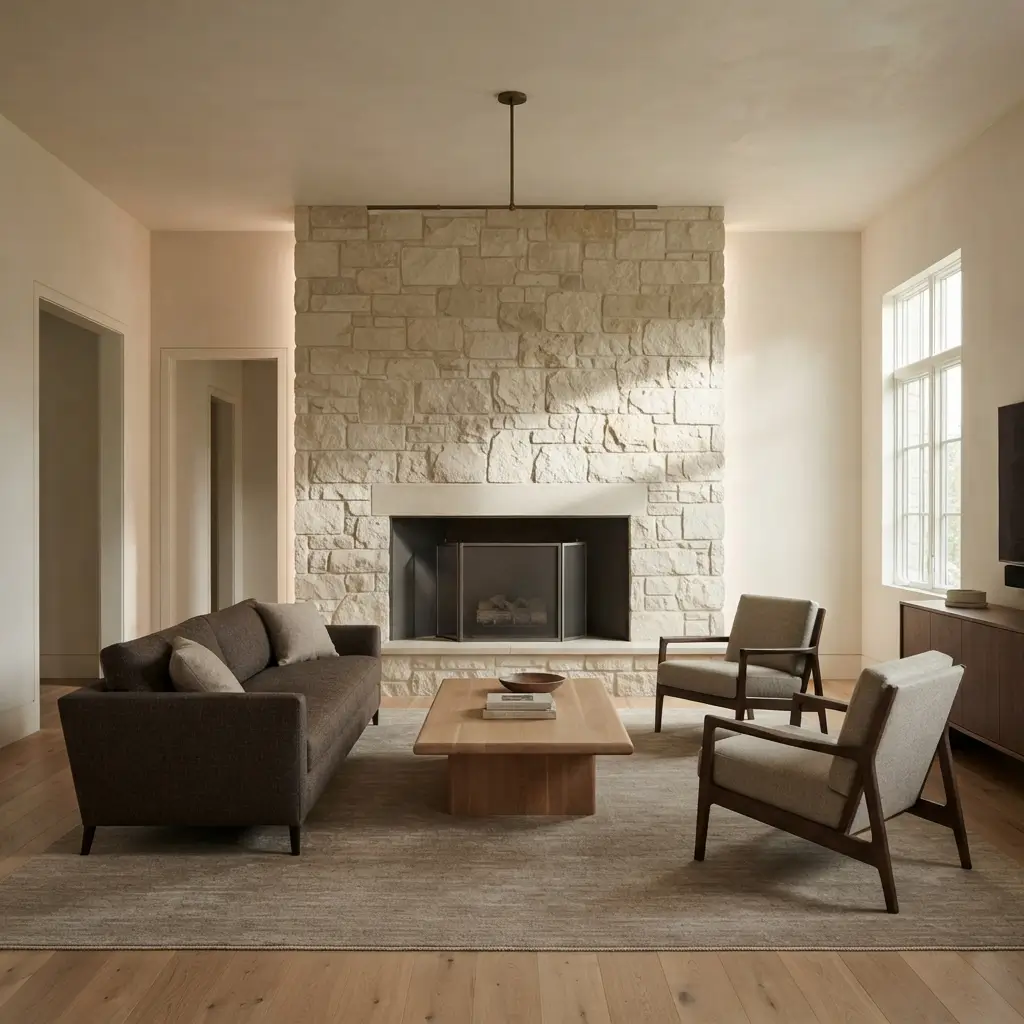
A broad limestone fireplace dominates this living room from floor to ceiling, giving the space a strong architectural center.
Its irregular surface introduces the visual variation associated with farmhouse buildings, while its substantial scale makes it feel integral to the structure rather than like a decorative feature added afterward.
The surrounding furniture is noticeably more restrained: a tailored deep sofa, streamlined lounge chairs, and a simple timber coffee table leave visual space around the masonry.
Pale plaster walls and wide natural-plank flooring keep the composition controlled. The contrast between substantial stone and refined upholstery gives the room farmhouse weight without relying on rustic accessories.
3. Earthy Color Instead of Traditional Neutrals
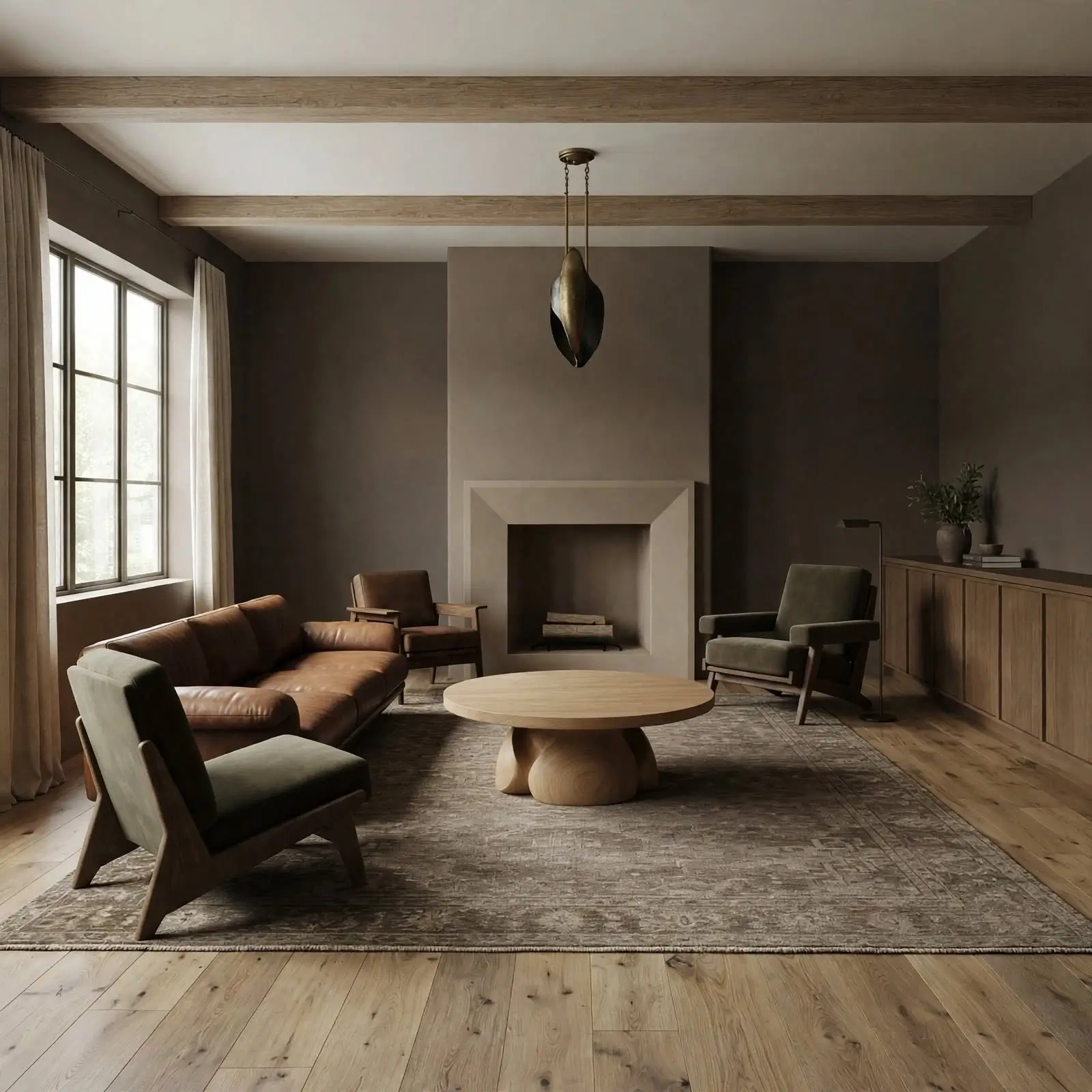
Here, color carries much of the room’s personality.
Mushroom-colored walls sit behind a tobacco leather sofa, muted olive upholstery, and warm brown timber, creating a layered earth-toned environment rather than another beige-and-white farmhouse interior.
A clay-colored fireplace surround provides a quieter shift in tone.
Natural light softens the deeper colors, while wood and leather prevent the palette from feeling flat. The farmhouse connection comes from the relationship between grounded colors and tactile materials.
Nothing is especially bright or saturated; the character comes from subtle changes in warmth, depth, and texture.
4. Vaulted Architecture and Exposed Structure
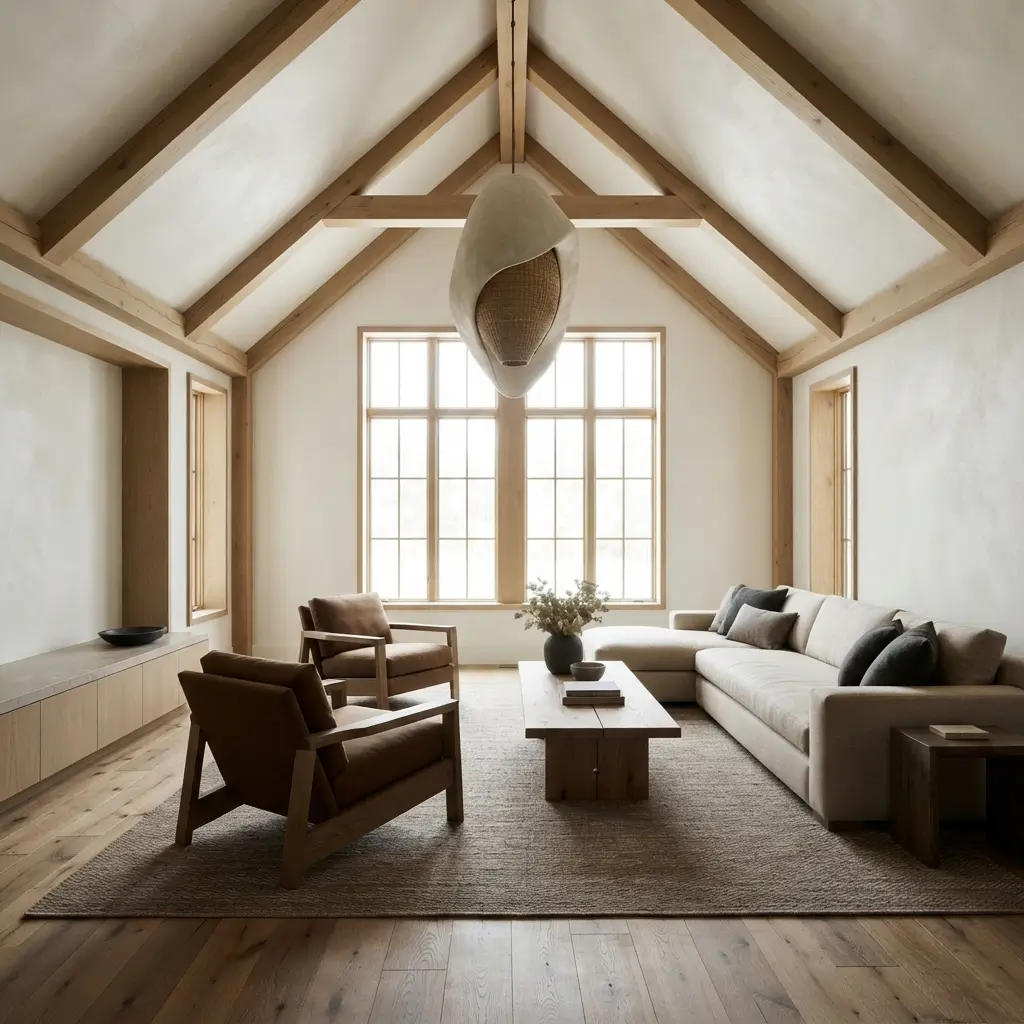
A vaulted ceiling changes the entire scale of this farmhouse living room.
Exposed timber beams follow the roofline above tall windows, creating strong vertical and diagonal lines that make the architecture the primary visual feature.
The furniture is correspondingly substantial: a generous linen sofa, broad lounge chairs, and a long timber table occupy the volume without appearing undersized.
A large sculptural pendant hangs within the height of the room, creating a visual anchor between the beams and seating zone. Instead of filling the walls with decoration, the design allows the ceiling structure, daylight, and proportions to carry the room.
5. Dark Architectural Contrast
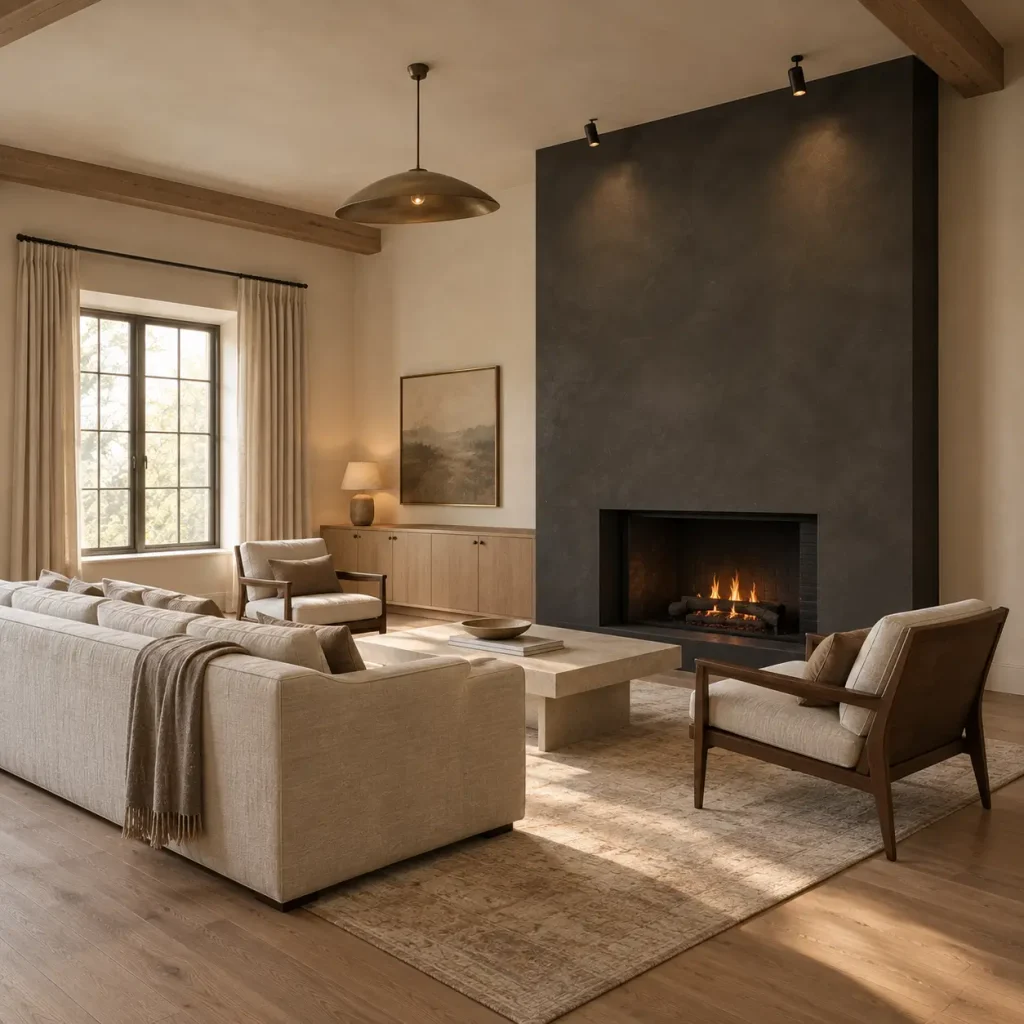
One charcoal fireplace wall gives this otherwise light living room its defining contrast.
The dark surface extends beyond the fireplace opening into a simple architectural plane, making the focal point feel deliberate and substantial. Around it, warm plaster walls, pale oak flooring, and lightly upholstered seating restore brightness.
A compact sofa and two angular lounge chairs create a clear seating arrangement without competing with the dark backdrop. Limited black metal in the lighting and fireplace detailing reinforces the connection.
Unlike a fully moody interior, the surrounding surfaces remain light, so the dark element reads as architectural punctuation rather than the room’s entire atmosphere.
6. Old-and-New Contrast
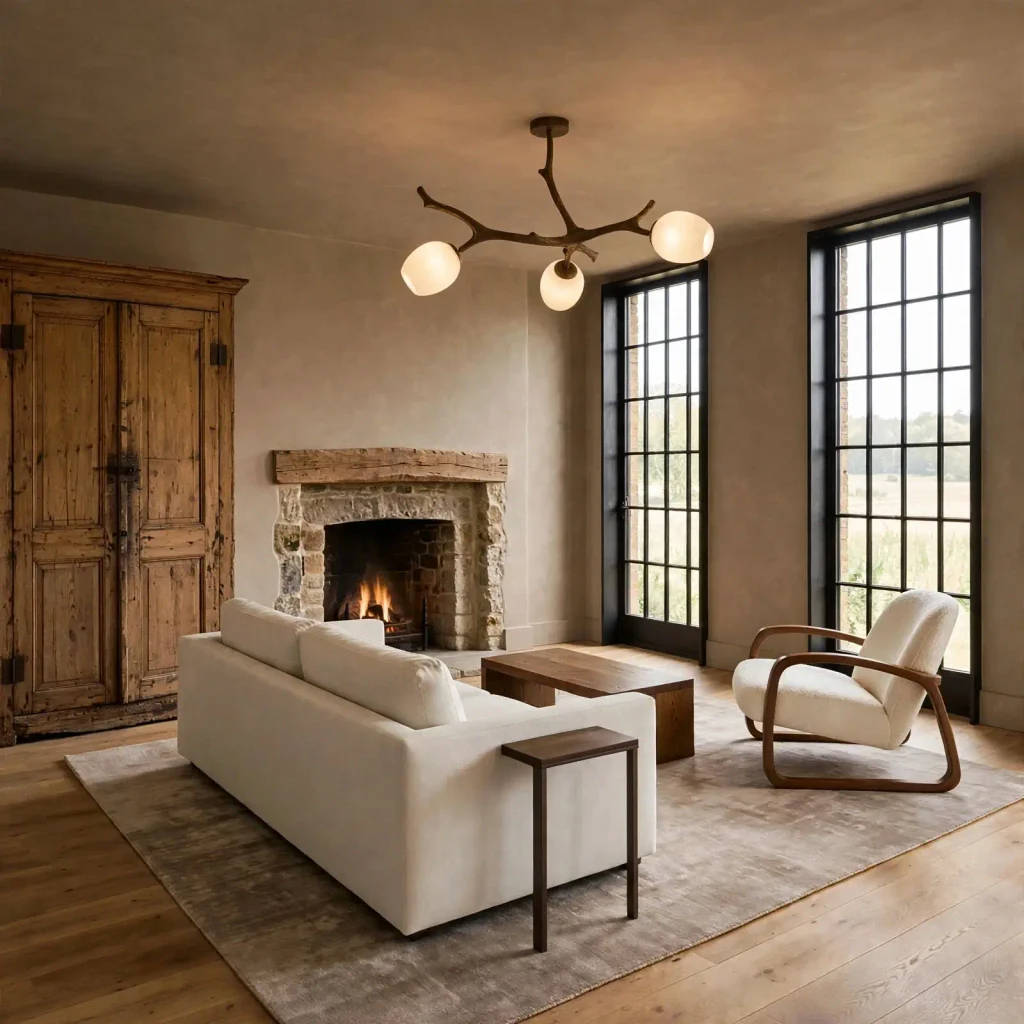
An antique pine cabinet stands against a clean plaster wall in this otherwise contemporary living room, giving the interior an immediate sense of age without turning it into a period-style space.
Its worn timber surface contrasts with a streamlined cream sofa, sculptural side chair, and understated contemporary lighting.
A traditional fireplace treatment reinforces the connection between old and new, but the room contains very few vintage objects. That restraint matters.
The aged pieces provide irregularity and history, while newer furniture establishes a cleaner visual rhythm. Modern farmhouse character emerges from the tension between surfaces that show their age and silhouettes that feel current.
7. Material-Rich, Texture-Led Farmhouse
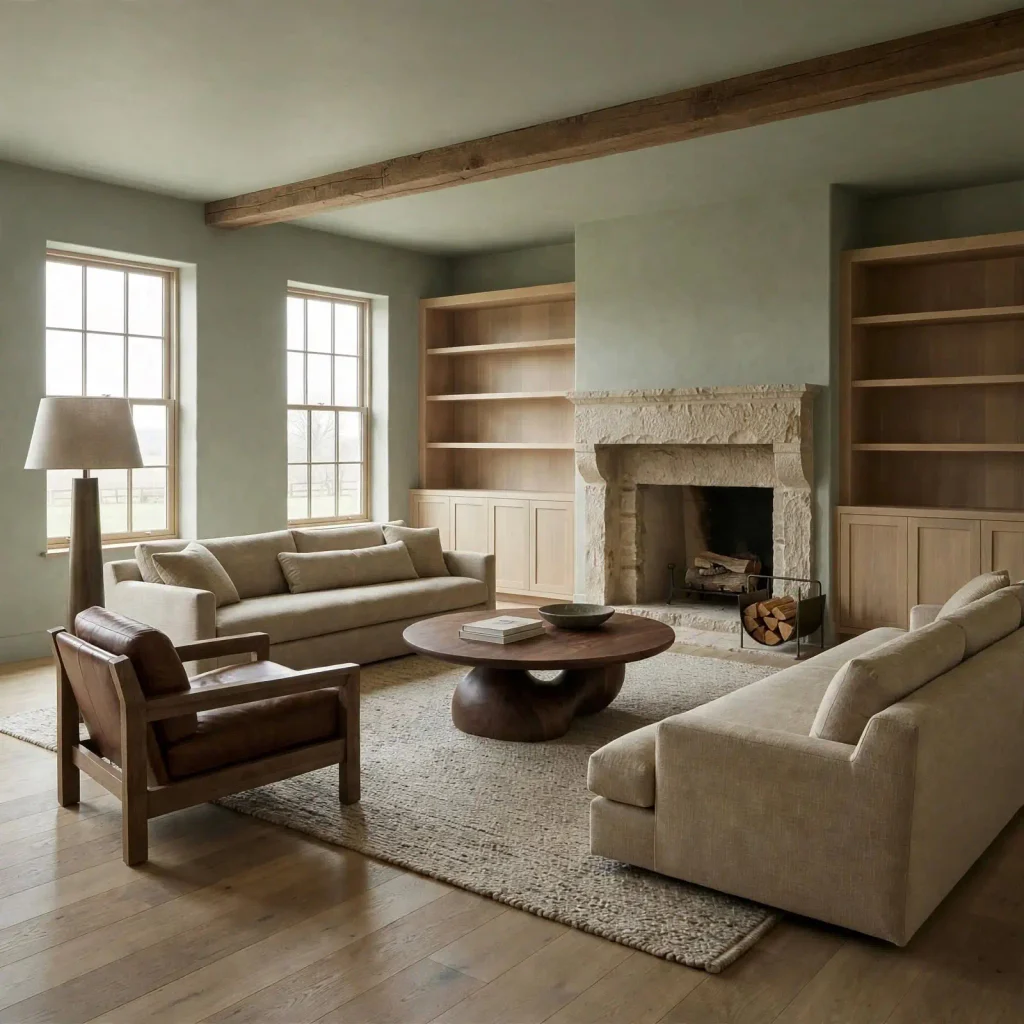
This room gets its depth from material variation rather than strong color. Pale oak cabinetry sits beside a rough limestone hearth, warm plaster walls, linen seating, and a deep leather lounge chair.
A wool rug softens the harder architectural surfaces, while aged metal introduces visual weight.
Each material contributes something different. Stone brings irregularity and permanence; oak supplies warmth; linen keeps the upholstery relaxed; leather adds density; wool introduces softness.
The palette remains restrained, allowing those physical differences to become visible.
Nothing depends on a collection of farmhouse accessories because the room’s character is embedded in its surfaces, construction, and tactile contrast.
8. Curved Contemporary Seating
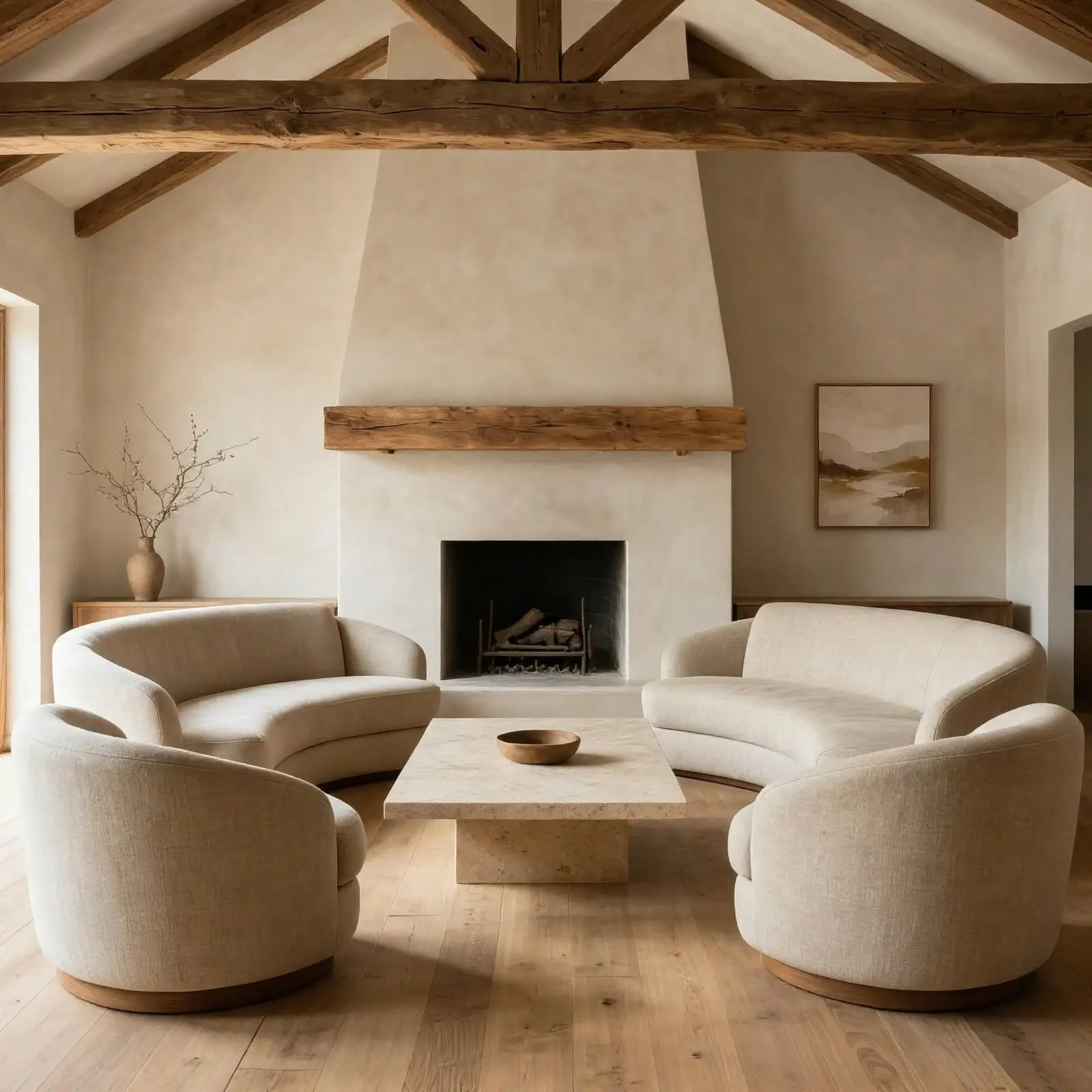
A gently curved sofa defines this interpretation of modern farmhouse style, creating a softer counterpoint to the room’s traditional architecture.
Behind it, a simple plaster fireplace and exposed timber lintel establish a linear framework, while rounded lounge chairs continue the furniture’s sculptural language.
The curved silhouettes change how the seating zone feels without requiring an unusual color palette or elaborate decoration.
Warm oak flooring and natural linen keep the materials familiar to farmhouse interiors, while the furniture’s softened geometry makes the room distinctly contemporary.
The visual interest comes from the conversation between architectural lines and rounded forms.
9. Architectural Built-Ins
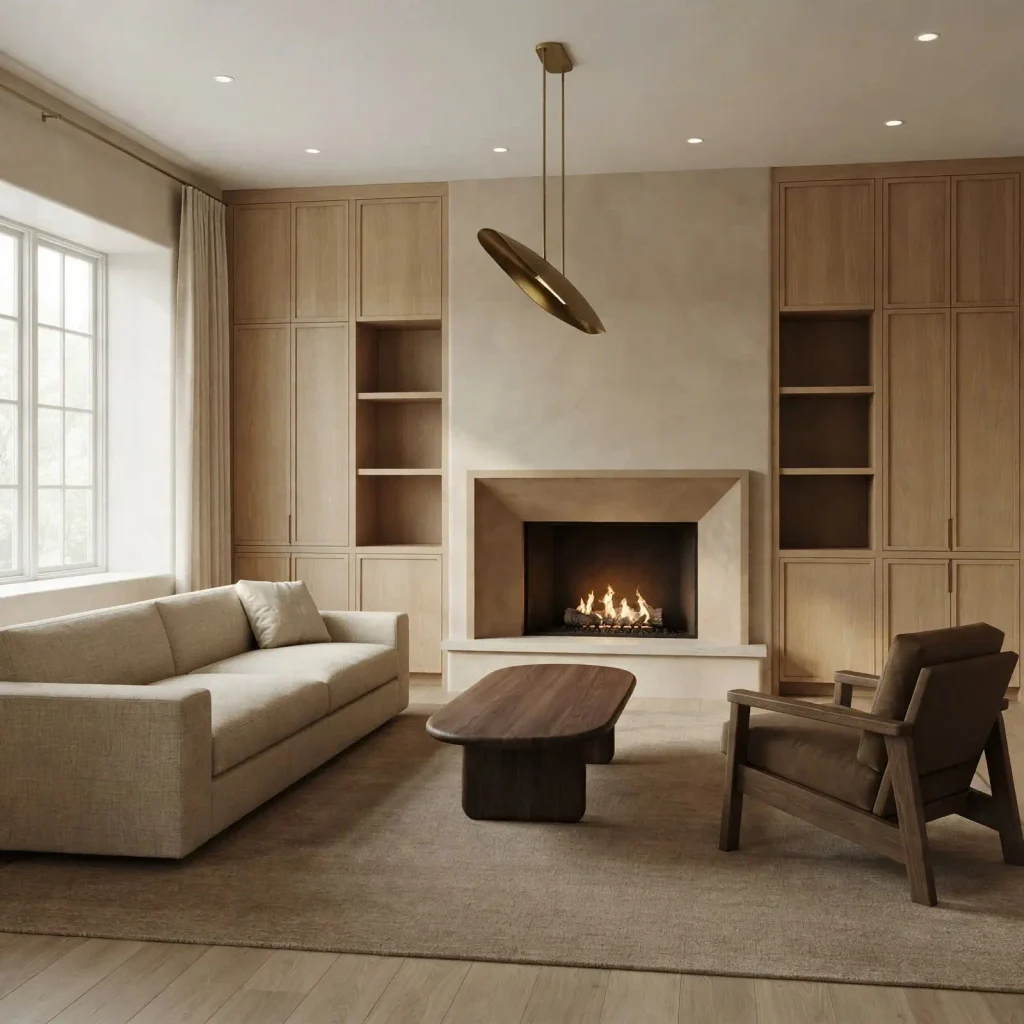
Full-height built-in cabinetry frames the fireplace in this living room, turning storage into part of the architecture.
The cabinetry follows the proportions of the wall rather than appearing as a freestanding installation, with recessed shelves and closed lower storage creating a consistent vertical rhythm.
A long, low sofa sits opposite the fireplace, leaving the built-in wall visually uninterrupted. Warm oak fronts against a mineral-toned plaster surround provide enough tonal variation without creating a busy display.
The shelving remains lightly styled, allowing the cabinetry itself to dominate. Modern farmhouse character is expressed through practical architecture, material warmth, and orderly proportions.
10. Moody Modern Farmhouse
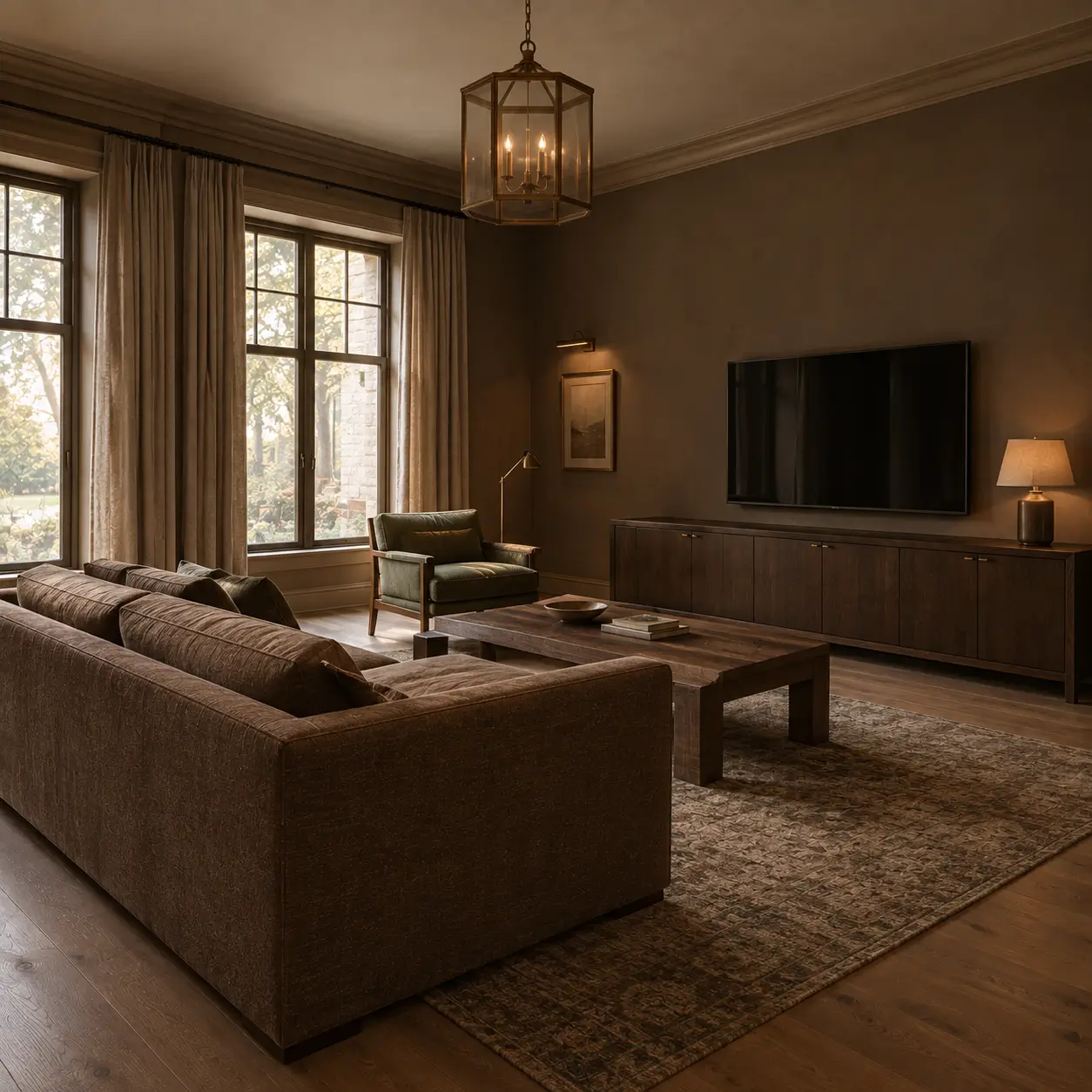
Deep mushroom walls, tobacco upholstery, dark walnut, and muted olive create a consistently darker environment in this intimate living room.
Unlike a room with one dramatic dark fireplace or feature wall, the tonal depth continues across most of the interior, allowing individual materials to merge into a quieter, more atmospheric composition.
A low walnut media console and generously proportioned sofa reinforce the grounded feeling, while aged brass lighting provides restrained warmth. Daylight entering through tall windows prevents the palette from becoming heavy.
Timber, natural upholstery, and traditional proportions maintain the farmhouse connection while the deeper tonal environment gives the room a more enveloping contemporary identity.
11. Pale Stone, Linen, and Natural Light
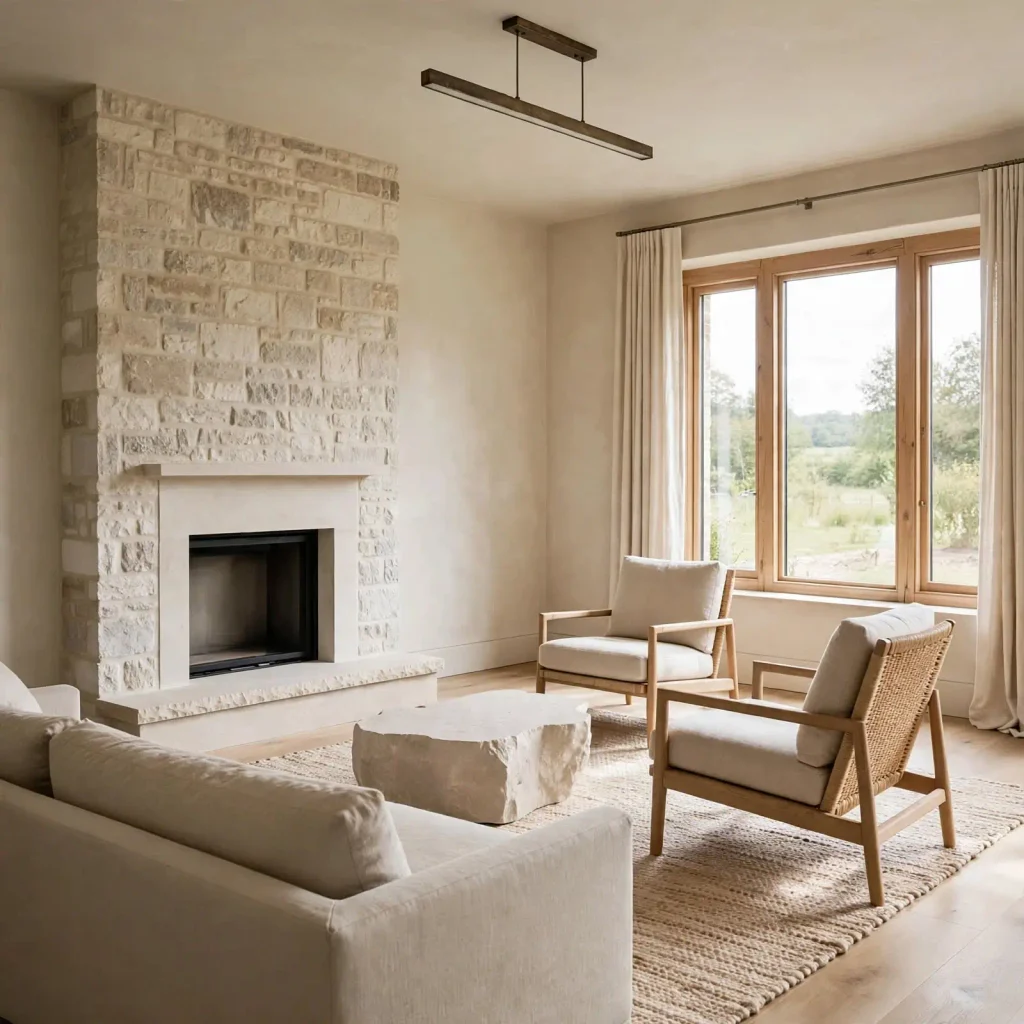
Pale stone forms the quiet architectural base of this room, with warm plaster walls and light oak creating several closely related tones rather than a single flat neutral.
Linen upholstery catches the changing daylight, while a softly textured wool rug introduces definition without strong contrast.
A wide window spreads natural light across the stone and timber surfaces, revealing their different textures throughout the day. The room feels bright without depending on stark white walls or excessive beige.
Its farmhouse identity comes from natural materials and relaxed proportions; its modern quality comes from clean furniture silhouettes and carefully controlled tonal variation.
12. Conversation-Focused Furniture Layout
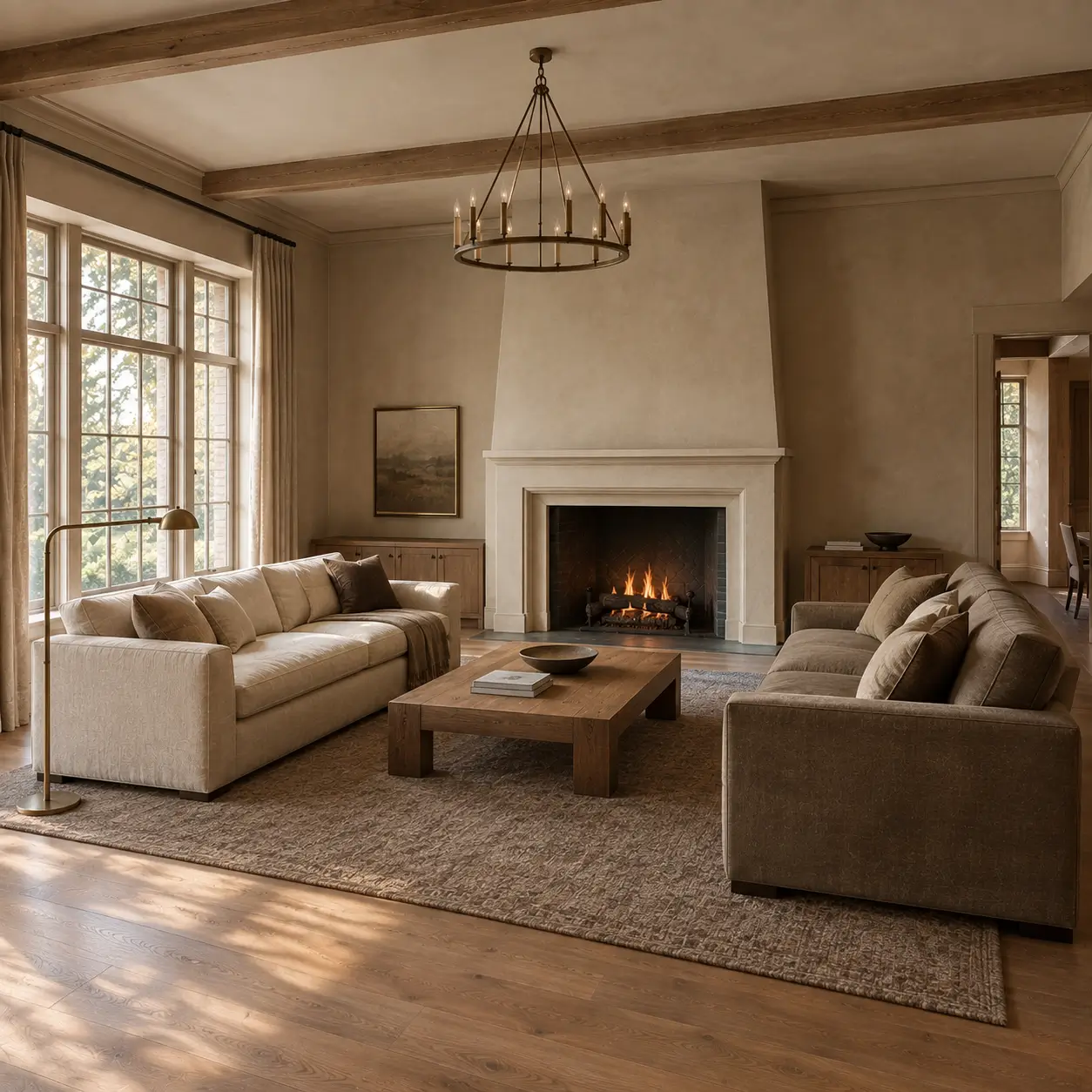
The furniture arrangement is the defining feature here. Two substantial sofas face one another across a broad, low coffee table, creating a clearly proportioned conversation zone around a traditional fireplace.
A wide rug contains the seating group, while generous circulation remains open along the room’s outer edges.
Nothing is pushed against the walls simply to maximize empty floor area. Instead, the arrangement gives the central seating zone enough visual weight to feel intentional while maintaining comfortable movement around it.
Warm timber flooring, a simple plaster mantel, and tailored upholstery supply the farmhouse language. The result demonstrates how circulation, seating distance, rug scale, and focal orientation can shape the character of an entire room.
For a deeper look at the relationship between seating, circulation, focal points, and room proportions, see How Should I Arrange Furniture in My Living Room?.
Bringing Modern Farmhouse Character Into an Existing Living Room
An existing room does not need a complete renovation to take on modern farmhouse character. Its strongest clues may already be present in the flooring, fireplace, ceiling, windows, or proportions.
Natural timber, textured upholstery, warmer wall color, contemporary lighting, or a more deliberate furniture arrangement can shift the overall balance.
The most convincing results usually come from working with the room’s existing architecture rather than covering it with farmhouse-themed decoration.
Can Modern Farmhouse Style Work in a Small Living Room?
Modern farmhouse style can work in a smaller room when visual weight is carefully controlled.
Furniture with appropriate proportions preserves circulation, while continuous flooring and related wall and upholstery tones prevent the space from becoming fragmented.
Integrated storage can reduce clutter, and one strong architectural feature—such as a fireplace, beam, or built-in – can provide character without requiring numerous small decorative objects.
Frequently Asked Questions
Q1. What makes a living room modern farmhouse?
Modern farmhouse combines natural materials and familiar architectural references with cleaner silhouettes, controlled contrast, contemporary lighting, and less visual clutter. Its character comes from the relationship between traditional warmth and modern restraint.
Q2. Does modern farmhouse have to be white?
No. Modern farmhouse can be built around mushroom, olive, clay, charcoal, tobacco, muted blue, or other earthy tones. The important consideration is how the color relates to natural materials, light, and the room’s overall visual weight.
Q3. What materials work well in a modern farmhouse living room?
Oak, limestone, plaster, linen, wool, leather, aged metal, and natural woven materials all work well.
Their value comes from the different qualities they introduce—such as softness, irregularity, warmth, weight, and texture – rather than from simply collecting rustic materials.
Can modern farmhouse look sophisticated rather than rustic?
Yes. Cleaner furniture silhouettes, restrained detailing, thoughtful proportions, refined lighting, and controlled material combinations can make farmhouse references feel architectural and contemporary rather than distressed or overly rustic.
Conclusion
These modern farmhouse living room ideas show how broad the style can become when it is treated as a design language rather than a decorating theme.
Warm timber, stone, traditional proportions, natural textiles, contemporary furniture, deeper color, and carefully organized space can all produce different interpretations.
The common thread is the balance between familiar farmhouse warmth and modern restraint, expressed through architecture, materials, color, scale, and spatial relationships.