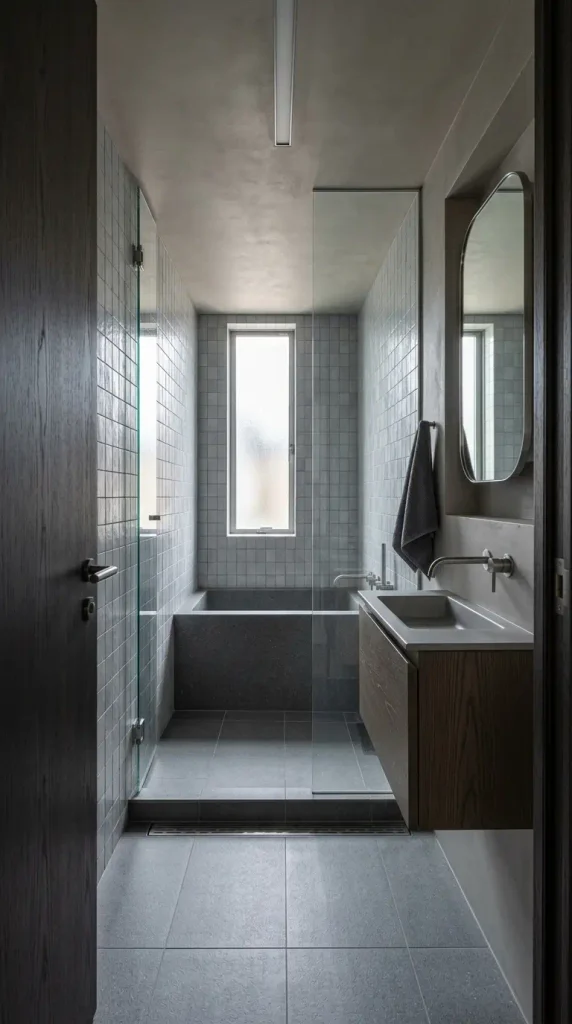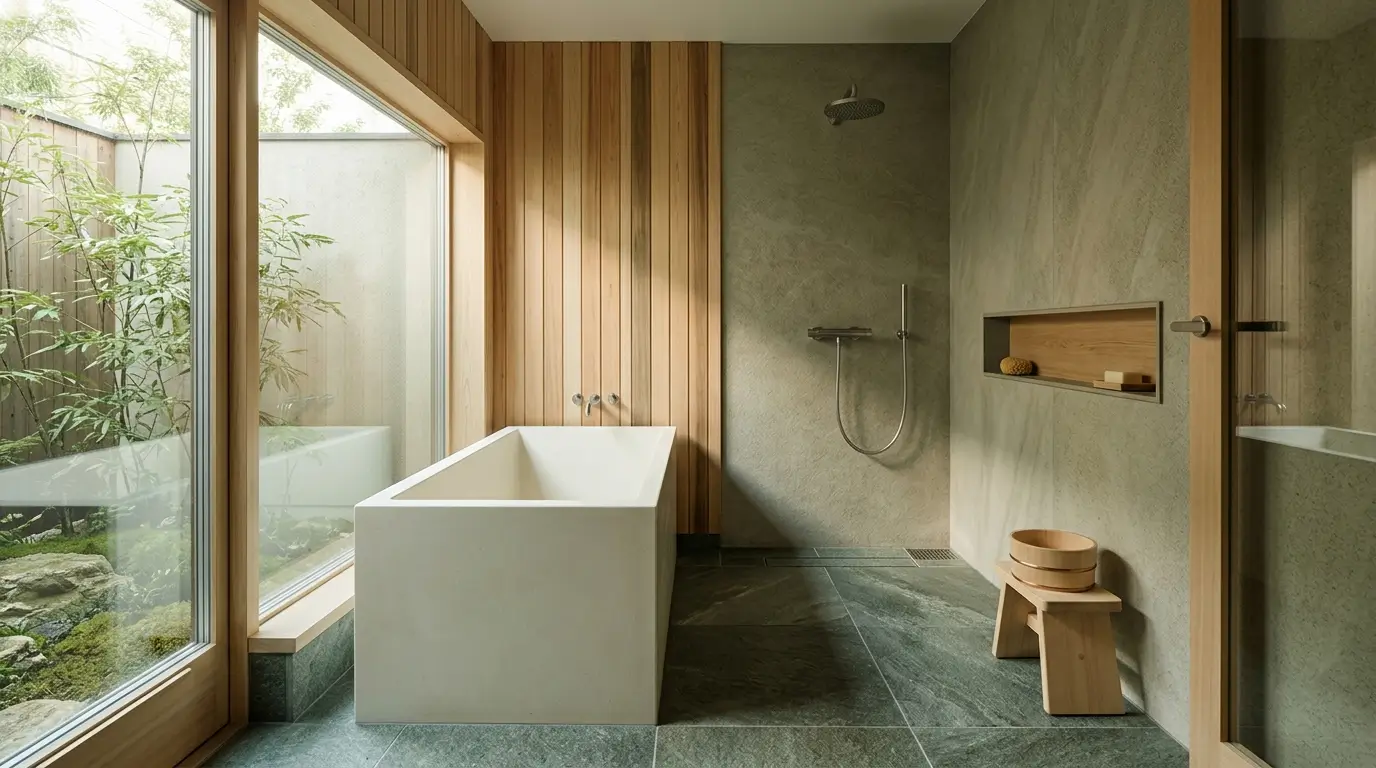
Japanese-style bathroom ideas center on creating a space defined by calm, simplicity, natural materials, and visual order.
Unlike ordinary minimalist bathrooms that can sometimes feel sterile or stark, a Japanese-inspired design introduces warmth and intentional bathing rituals through organic textures and balanced proportions.
Designing a room around this aesthetic does not require copying a traditional Japanese bathhouse or completely tearing out existing fixtures. A few thoughtful choices in materials, lighting, storage, and color can establish the same sense of quiet focus.
By emphasizing the relationship between light, shadow, and tactile surfaces, homeowners can shape a room that feels grounded and deeply connected to nature.
1. Let Natural Wood Bring Warmth to the Room
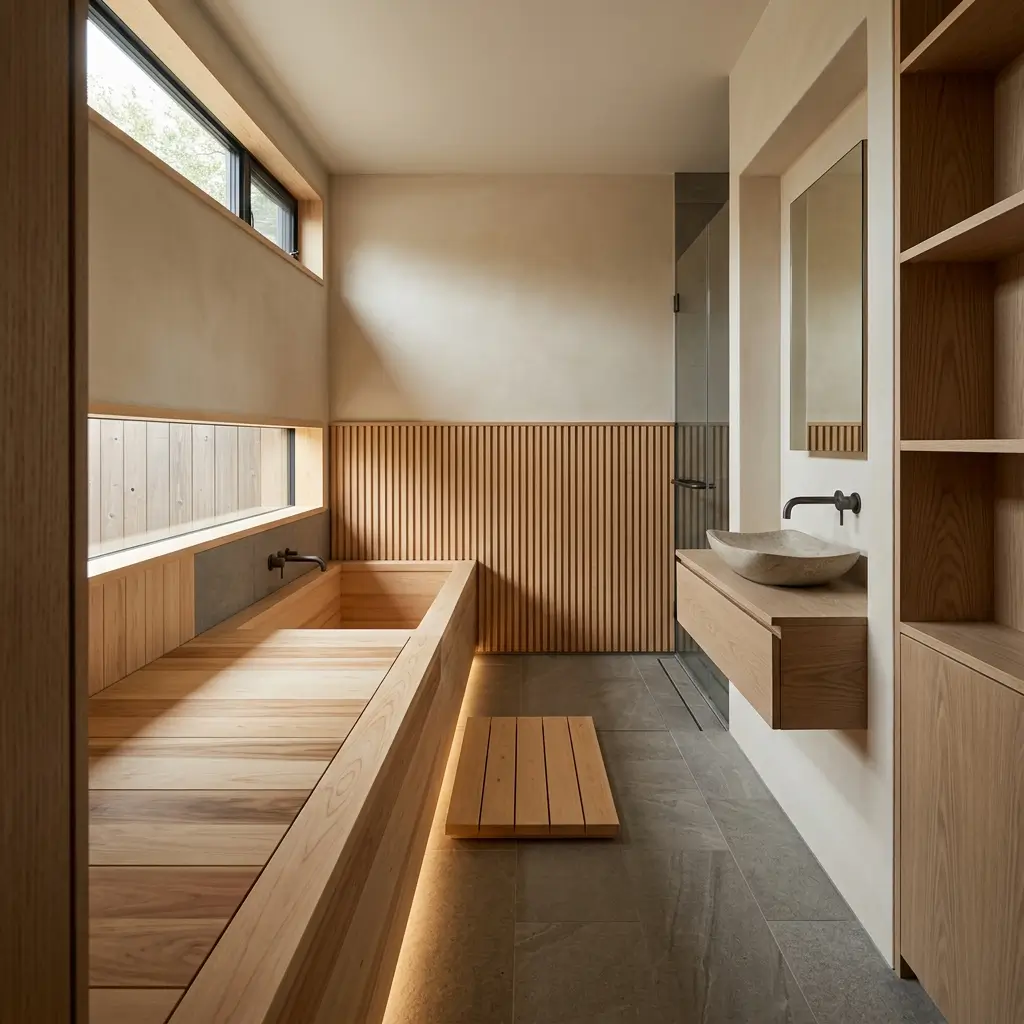
Pale and medium natural woods, such as hinoki cypress, white oak, or ash, introduce organic warmth that prevents a minimalist bathroom from feeling cold. The visible grain breaks up expansive neutral walls and adds tactile depth to the space.
Using wood on floating vanities, shelving, or wall slats creates a continuous visual thread that anchors the room. Homeowners can easily adapt this idea by introducing a teak bath mat or a solid wood tray to hold everyday essentials.
2. Build the Palette Around Quiet Neutrals
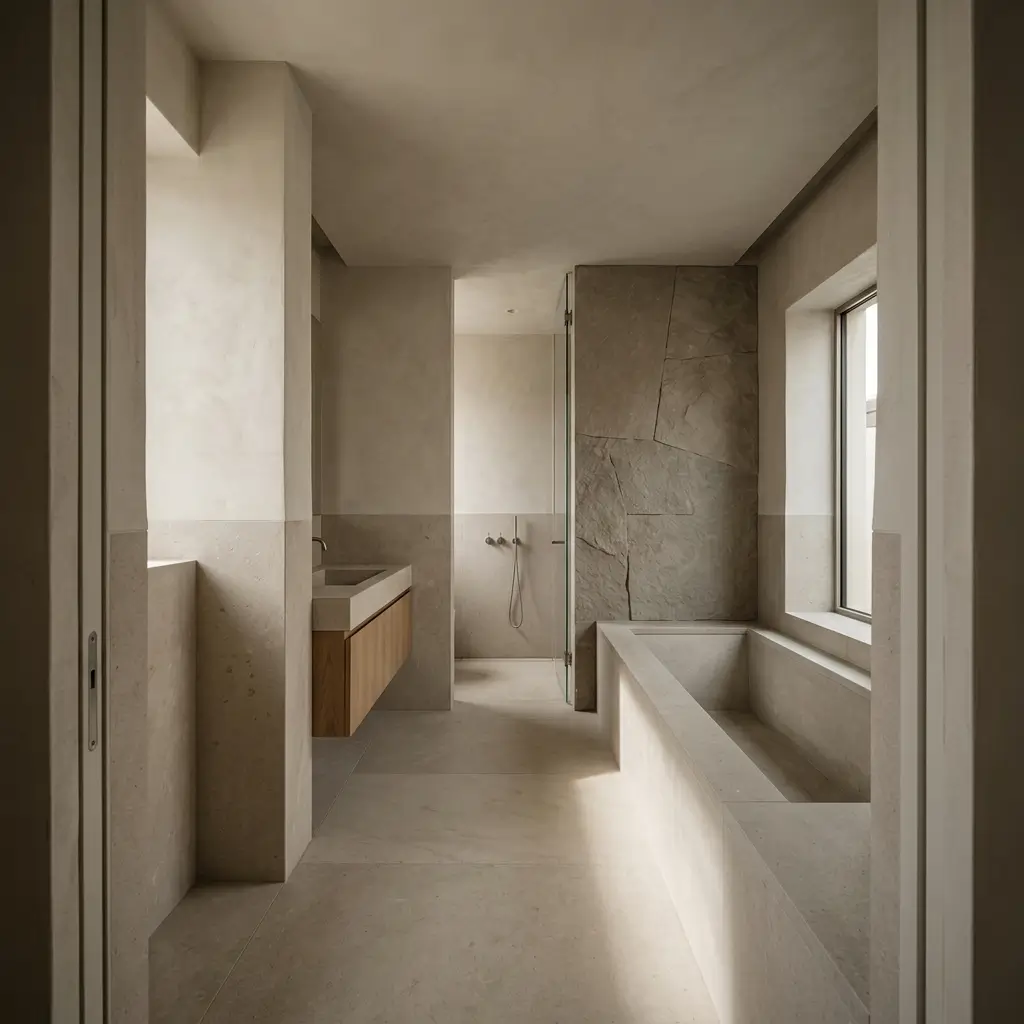
Color choices in these spaces rely on restrained, earth-derived tones like warm white, soft beige, sand, taupe, and stone gray. Rather than relying on stark contrasts, the palette flows seamlessly from floor to ceiling to eliminate visual noise.
This cohesive backdrop allows natural light and architectural shadows to become the primary decorative elements. To prevent the room from feeling flat, designers pair matte finishes with subtle variations in wall plaster or stone tile.
3. Use Stone and Mineral Finishes for a Grounded Feel
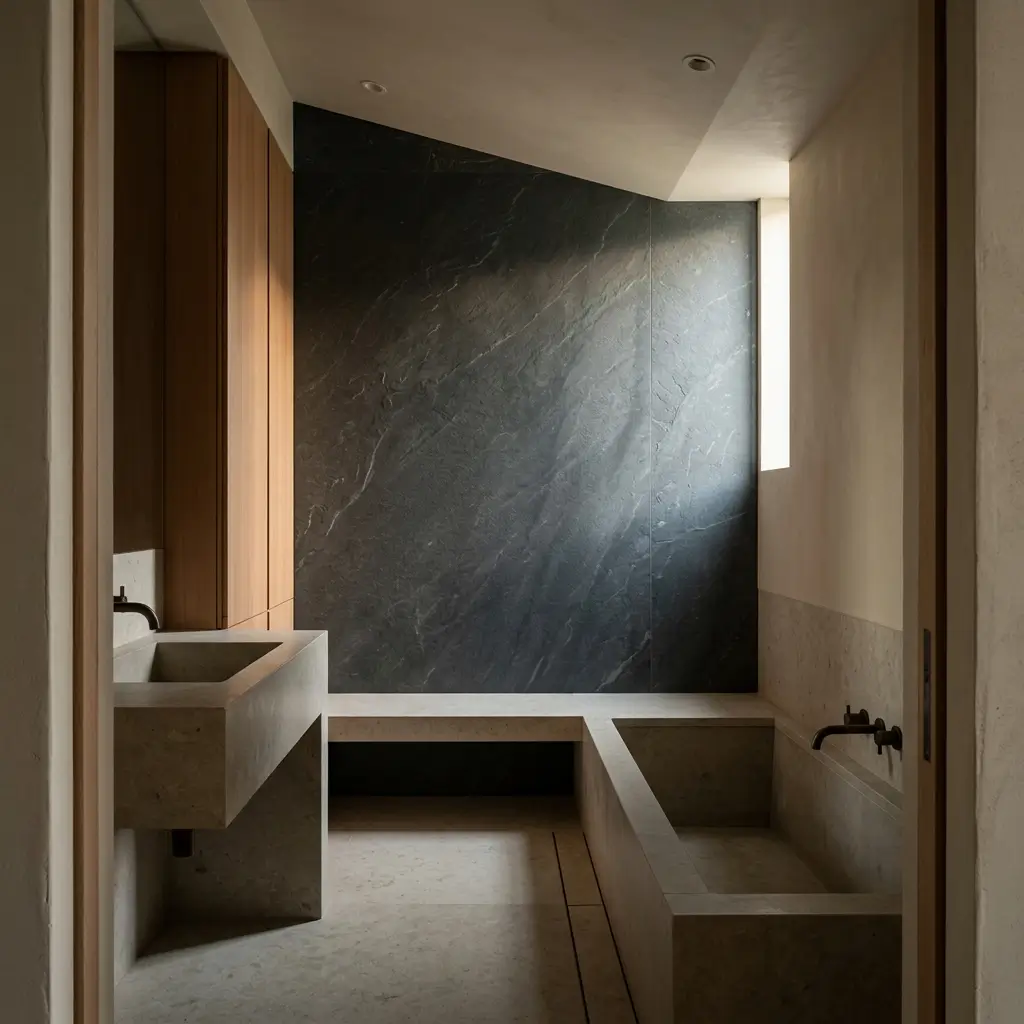
Grounding the room with mineral textures connects the interior to the natural world. Slate, honed limestone, or concrete-inspired finishes introduce an earthy permanence that feels deliberate and unpretentious.
These surfaces absorb and reflect light softly, avoiding the harsh glare often associated with high-gloss porcelain. A single stone-look accent wall or a cast-stone basin can serve as a quiet focal point without overwhelming the room’s proportions.
4. Make a Deep Soaking Tub the Visual Anchor
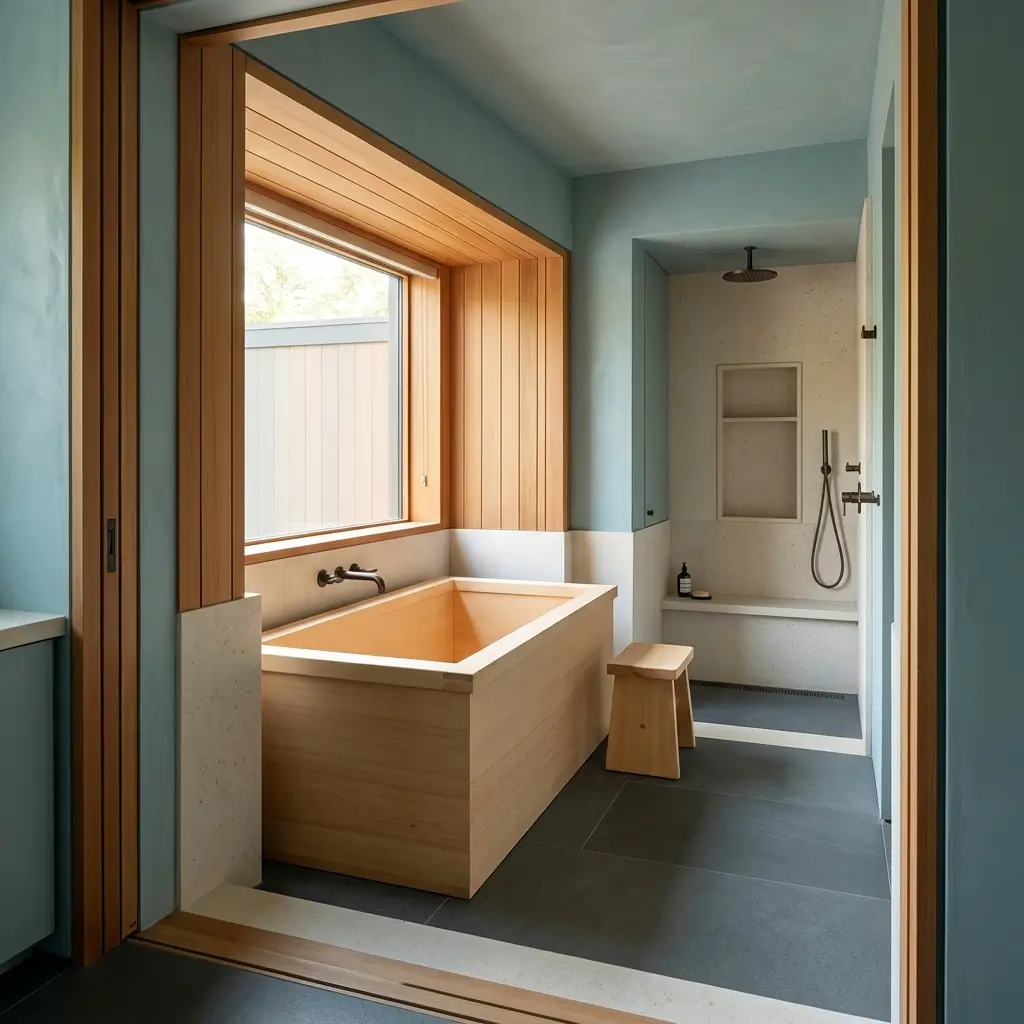
Inspired by the traditional furo, a compact and deep soaking tub encourages unhurried bathing. Because these tubs are typically deeper than standard Western models while taking up less floor space, they draw the eye downward and establish a strong visual anchor.
Positioned beneath a window or near a minimalist shower area, the tub transforms the room into a dedicated space for relaxation.
5. Wood Bathing Stool and Simple Accessories
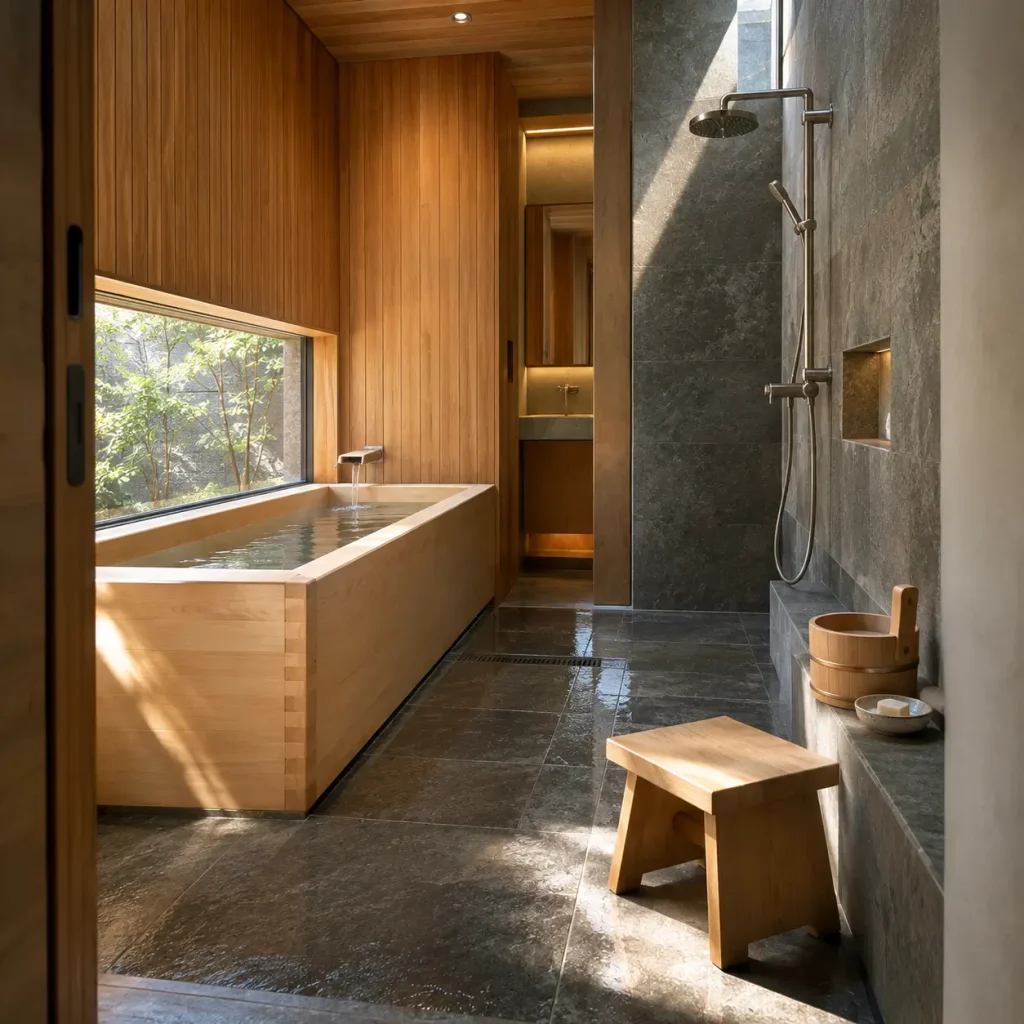
Purposeful objects define the character of the space without contributing to clutter. A low wooden stool placed near the shower or tub serves both a functional seating purpose and an aesthetic anchor.
Paired with a ceramic soap dish or a single handled bucket, these few items honor utility and craftsmanship. Every object present has a defined role, reinforcing the room’s overall sense of visual discipline.
6. Soft, Layered Lighting
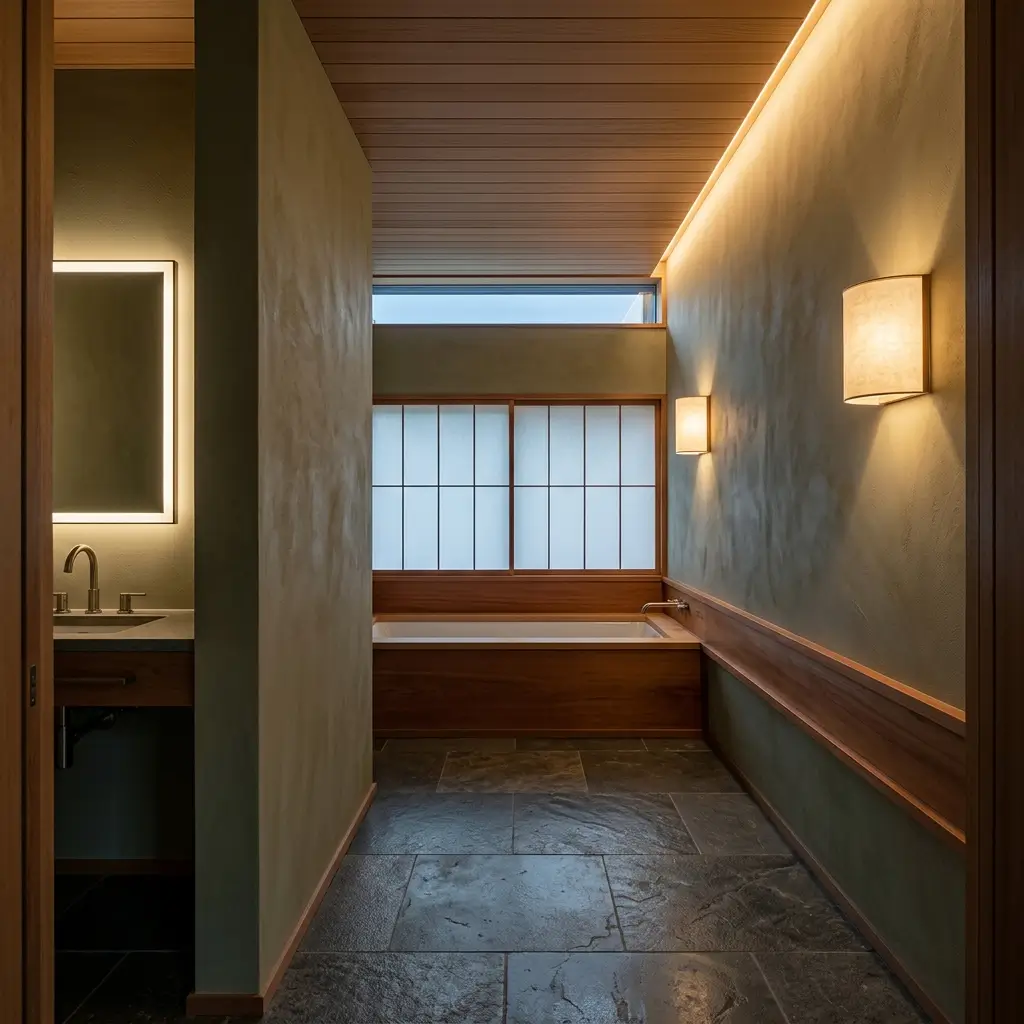
Harsh overhead illumination quickly dismantles a calm atmosphere. Instead, Japanese-inspired spaces rely on warm, diffused lighting sources that mimic natural daylight filtering through shoji screens.
Sconces with linen shades, backlit mirrors, and concealed LED strips cast gentle glows across textured walls, creating soft shadows that give the room depth and intimacy.
7. Create a Visual Connection With Nature
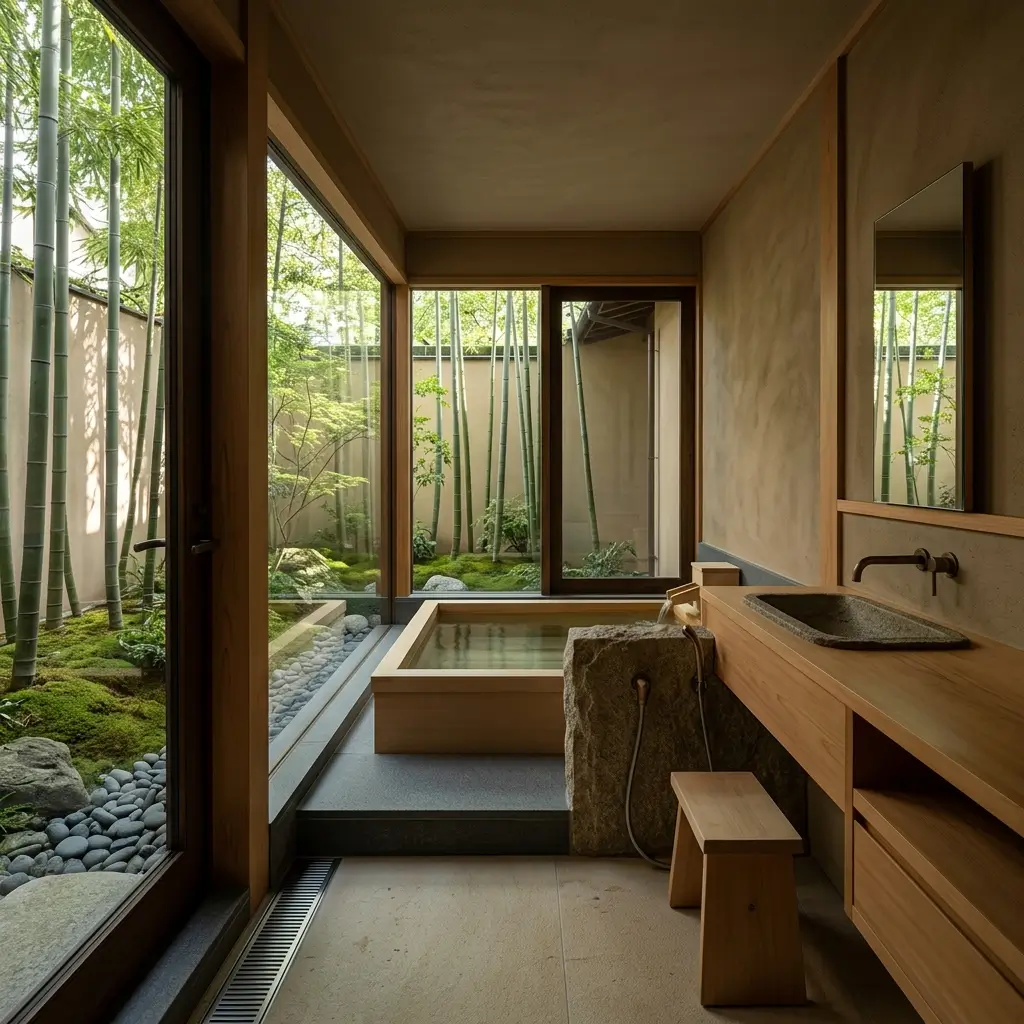
Connecting the interior to the outdoors is a foundational element of this design tradition. Large windows framing a bamboo garden or a narrow lightwell bring living greenery directly into the visual field.
For urban homes without outdoor access, a single potted fern or a tall branch in a minimalist ceramic vase introduces organic movement against static architectural lines.
8. Minimal Open Storage
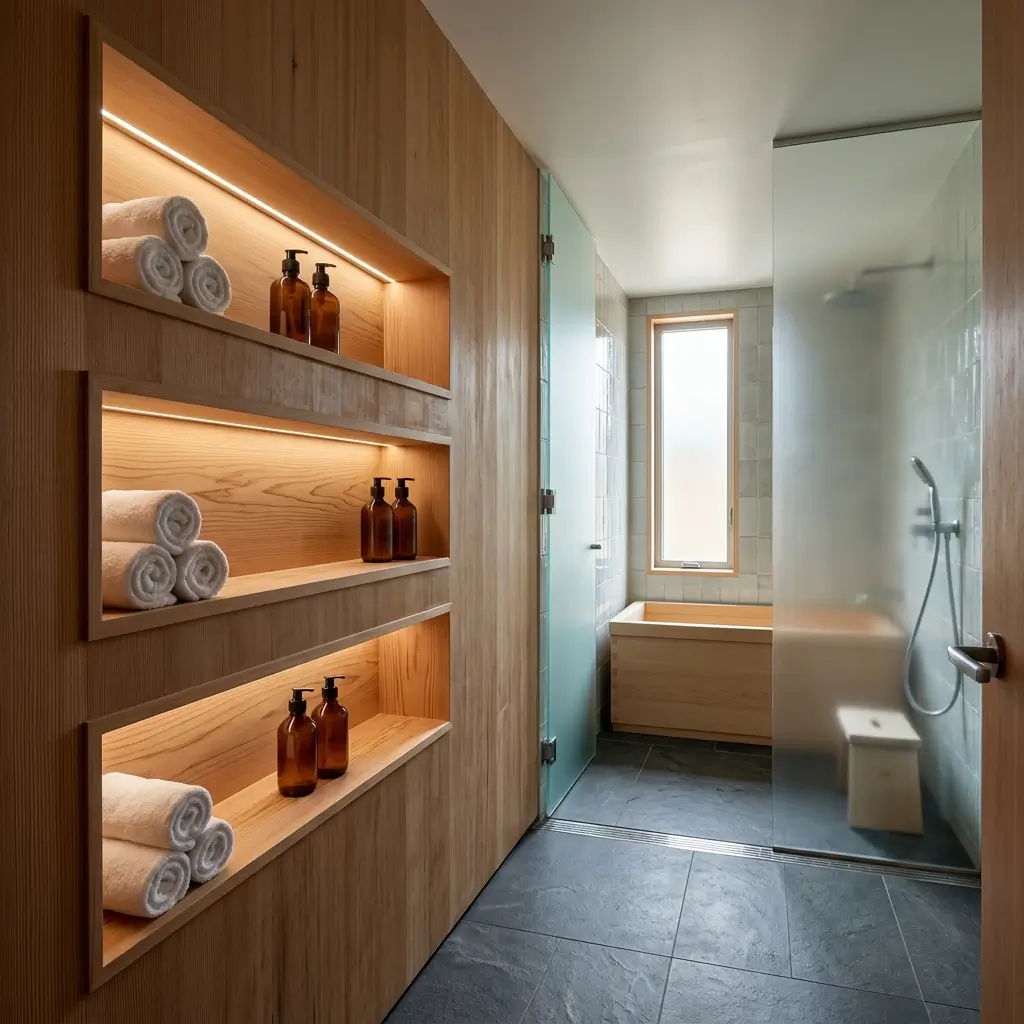
Restrained open shelving allows useful everyday objects to double as subtle décor while preserving overall visual order.
Rather than packing shelves with varied product packaging, homeowners display only a few uniform items, such as rolled cotton towels or amber glass soap bottles. This deliberate editing keeps surfaces clear and maintains a sense of spaciousness.
9. Frameless and Visually Quiet Showers
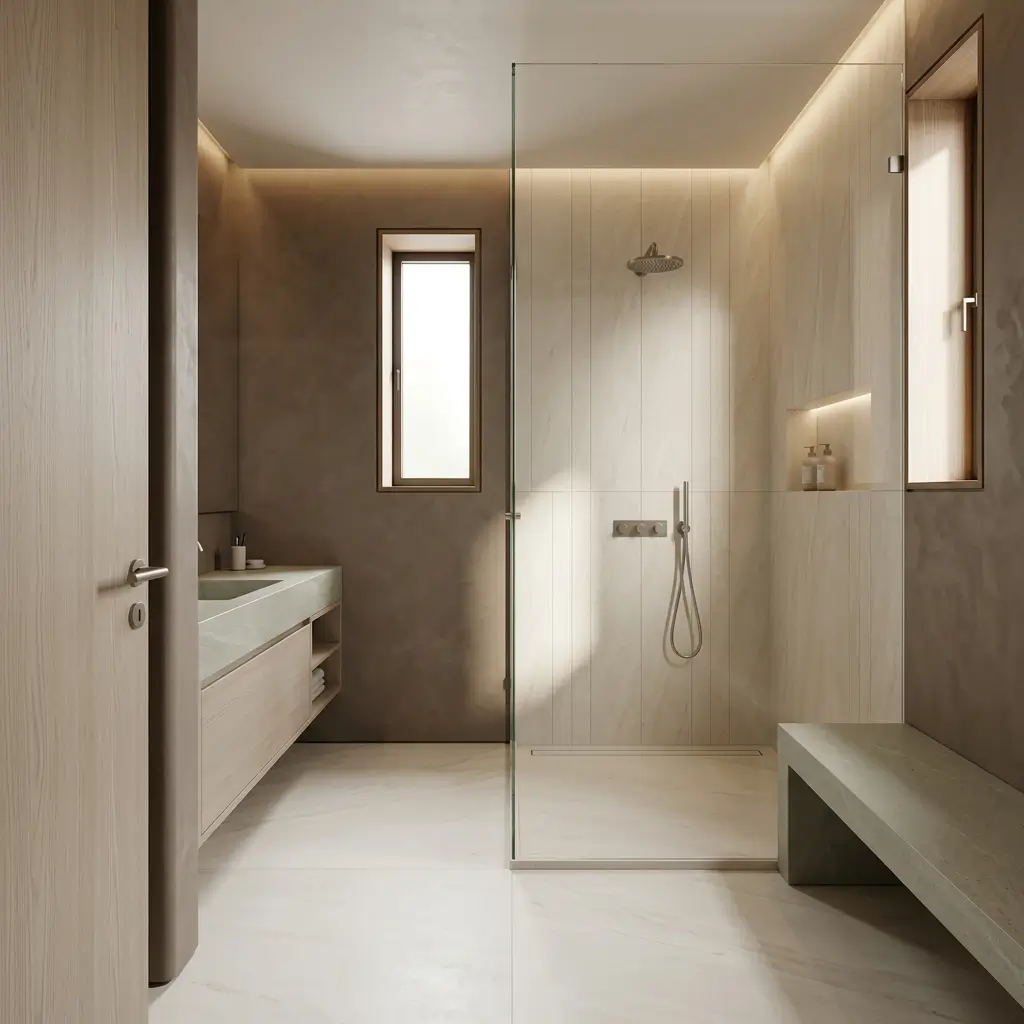
Wet-room layouts and frameless glass partitions remove physical and visual barriers, allowing the eye to travel uninterrupted across the room.
By eliminating heavy metal tracks and door frames, the shower area integrates seamlessly with the rest of the bathroom. This openness enhances fluid movement and makes compact footprints feel significantly more expansive.
10. Textured Tile With Subtle Variation
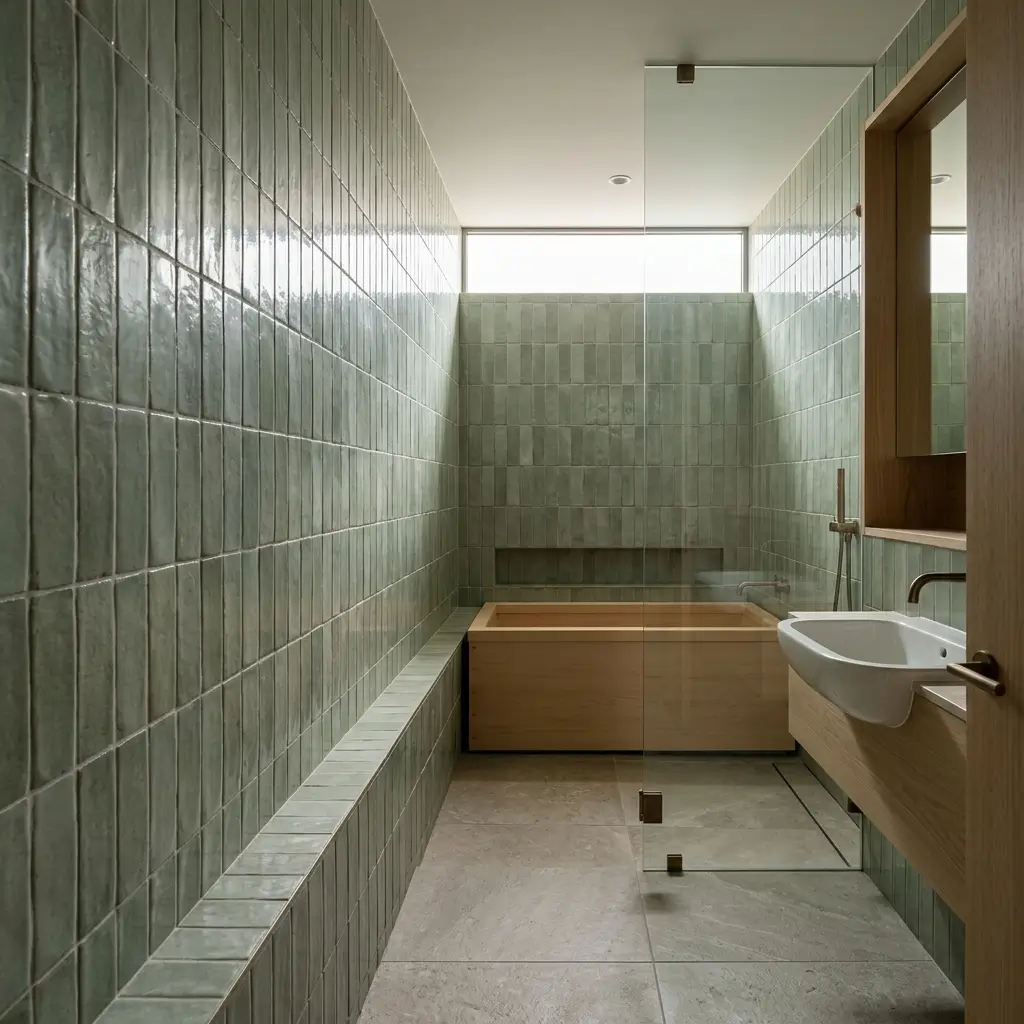
Walls and floors often feature handmade-looking, lightly textured, or Zellige-style tiles that catch light unevenly.
Rather than relying on busy geometric patterns, the visual interest comes from organic surface irregularities and quiet tonal variations. These tactile surfaces add warmth and humanity to otherwise sleek architectural planes.
11. Use Black Accents as Punctuation
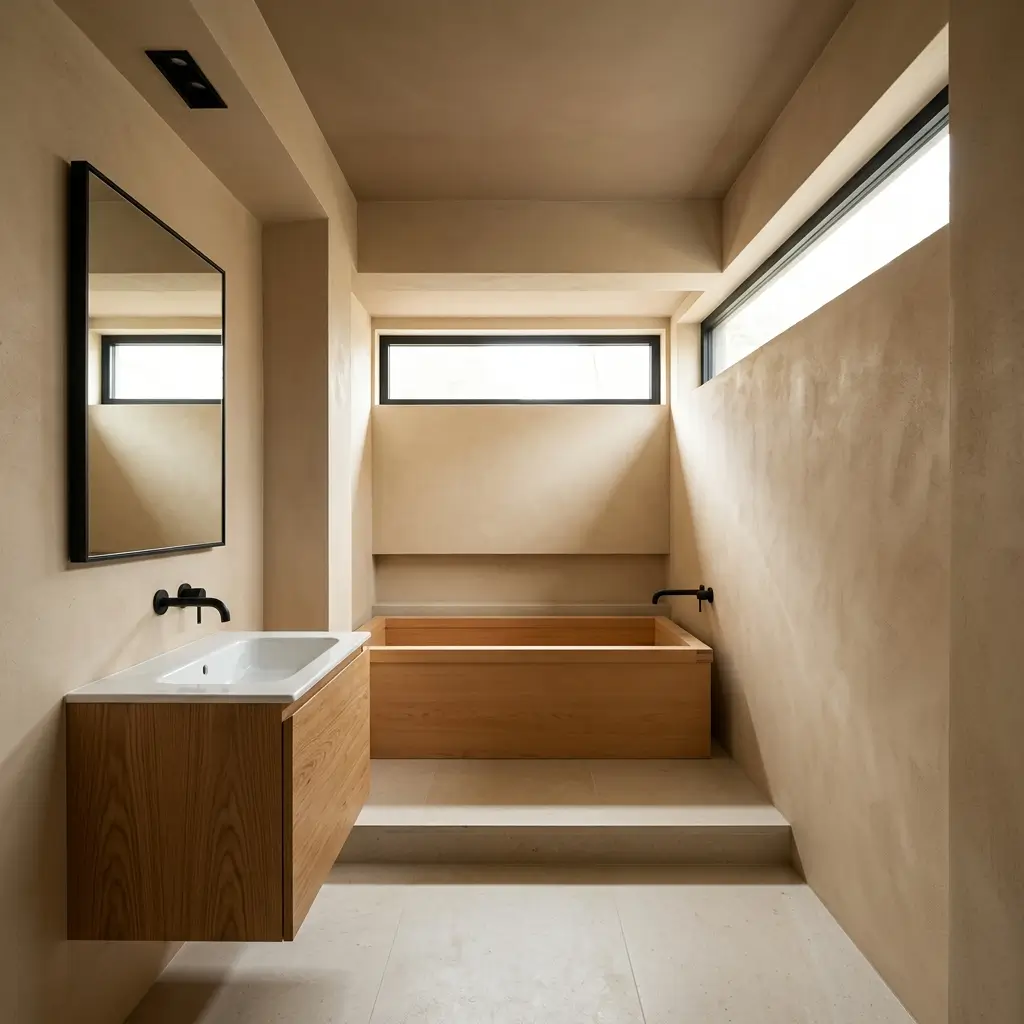
Matte black hardware, mirror frames, or light fixtures provide sharp, clean definition against warm neutrals. Used sparingly, black elements anchor the softer tones of wood and stone without overpowering the room.
This approach avoids the high-contrast drama of modern industrial design, favoring a balanced and understated silhouette instead.
12. Shoji-Inspired and Slatted Details
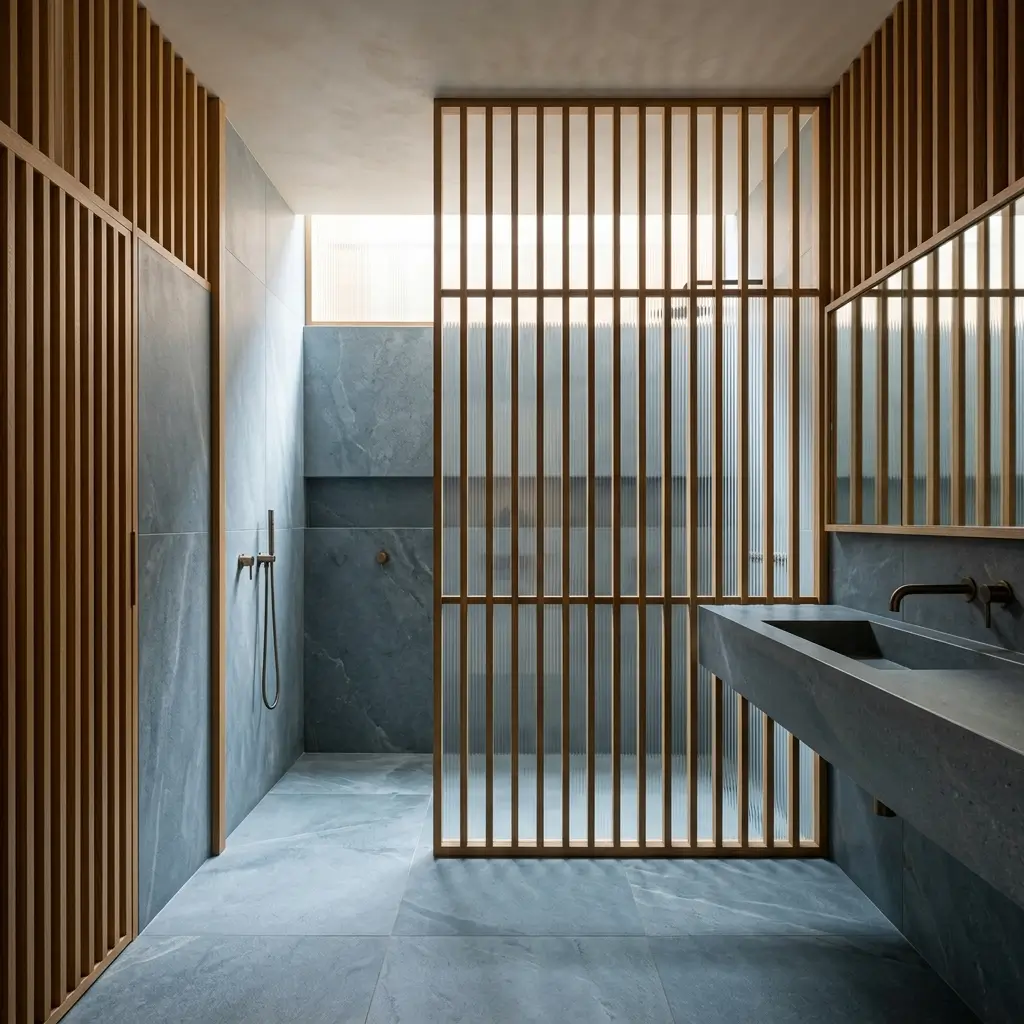
Vertical wood slats and translucent fluted glass panels offer a contemporary nod to traditional Japanese architecture. These elements diffuse light beautifully while creating subtle room partitions or concealing storage cabinets.
They introduce rhythm and verticality to the space, drawing the eye upward and enhancing the room’s architectural interest.
13. A Quiet, Spa-Like Composition
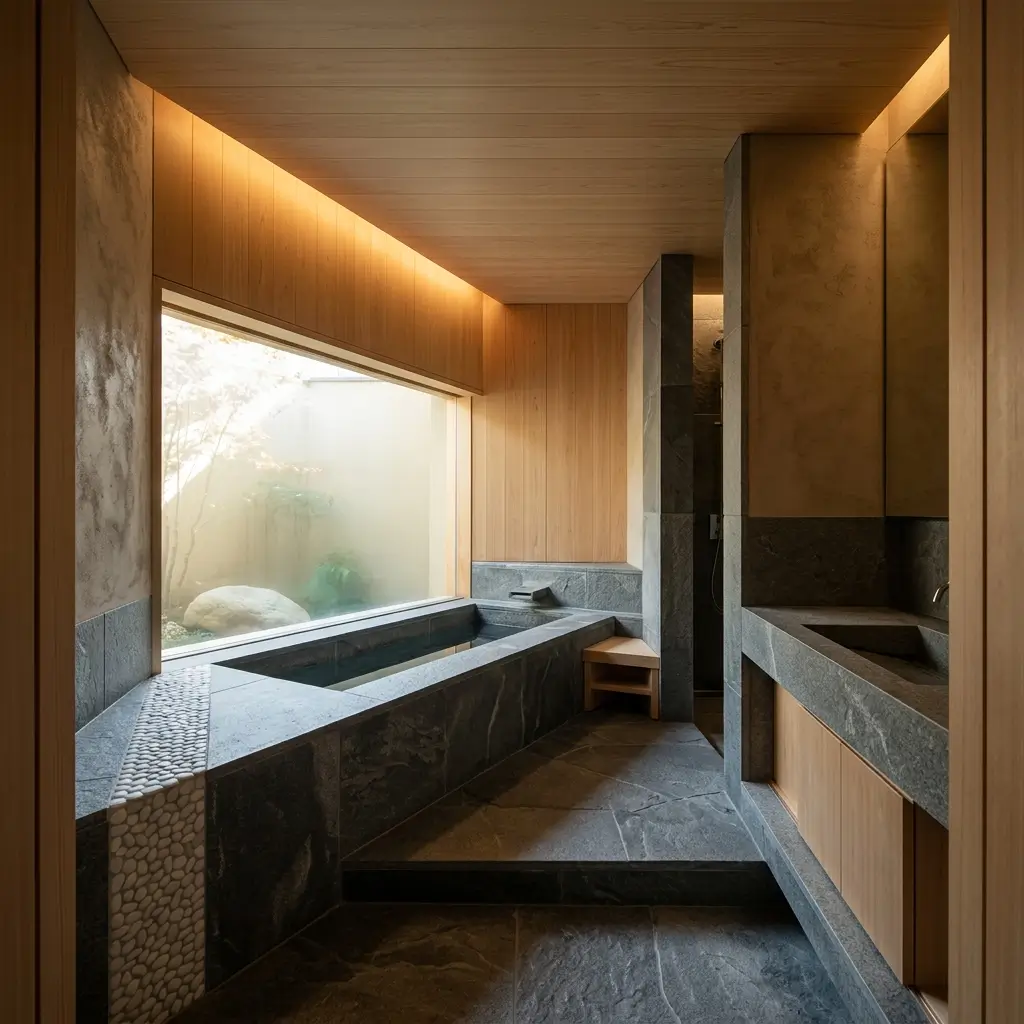
Bringing these principles together requires a focus on proportion, light, and restraint. When natural wood, matte stone, soft illumination, and minimal accessories intersect, the room functions as a cohesive whole.
Every material has a reason for being there, contributing to an atmosphere of profound quietude and everyday luxury.
14. Japanese-Inspired Design in Small Bathrooms
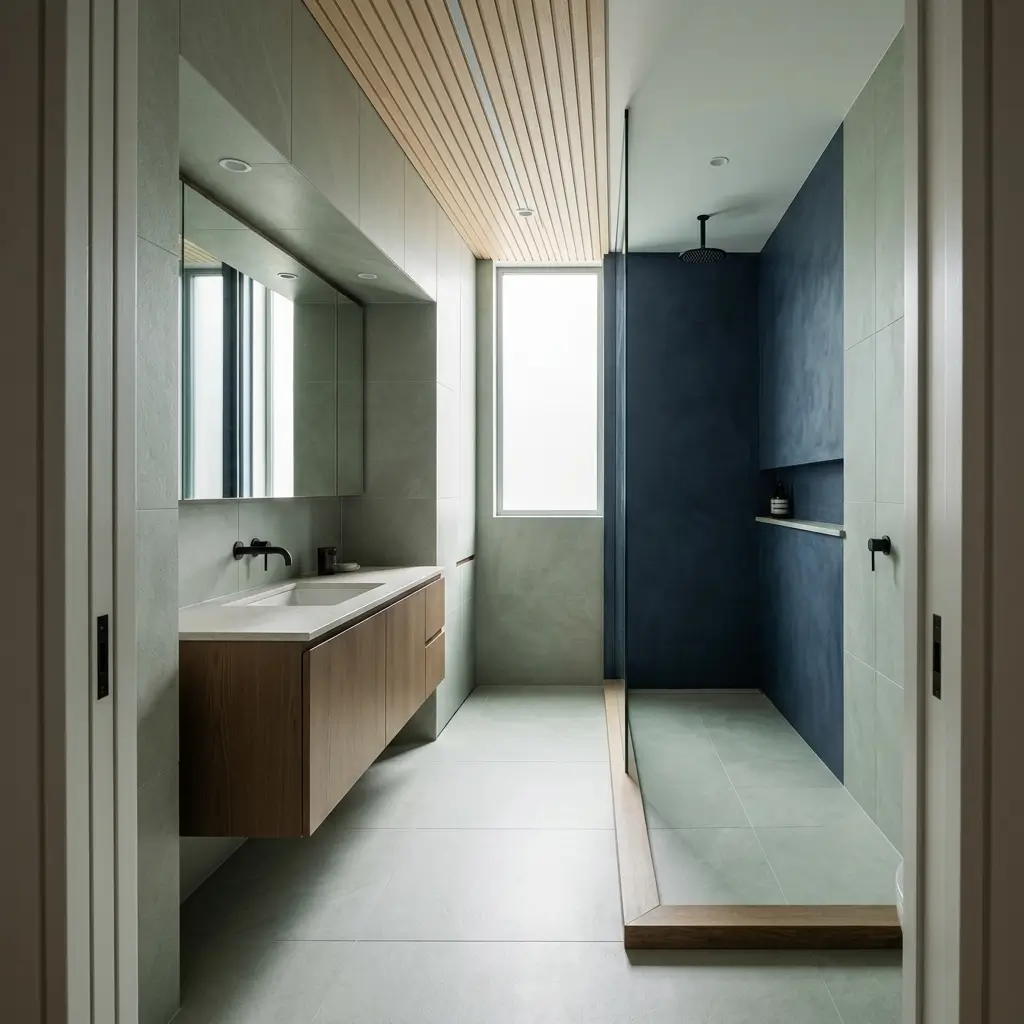
These design principles adapt exceptionally well to compact footprints because simplicity and light colors naturally enhance spatial awareness. Wall-mounted vanities free up floor space, while continuous large-format tile minimizes grout lines to reduce visual clutter.
Concealed cabinetry keeps counters completely bare, proving that even a modest powder room can achieve a serene, uncluttered atmosphere through disciplined editing.
Modern Interpretations Versus Traditional Influences
Contemporary Japanese-inspired bathrooms adapt ancient aesthetic values for modern lifestyles rather than recreating historical bathing environments.
While traditional spaces often featured deep cedar soaking tubs and wet-room layouts designed for separate washing and soaking rituals, modern interpretations translate these values into everyday residential routines.
The focus remains on natural materials, simplicity, and calm, bridging cultural appreciation with practical contemporary needs.
Palette Inspirations
- Warm white + pale oak + stone: Creates an airy, light-filled atmosphere that maximizes natural daylight and feels exceptionally clean.
- Soft beige + walnut + matte black: Offers a grounded, earthy warmth with sharp contemporary definition.
- Light gray + natural wood + brushed metal: Establishes a crisp, serene environment that feels modern yet organic.
- Sand + cream + warm oak: Evokes a soothing, coastal-inspired calm centered on tactile comfort.
- Taupe + stone + dark wood: Delivers a moody, intimate spa-like retreat with rich mineral depth.
How to Get the Look Without a Full Remodel
Homeowners can adopt this aesthetic without undertaking a major construction project through targeted cosmetic updates. Swapping bright overhead bulbs for warm-toned lighting instantly shifts the mood.
Replacing commercial plastic dispensers with uniform glass bottles, adding a teak shower bench, and clearing counters of excess items immediately introduces visual calm. Introducing one potted plant and switching to plush, neutral-toned towels completes the transformation.
Frequently Asked Questions
Q1. What makes a bathroom look Japanese? A Japanese-inspired bathroom relies on a harmonious balance of natural materials, restraint, soft lighting, and uncluttered surfaces.
Rather than following strict design formulas, it prioritizes organic textures like wood and stone, muted earth tones, and an intentional layout that supports quiet relaxation and functional simplicity.
Q2. What colors are used in Japanese-inspired bathrooms? The color palette draws heavily from nature, utilizing warm whites, soft beiges, sand, taupe, and subtle stone grays.
These neutral foundations are often paired with the natural grain of pale or medium woods and accented with small touches of matte black or dark bronze.
Q3. How can I make my bathroom feel more Japanese? You can enhance the aesthetic by removing visual clutter, swapping harsh overhead lights for warm, diffused fixtures, and incorporating natural wood accessories like a bath stool or slatted tray.
Q4. Can Japanese-inspired bathroom design work in a small bathroom? Yes, these principles translate seamlessly to smaller spaces because the design philosophy relies heavily on minimizing visual clutter and maximizing open sightlines.