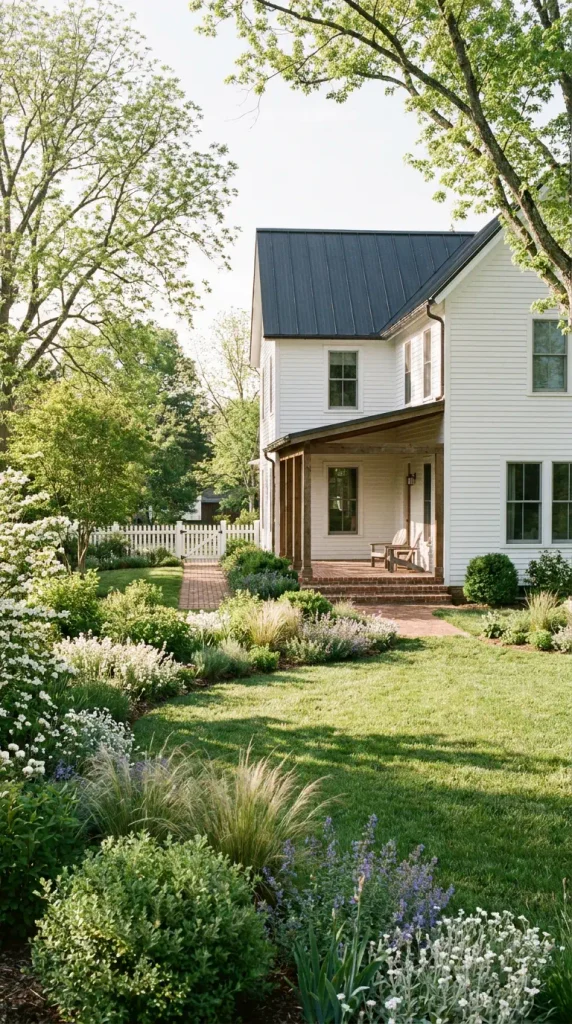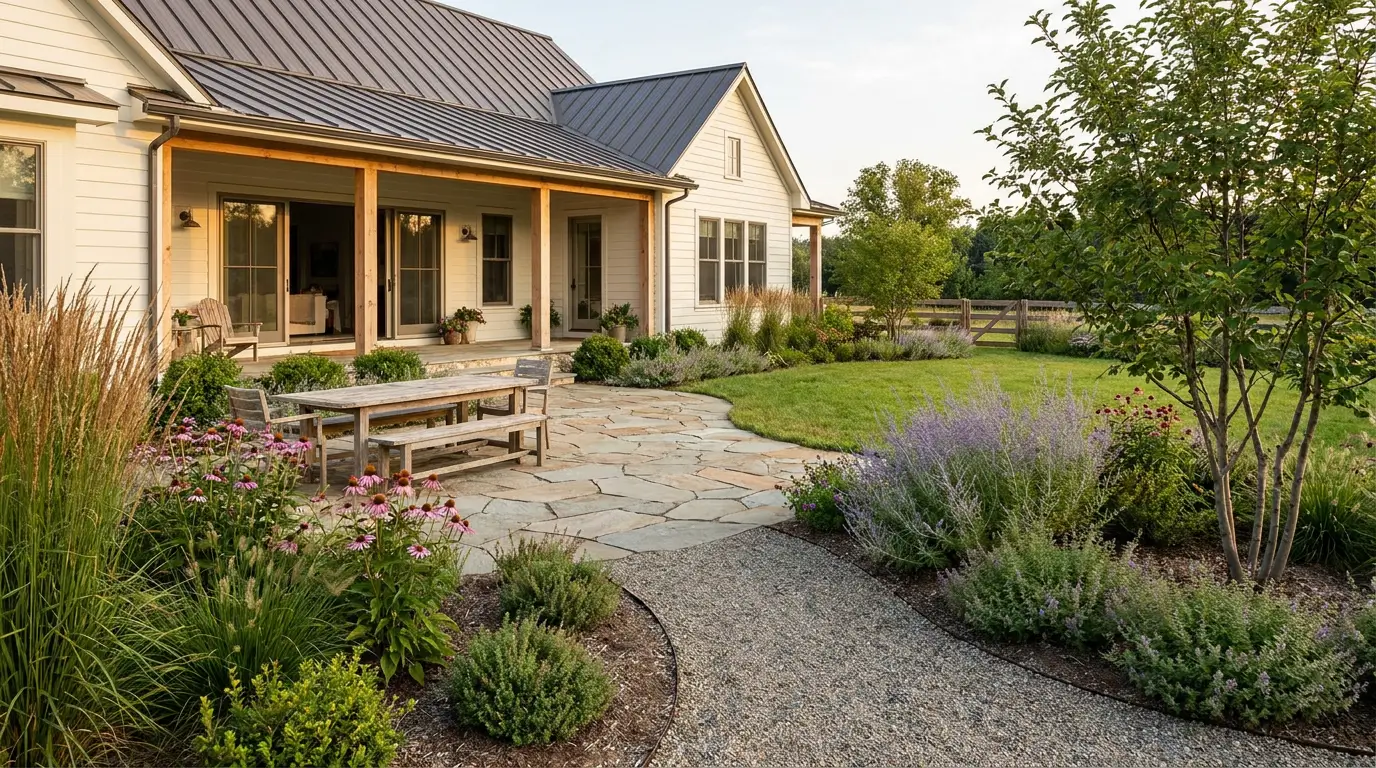
Farmhouse backyard landscaping ideas work best when the landscape feels connected to the architecture rather than decorated with farmhouse-themed accessories.
Natural stone, gravel, timber, lawn, productive gardens, mature trees, and informal planting can establish the character through structure and material choice.
The style also allows considerable flexibility. A traditional kitchen garden can feel distinctly farmhouse, yet so can a restrained landscape with clean geometry and contemporary stonework.
The 12 ideas below take different approaches to organizing a backyard, from gravel courtyards and meadow-inspired planting to defined garden rooms, mature tree canopies, and low-maintenance natural landscapes.
Each composition uses a different combination of hardscape, planting, boundaries, outdoor spaces, and spatial organization, making it easier to identify the landscape direction that suits the property.
1. Gravel Courtyard With Informal Borders
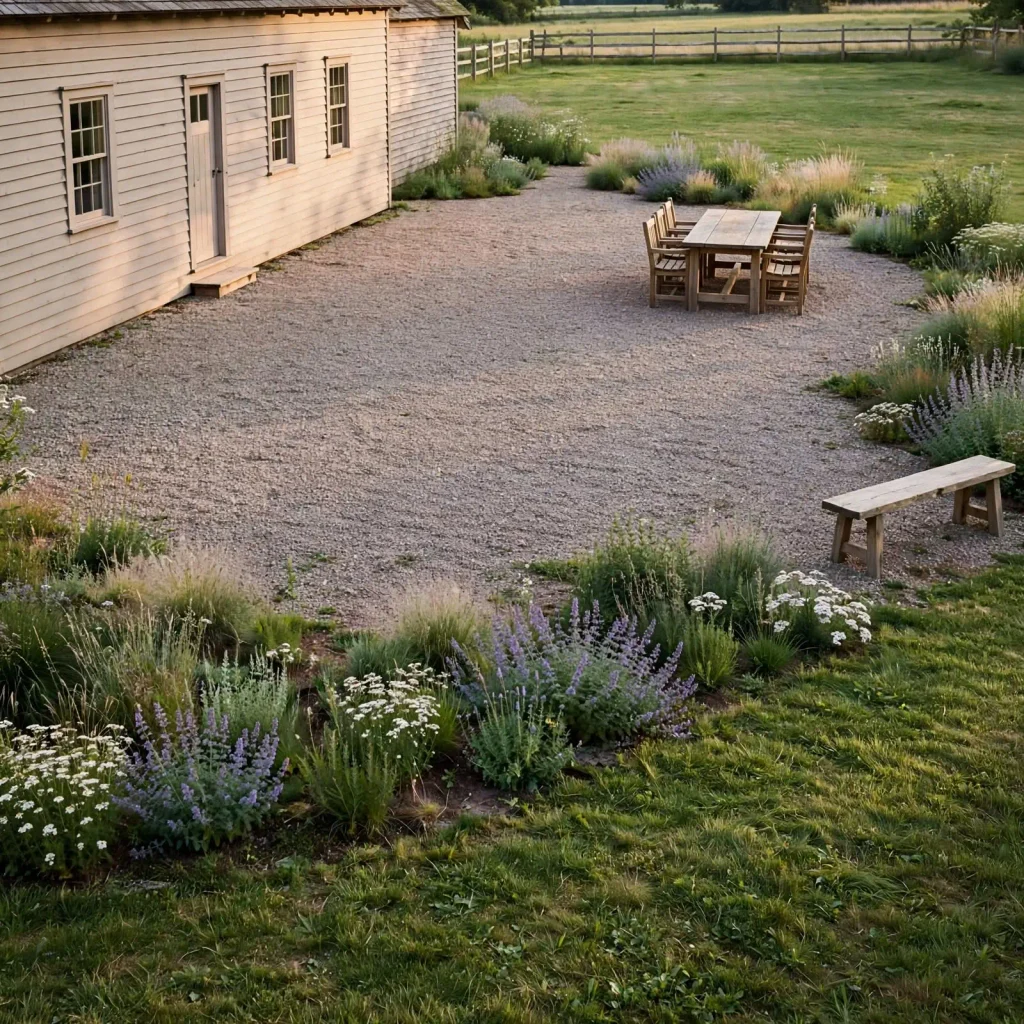
A broad gravel courtyard gives this farmhouse backyard a relaxed outdoor foundation without requiring an elaborate hardscape pattern.
The generous surface works particularly well beside a simple farmhouse facade, creating a practical area for outdoor dining or casual seating.
Informal planted borders soften the perimeter and establish a clear transition between the hardscape and open lawn. Their irregular density keeps the courtyard from becoming overly formal.
A restrained timber or stone boundary can add enclosure without competing with the house.
The strongest compositions keep the material palette limited, allowing gravel, planting, lawn, and architecture to establish the farmhouse character.
2. Traditional Farmhouse Kitchen Garden
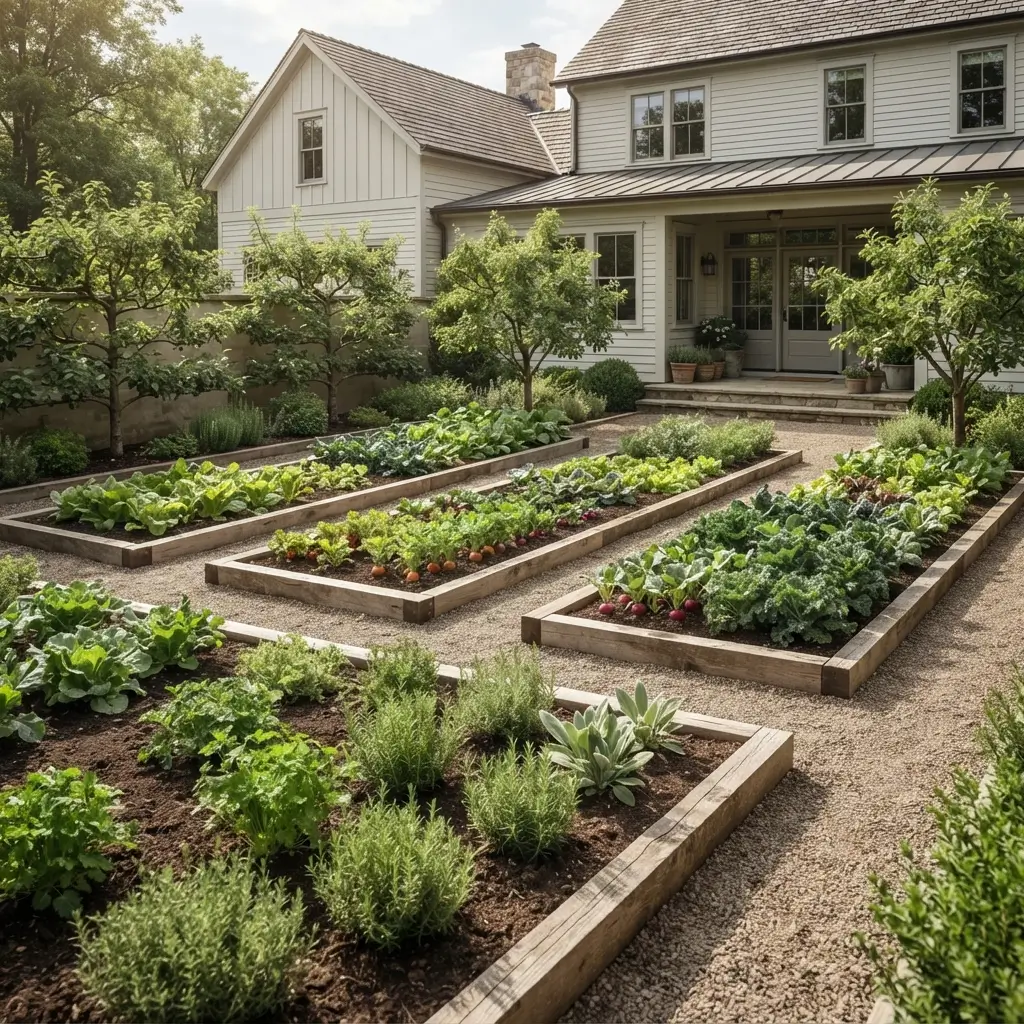
A productive kitchen garden gives the backyard a distinctly traditional farmhouse structure.
Defined vegetable beds establish an organized central element, supported by simple paths that make the garden feel purposeful rather than ornamental.
Timber edging or understated stone borders can give the beds enough definition to relate to the architecture.
Fruit trees and other useful plantings add vertical structure where the local growing conditions allow. The relationship between the productive garden and the house matters as much as the individual beds.
A clear connection creates a landscape that feels practical, cultivated, and rooted in the working character traditionally associated with farmhouse properties.
3. Meadow-Inspired Backyard
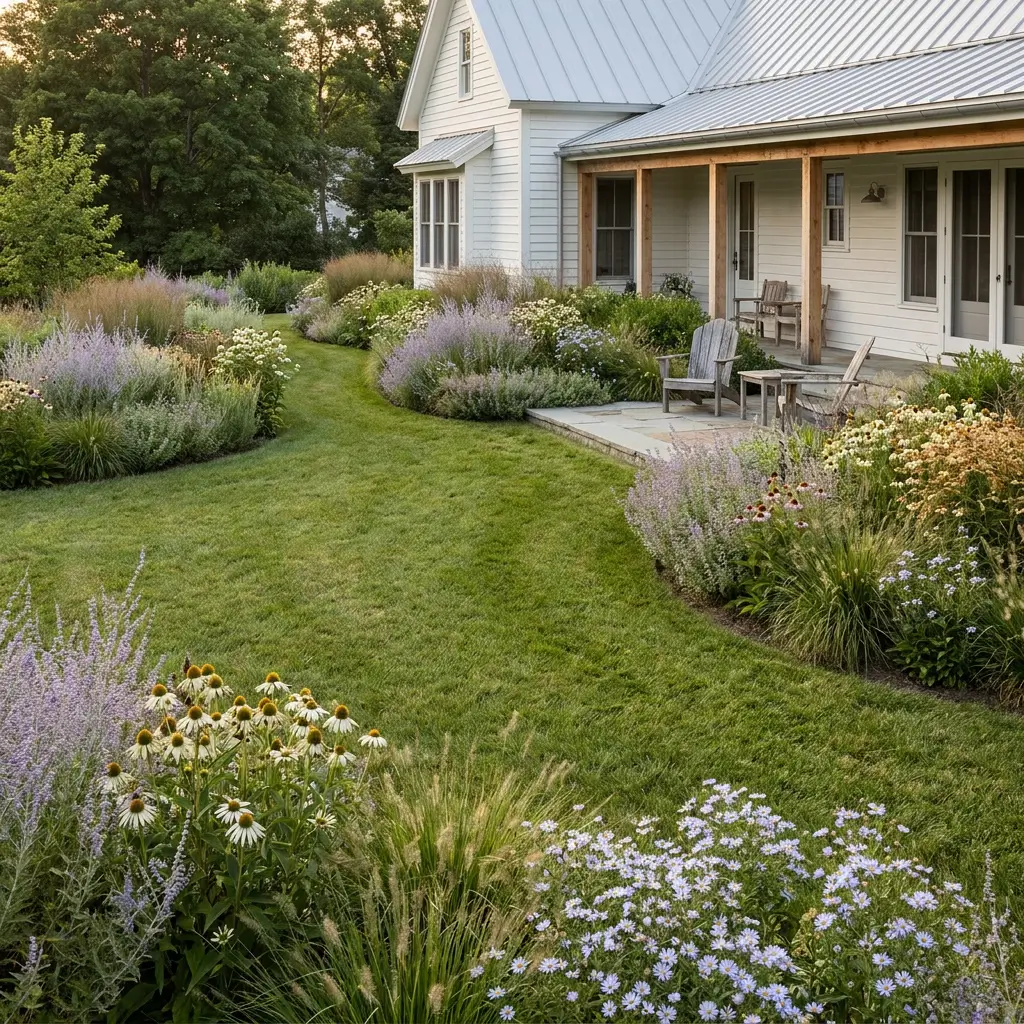
A meadow-inspired composition replaces tightly controlled borders with broader areas of naturalistic planting and open lawn.
The contrast between dense perennial areas and relatively uninterrupted grass creates a strong sense of rural space without relying on rustic accessories.
Planting density should vary across the yard rather than forming one continuous mass.
Taller seasonal planting can establish structure near boundaries, with lower vegetation creating a more open foreground. Repetition of texture and seasonal color keeps the landscape cohesive.
This approach suits larger properties particularly well, where generous open areas can provide the scale needed for a convincing meadow-like composition.
4. Stone Path Through a Green Garden
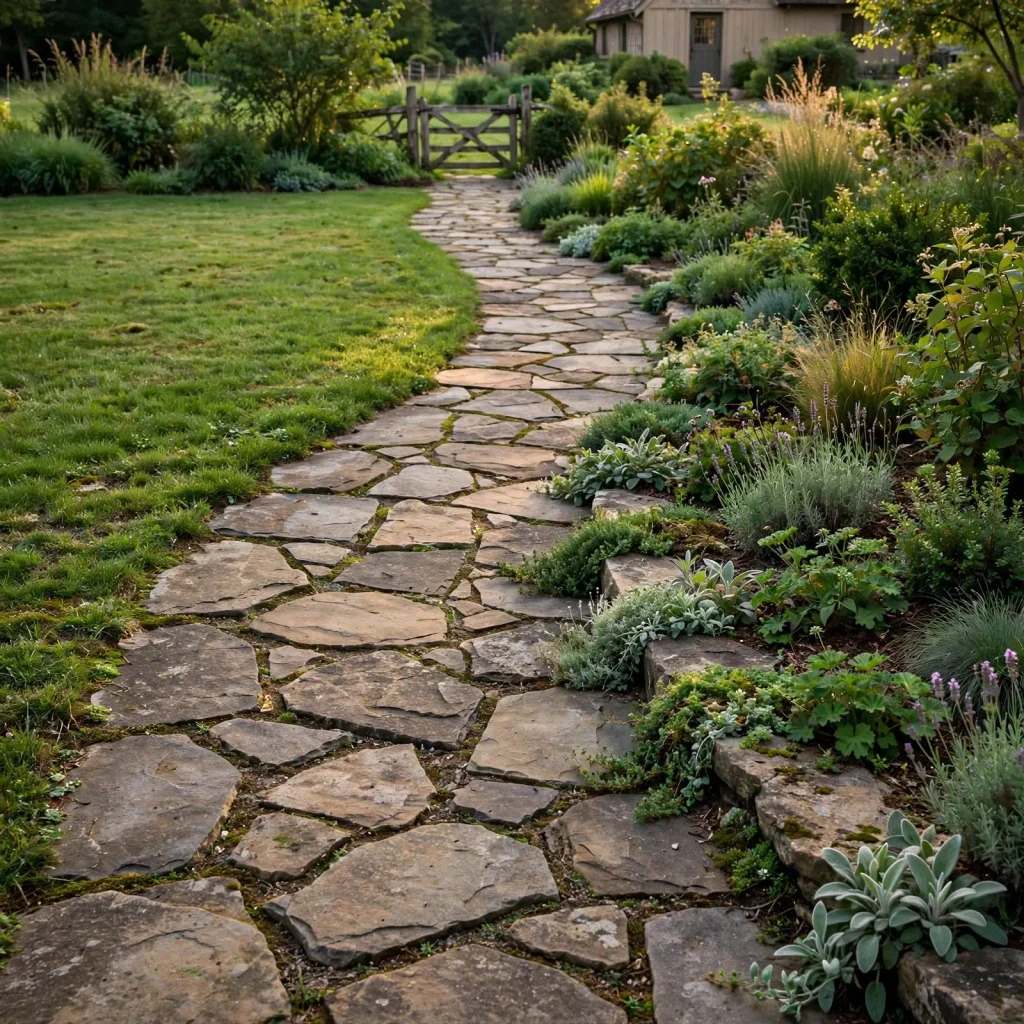
Natural stone can organize an entire farmhouse backyard when the path becomes part of the landscape’s structural framework.
Irregular flagstone or locally appropriate stone introduces texture and variation that work naturally with informal planting.
The strongest layouts use the path to define relationships between lawn, planted beds, and garden spaces rather than treating it as an isolated feature.
Green foliage provides continuity around the stone, and changes in planting height create visual rhythm along its edges.
The result feels traditional because the materials and organization are simple, practical, and closely related to the architecture of a farmhouse.
5. Backyard With Mature Shade Trees
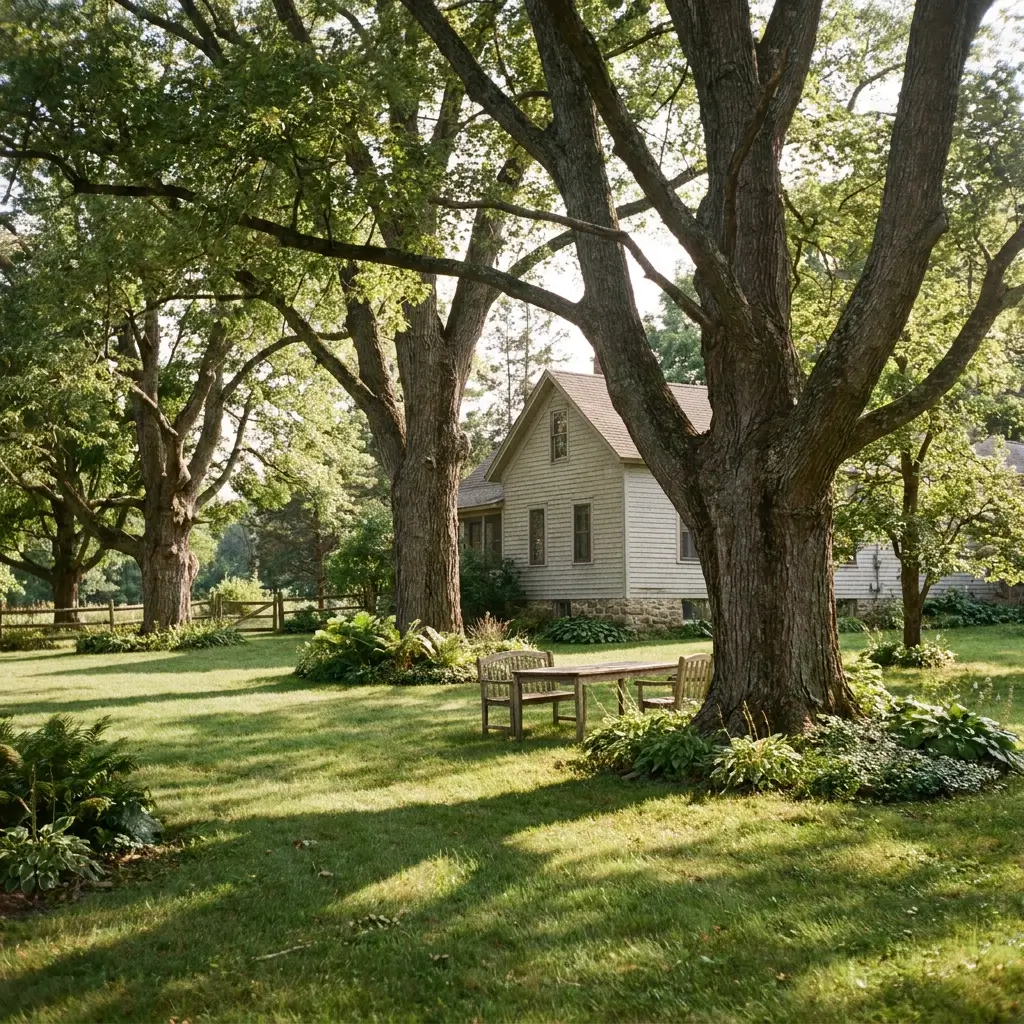
Mature trees can become the defining architectural element of a farmhouse backyard.
Their established canopy gives the landscape scale and creates a naturally shaded setting that younger ornamental planting cannot easily replicate.
A broad lawn beneath the canopy preserves the sense of space, with selective underplanting adding texture around the tree bases and property edges.
Seating can occupy the most usable shaded areas without dominating the composition. The relationship between tree scale and house scale is especially important.
Large trees can anchor a modest farmhouse or reinforce the expansive character of a larger rural property.
6. Farmhouse Backyard With a Simple Timber Fence
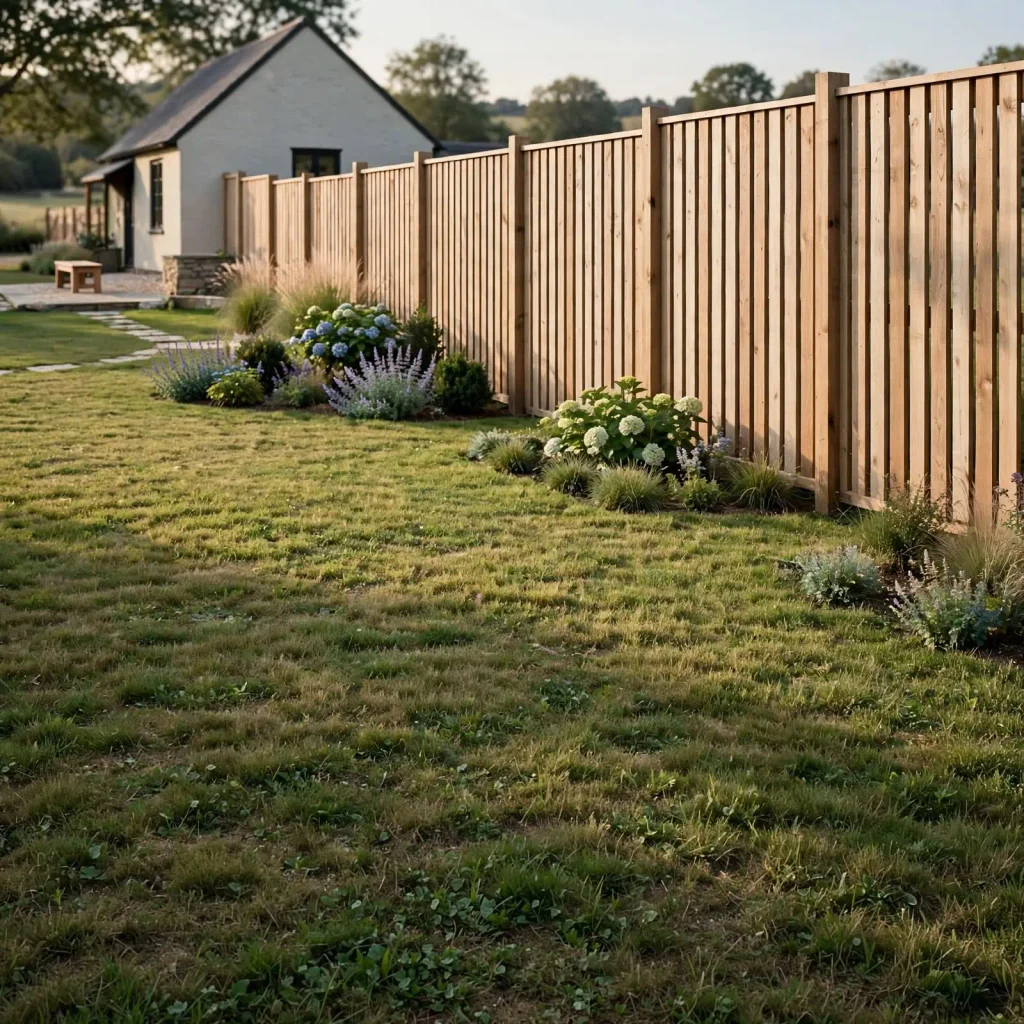
A simple timber fence can give an otherwise open backyard a strong farmhouse identity through proportion and enclosure.
The most effective versions use straightforward vertical or horizontal boards with restrained detailing rather than deliberately distressed finishes or decorative rural motifs.
The fence establishes the property line and provides a consistent backdrop for planting. An open lawn in front of the boundary prevents the enclosure from becoming visually heavy.
Planting can be concentrated in selected sections rather than covering the entire perimeter. Matching the fence scale to the farmhouse architecture keeps the boundary integrated into the overall landscape design.
7. Stone Patio With Layered Planting
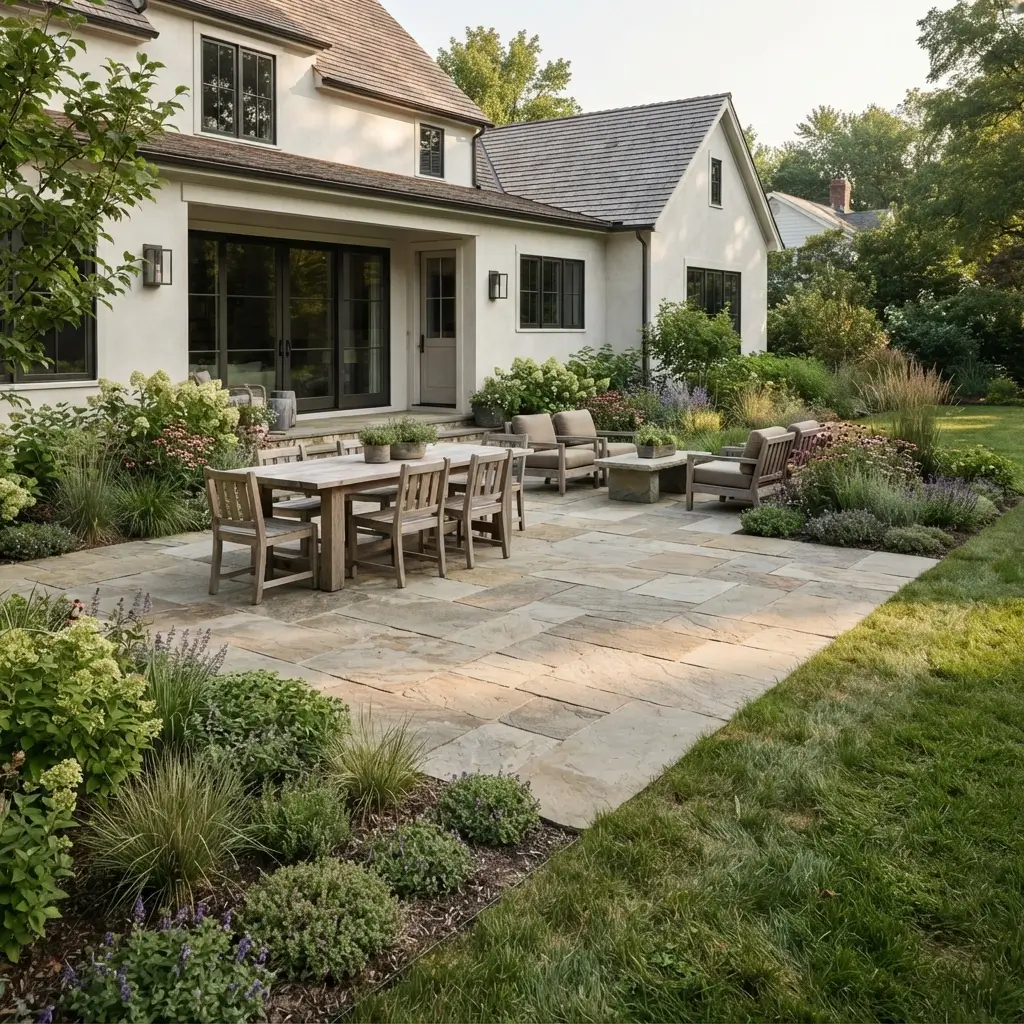
A substantial stone patio can anchor a farmhouse backyard when the hardscape has enough visual weight to function as part of the architecture.
Fieldstone, flagstone, or another regionally appropriate natural stone provides texture and permanence. Layered planting around the patio creates a softer relationship with the lawn and house.
Low planting can define the immediate edge, medium-height vegetation can add seasonal texture, and taller structural plants can establish depth farther into the garden.
The patio should retain a clear shape rather than disappearing beneath planting. This balance gives the outdoor living area definition without making it feel detached from the surrounding landscape.
8. Long Farmhouse Backyard With Defined Garden Rooms
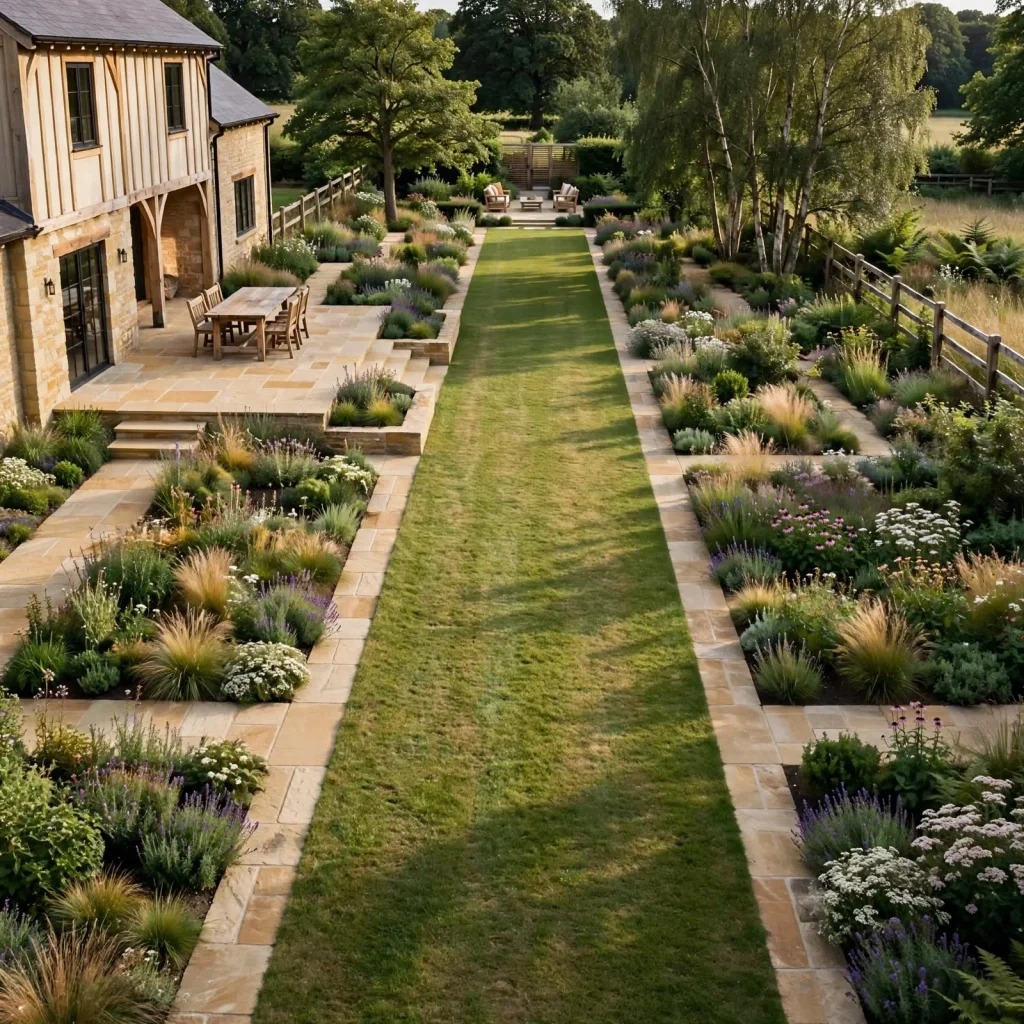
A long backyard benefits from distinct garden rooms that organize the property’s depth without dividing it into unrelated sections.
A central lawn can provide continuity, with separate areas allocated to dining, planting, recreation, or quiet seating.
Paths and planting beds can establish boundaries between these functions without requiring walls or heavy construction. Repeated materials help maintain visual consistency across the length of the property.
Trees, hedging, or strategically placed planting can provide privacy and scale at selected points. The result is a sequence of clearly defined functions supported by one cohesive landscape framework.
9. Rustic-Modern Farmhouse Landscape
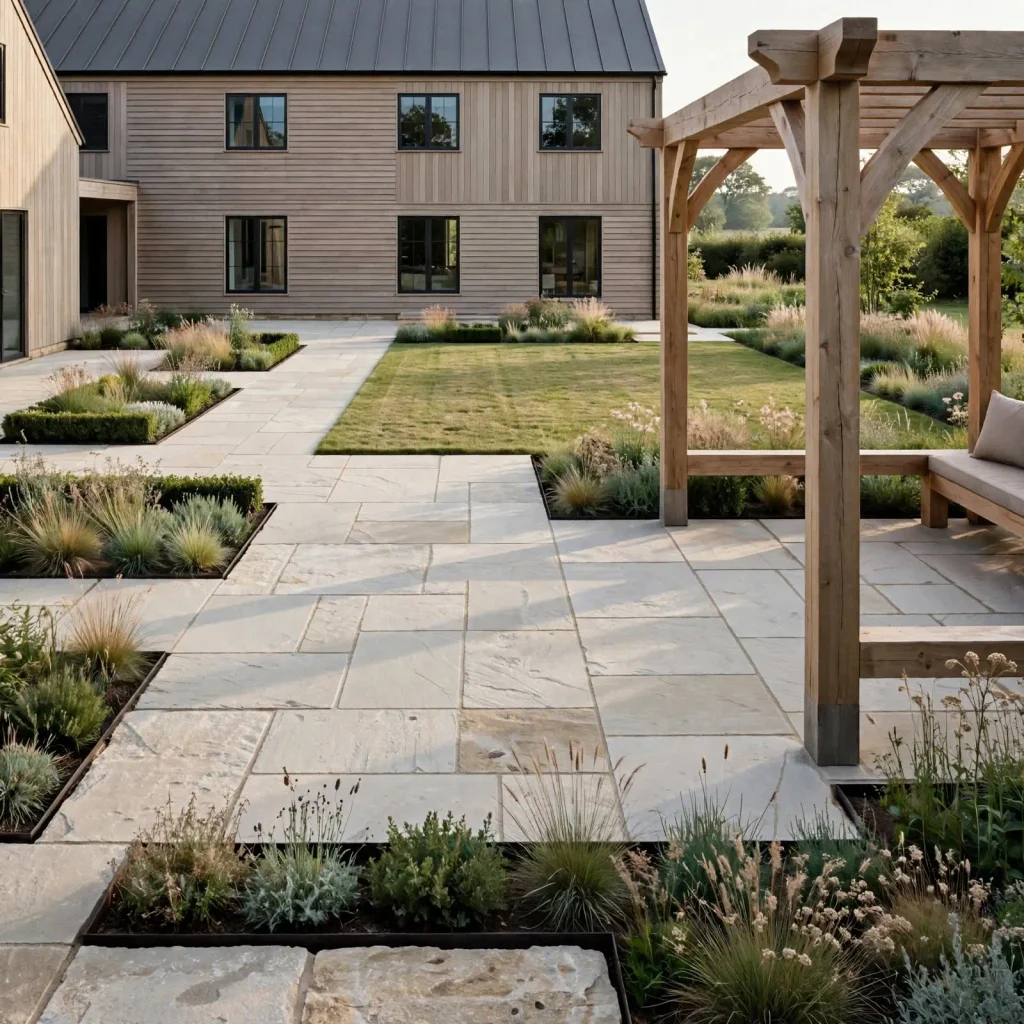
A rustic-modern farmhouse landscape combines traditional materials with more disciplined geometry.
Clean-edged planting beds, large-format natural stone, simple timber structures, and carefully proportioned lawn areas can create a contemporary interpretation without losing farmhouse character.
The material palette should remain restrained. Natural stone and timber provide warmth, and controlled planting prevents the landscape from becoming overly ornamental.
Strong lines can be balanced with softer vegetation so the composition retains a residential quality.
This approach works particularly well with newer farmhouse architecture, where a simplified landscape can connect traditional forms with modern construction.
10. Cozy Backyard Gathering Landscape
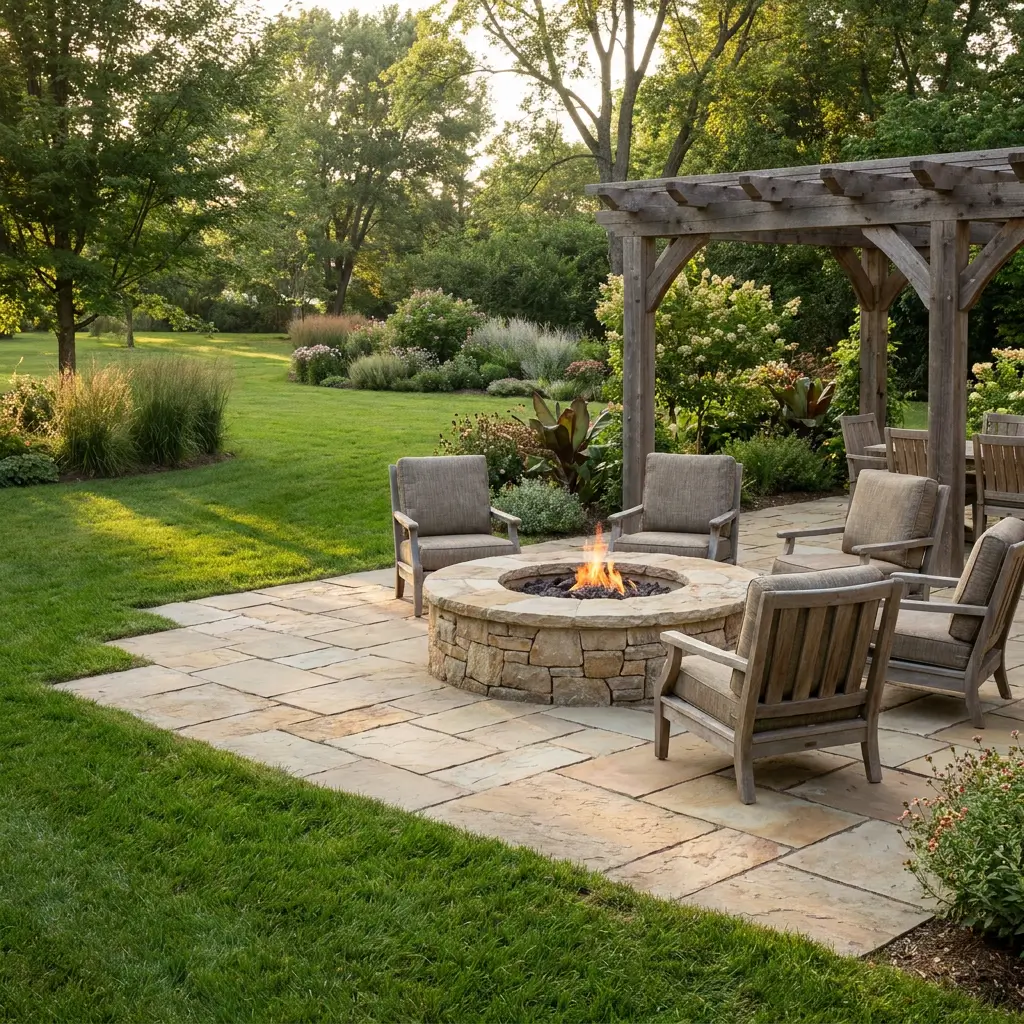
A gathering-focused landscape should organize the backyard around a clearly defined outdoor living area rather than treating seating as an isolated addition.
A stone, brick, or gravel surface can establish the central zone, with lawn and planting providing visual separation from the rest of the property.
A fire-pit area can become the focal point when the yard has enough space for safe circulation and appropriate clearances.
Shade structures or mature trees can reinforce the outdoor room. Planting around the perimeter helps define the gathering area without enclosing it completely.
The landscape remains the priority, with furniture serving the spatial arrangement rather than determining it.
For more inspiration on incorporating one into a farmhouse setting, see our Farmhouse Backyard Fire Pit Design Ideas for a Cozy Retreat.
11. Cottage-Style Farmhouse Garden
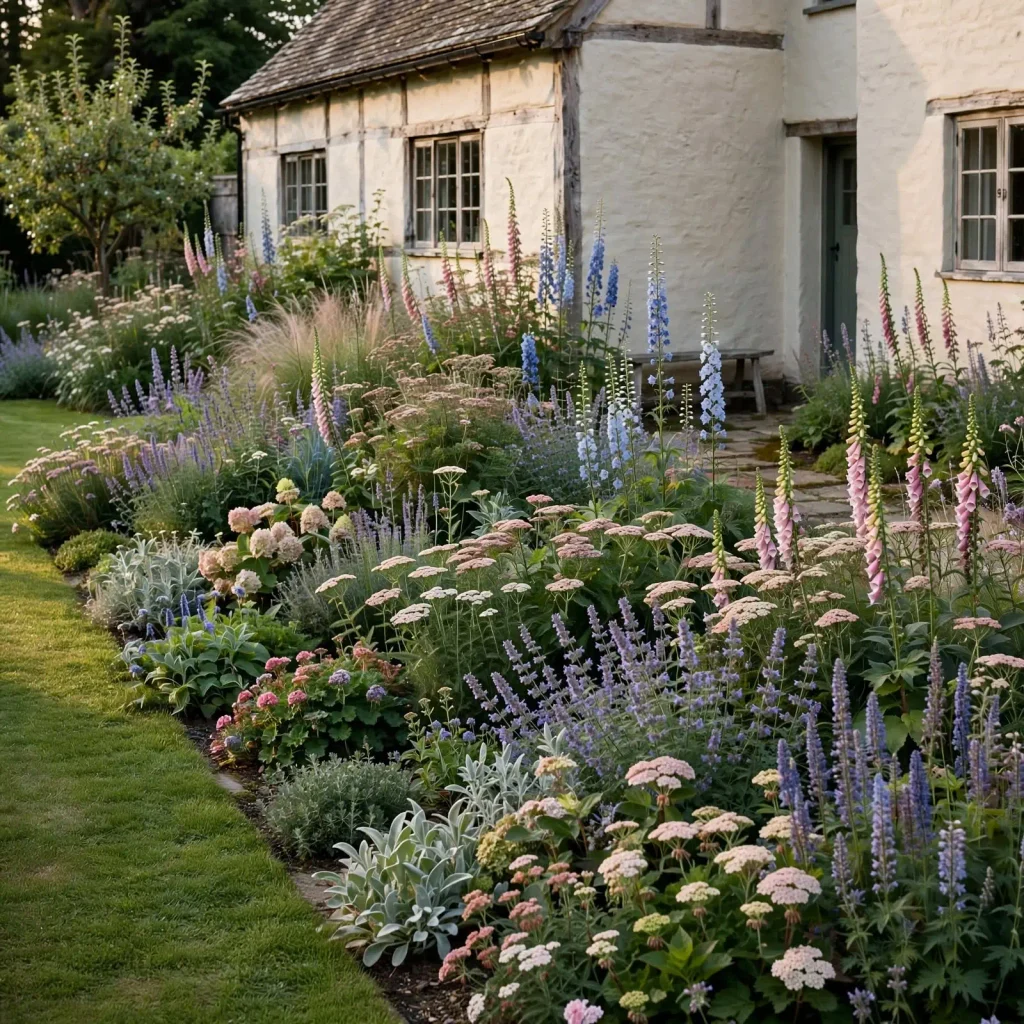
A cottage-style farmhouse garden uses dense, layered planting to create a fuller landscape relationship with the house.
The composition depends on variation in height, texture, and flowering periods rather than a rigidly repeated planting grid.
Informal borders can contain taller vegetation toward the rear, medium-height planting through the middle, and lower growth near paths or lawn edges.
The density should remain intentional, with enough structure to prevent the garden from appearing unmanaged.
Stone or brick paths can provide definition within the planting. This approach is particularly compatible with traditional farmhouse architecture that benefits from a more abundant garden setting.
12. Low-Maintenance Natural Farmhouse Landscape
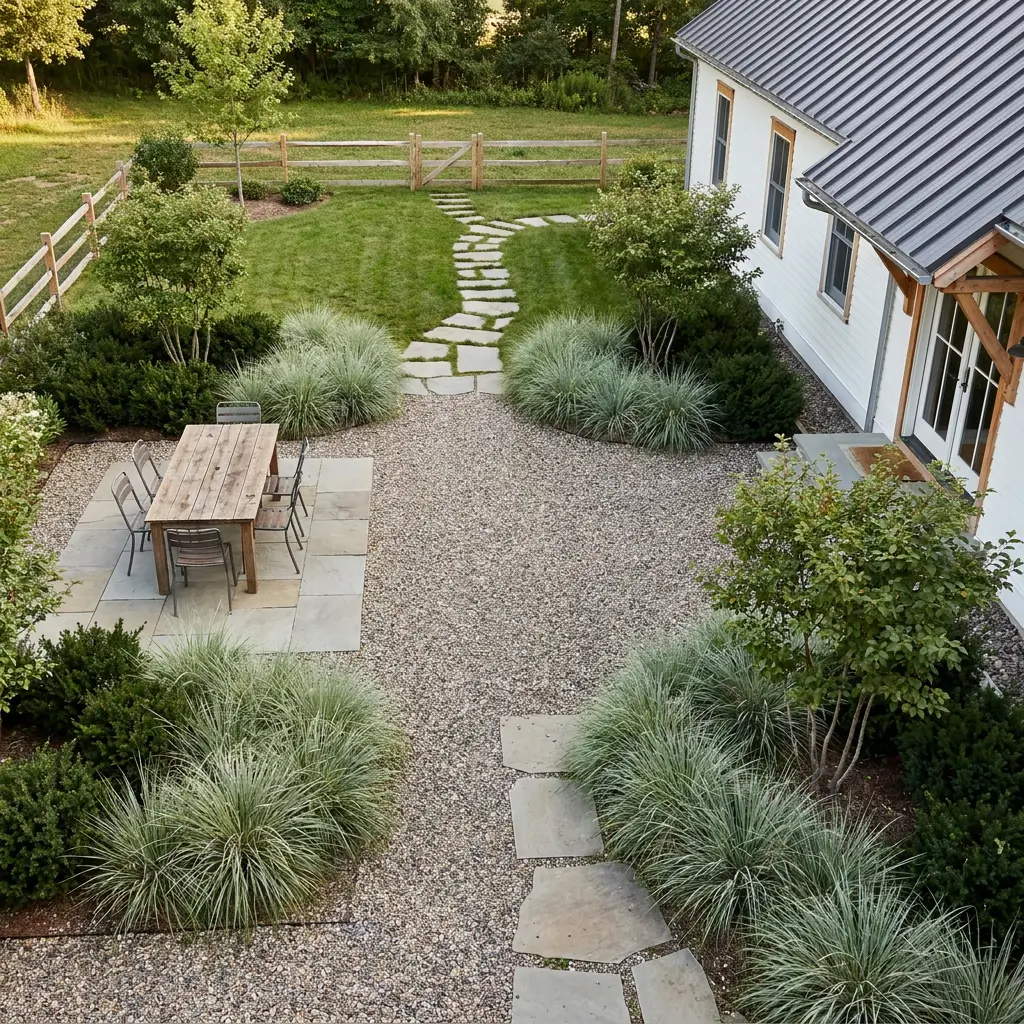
A low-maintenance natural landscape can retain farmhouse character through durable materials, structural planting, and a restrained layout.
Reducing dependence on large lawn areas creates opportunities for gravel, stone, groundcover, and regionally appropriate plants suited to local growing conditions.
The design should rely on a small number of strong landscape elements rather than numerous individual features.
Durable hardscape can establish circulation and outdoor-use areas, with structural planting providing continuity around the property.
Simple boundaries keep the composition visually clear. The goal is not an empty landscape but one with enough repetition, texture, and structure to remain coherent as the garden matures.
How to Give a Backyard a Farmhouse Landscape Feel Without a Major Redesign
A farmhouse landscape can often be strengthened through simpler changes rather than a complete redesign.
Define lawn and planting areas more clearly, introduce gravel or another natural material, simplify edging, and repeat one material across separate parts of the yard.
Stronger planting structure can also make an existing garden feel more intentional.
A modest outdoor zone or a straightforward boundary improvement may provide enough organization to establish a stronger connection between the backyard and farmhouse architecture.
Farmhouse Landscaping Ideas for a Small Backyard
Small yards benefit from a limited material palette and clearly defined functions.
A compact gravel or stone zone can combine dining and lounging, with structured planting providing separation from the house or property boundary.
Vertical planting can add height where appropriate without consuming much ground area. Clear circulation and consistent materials help prevent the landscape from becoming visually crowded.
Scale matters more than the number of features, so a few well-proportioned elements usually create a stronger composition than numerous small additions.
Frequently Asked Questions
Q1. What plants work well in a farmhouse backyard?
Plants suited to farmhouse landscapes generally include layered ornamental planting, productive garden plants, grasses, shrubs, and regionally appropriate perennials. The best choices depend on local climate, soil, sunlight, and water availability.
Q2. How do you make a backyard look farmhouse style?
Use natural materials, informal planting, practical garden organization, simple boundaries, lawn, gravel, stone, timber, and functional outdoor areas. The overall structure should relate naturally to the farmhouse architecture.
Q3. What materials work best for farmhouse landscaping?
Gravel, natural stone, brick, timber, and other durable natural-looking materials work particularly well. Combining a small number of complementary materials creates more cohesion than using numerous rustic finishes.
Q4. How can farmhouse landscaping work in a small backyard?
A small farmhouse backyard can use one compact outdoor zone, structured planting, simple paths, and a restrained material palette. Clear circulation and consistent boundaries help maintain visual order without making the landscape feel crowded.
Final Thoughts
Farmhouse backyard landscaping works best when the landscape feels like a natural extension of the home.
Natural materials, informal planting, practical garden organization, outdoor living areas, and clear spatial structure can establish the character without relying on farmhouse décor.
The strongest approach depends on the property itself: a productive kitchen garden may suit one yard, while mature trees, defined garden rooms, or a restrained modern composition may better suit another.