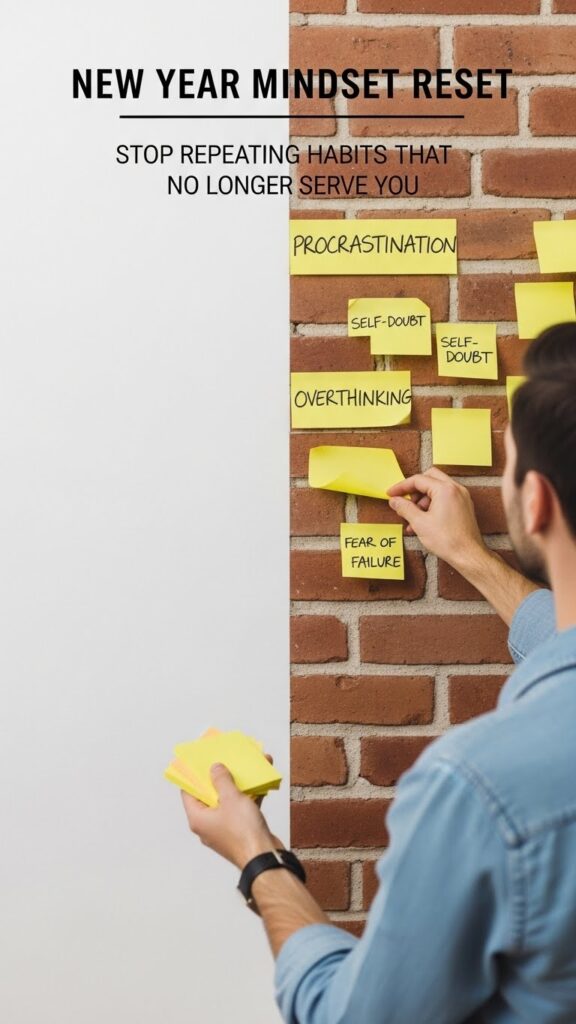
The start of a new year often arrives carrying more weight than hope. After a long or heavy season, many people feel emotionally tired before January even settles in. The expectation to feel motivated, optimistic, or “ready” can quietly add more strain.
A new year mindset reset isn’t about forcing positivity or reinventing yourself overnight. It’s about creating internal space after months of carrying responsibility, uncertainty, and pressure. It allows you to acknowledge what the year took from you without rushing to replace it with new demands.
Instead of pushing forward, a mindset reset invites you to soften first. To notice what feels tight, heavy, or unrealistic inside you, and to gently loosen your grip. This kind of reset is slow, quiet, and deeply practical.
When the internal noise settles, clarity tends to follow on its own.
1. Releasing the Pressure to “Feel Excited” About the New Year
One of the most common unspoken pressures around January is the belief that you should feel hopeful, energized, or inspired. When that excitement doesn’t come, it’s easy to assume something is wrong with you. In reality, emotional fatigue often needs acknowledgment before optimism can exist.
Letting go of forced excitement can feel like exhaling after holding your breath too long. You’re allowed to meet the new year neutrally. You don’t owe it enthusiasm. When you release that expectation, the year begins to feel less demanding and more open-ended.
In real life, this looks like allowing yourself to say, “I’m here, and that’s enough for now.” Calm replaces comparison. Curiosity replaces pressure. The year becomes something you step into gradually rather than something you perform for.
2. Letting Go of the Belief That You’re Behind
January often carries a quiet sense of urgency. Social cues, conversations, and online narratives can create the impression that everyone else is already moving ahead. This belief weighs heavily, especially if the previous year involved setbacks, grief, or slow progress.
Reframing this mindset means recognizing that there is no universal timeline. Life does not reset on January 1st, even if the calendar does. When you let go of the idea that you’re behind, your nervous system often responds with relief.
Applied in daily life, this mindset creates steadiness. You stop rushing decisions. You move with your actual capacity instead of imagined expectations. The year begins where you are; not where you think you should be.
3. Releasing the Need to Make the New Year “Count”
There is a subtle pressure to make each new year meaningful, productive, or transformative. This belief can turn ordinary days into evaluations of success or failure. Over time, that mental tally becomes exhausting.
A gentler reframe is understanding that years don’t need to prove their worth. Living, coping, resting, and continuing are already meaningful acts. When you stop demanding that the year “deliver” something extraordinary, daily life becomes less loaded.
In practice, this mindset feels like permission. Permission to have quiet months. Permission to change slowly. The year stops feeling like a test and starts feeling like a container; one that can hold both progress and pause.
4. Creating Emotional Boundaries Around External Expectations
New beginnings often invite advice, opinions, and questions about what you plan to do next. While often well-meaning, this external focus can drown out your internal voice, especially if you’re still processing the past year.
An emotional boundary doesn’t require confrontation. It simply means deciding which expectations you allow to shape your inner world. When you limit how much external noise you internalize, your thoughts begin to settle.
In real terms, this might feel like choosing silence over explanation or reflection over reaction. Over time, you’ll notice a growing sense of internal calm; the feeling that your emotional space belongs to you again.
5. Releasing the Expectation to Be “A Better Version” of Yourself
The idea that each year should produce an upgraded version of you can quietly erode self-acceptance. It frames growth as a correction rather than a continuation. That belief often leads to self-criticism disguised as motivation.
A healthier mindset recognizes that you don’t need improvement to deserve ease. You are allowed to begin the year as you are, without self-editing. Growth can happen from acceptance, not pressure.
When this reframe settles in, daily life feels less combative. You stop pushing against yourself and start working with yourself. That shift alone often creates more peace than any resolution ever could.
6. Allowing the Year to Start Slowly
Many people feel compelled to “use January well.” There’s an unspoken assumption that starting strong determines how the rest of the year will unfold. This belief creates unnecessary urgency.
Letting the year start slowly honors emotional recovery. It acknowledges that rest, reflection, and adjustment are valid beginnings. When you remove the rush, your body and mind can recalibrate naturally.
In everyday life, this might look like gentler mornings or fewer self-imposed demands. The year begins to feel spacious instead of compressed. Often, clarity arrives when you stop chasing it.
7. A New Year Mindset Reset Focused on Mental Clarity
Mental clutter often builds quietly; unfinished thoughts, lingering worries, and unresolved emotions from the previous year. Carrying all of that into January can make even simple decisions feel heavy.
A new year mindset reset aimed at mental clarity doesn’t involve fixing every thought. It’s about releasing the need to hold everything at once. When you allow thoughts to exist without immediate action, mental pressure eases.
In real life, this feels like fewer mental loops and less internal commentary. You may notice moments of stillness returning. That clarity doesn’t demand effort; it emerges when space is created.
8. Letting Go of the Narrative That Last Year Defines This One
It’s easy to let the previous year shape expectations for the next; especially if it was difficult. Without realizing it, people carry forward disappointment, fear, or guardedness. A gentle reframe acknowledges the past without letting it forecast the future.
The new year doesn’t owe you compensation, nor is it obligated to repeat old patterns.
Applied practically, this mindset softens anticipation. You approach days with openness instead of defense. The year becomes something you experience moment by moment, rather than something you brace yourself against.
9. Releasing Emotional Self-Judgment
After a challenging year, many people judge their emotional responses feeling they should be “over it” by now. This self-judgment adds a second layer of stress to already complex feelings.
Letting go of emotional self-judgment means allowing feelings to exist without labeling them as progress or failure. Emotions don’t follow calendars; they move at their own pace.
In daily life, this creates gentleness. You stop monitoring your emotional state and start trusting it. That trust often brings a sense of safety back into your inner world.
10. Accepting That Calm Is a Valid Intention
Calm is often undervalued because it doesn’t look impressive. It doesn’t announce itself. Yet for many people, calm is the most restorative state after prolonged stress. Reframing calm as valid removes the pressure to constantly improve or optimize.
It allows the nervous system to downshift. This acceptance can be deeply grounding. When applied, calm shows up as steadier reactions, quieter thoughts, and a sense of being less pulled in multiple directions. It becomes easier to notice what actually matters to you.
11. Letting Go of Comparison at the Start of the Year
January amplifies comparison. Conversations about plans and changes can unintentionally trigger self-doubt. Measuring your internal state against someone else’s external presentation rarely leads to peace.
Releasing comparison doesn’t mean ignoring others; it means returning attention inward. Everyone enters the year with unseen context. In real life, this mindset feels like relief. You stop interpreting other people’s progress as commentary on your own life.
Your focus narrows, and your inner pace becomes more natural.
12. Making Space for Emotional Recovery
Emotional recovery is rarely acknowledged as necessary. Yet many people start the year depleted, even if nothing “bad” happened. Chronic stress accumulates quietly.
Allowing space for recovery reframes rest as responsible rather than indulgent. It recognizes that emotional energy needs replenishment just like physical energy. Applied gently, this mindset feels like softness; you give yourself permission to not be ready. Over time, resilience rebuilds without force.
13. Releasing the Need to Have Clarity Right Away
There’s pressure to know what you want from the year early on. Uncertainty can feel uncomfortable, especially when others seem decisive. A healthier perspective allows clarity to emerge gradually. You don’t need answers before you’ve had time to settle.
In practice, this feels like patience. You make fewer rushed decisions. You listen more closely to yourself. Clarity becomes something that unfolds, not something you chase.
14. Allowing Yourself to Redefine What “Enough” Means
Many people carry an internal definition of “enough” that keeps moving out of reach. Each year, the standard quietly rises, leaving satisfaction perpetually delayed. Letting yourself redefine “enough” brings emotional relief. It grounds your expectations in reality rather than ideals.
In daily life, this mindset feels stabilizing. You begin to notice contentment without waiting for milestones. Life feels less conditional.
Conclusion
A new year mindset reset is not about correcting who you are or rushing toward who you think you should be. It’s about creating emotional breathing room after carrying more than you realized. Calm, permission, and clarity are not rewards; you’re allowed to begin with them.
When you release pressure, expectations soften. When expectations soften, space opens. From that space, the year can unfold at a pace that respects your reality.
If you’re seeking a gentler beginning, let this reset be quiet and kind. Explore more gentle New Year reset ideas that support a calmer start.
FAQs
Q1. What is a new year mindset reset?
A new year mindset reset is an internal shift that focuses on releasing pressure, emotional clutter, and unrealistic expectations at the start of the year.
Q2. How do you mentally reset for the new year?
By slowing down, acknowledging emotional fatigue, and letting go of the belief that you need immediate clarity or motivation.
Q3. Is it okay to start the year without goals?
Yes. Many people benefit from starting the year with emotional steadiness rather than structured goals.
Q4. How do I let go of pressure in January?
Pressure eases when you stop treating the new year as a performance and allow yourself to begin where you are.