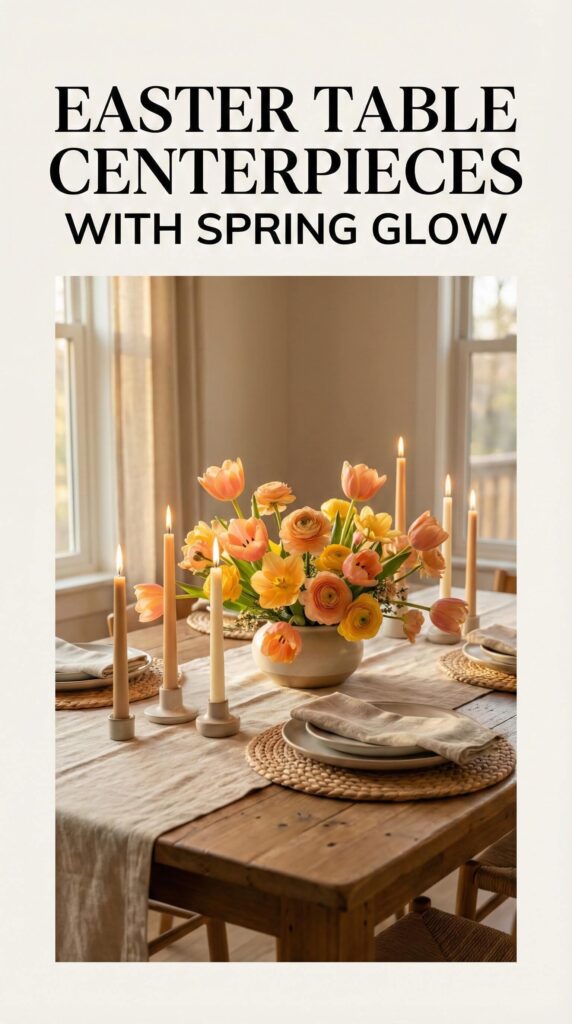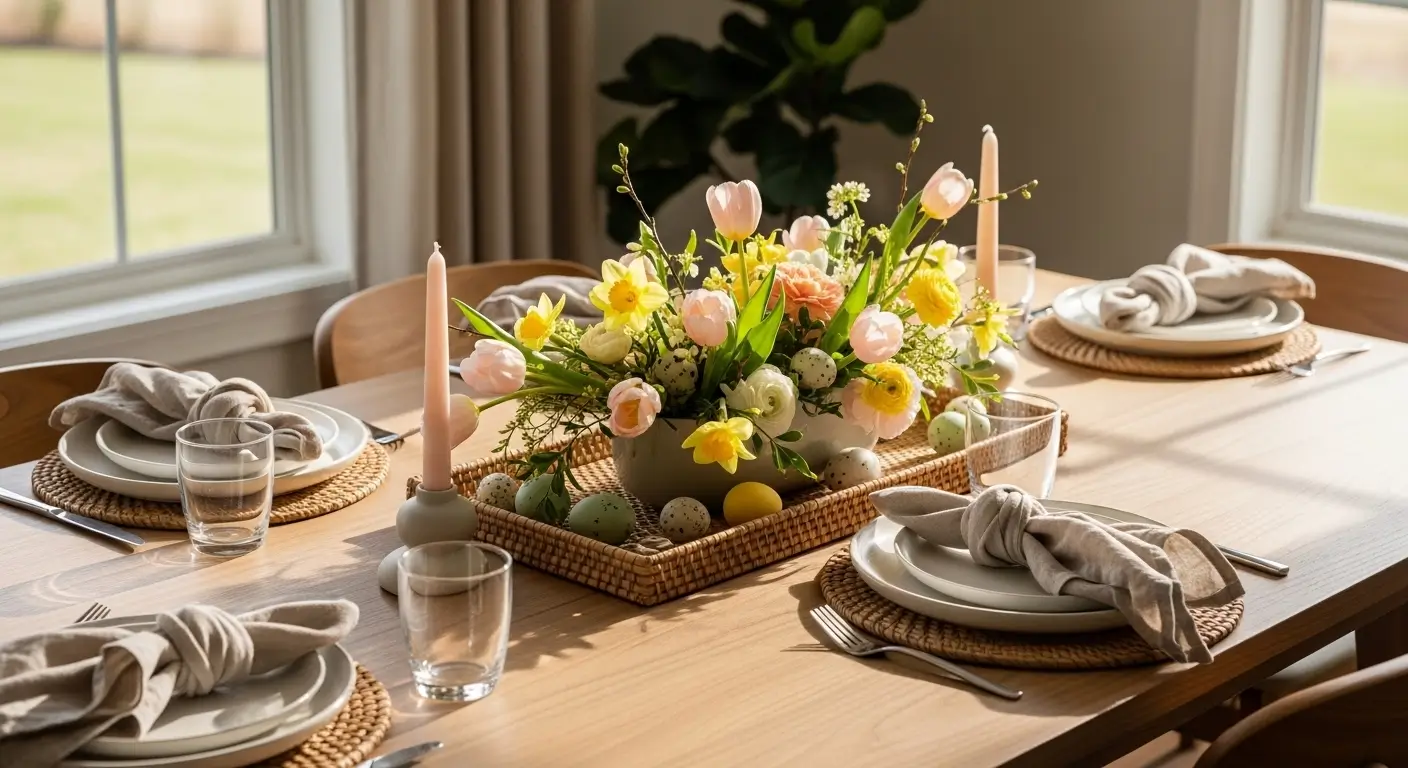
When the light shifts toward the golden clarity of spring, the dining table becomes the focal point of renewal.
Crafting Easter table centerpiece ideas is less about following a rigid tradition and more about capturing the ephemeral beauty of the season; the scent of damp earth, the fragility of new blooms, and the warmth of a shared meal.
An effective centerpiece does more than sit in the middle of the table; it anchors the room, setting a narrative of elegance and intentionality.
The modern Easter aesthetic has transitioned away from the synthetic and toward the soulful. We are seeing a return to organic textures, architectural floral placements, and tonal palettes that mirror the landscape.
Whether you are hosting a sprawling garden brunch or an intimate candlelit dinner, your centerpiece acts as the visual heartbeat of the experience. It is the bridge between the architecture of your home and the conviviality of the holiday.
In this guide, we move beyond the expected. We explore how to layer height, manipulate negative space, and utilize seasonal elements to create a tablescape that feels curated, professional, and deeply inviting.
By focusing on scale, proportion, and texture, you can transform your dining room into a sanctuary of spring sophistication.
Architectural and Elegant Floral Arrangements
1. The Monoblossom Statement in Smoked Glass
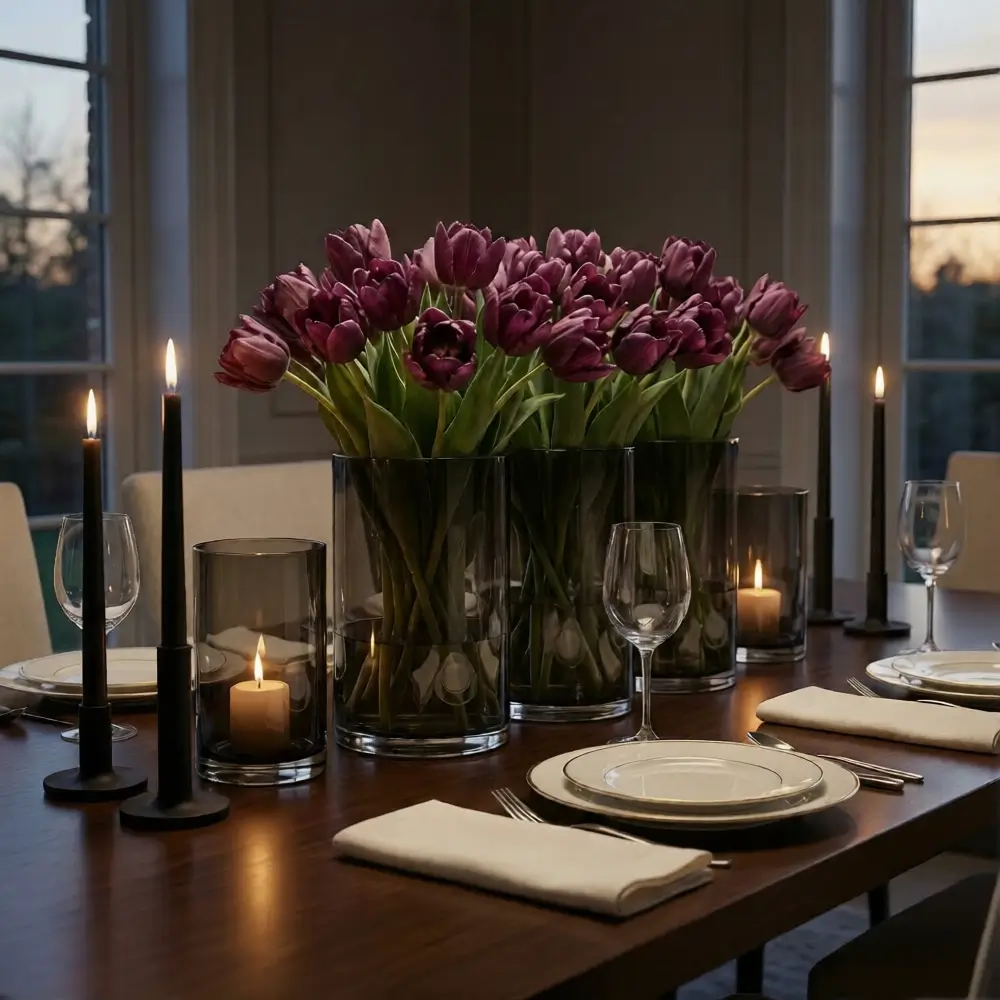
For a formal dining room with a contemporary edge, skip the mixed bouquet. Select one variety of flower; such as parrot tulips or double-petaled narcissus – and mass them in a series of heavy, smoked-glass vessels. By keeping the floral type consistent, you create a high-impact visual “block” that feels intentional rather than chaotic.
- Palette: Deep plum, charcoal glass, and creamy white.
- Best For: Sophisticated evening dinners on a marble or dark wood table.
2. Deconstructed Meadow Runs
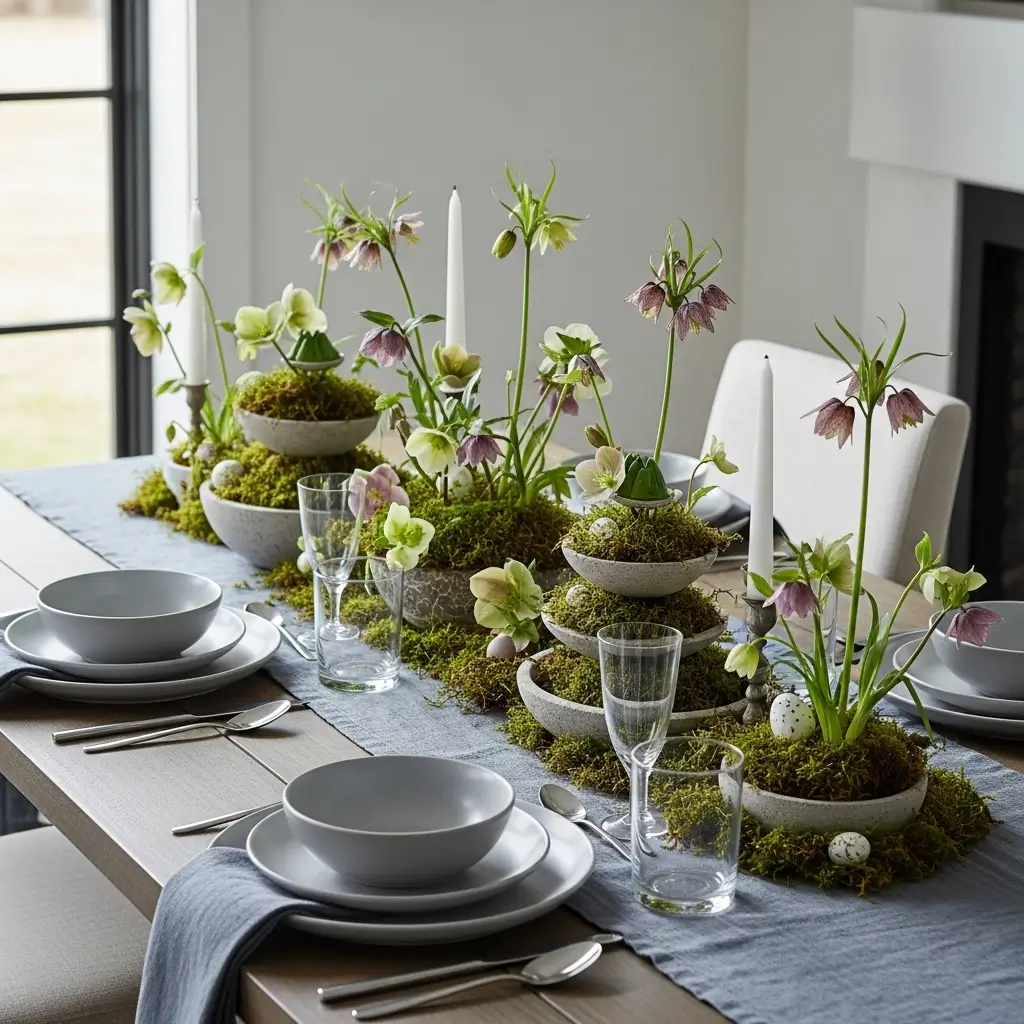
Instead of one central vase, create a “living” path down the center of a long rectangular table. Use low, ceramic Ikebana-style frogs hidden inside shallow stone bowls. Nestle moss, hellebores, and fritillaria at varying heights to mimic a forest floor. This adds movement and allows guests to see over the décor easily.
- Palette: Moss green, dusty mauve, and slate grey.
- Best For: Long farmhouse tables or modern trestle tables.
3. Cherry Blossom Altitudes
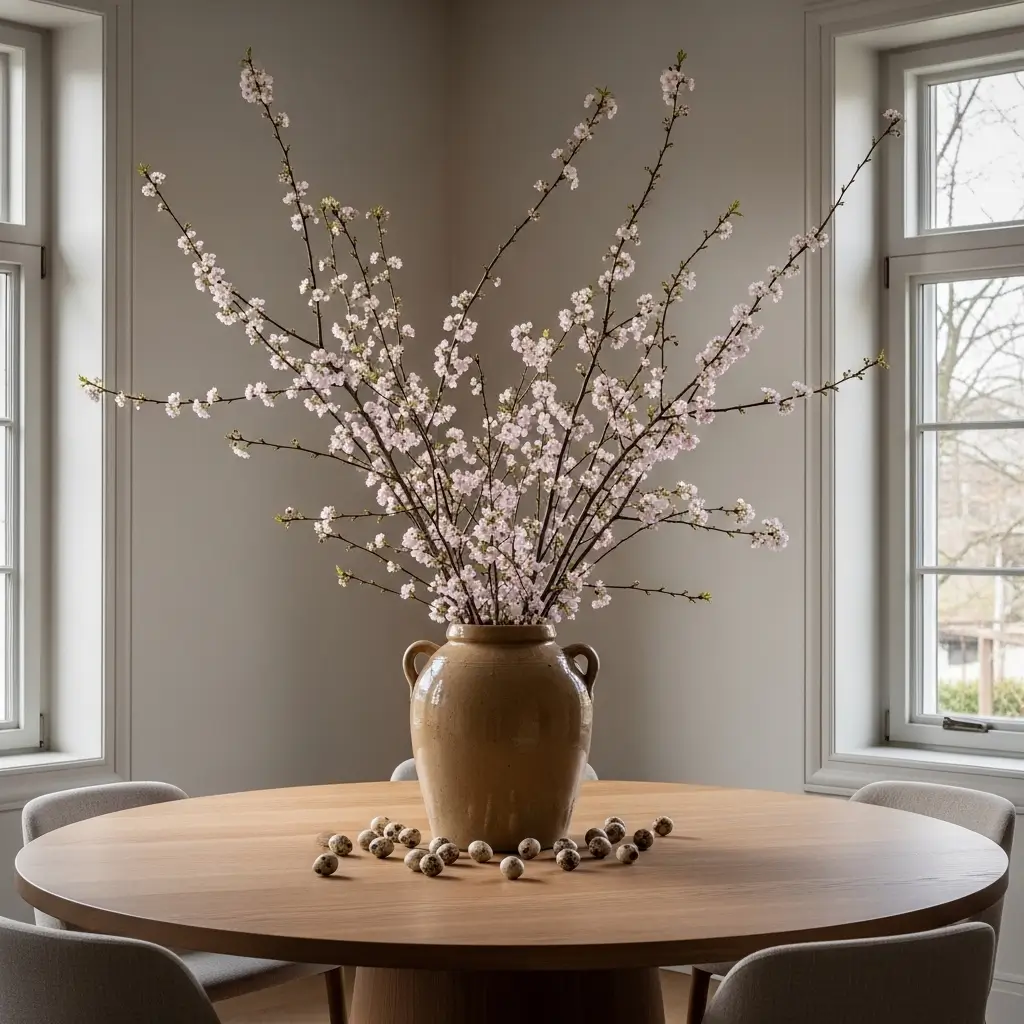
In rooms with high ceilings, leverage vertical space. Secure tall, budding cherry blossom or forsythia branches in a heavy, oversized stoneware crock. The height creates a sense of drama without cluttering the “eye level” of the guests. Surround the base with simple, unadorned quail eggs for a subtle nod to the season.
- Palette: Pale pink, tawny wood, and stoneware beige.
- Best For: Entryway buffet tables or grand circular dining tables.
Styling Tip: The Rule of Visual Breathability To ensure your Easter tablescape inspiration remains functional, keep the “conversation zone” clear. Centerpieces should either be lower than 10 inches or tall enough (over 24 inches) that the bulk of the arrangement sits above the guests’ line of sight. This allows for unobstructed eye contact across the table, maintaining the flow of conversation.
Modern Minimalist Easter Centerpieces
4. The Sculptural Stone and Egg Composition
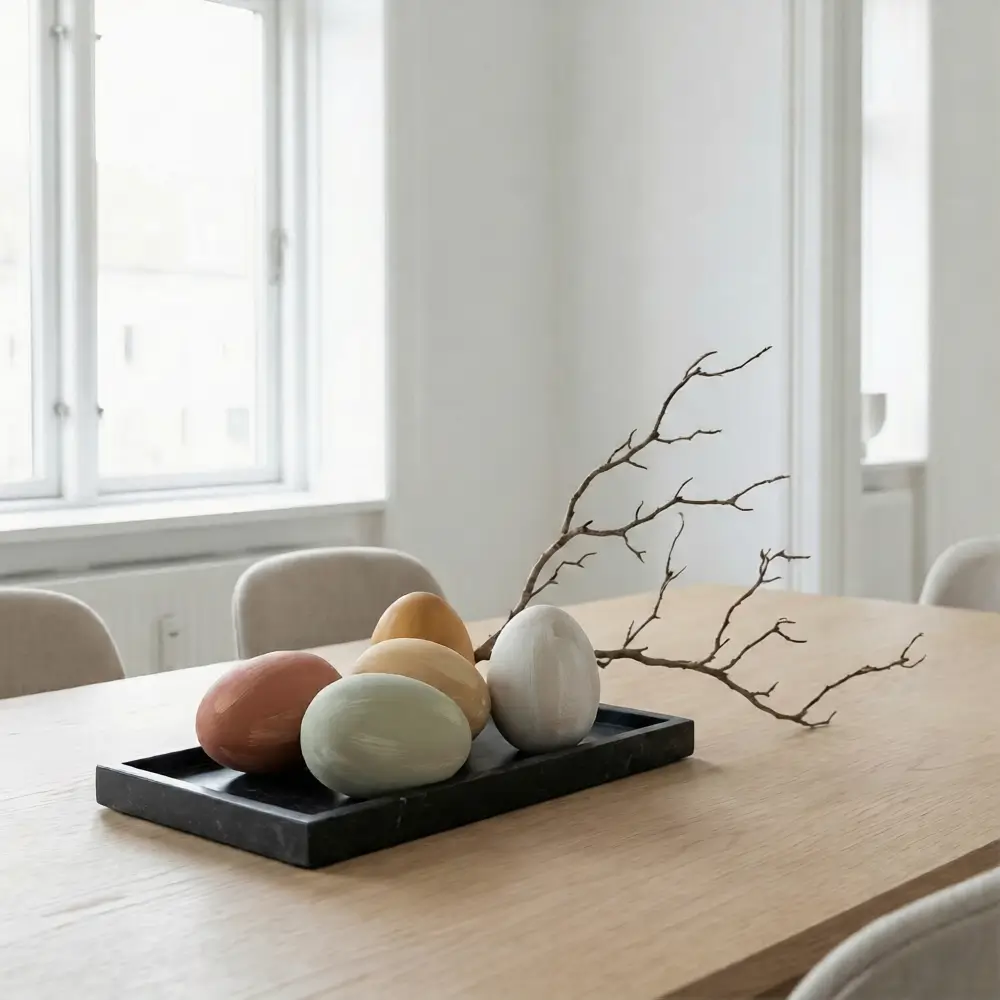
Minimalism thrives on contrast. Place a matte black or white travertine tray in the center of a minimalist oak table. Arrange three to five oversized, hand-painted ceramic eggs in varying earthy tones; terracotta, sage, and ochre. Add a single, sculptural dried branch to introduce an organic, asymmetrical line.
- Palette: Earth tones, matte black, and natural oak.
- Best For: Minimalist apartments or Scandi-style brunch settings.
5. Floating Hellebores in Shallow Zinc
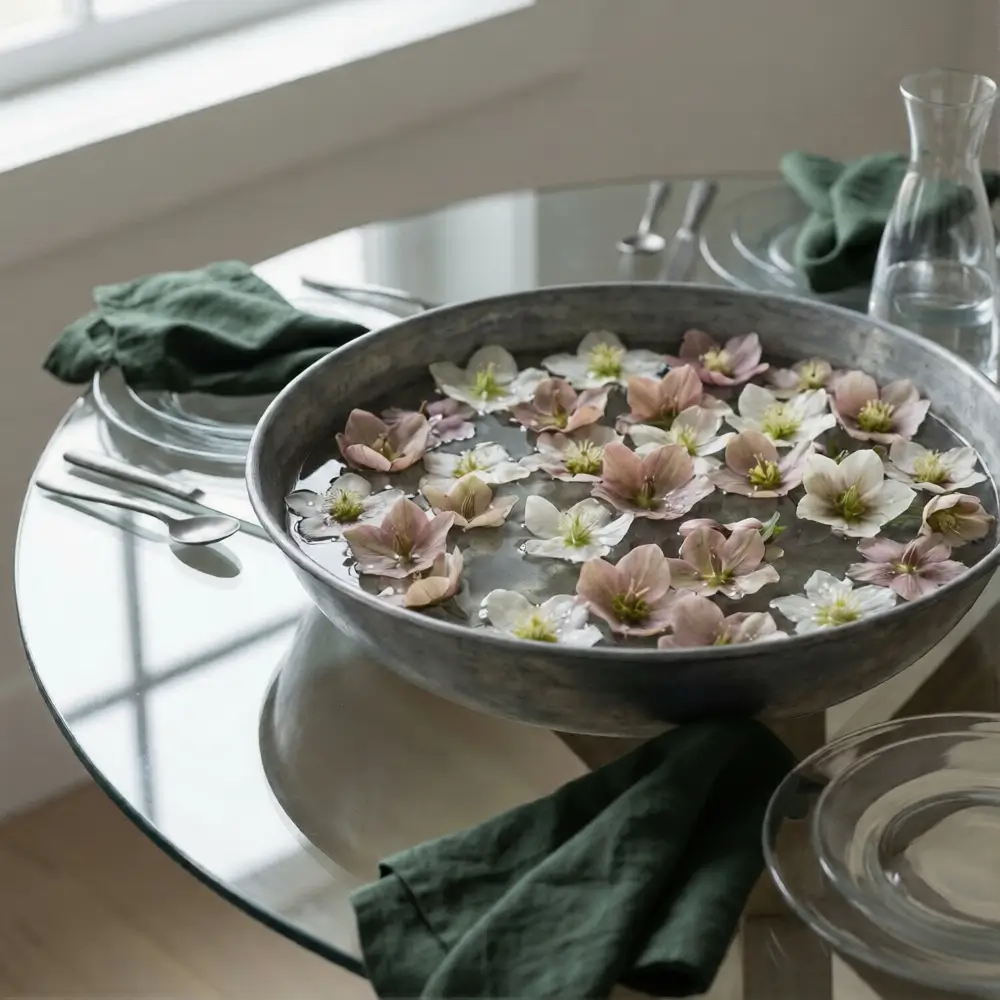
For a low-profile look that feels incredibly fresh, fill a large, shallow zinc or copper bowl with water. Cut the heads of hellebores or camellias and let them float freely. The metallic reflection combined with the delicate petals creates a quiet, reflective centerpiece that feels like a piece of art.
- Palette: Pewter, deep forest green, and wine-stained white.
- Best For: Round glass tables or small intimate breakfasts.
6. Linear Taper and Bud Vase Sequence
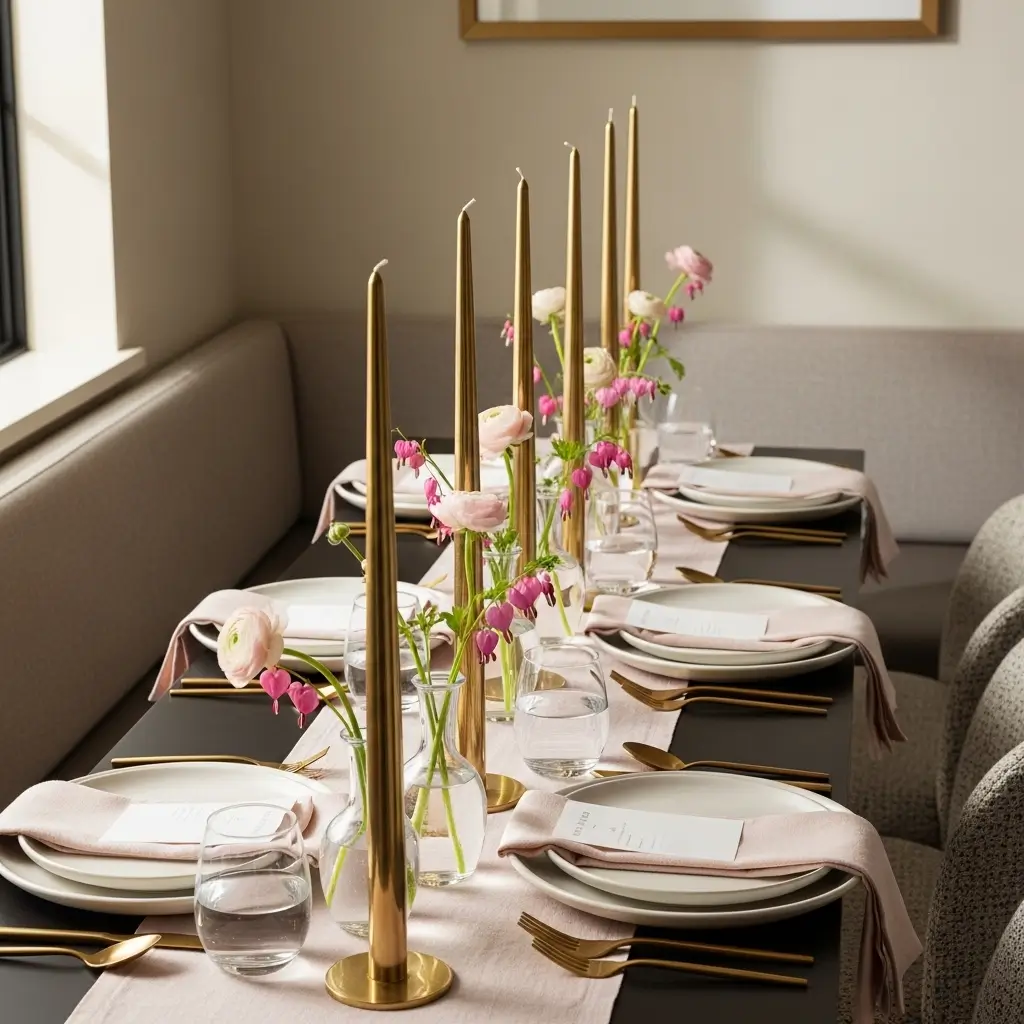
Simplicity is often the most sophisticated choice. Line the center of your table with a row of slim, modern brass taper holders and intercalate them with delicate glass bud vases. Each vase should hold a single stem, such as a ranunculus or a sprig of bleeding heart. The repetition creates a rhythmic, clean visual.
- Palette: Polished brass, clear glass, and blush.
- Best For: Modern bistro tables or narrow dining nooks.
Rustic Farmhouse and Natural Textures
7. The Woven Basket Grassland
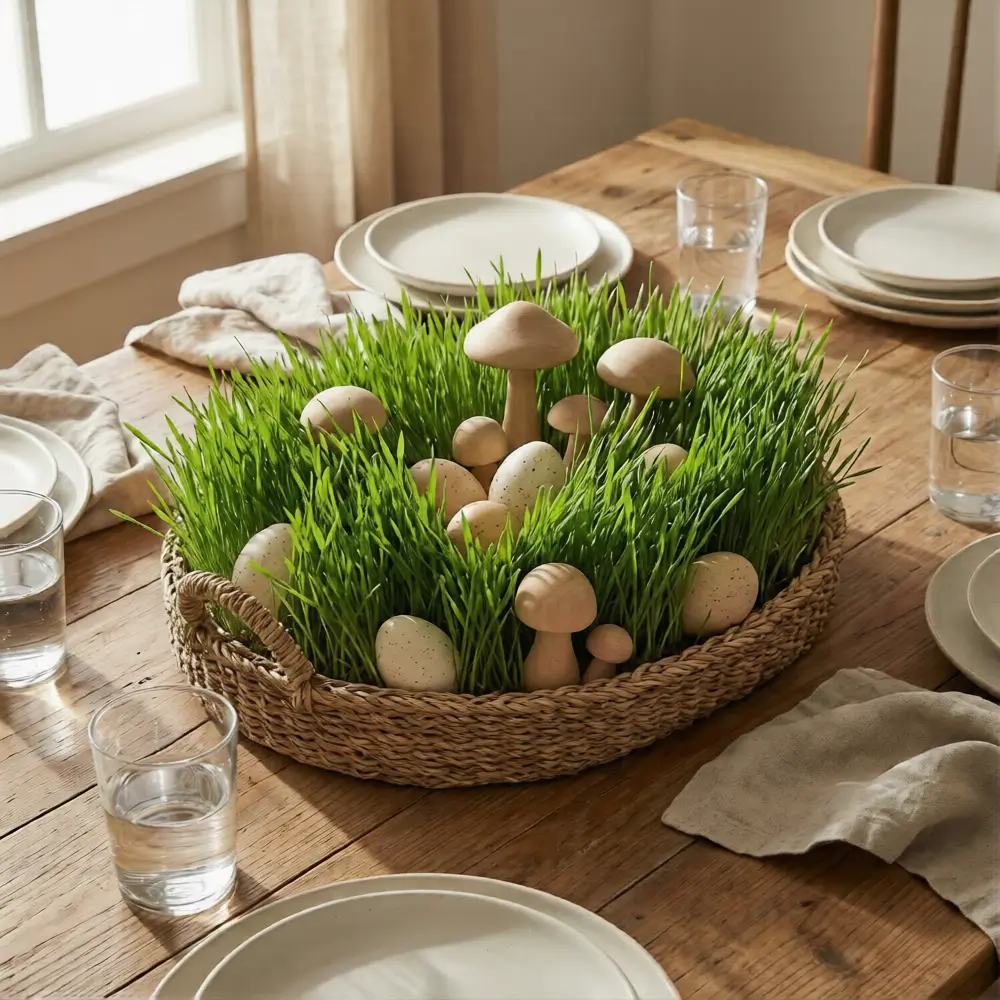
Bring the outdoors in by using a long, shallow tobacco basket or a hand-woven seagrass tray as your base. Fill it with live wheatgrass (easily grown or purchased in flats) and “plant” wooden mushrooms and speckled stoneware eggs within the blades. It feels tactile, grounded, and perfectly suited for a relaxed holiday.
- Palette: Honey wood, vibrant grass green, and cream.
- Best For: Family-style brunch on a reclaimed wood table.
8. Bleached Wood and Dried Florals
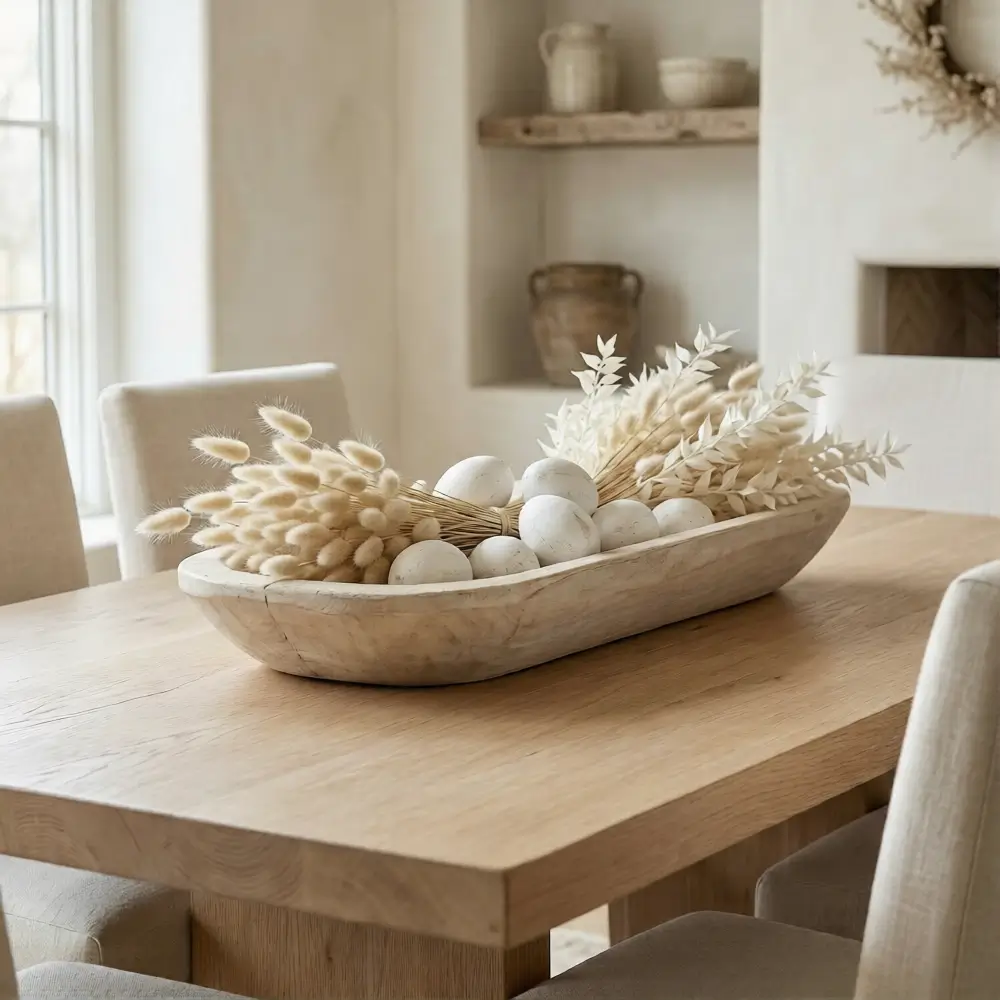
For those who prefer a neutral, monochromatic look, use a hand-carved dough bowl. Fill it with dried bunny tails, bleached ruscus, and white-washed decorative eggs. This Easter table styling relies entirely on texture rather than color, making it a timeless choice for a farmhouse aesthetic.
- Palette: Bone, parchment, and driftwood.
- Best For: Neutral-toned dining rooms and rustic cottages.
9. Terracotta Pot Cluster with Herbs
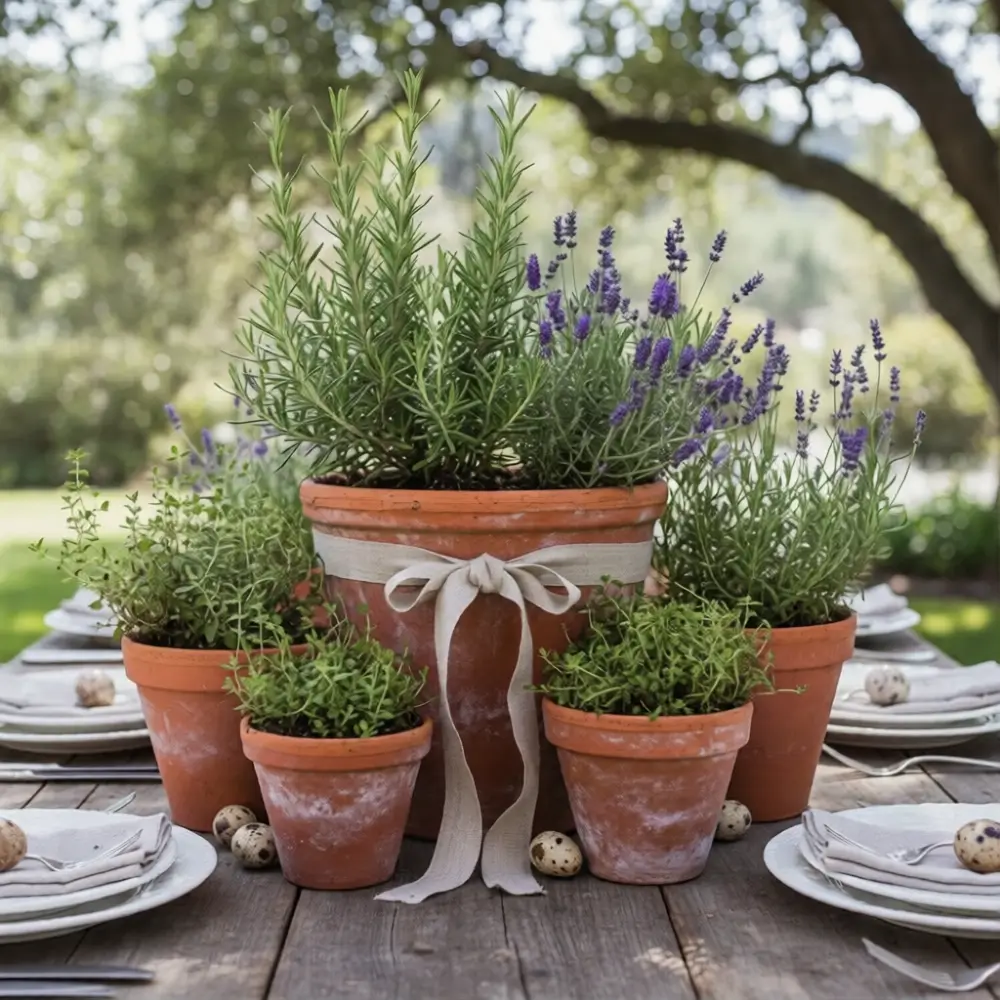
Instead of traditional flowers, use a collection of aged terracotta pots in different sizes. Plant them with aromatic herbs like rosemary, thyme, and lavender. Not only does this create a lush, tiered centerpiece, but the scent also enhances the dining experience. Tie a simple linen ribbon around the largest pot for a soft touch.
- Palette: Burnt orange, silvery green, and flaxen linen.
- Best For: Outdoor garden parties or casual kitchen table lunches.
Styling Tip: Layering with Textiles A centerpiece rarely stands alone. To give your spring table décor ideas a professional finish, layer a wrinkled linen runner beneath your focal point. The fabric provides a soft “landing” for your objects and helps define the central axis of the table, making even a simple arrangement feel substantial.
Pastel and Playful Spring Centerpieces
10. The Ombré Egg Cascade
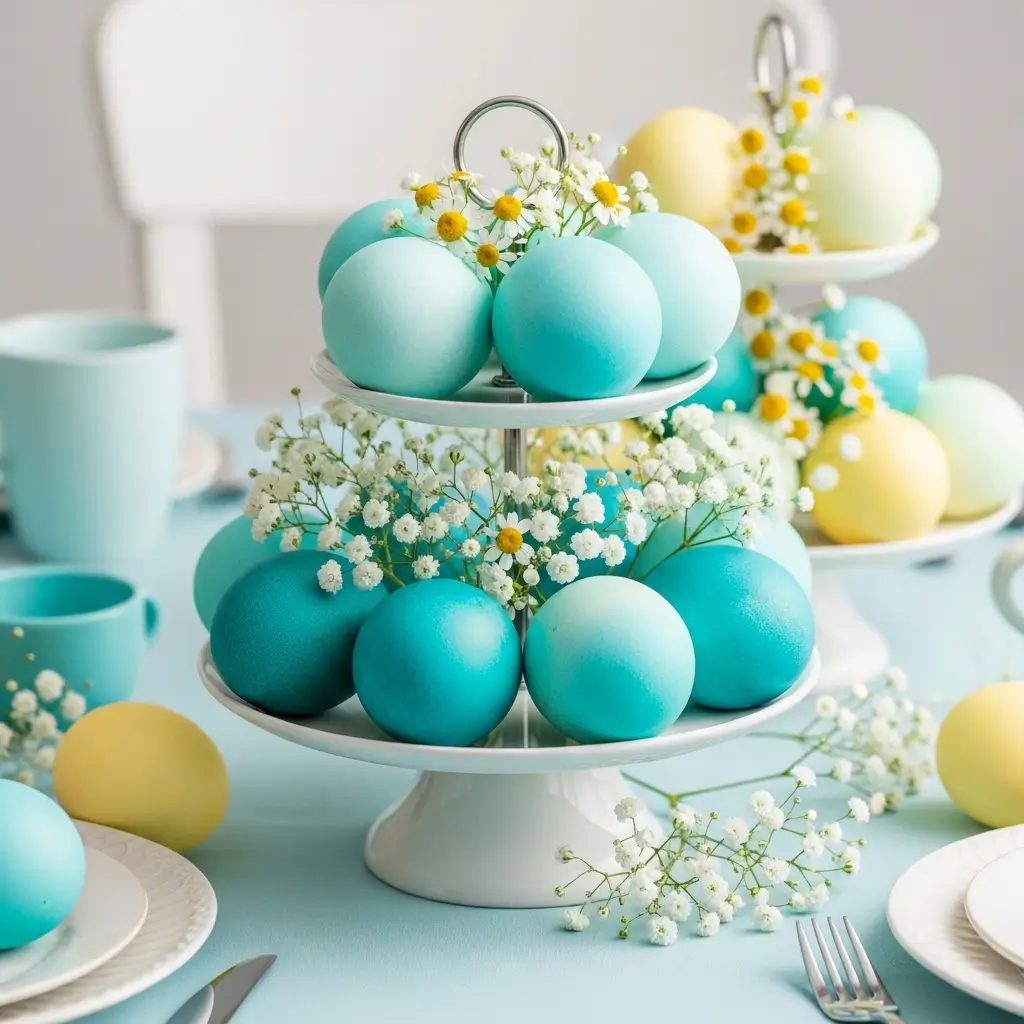
For a kid-friendly yet polished look, use a tiered cupcake stand or a series of pedestals. Arrange dyed eggs in an ombré transition – from deep teal to pale sky blue. Intersperse small clusters of baby’s breath or chamomile between the eggs to soften the structure.
- Palette: Sky blue, mint, and butter yellow.
- Best For: Easter morning breakfast with children.
11. Cabbage Leaf “Vases” and Tulips
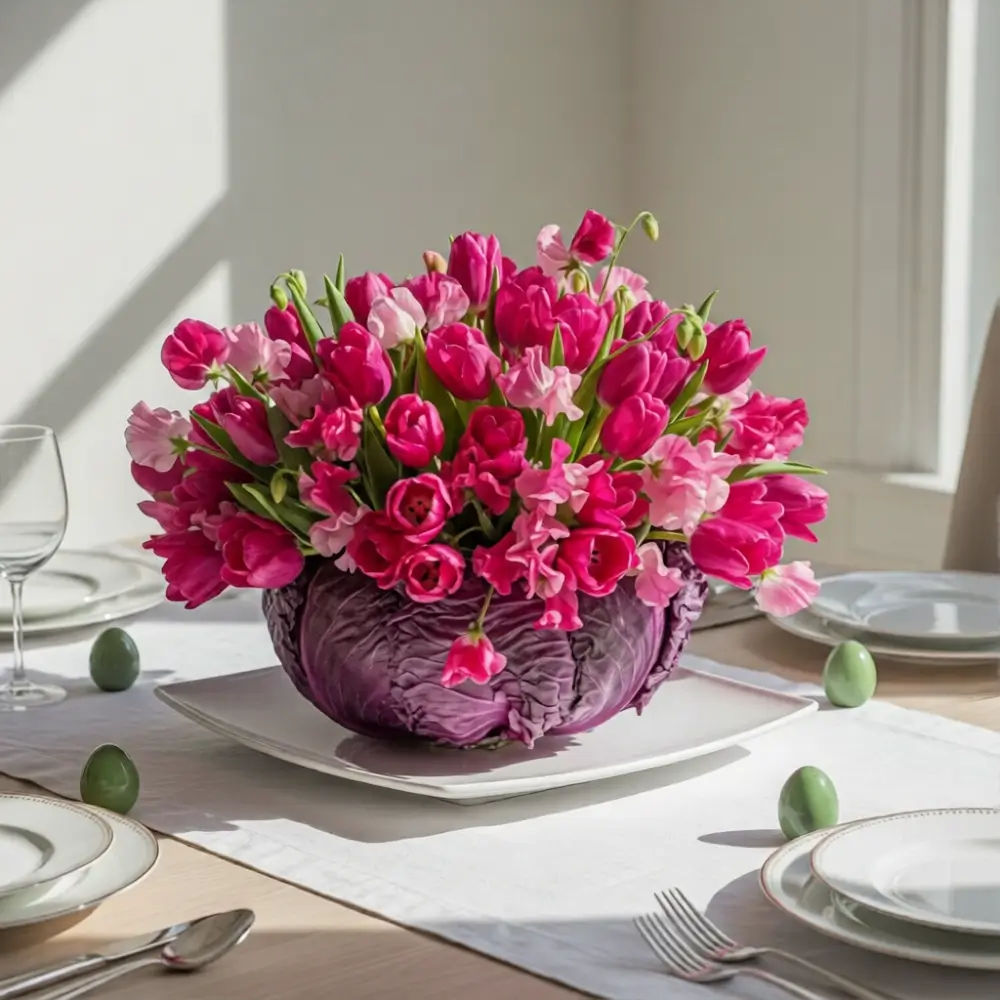
Embrace the whimsy of the garden by using a hollowed-out purple cabbage as a natural vase. Place a wet floral foam block inside and densly pack it with pink tulips and sweet peas. The waxy, textured leaves of the cabbage provide an incredible organic vessel that feels both high-fashion and playful.
- Palette: Magenta, violet, and bright spring green.
- Best For: A vibrant Easter lunch or a floral-themed tea party.
12. Nestled Porcelain Bunnies in Moss
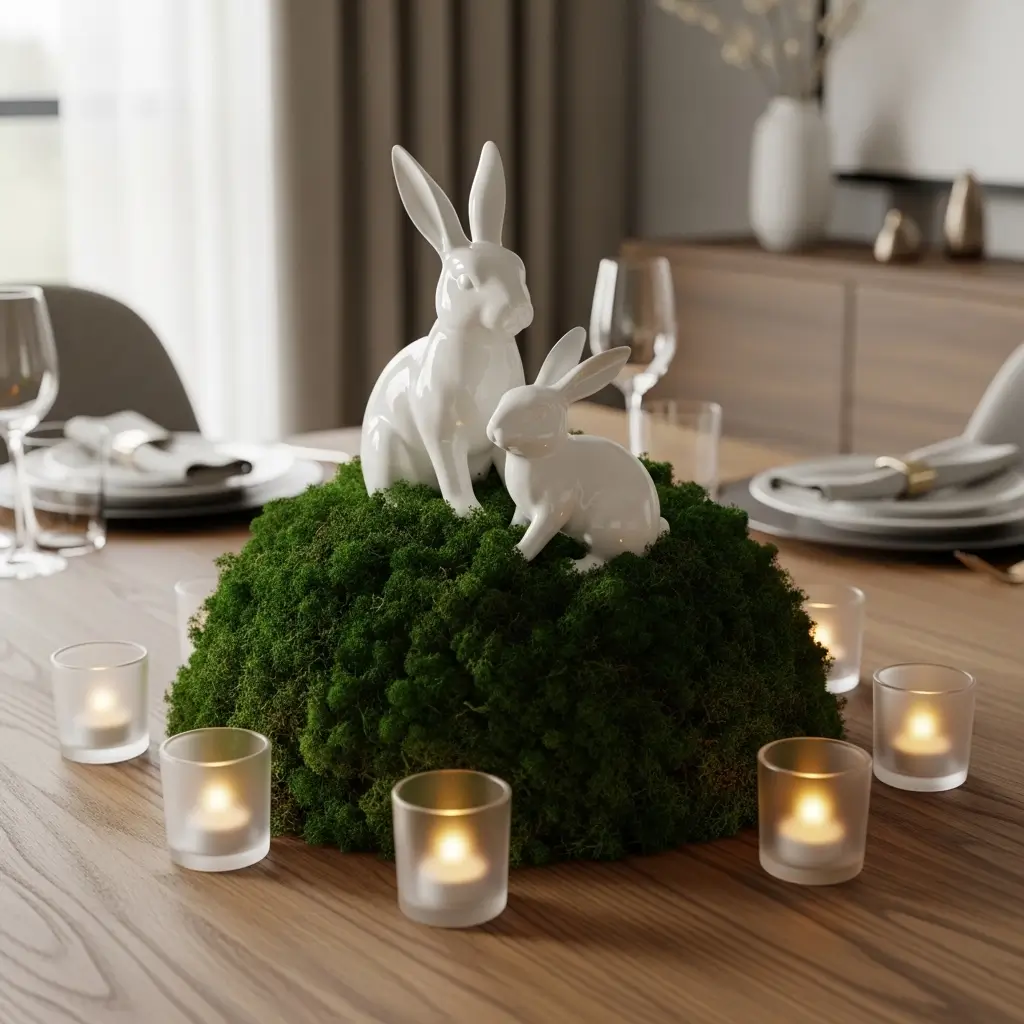
Avoid “kitsch” by choosing high-quality materials. Place a large, preserved moss mound in the center of the table and nestle a pair of white porcelain or bisque-fired bunnies within the greenery. Surround the mound with small tea lights in frosted glass to create a magical, “secret garden” feel.
- Palette: Emerald green, stark white, and warm candlelight.
- Best For: Elegant family gatherings where tradition meets modern style.
Outdoor Garden and Al Fresco Ideas
13. The Hanging Floral Chandelier
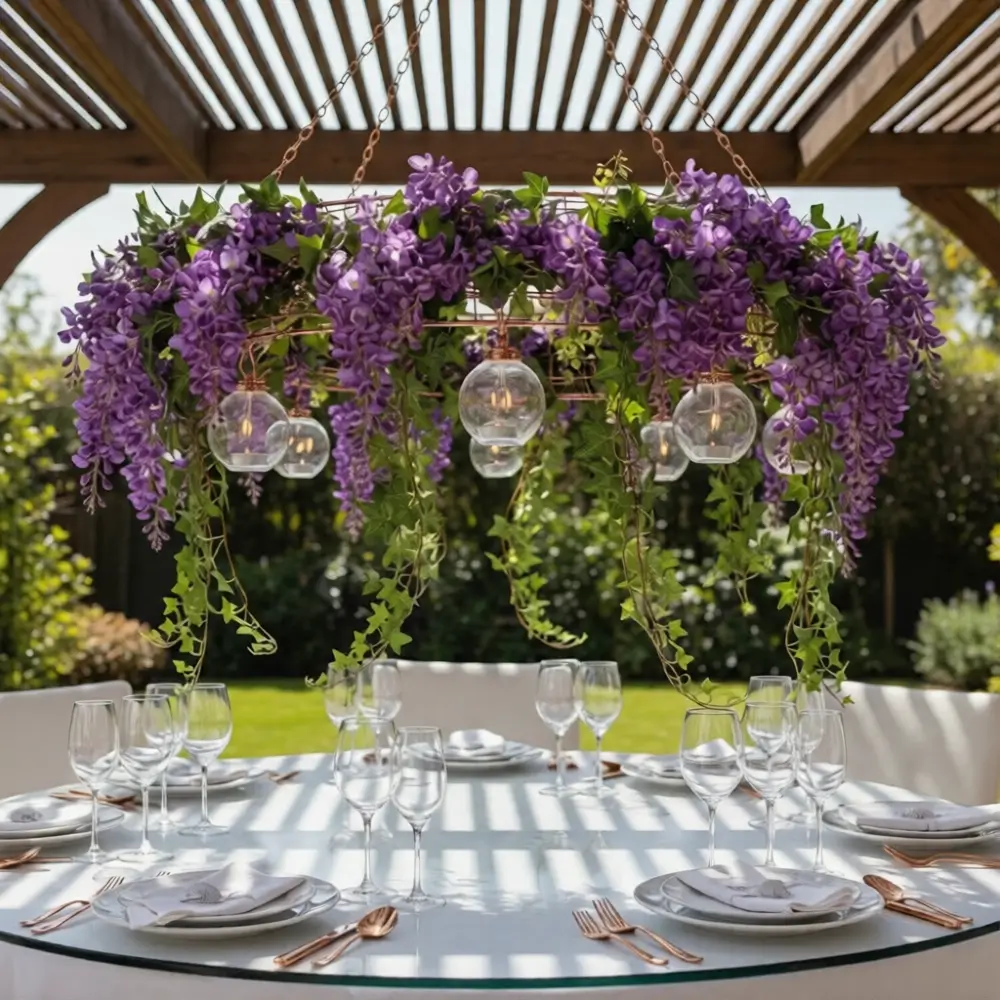
If you are dining outdoors under a pergola or tree, move your centerpiece off the table. Suspend a vintage ladder or a circular wire frame above the table and drape it with wisteria, ivy, and hanging glass globes containing tea lights. This leaves the table clear for food while creating an immersive environment.
- Palette: Wisteria purple, leaf green, and copper wire.
- Best For: Formal outdoor Easter dinner.
14. Citrus and Stone Fruit Abundance
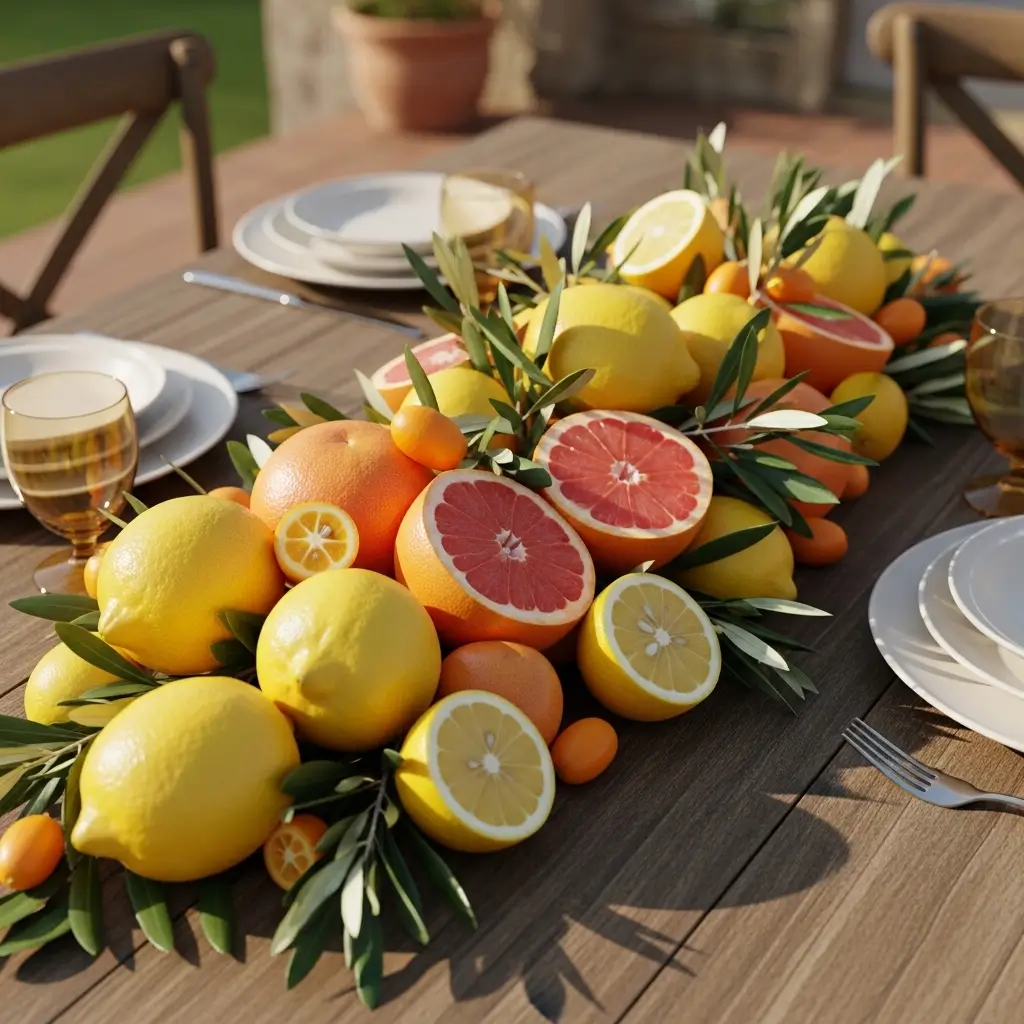
For a Mediterranean-inspired Easter, move away from eggs and toward fruit. Create a lush runner of lemons, kumquats, and sliced grapefruits directly on the wood, interspersed with olive branches. The bright colors and fresh citrus scent are perfect for a sun-drenched patio meal.
- Palette: Lemon yellow, orange, and silvery olive green.
- Best For: Al fresco brunch or a long, lazy afternoon lunch.
15. Hurricane Lanterns with Wildflower Sprigs
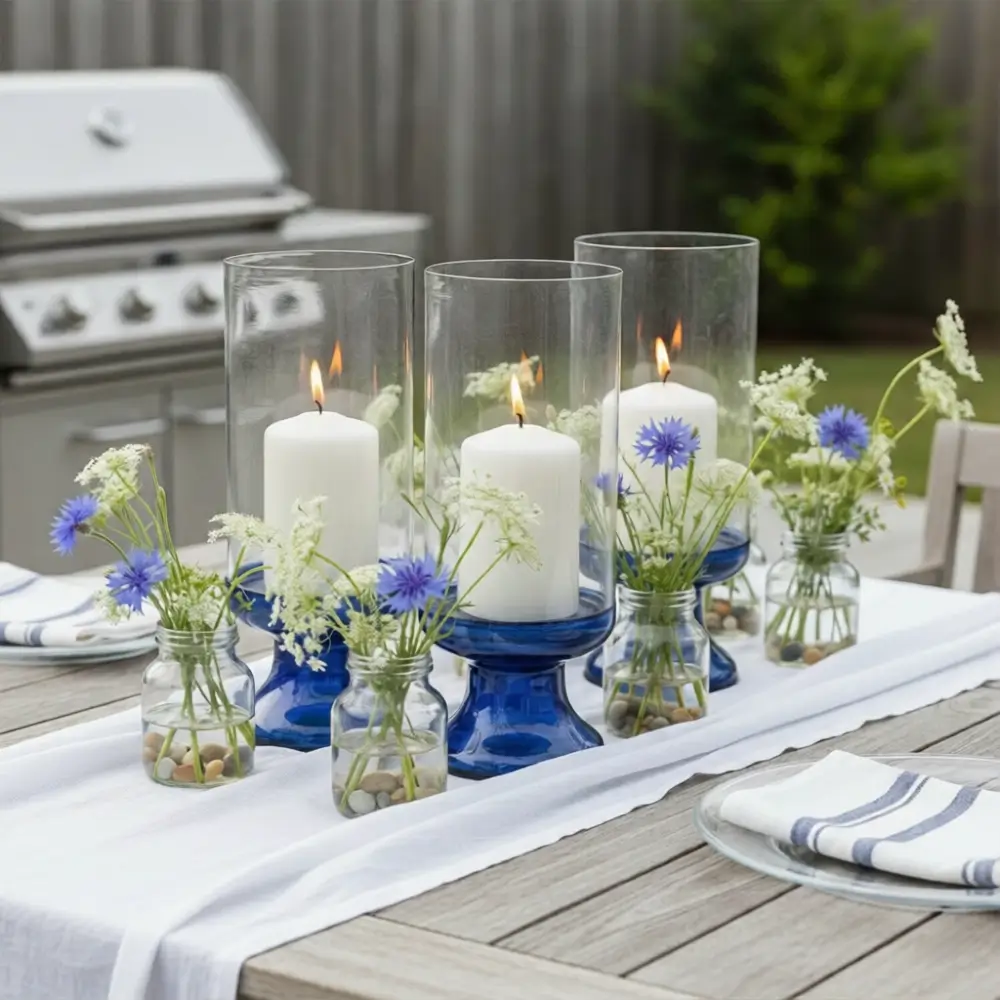
Wind is often a factor for outdoor Easter table centerpiece ideas. Use heavy glass hurricane lanterns with thick pillar candles as your anchors. Surround the base of the lanterns with small, weighted jars filled with hardy wildflowers like cornflowers or Queen Anne’s lace.
- Palette: Clear glass, navy blue, and crisp white.
- Best For: Windy coastal settings or casual backyard BBQs.
Refining the Tablescape: Proportions and Finishing Touches
When finalizing your fresh spring centerpiece ideas, consider the weight of your dinnerware. If you are using heavy, artisanal stoneware, your centerpiece should have enough visual “heft” to match – think thick branches or large ceramic vessels.
If your china is delicate and translucent, opt for airy, ethereal florals like poppies or cosmos. Lighting also plays a crucial role. For daytime brunches, lean into natural light and reflective surfaces like glass and silver. For evening dinners, the flicker of candlelight is non-negotiable.
Use unscented candles near food to avoid clashing with the aroma of the meal, and vary the heights of your tapers to create a sense of movement across the table.
Finally, remember the power of the “hero” object. Every great centerpiece has one element that draws the eye first; a particularly gnarly branch, a vibrant bloom, or a uniquely shaped sculpture. Build around that hero, and the rest of the composition will naturally fall into place.
Conclusion
The most memorable Easter table centerpiece ideas are those that feel personal and reflective of the host’s style. Whether you lean toward the structured elegance of a monoblossom arrangement or the wild, untamed beauty of a deconstructed meadow, the goal is to celebrate the season’s vitality.
By focusing on quality materials, thoughtful layering, and a cohesive color story, you can create a space that does more than look beautiful; it fosters a sense of wonder and connection for everyone gathered around it.
As you prepare for your spring festivities, let the landscape be your guide. Pull colors from the first buds of the season, textures from the garden, and inspiration from the light. Your table is a canvas; treat it with the same care and creativity as the meal you serve upon it.