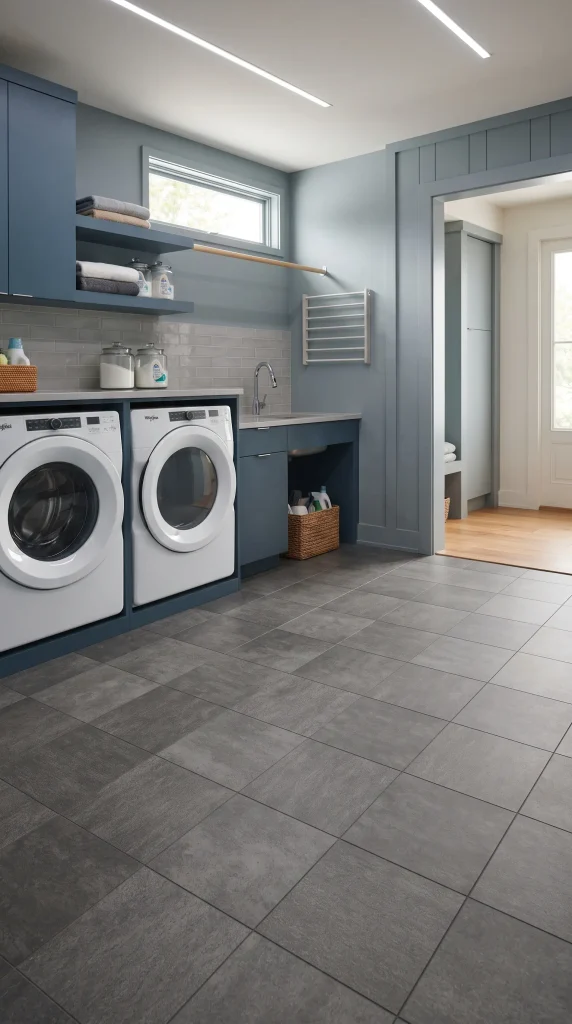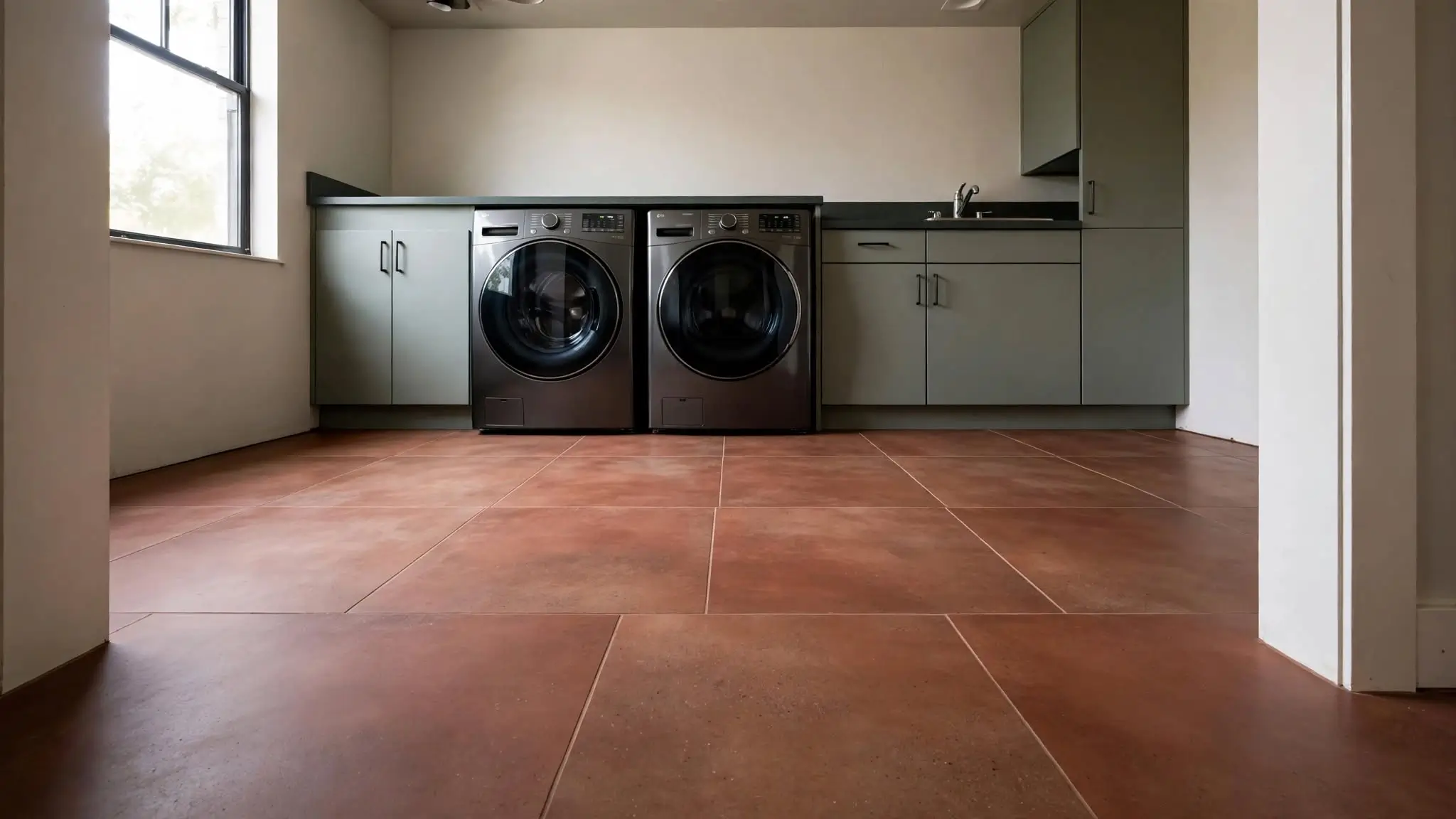
Choosing among Laundry Room Flooring Options involves more than picking a surface that matches your cabinets or paint colors.
A laundry room may be exposed to splashes, damp shoes, detergent spills, heavy appliances, and, in some cases, washing-machine leaks.
Those conditions make moisture management, cleaning requirements, surface traction, and installation details especially important.
The challenge is that flooring materials often look similar while performing very differently. A porcelain tile can resemble natural stone. Luxury vinyl plank can imitate hardwood.
Some laminate products offer enhanced moisture protection, yet their limitations differ from those of vinyl or tile.
Water-resistant and waterproof are not interchangeable terms, and a product’s surface performance does not automatically describe the performance of the entire installed floor system.
The following guide compares 12 popular laundry room flooring materials, explaining what each looks like, how it performs, and what factors deserve attention before making a final decision.
1. Porcelain Tile
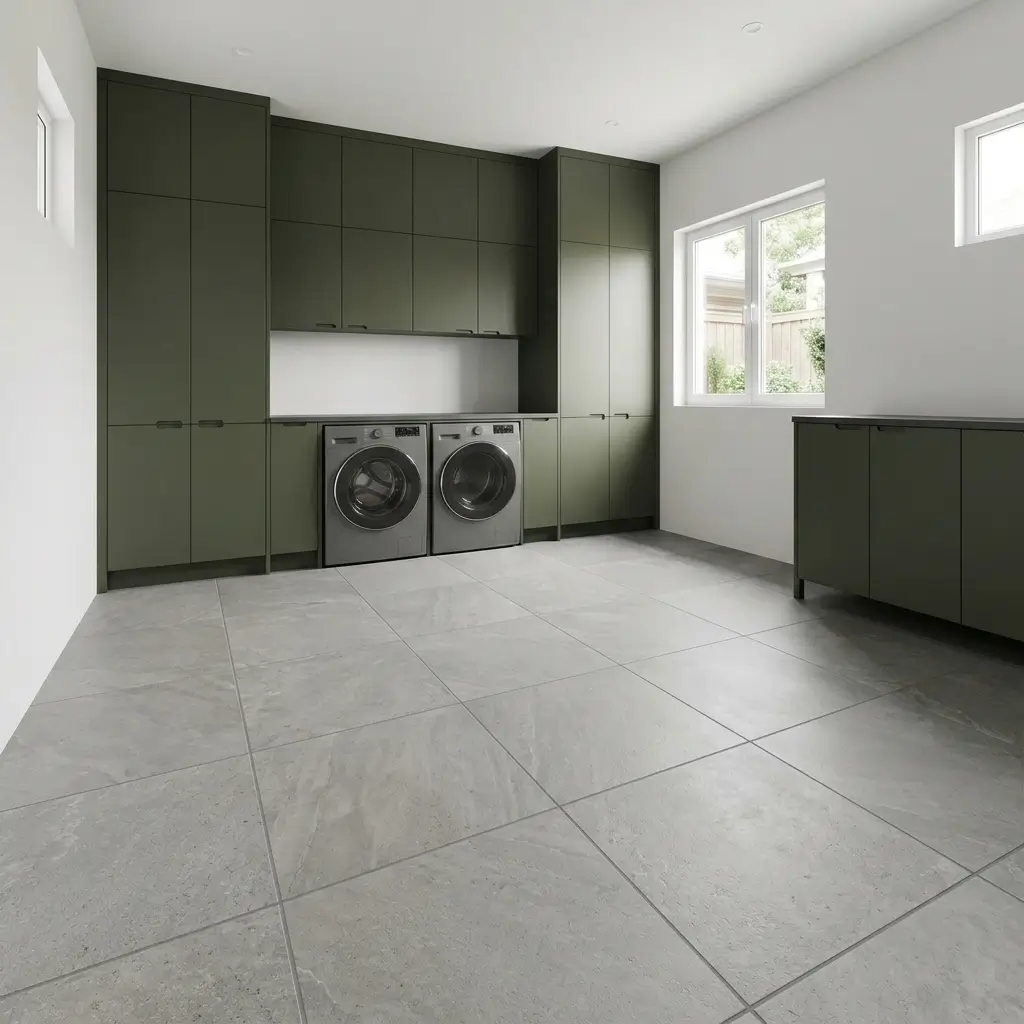
Porcelain tile is often considered among the best flooring for a laundry room because its tile body has very low water absorption when classified as porcelain under applicable standards, typically 0.5% or less.
Visually, porcelain offers exceptional flexibility. It is available in wood-look planks, stone-look formats, concrete-inspired finishes, and large modern tiles.
That variety makes it suitable for everything from traditional utility rooms to contemporary renovations.
Its practical appeal comes from durability and routine cleanability. At the same time, traction depends heavily on the specific finish.
A polished tile will behave differently from a textured one when moisture is present. Grout joints also require consideration because they introduce maintenance needs that differ from the tile surface itself.
A porcelain tile installation should not automatically be assumed waterproof. Tile, grout, substrate preparation, movement joints, and installation quality all influence how the complete floor performs.
2. Ceramic Tile (Non-Porcelain)
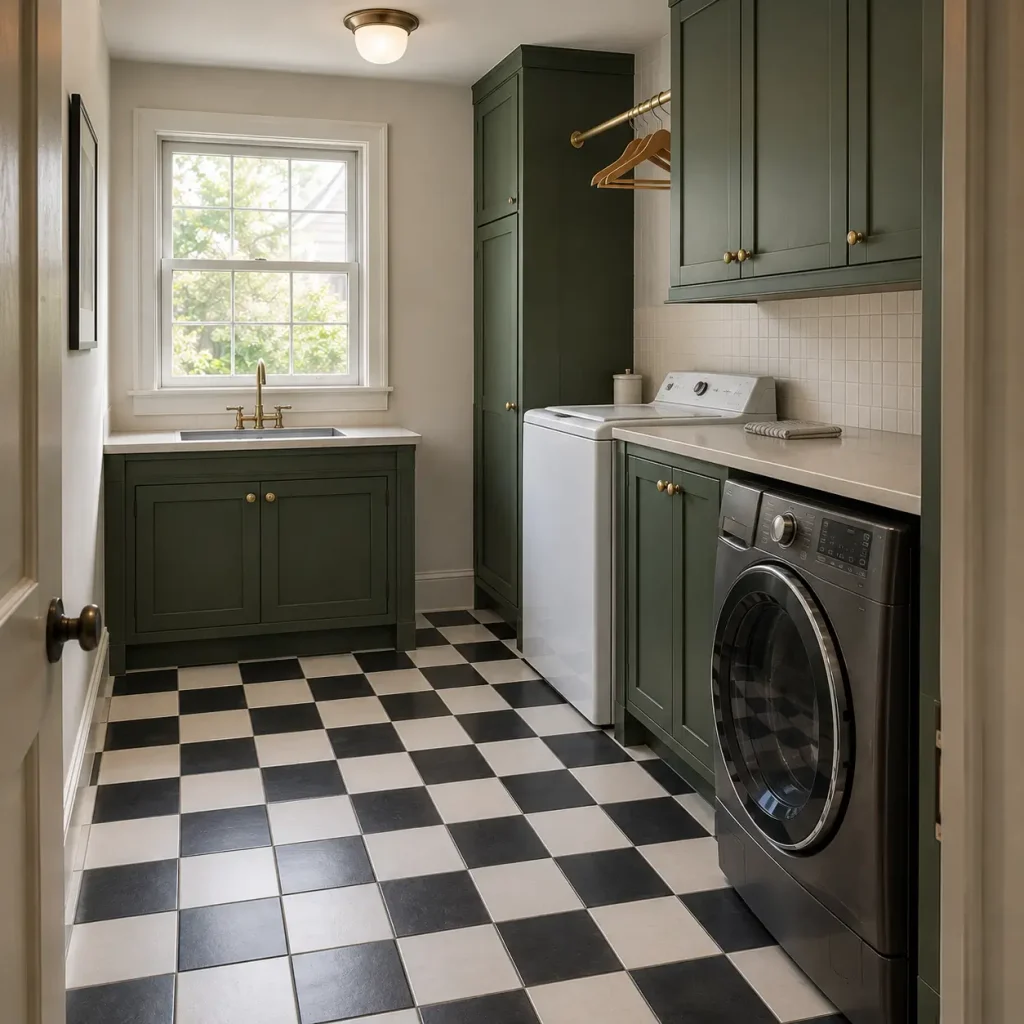
Non-porcelain ceramic tile remains a popular option due to its enormous range of colors, patterns, decorative motifs, and finishes.
Since porcelain is a type of ceramic tile, this category focuses on ceramic products that do not meet porcelain classifications.
One of ceramic tile’s strengths is design flexibility. Laundry room tile flooring can incorporate geometric patterns, traditional designs, or colorful accents that would be difficult to achieve with many other materials.
Performance varies substantially by product. Water absorption, glaze characteristics, durability, and traction all depend on the tile selected.
Products intended for walls should not automatically be used on floors, since floor installations require adequate strength and wear resistance.
Maintenance often centers on grout joints. Regular cleaning is typically straightforward, but grout may require additional attention over time.
Ceramic tile can work well in many laundry rooms, provided the chosen product is specifically rated for floor use and suited to the room’s conditions.
3. Luxury Vinyl Plank (LVP)
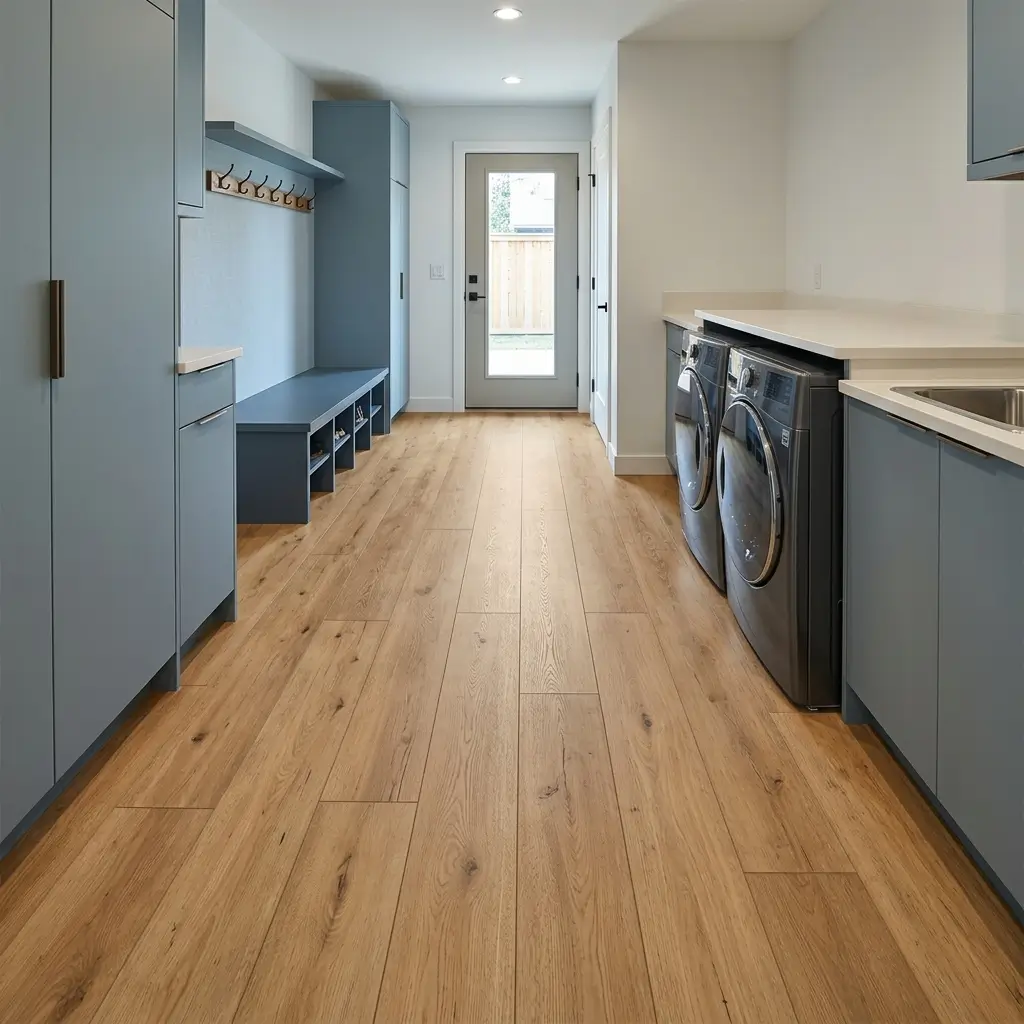
Luxury vinyl plank has become a leading choice for homeowners who want the appearance of wood without using natural hardwood.
The plank format mimics traditional flooring boards, and manufacturers now offer a wide range of oak, walnut, maple, and weathered-wood visuals.
Many LVP products provide strong moisture performance and are marketed as waterproof laundry room flooring.
Even so, the stated performance usually applies to the flooring product itself rather than every component of the installed assembly.
Water can still reach the subfloor through perimeter gaps, transitions, penetrations, or installation errors.
LVP generally feels more resilient underfoot than tile or concrete. Product construction, backing layers, and underlayment influence that experience.
Subfloor preparation remains critical. Uneven surfaces can affect appearance and long-term durability.
Heavy appliances, manufacturer-approved underlayments, and installation requirements should be reviewed before selecting a specific product.
4. Luxury Vinyl Tile (LVT)
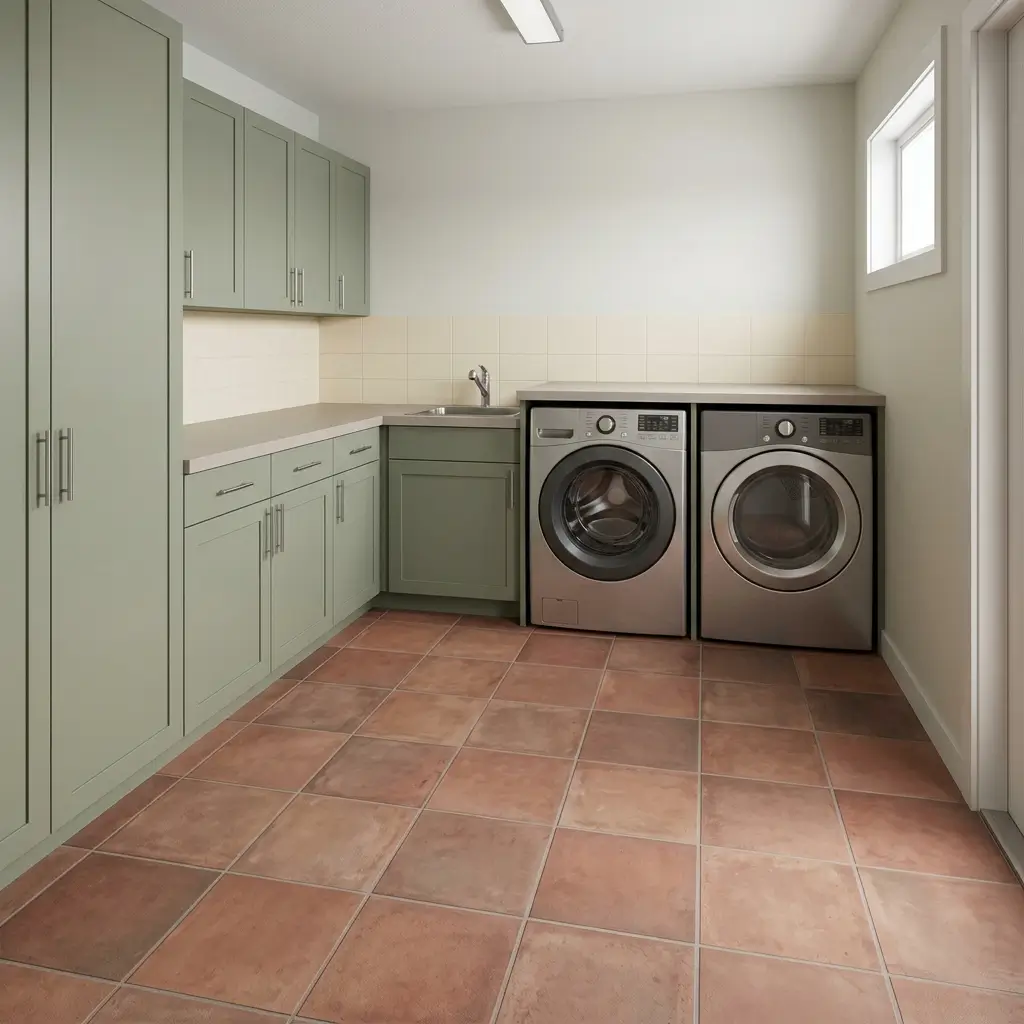
Luxury vinyl tile shares much of its construction technology with LVP but uses a tile format instead of a plank format.
It is particularly appealing for homeowners seeking stone-look, concrete-look, slate-inspired, or patterned floors.
LVT can suit modern architectural laundry rooms, traditional utility spaces, or transitional interiors. Large-format designs often create a cleaner visual appearance with fewer pattern interruptions.
Performance depends on the wear layer, construction method, installation system, and manufacturer specifications.
Some products incorporate textured surfaces intended to improve underfoot grip, though traction should always be evaluated using product-specific information rather than assumptions about the entire category.
Because LVT and LVP belong to the same resilient flooring family, their moisture characteristics often overlap. The greatest distinction is visual presentation.
LVT emphasizes tile-inspired aesthetics that many homeowners prefer when designing a more architectural laundry room.
5. Sheet Vinyl
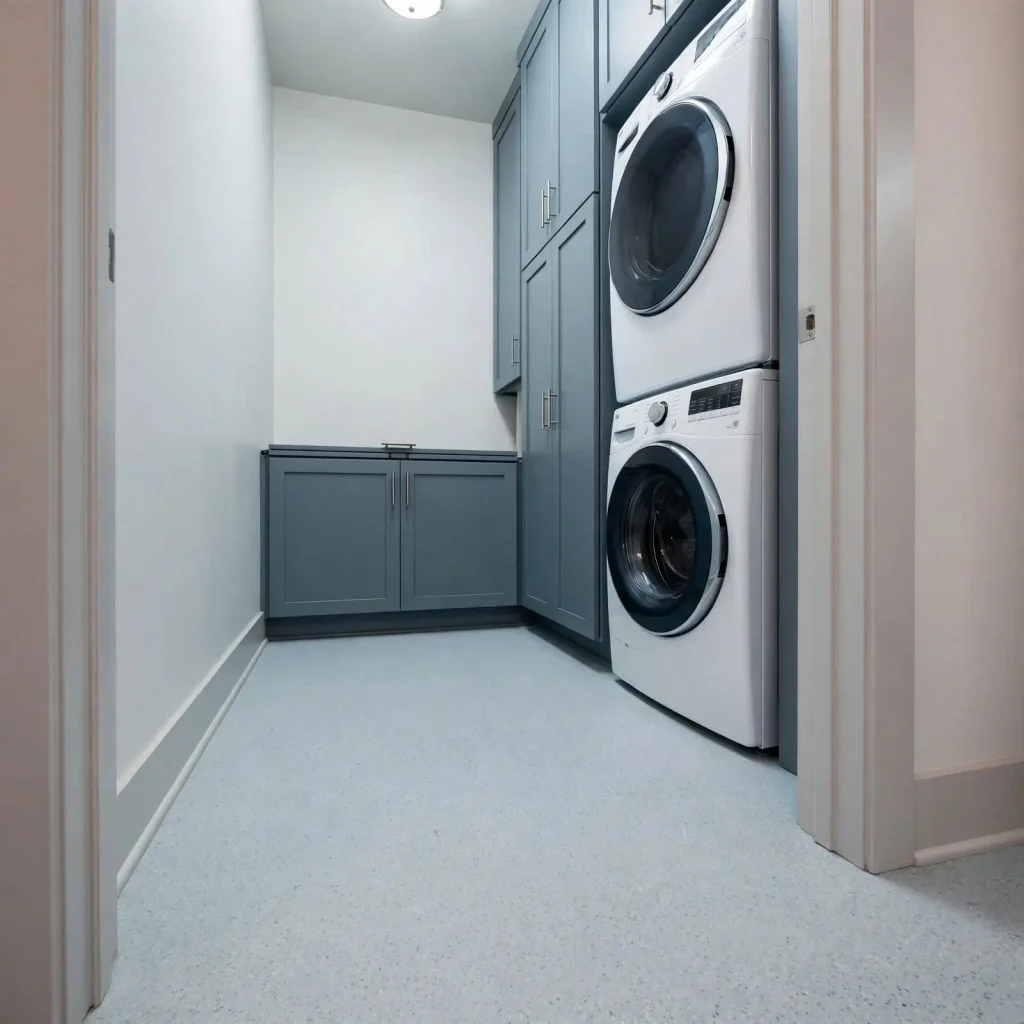
Sheet vinyl differs from plank and tile products because it is installed in large continuous sections. That format can reduce the number of seams across the floor surface.
For laundry rooms, the continuous appearance can be attractive in smaller spaces where visual simplicity is desirable.
Sheet vinyl is available in patterns resembling tile, stone, wood, or abstract contemporary surfaces.
Fewer seams may reduce opportunities for moisture intrusion, but the floor’s edges, penetrations, transitions, and installation quality still affect overall performance.
A continuous sheet should not be interpreted as proof that the entire system is waterproof.
The substrate beneath the flooring also matters. Surface imperfections may telegraph through some products, making preparation important before installation.
Following manufacturer instructions is particularly important because sheet-vinyl performance depends heavily on proper installation techniques.
6. Natural Stone Tile
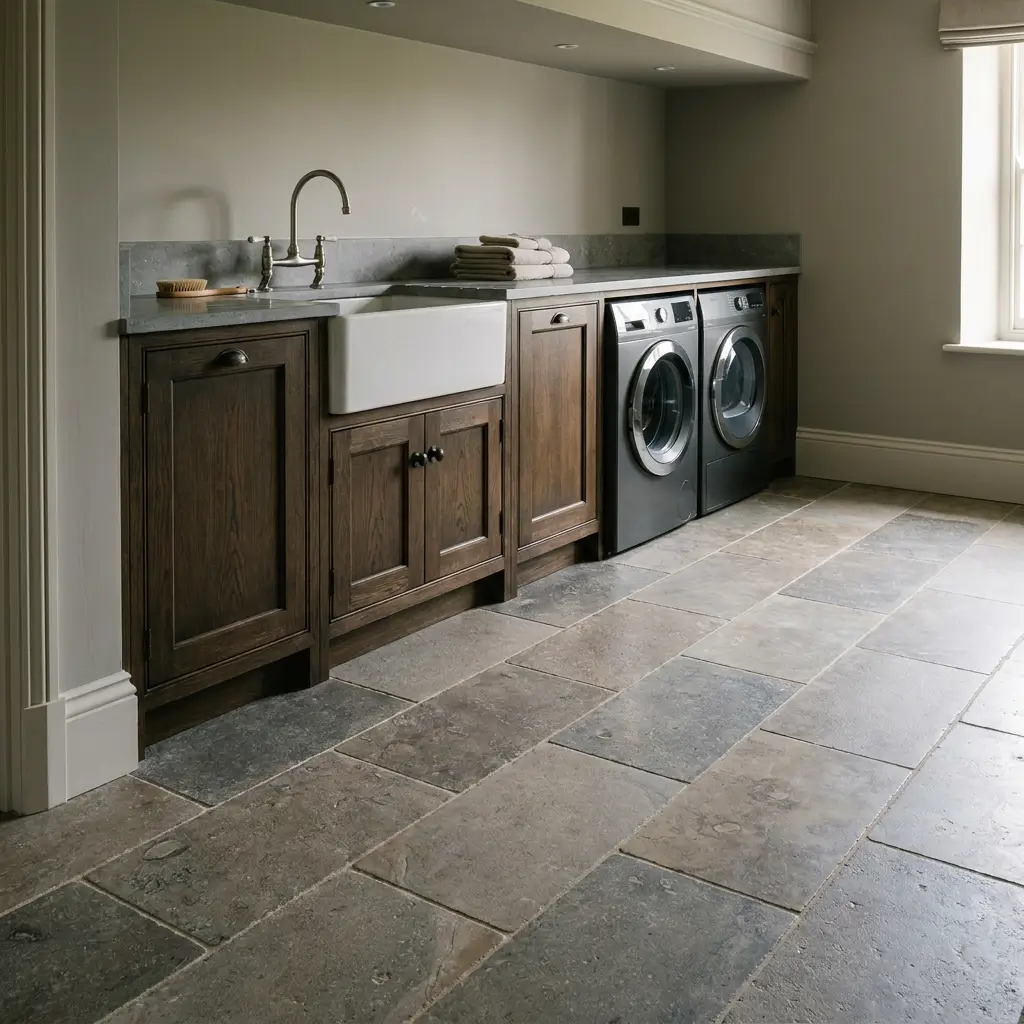
Natural stone introduces visual characteristics that manufactured products cannot perfectly duplicate.
Marble, granite, limestone, and travertine each contain natural variation in color, veining, texture, and pattern.
That originality often appeals to homeowners seeking a more distinctive floor. A limestone floor creates a different visual effect from polished granite, even if both appear neutral at first glance.
Stone performance varies significantly by material. Some stones are more porous than others and may require periodic sealing.
Sealing can help manage staining risks but does not make every stone waterproof, nor does it eliminate all maintenance requirements.
Traction depends on the specific finish. Honed surfaces often behave differently from polished finishes when wet.
Natural stone can be a worthwhile choice for carefully planned laundry rooms, but suitability depends on the selected stone, finish, installation, and maintenance expectations.
7. Concrete Flooring
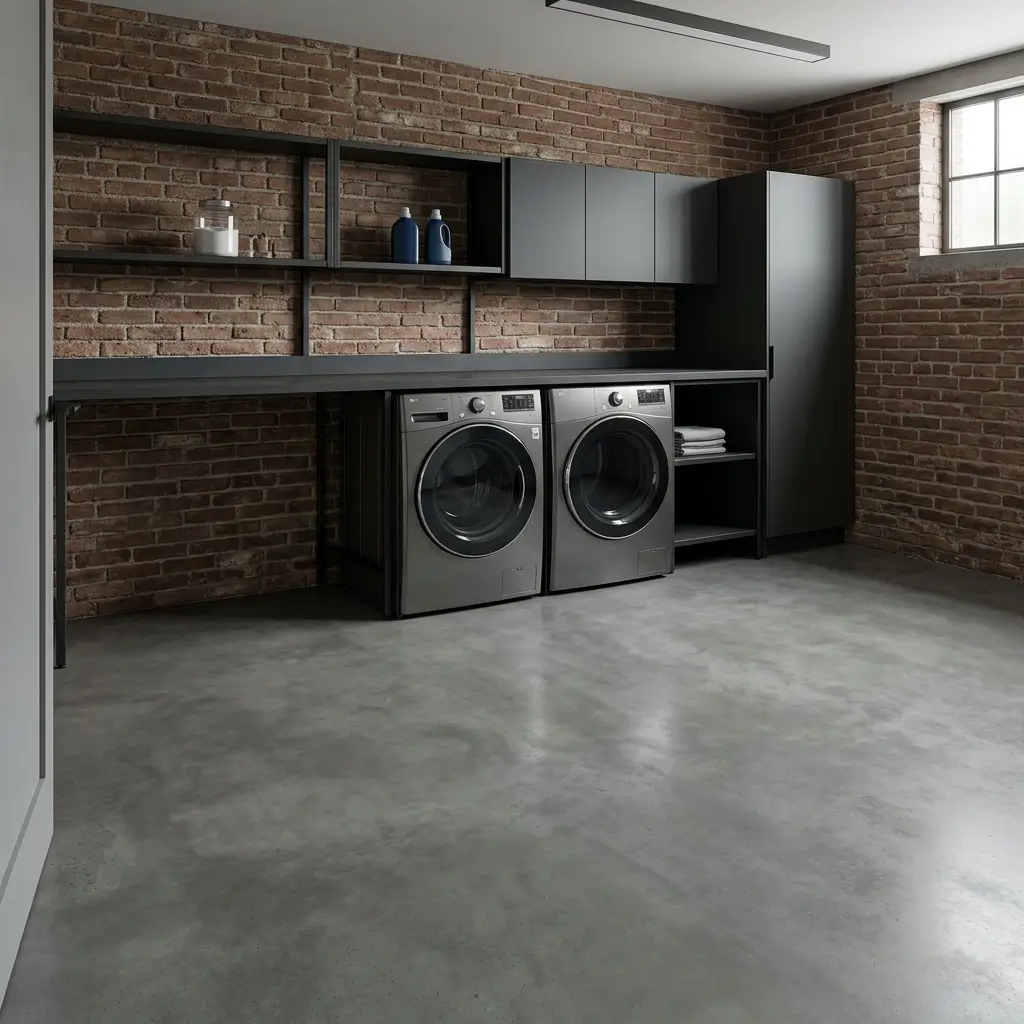
Concrete laundry room floors work particularly well in industrial, minimalist, and contemporary interiors. The floor may be polished, stained, sealed, or left with a more understated architectural appearance.
A finished concrete floor often benefits from visual simplicity. It pairs comfortably with metal shelving, clean-lined cabinetry, and contemporary design palettes.
The condition of the slab deserves close attention before any finishing work begins. Existing cracks, moisture conditions, and structural issues influence the success of the project.
Surface preparation frequently determines whether the final floor performs as intended.
Finish selection affects both appearance and traction. Some polished or highly sealed surfaces may become slippery when wet.
A sealer also cannot correct an underlying moisture problem within the slab. Concrete can be durable and attractive, but assessment of existing conditions remains a critical part of the decision.
8. Engineered Wood Flooring
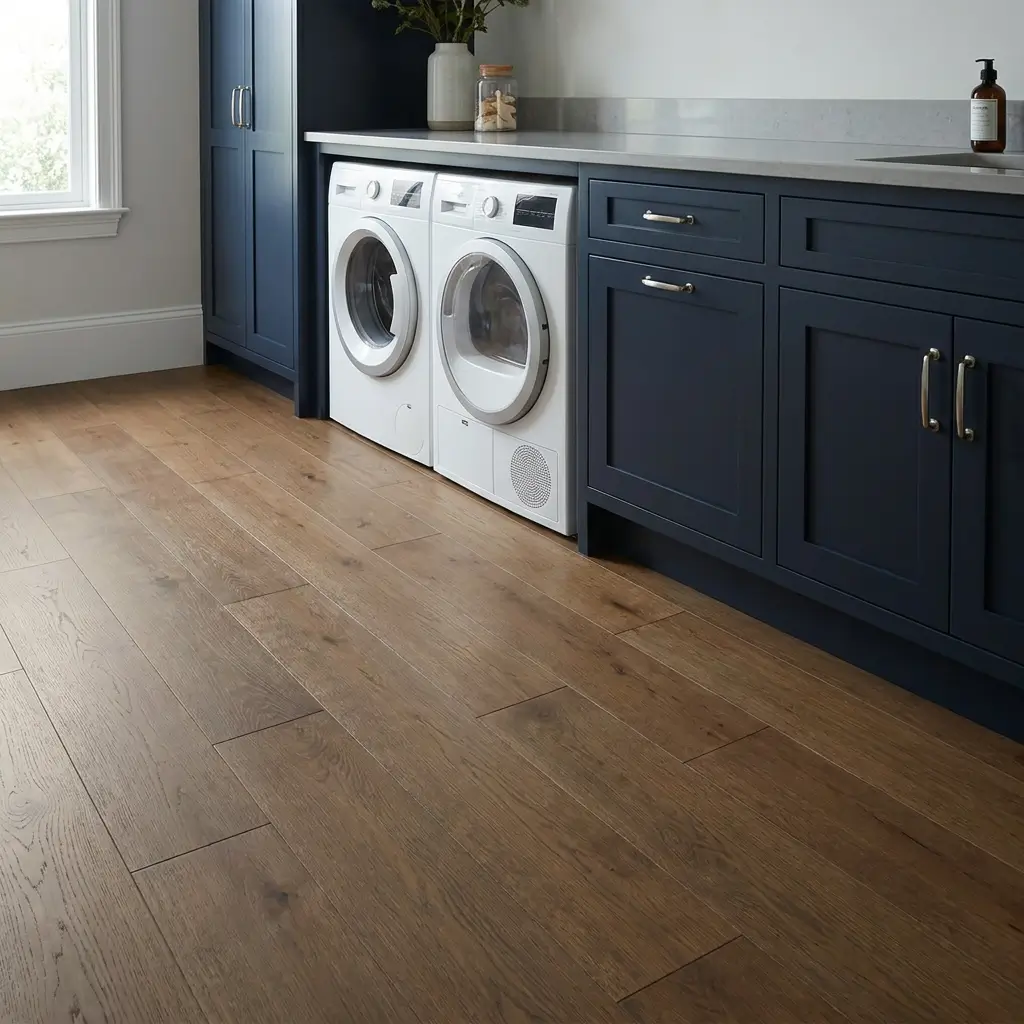
Engineered wood flooring combines a real wood surface layer with a multi-layer core system.
This construction provides greater dimensional stability than traditional solid hardwood while preserving the appearance of genuine wood.
For homeowners who want natural timber in a laundry room, engineered wood offers warmth and authenticity that printed wood-look products cannot fully replicate.
The primary consideration is moisture exposure. Engineered wood is not waterproof. Standing water, appliance leaks, or prolonged moisture exposure can damage vulnerable areas, cause swelling, or affect the flooring’s structure.
Suitability depends heavily on manufacturer approval for the intended location.
Moisture testing, subfloor preparation, environmental conditions, and prompt cleanup of spills become especially important when incorporating engineered wood into a laundry room.
9. Laminate Flooring
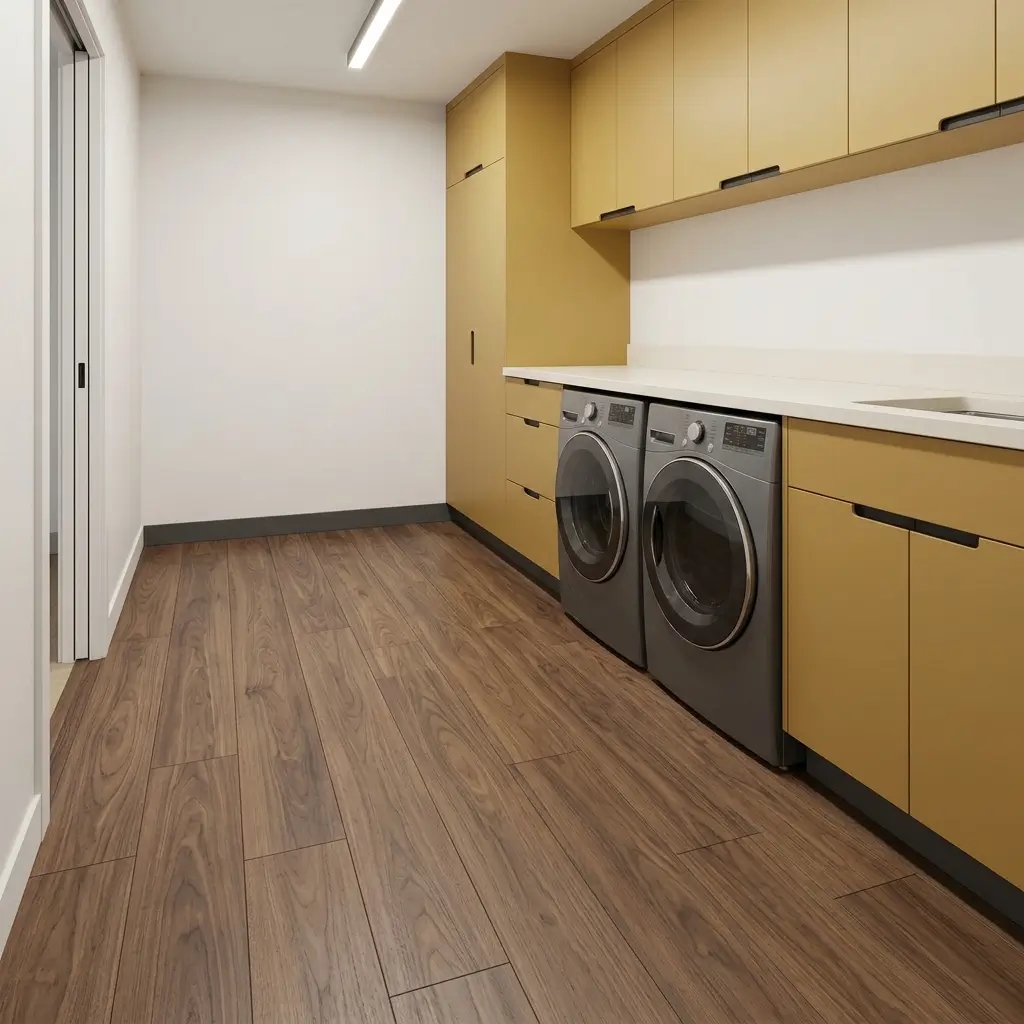
Laminate flooring remains popular because of its realistic wood visuals and broad range of finishes. Advances in manufacturing have improved appearance substantially compared with earlier generations.
Traditional laminate typically uses a fiberboard core with decorative and protective surface layers. Because moisture can affect the core, water management remains a major consideration.
Some modern laminate products incorporate enhanced water-resistant or waterproof-related technologies.
Even so, performance depends on construction, joint design, edge protection, installation quality, and exposure conditions.
Waterproof labels should be interpreted in accordance with product-specific specifications rather than as guarantees against every leak scenario.
Laundry room suitability depends on the particular product and the room’s risk profile. An occasional splash presents a different challenge from a significant appliance leak or recurring moisture issue.
10. Cork Flooring
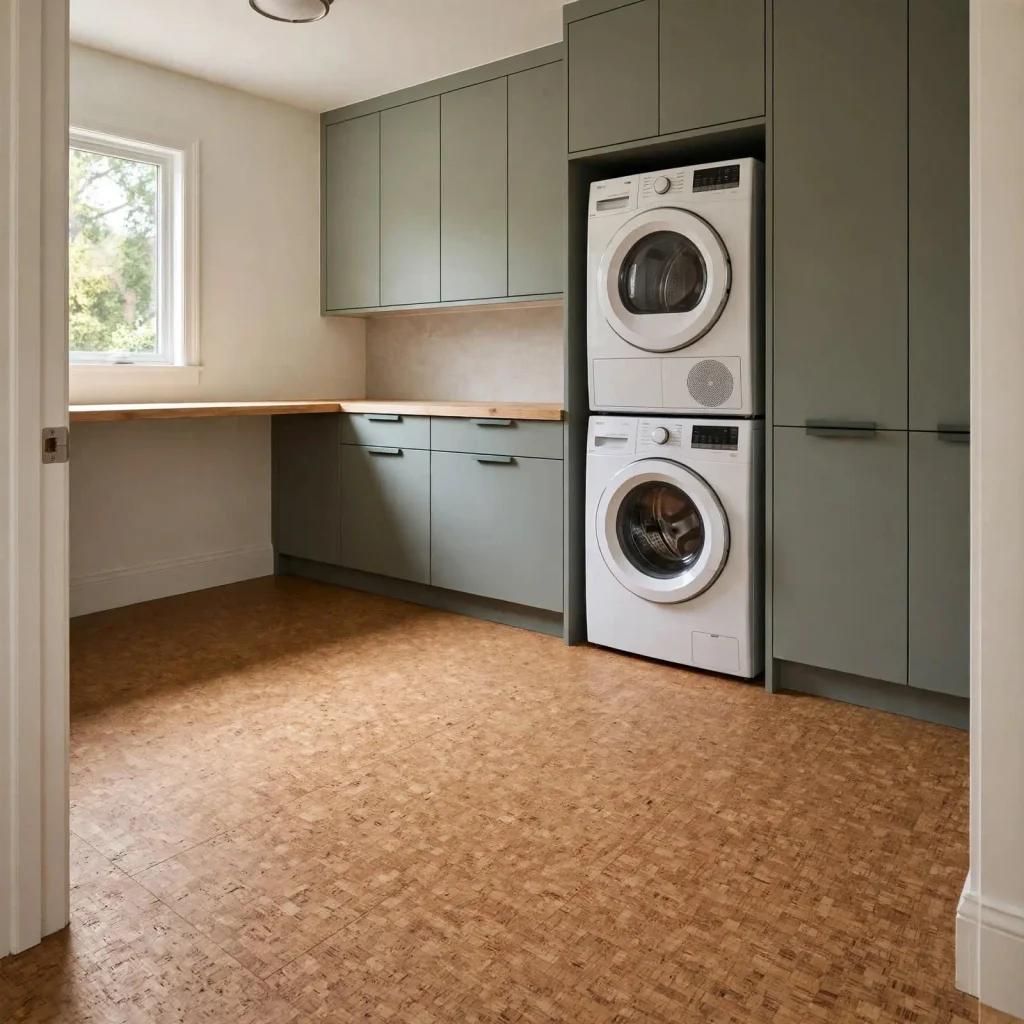
Cork flooring appeals to homeowners who value natural materials and a softer feel underfoot. Its distinctive texture creates visual warmth that differs from tile, stone, or concrete.
A cork floor may contribute to a quieter utility space and can feel more forgiving during long periods of standing. Product construction and installation methods influence the extent of those benefits.
The most important consideration is moisture sensitivity.
Some cork flooring products are better protected than others through finishes and construction techniques, but standing water and substantial leaks can still cause damage.
Protective coatings should not be interpreted as making the entire floor assembly waterproof.
Before specifying cork for a laundry room, confirm that the manufacturer approves the product for that environment and review the cleaning and maintenance requirements associated with the chosen finish.
11. Rubber Flooring
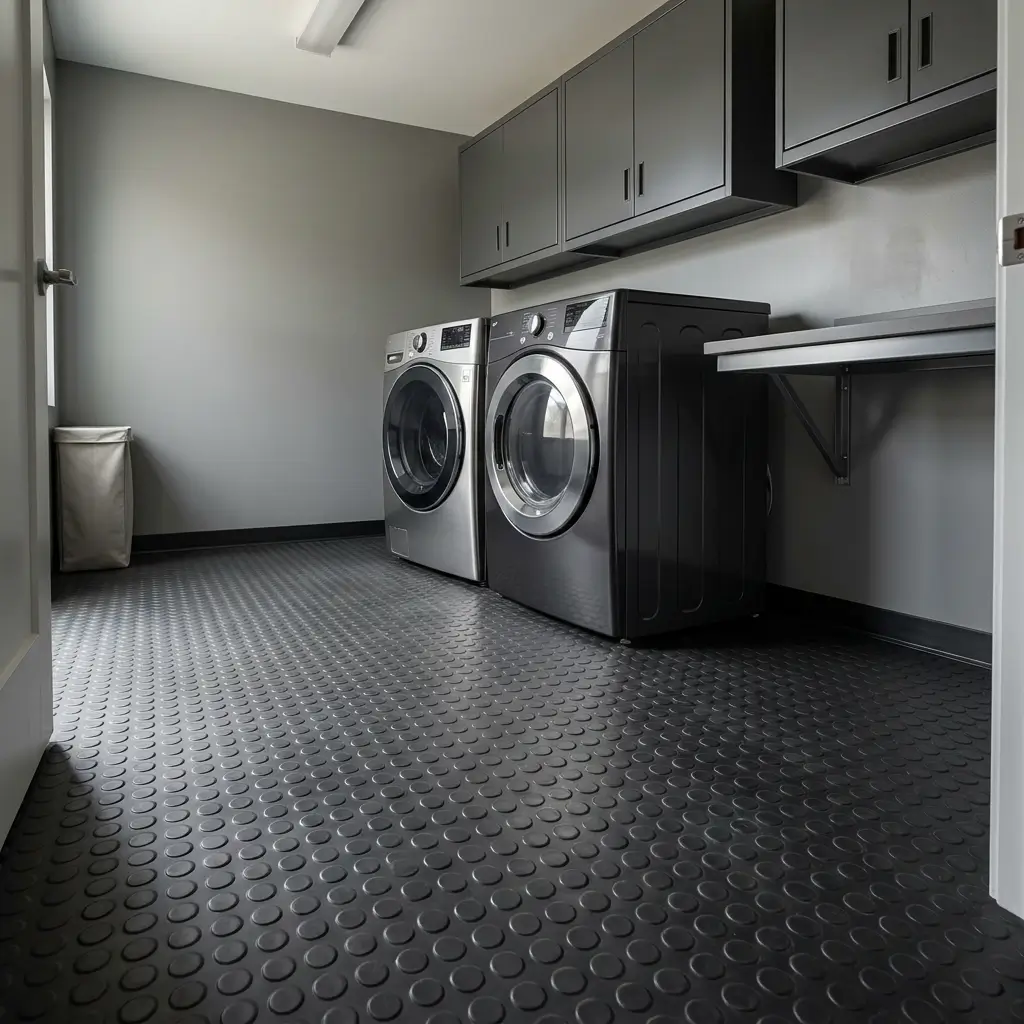
Rubber flooring is a practical option for selected utility areas where comfort, resilience, and traction are priorities. Available in rolls, tiles, and specialized flooring systems, it has a distinctly functional appearance.
The material often feels softer underfoot than tile or concrete and may help reduce fatigue during household tasks. Different textures and surface profiles offer varying aesthetic and practical characteristics.
Rubber flooring is not a single standardized product type. Water performance, cleaning compatibility, odor characteristics, installation systems, and appliance-load suitability vary substantially between products.
Surface texture may contribute to traction, but no texture guarantees slip resistance in every condition.
Residential suitability should be confirmed through the manufacturer’s intended-use recommendations, especially when heavy washers and dryers are involved.
12. Linoleum Flooring
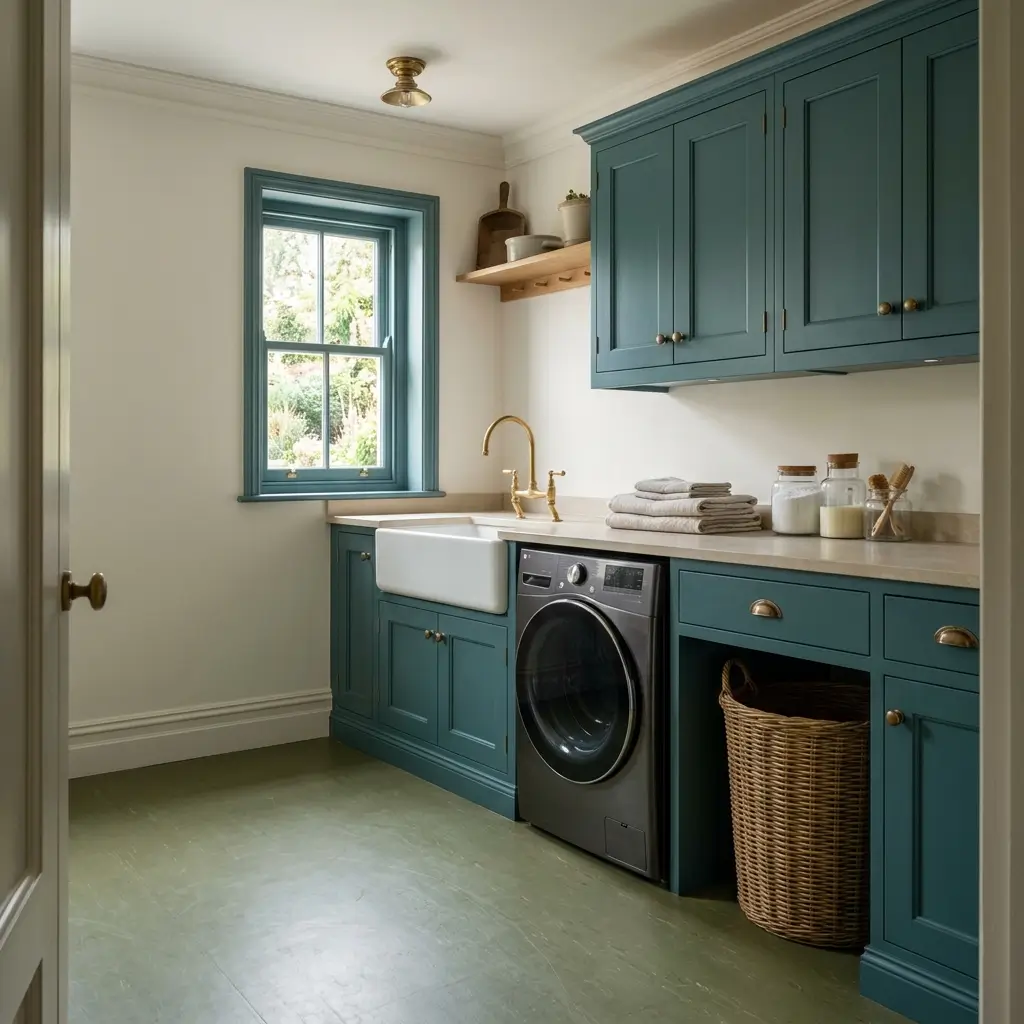
Genuine linoleum is distinct from vinyl flooring. It is traditionally manufactured using linseed oil and other natural constituents, creating a material with its own appearance and performance profile.
Linoleum is available in a wide range of colors and patterns. Many installations provide a smooth, resilient walking surface that feels different from harder materials such as ceramic tile or stone.
In laundry rooms, moisture management remains important. Seams, edges, installation details, and substrate conditions affect long-term performance. Water reaching vulnerable joints can contribute to problems over time.
Maintenance requirements depend on the specific product and finish. Linoleum should not be treated as maintenance-free, nor should it automatically be considered waterproof.
As with other flooring materials, product-specific guidance ultimately determines where the flooring is appropriate.
How to Choose Among Laundry Room Flooring Options
The best way to compare Laundry Room Flooring Options is to begin with realistic conditions rather than appearance alone.
If leak risk is a major concern, materials commonly associated with low water absorption or strong moisture performance, such as porcelain tile and appropriately specified vinyl products, may deserve closer attention.
Surface traction should be evaluated according to the actual finish, especially where detergent residue, splashes, or wet footwear may occur.
Maintenance varies widely. Tile introduces grout considerations. Natural stone may require periodic sealing. Vinyl products often focus on seam and edge management.
Wood, laminate, cork, and linoleum require careful attention to moisture exposure.
Comfort can also influence the decision. Concrete and tile generally feel firmer underfoot, while cork, rubber, and many resilient flooring products can feel more forgiving.
Finally, verify that the chosen installation system is compatible with the subfloor.
Preparation, labor complexity, transitions, accessories, and long-term maintenance can affect overall value just as much as the flooring material itself.
FAQs
Q1. What Is the Best Flooring for a Laundry Room?
There is no universal winner.
Porcelain tile and appropriately specified vinyl products are frequently compared because of their moisture-related characteristics, but the right choice depends on water exposure, surface traction, maintenance expectations, installation quality, budget, and household needs.
A laundry room with minimal moisture concerns may support options that would be less suitable in a higher-risk environment.
Q2. Is Waterproof Vinyl Flooring a Good Choice for a Laundry Room?
Many waterproof vinyl products can be strong candidates for laundry rooms, particularly when moisture resistance is a priority. Still, homeowners should review how the manufacturer defines the waterproof claim.
Seams, edges, transitions, perimeter gaps, installation details, and the subfloor continue to influence the performance of the complete flooring system.
Q3. Can You Use Laminate Flooring in a Laundry Room?
Some laminate products include enhanced water-resistance technologies and may be approved for laundry-room installations.
Product specifications matter. Installation quality, leak risk, moisture exposure, and manufacturer requirements should all be reviewed before selecting laminate for this type of space.
Q4. What Type of Laundry Room Flooring Is Easiest to Maintain?
Ease of maintenance depends on more than material category.
Surface texture, grout joints, seams, sealing requirements, and manufacturer cleaning instructions all affect upkeep.
Vinyl products often involve straightforward routine cleaning, but tile, concrete, and other surfaces can also be relatively low-maintenance when correctly specified and properly maintained.
Conclusion
The most practical Laundry Room Flooring Options balance appearance with real-world performance.
Moisture exposure, traction, maintenance expectations, installation requirements, subfloor conditions, and budget all play a role in determining the right fit.
Before committing to a product, review the manufacturer’s specifications, understand how the installation system is designed to perform, and evaluate the actual conditions in your laundry room rather than relying on broad material claims.