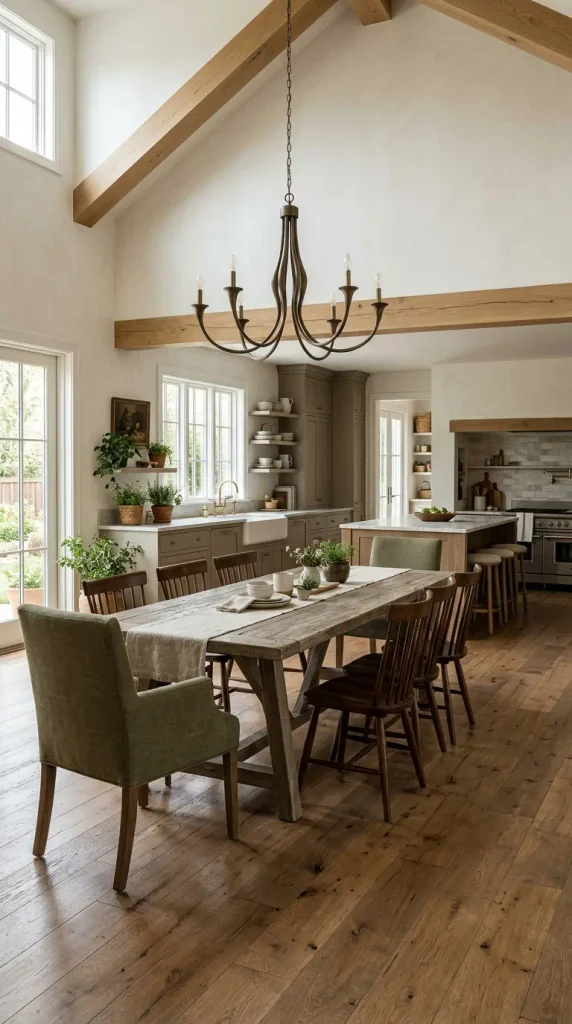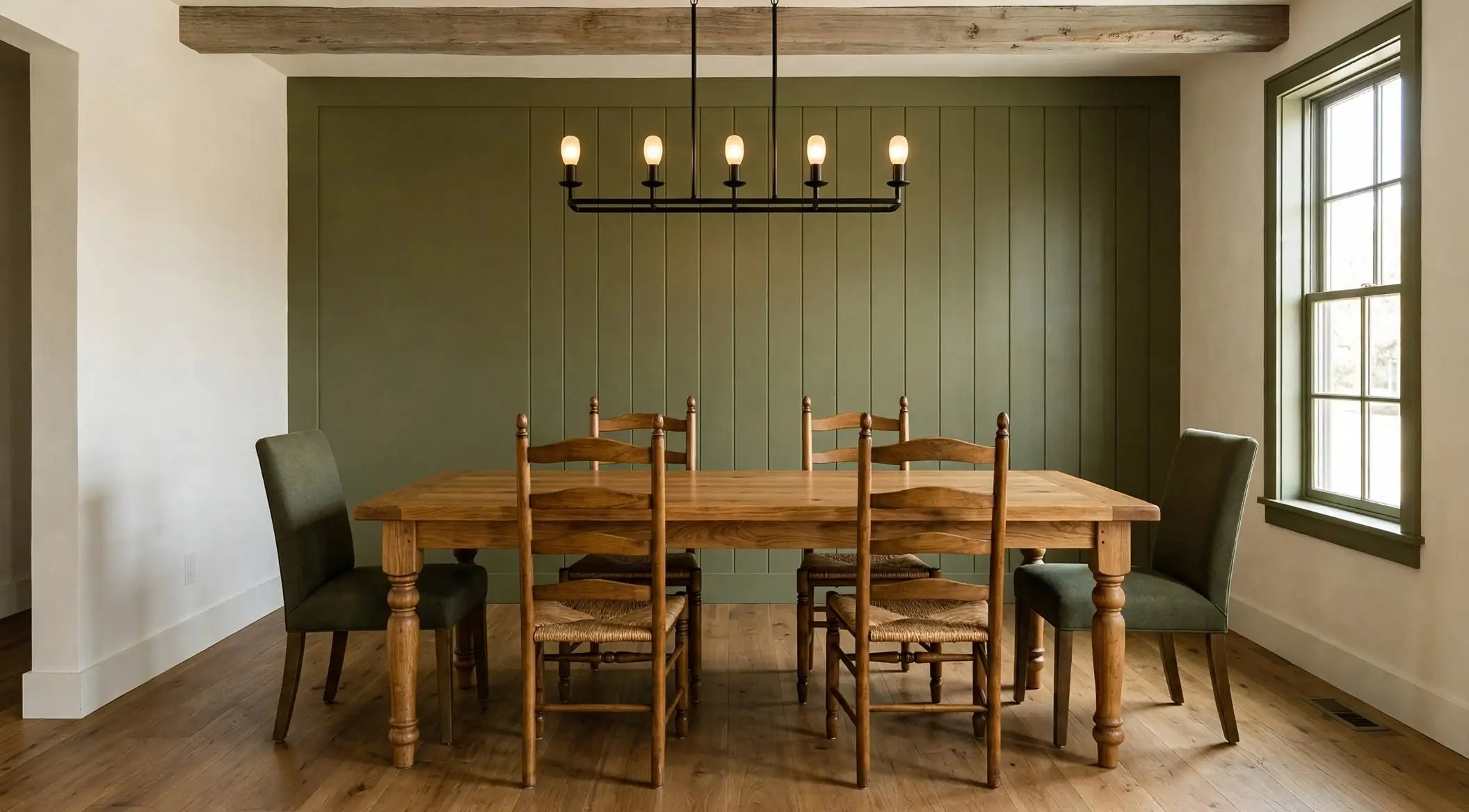
Designing a farmhouse dining room begins with understanding that rustic character does not require a single, predictable formula.
While early interpretations relied heavily on distressed timber and uniform neutral palettes, contemporary farmhouse interiors embrace a much broader spectrum of materials, architectural elements, and spatial strategies.
A successful dining space balances practical everyday durability with considered aesthetic choices, ensuring that the furniture, lighting, and finishes work in genuine harmony.
Whether furnishing a dedicated formal room, an open-plan ground floor, or a compact apartment corner, the right combination of elements establishes an interior that feels both authentic and livable.
The following twelve concepts illustrate how distinct design priorities can shape a farmhouse dining room for different architectural settings and personal preferences.
1. Natural Oak and Understated Farmhouse Simplicity
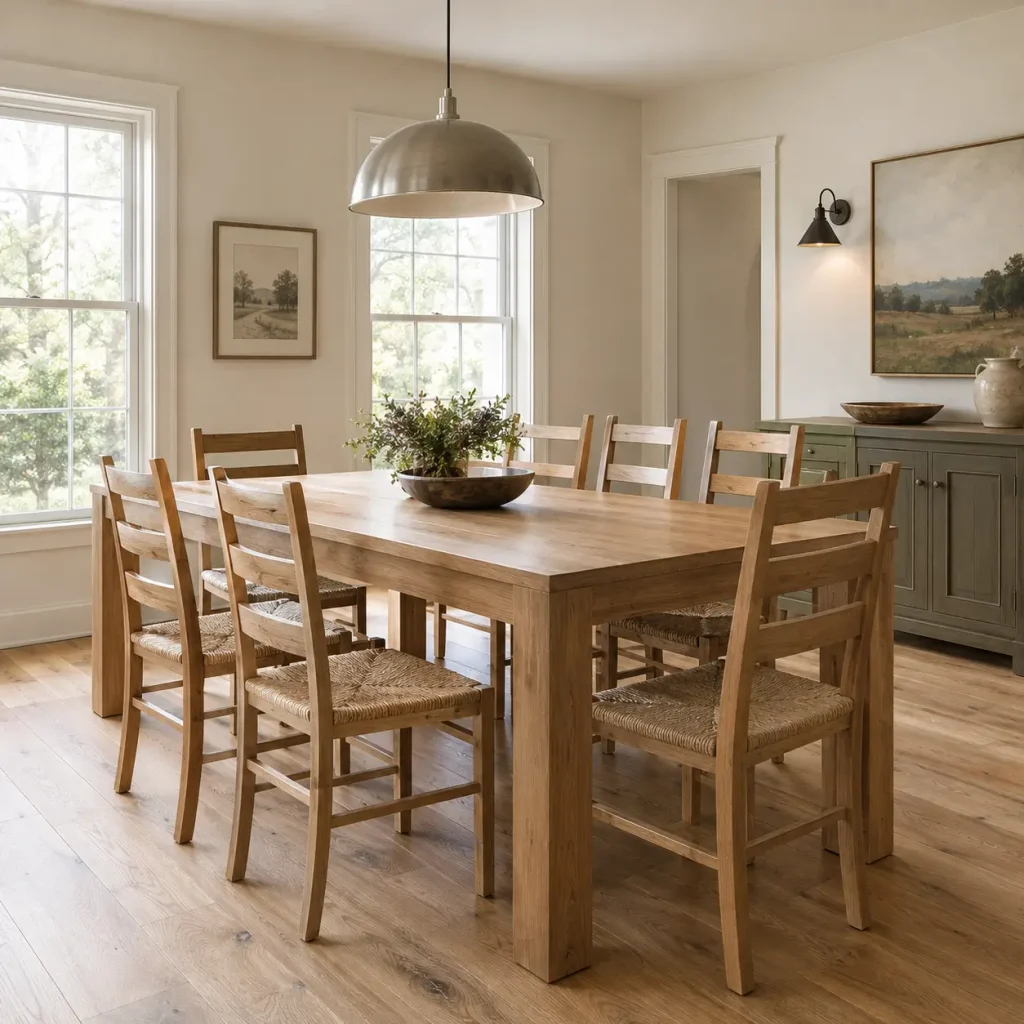
A substantial white oak table with a lightly brushed finish forms the centerpiece of this restrained interior.
The table features clean-lined square legs and a visible, straight-grain pattern that brings quiet warmth without excessive knots or distressing.
Simple ladder-back chairs with woven rush seats surround the perimeter, echoing the timber tone of the floorboards.
Walls finished in a soft, chalky off-white reflect natural daylight from unadorned windows, while a brushed nickel pendant hangs at a comfortable height above the tabletop.
The composition relies entirely on honest materials and precise proportions, demonstrating how understated furniture creates a serene, highly functional environment without relying on decorative filler.
2. A Traditional Farmhouse Table with Collected Character
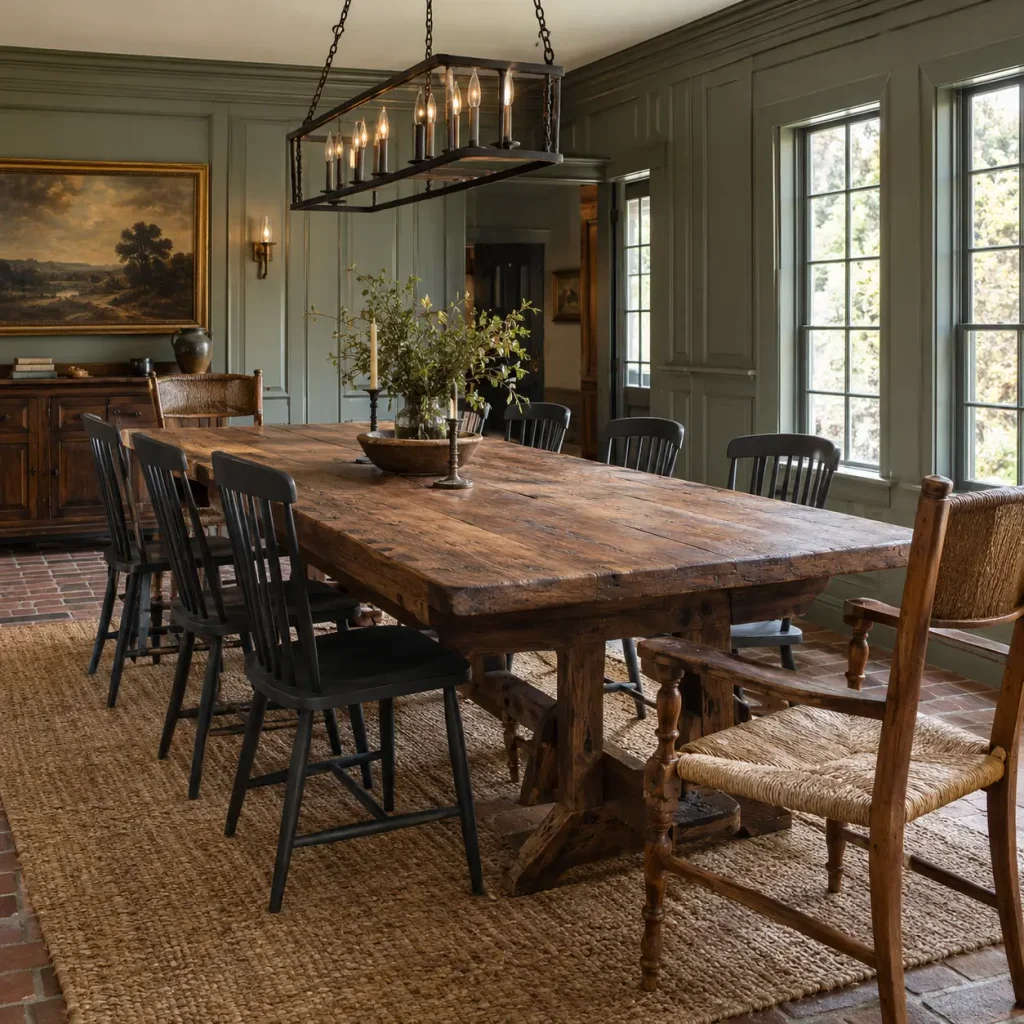
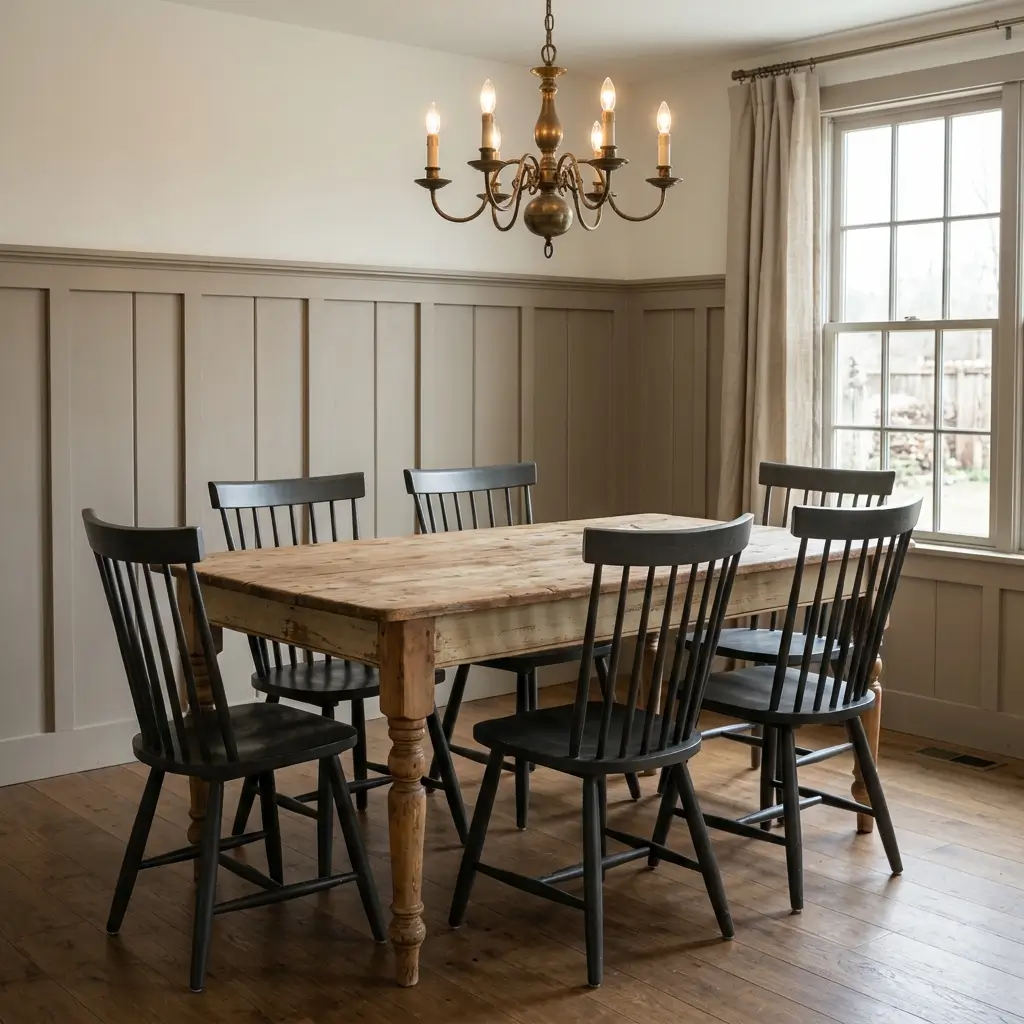
The room revolves around a long farmhouse table whose thick top shows decades of use through subtle wear, varied grain patterns, and hand-finished edges.
Its visual weight establishes the room’s character before any other element comes into view.
Surrounding pieces remain comparatively restrained.
Painted Windsor chairs, a simple wool rug, and paneled walls offer supporting roles without competing for attention.
Daylight from tall windows highlights the table’s surface variation, reinforcing its handcrafted presence.
The composition feels collected over time because the furniture does not appear purchased as a matching set.
Every surrounding decision acknowledges the table’s significance, allowing genuine craftsmanship to shape the room’s identity.
3. Modern Farmhouse Dining with Sculptural Chairs
Dining seating takes the primary design role through four molded ash armchairs with curved, organic backrests and black steel legs.
These fluid silhouettes soften the linear geometry of the rectangular walnut dining table beneath them.
The table itself is sleek and unadorned, allowing the intricate joinery of the chair frames to command attention.
Overhead, a wide drum shade wrapped in coarse natural linen diffuses light evenly across the tablespace.
The floor is covered in wide-plank smoked hickory, adding a rich, dark foundation that grounds the lighter ash wood of the seating and maintains a clean, architectural rhythm throughout the room.
4. A Dining Room Defined by an Exposed-Beam Ceiling
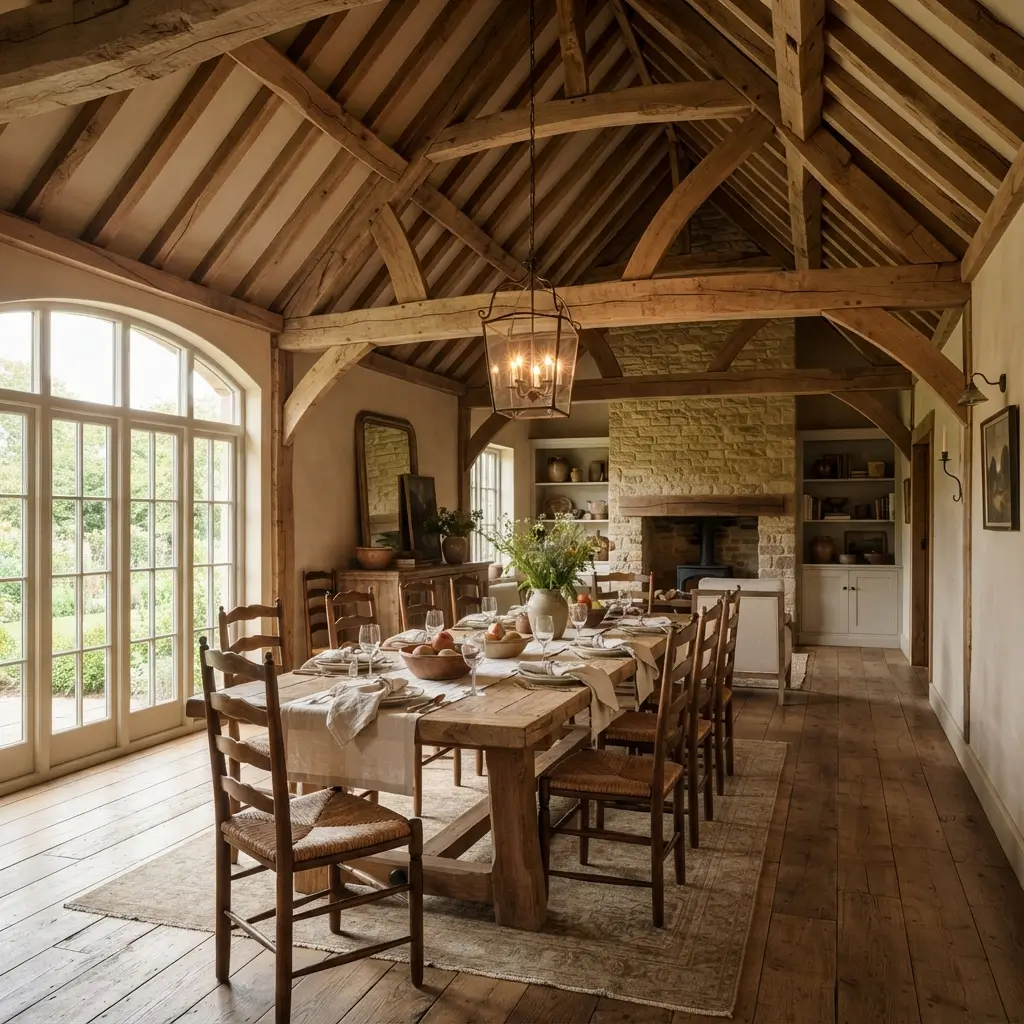
This dining room occupies a converted farmhouse wing with a vaulted ceiling crossed by substantial timber beams. Their direction immediately influences the room’s layout.
The dining table aligns beneath the beam structure, reinforcing the architecture’s natural rhythm.
The room’s vertical volume supports a generously scaled trestle table and ladder-back chairs without appearing overcrowded.
Large windows positioned between the beams bring shifting daylight across the ceiling structure throughout the day.
Furniture remains visually substantial because lighter pieces would appear disconnected from the architecture.
The ceiling is not decorative background here. It establishes the room’s proportions, guides furniture placement, and determines the overall sense of scale.
5. Farmhouse Dining with a Statement Chandelier
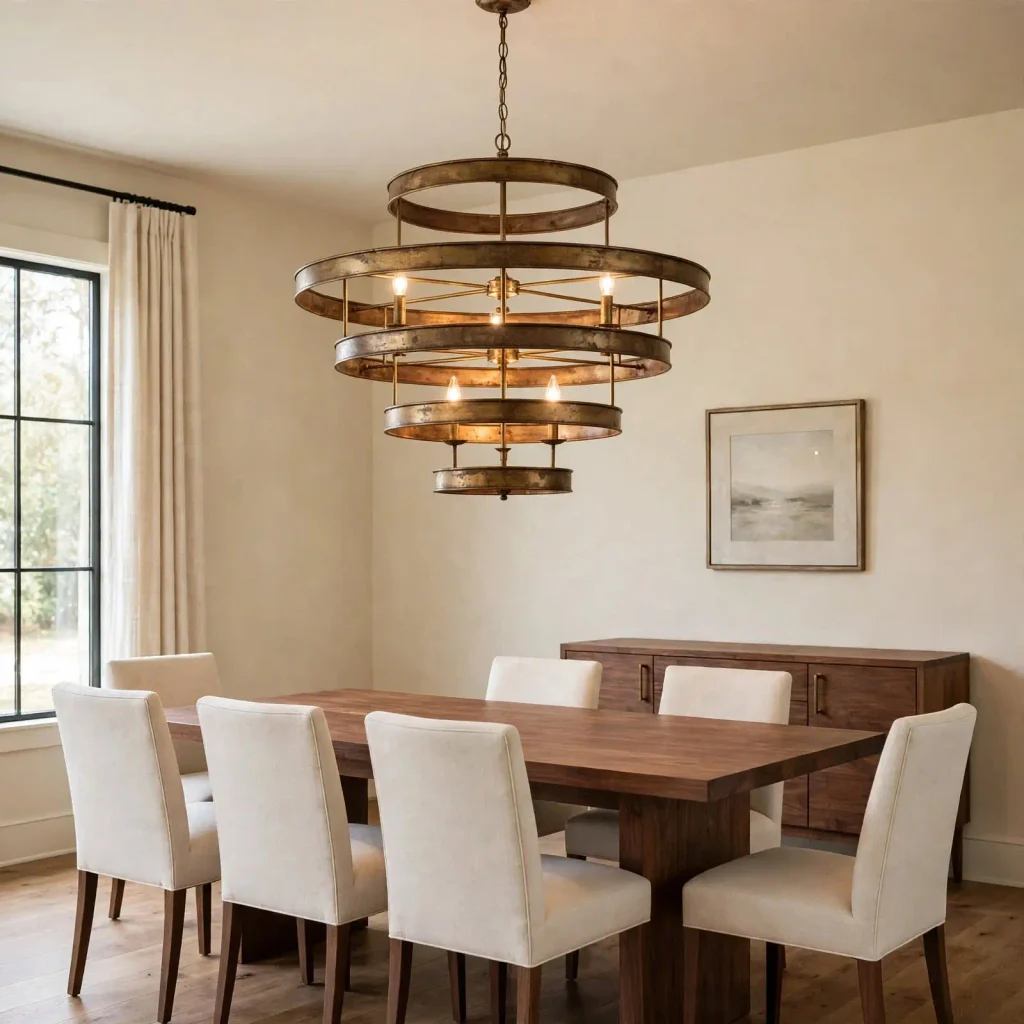
An aged-brass chandelier suspended above a rectangular walnut table becomes the defining feature of this dining room.
Its broad circular frame occupies a deliberate position between table and ceiling, visually connecting the two planes.
The fixture’s warm metallic finish is reflected in cabinet hardware and framed artwork, creating continuity across the room.
Upholstered dining chairs maintain simple forms so attention remains focused overhead.
Because the ceiling itself is relatively plain, the lighting carries greater responsibility for shaping the room’s identity.
Light distribution extends evenly across the tabletop, reinforcing the chandelier’s practical role alongside its decorative presence.
The result feels intentional because every major element acknowledges the fixture’s scale and geometry.
6. Dark Wood and Rich, Earthy Colors
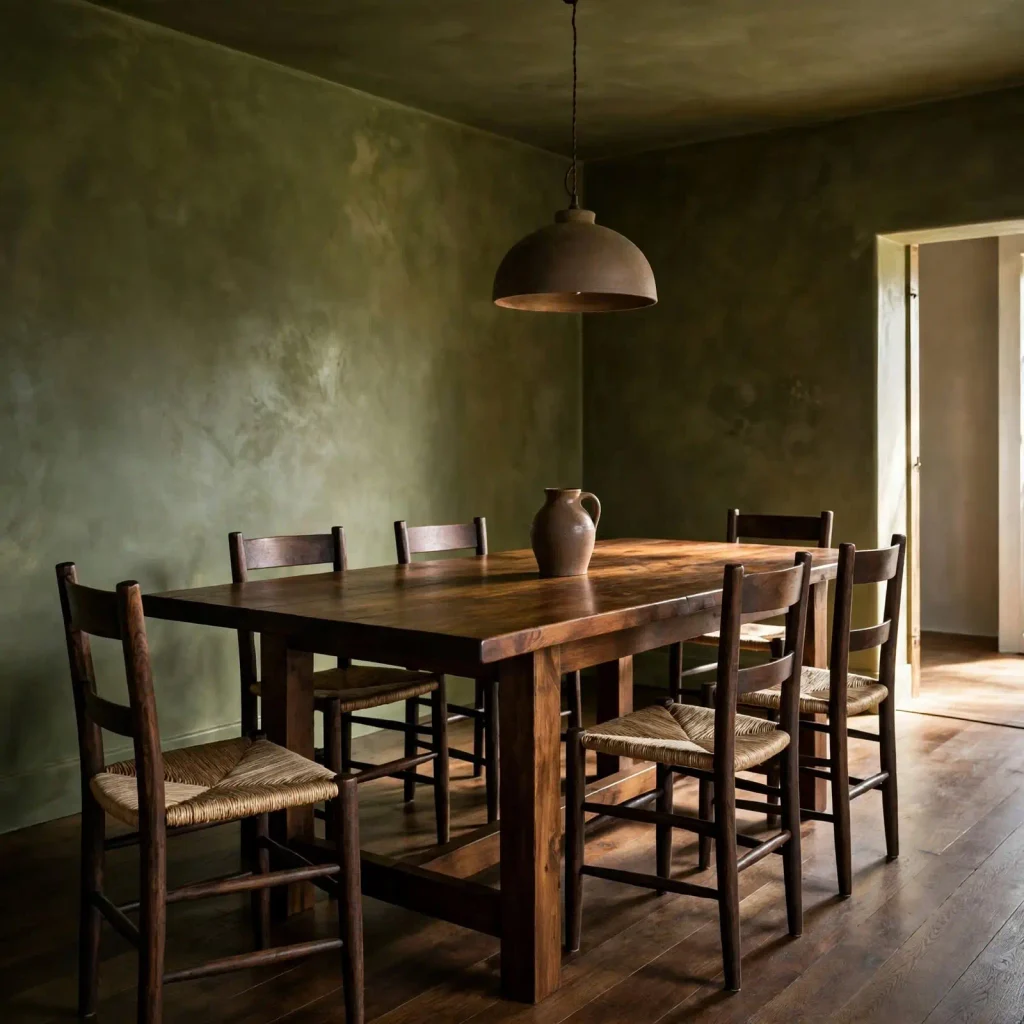
Deep olive green walls wrap the dining room in a cocoon of rich color, setting a dramatic yet grounded tone for everyday meals. A massive dining table made of dark-stained mango wood anchors the center of the space, showing subtle grain undertones that catch the light. Surrounding the table are matching dark wood chairs with rush seats, creating a monochromatic foundation that emphasizes texture over bright contrast. A low-slung ceramic pendant in a matte clay finish hangs low over the table, casting focused task lighting downward and heightening the intimate atmosphere of the moody, earthy palette.
7. A Built-In Dining Nook with Architectural Seating
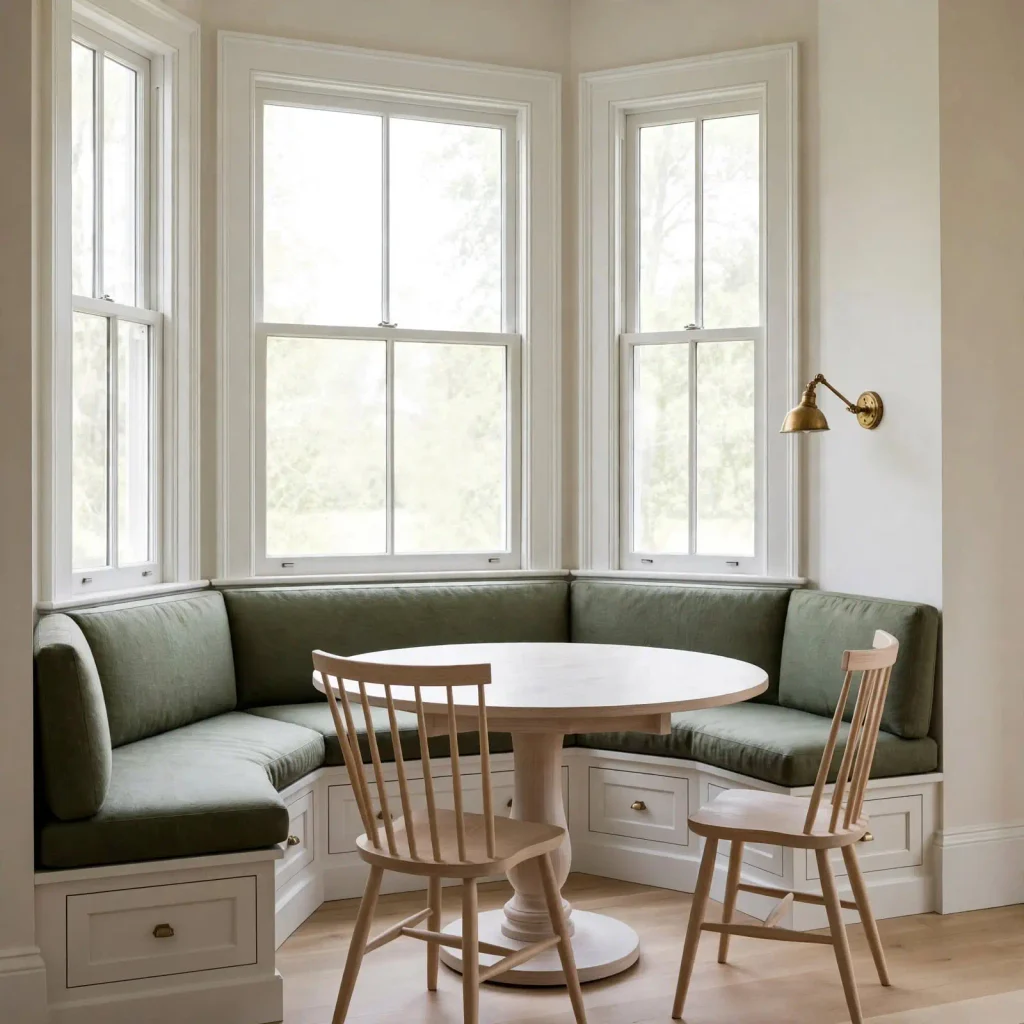
Built directly into an expansive bay window, a custom L-shaped banquette upholstered in durable moss-green linen maximizes the room’s corner geometry.
A round pedestal table crafted from bleached ash sits snugly against the banquette curve, accompanied by two matching spindle-back chairs that can be repositioned easily.
Deep drawers integrated into the base of the bench provide hidden storage for table linens and seasonal serveware.
This architectural integration transforms an awkward architectural alcove into a cozy, highly efficient dining station that preserves central floor circulation in a moderately sized home.
8. Farmhouse Dining with a Round or Oval Table
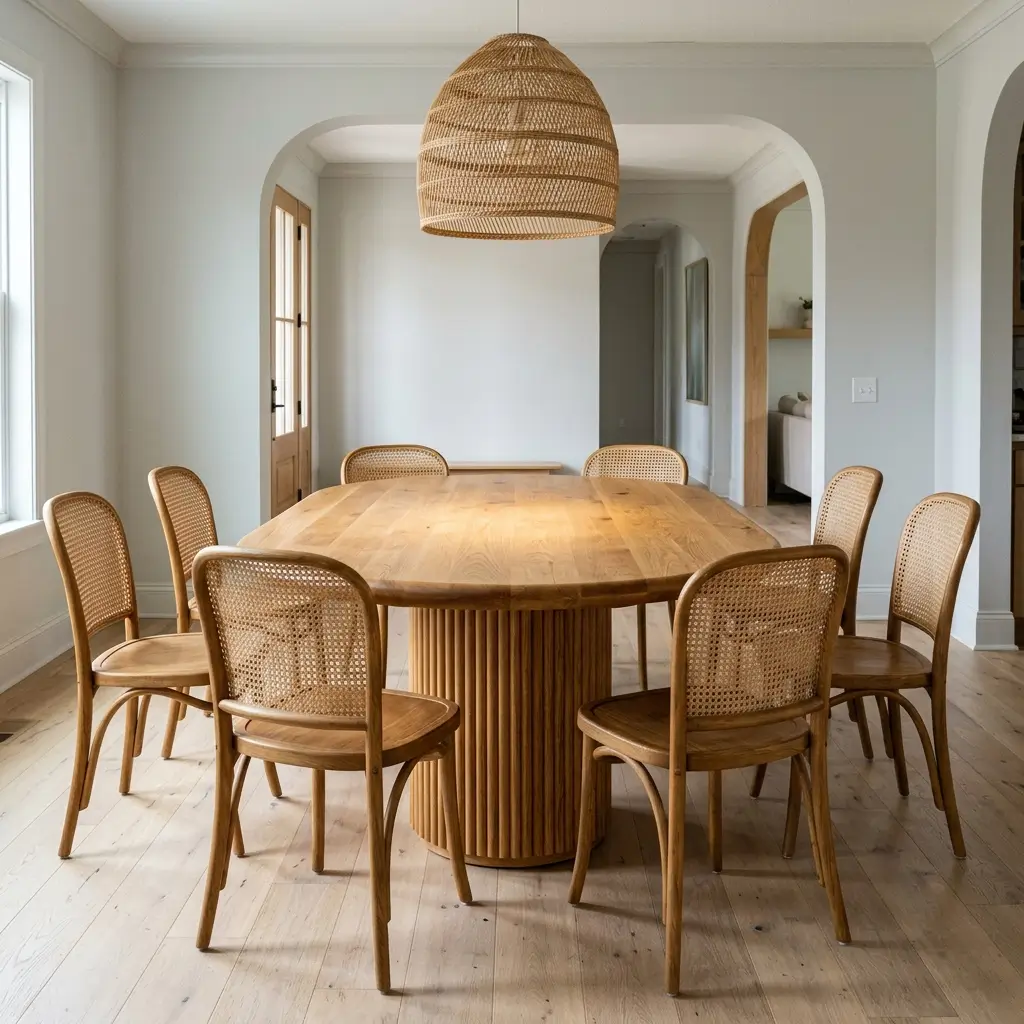
An expansive oval dining table with a substantial central pedestal frees the perimeter of the room from obstructive table legs, improving circulation and seating flexibility.
Surrounding the curved edge are six curved-back wooden chairs that nest neatly underneath when not in use.
The absence of corner table legs allows diners to converse easily across the center, making the shape ideal for interactive family meals.
Overhead, a bell-shaped woven rattan pendant echoes the curved geometry of the table, while light gray walls and pale oak flooring keep the overall atmosphere airy and open.
9. Refined Farmhouse Dining with Stone and Plaster
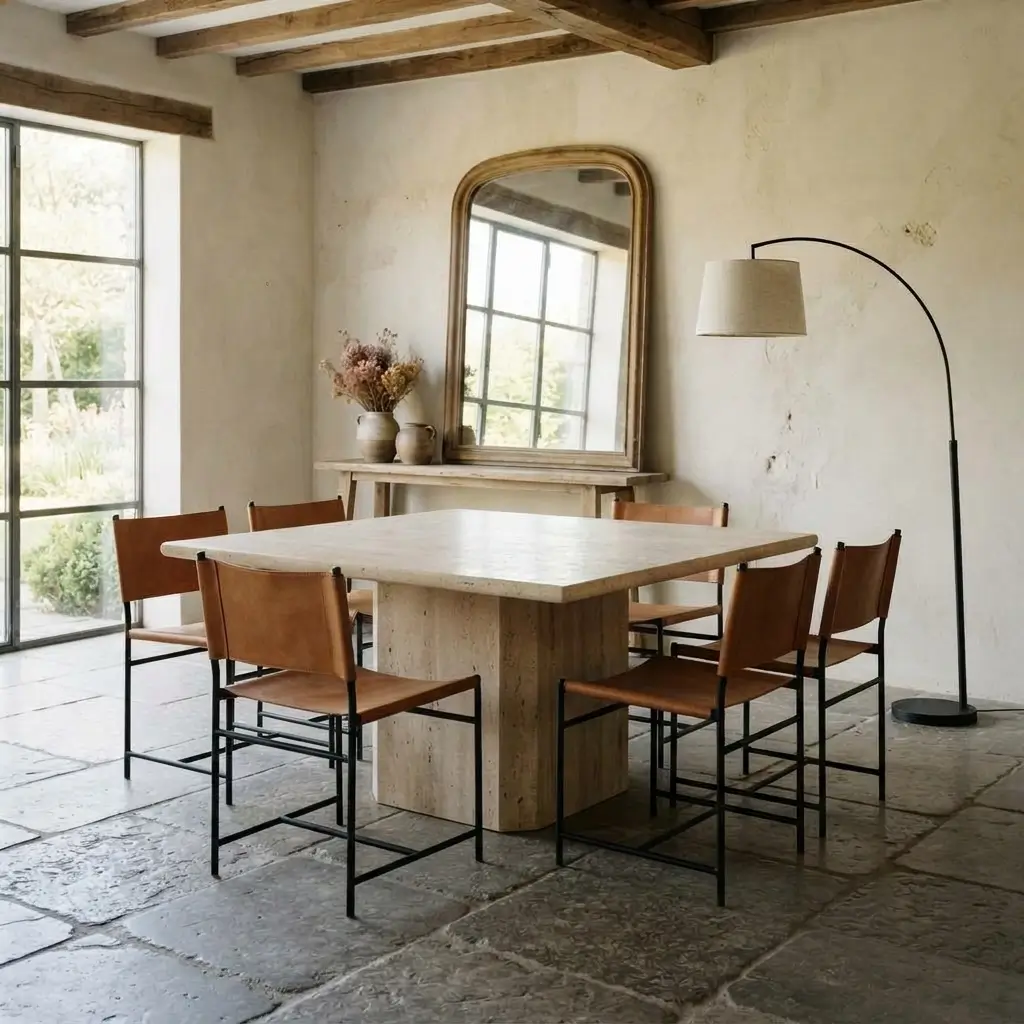
Textured lime-washed walls in a warm cream tone create a soft, undulating backdrop that mimics the feel of historic European farmhouses.
A monolithic dining table carved from honed travertine stone introduces cool mineral texture, contrasted by simple black iron-framed chairs with saddle-leather seats.
The floor features wide flagstone tiles laid in an irregular pattern, adding subterranean weight to the composition.
By substituting typical timber with stone and plaster, this dining room achieves a refined, architectural interpretation of farmhouse style that prioritizes tactile surface variation over rustic wooden furniture.
10. A Colorful Farmhouse Dining Room
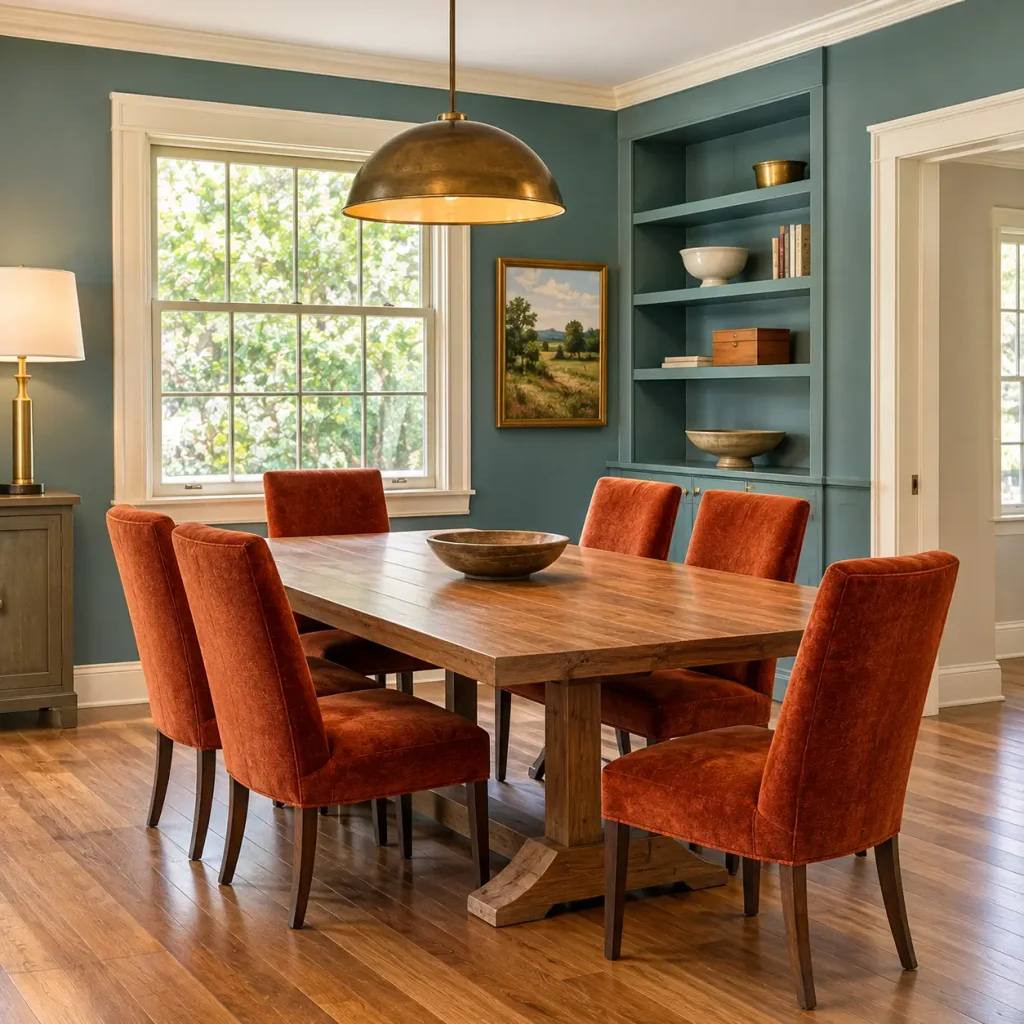
Muted blue-green walls, rust-colored upholstered chairs, and warm oak furniture create a room whose identity is unmistakably tied to color.
The palette extends across substantial surfaces rather than appearing solely through accessories.
Morning light intensifies the cooler wall color, while evening illumination highlights the richer upholstery tones.
The oak table acts as a visual bridge between these contrasting hues due to its warm undertones.
Open shelving painted to match the walls strengthens the room’s color strategy and prevents individual furniture pieces from feeling disconnected.
Farmhouse dining room colors often remain understated, but this design demonstrates how a confident palette can shape the entire atmosphere without sacrificing authenticity or practicality.
11. An Open-Plan Farmhouse Dining Area
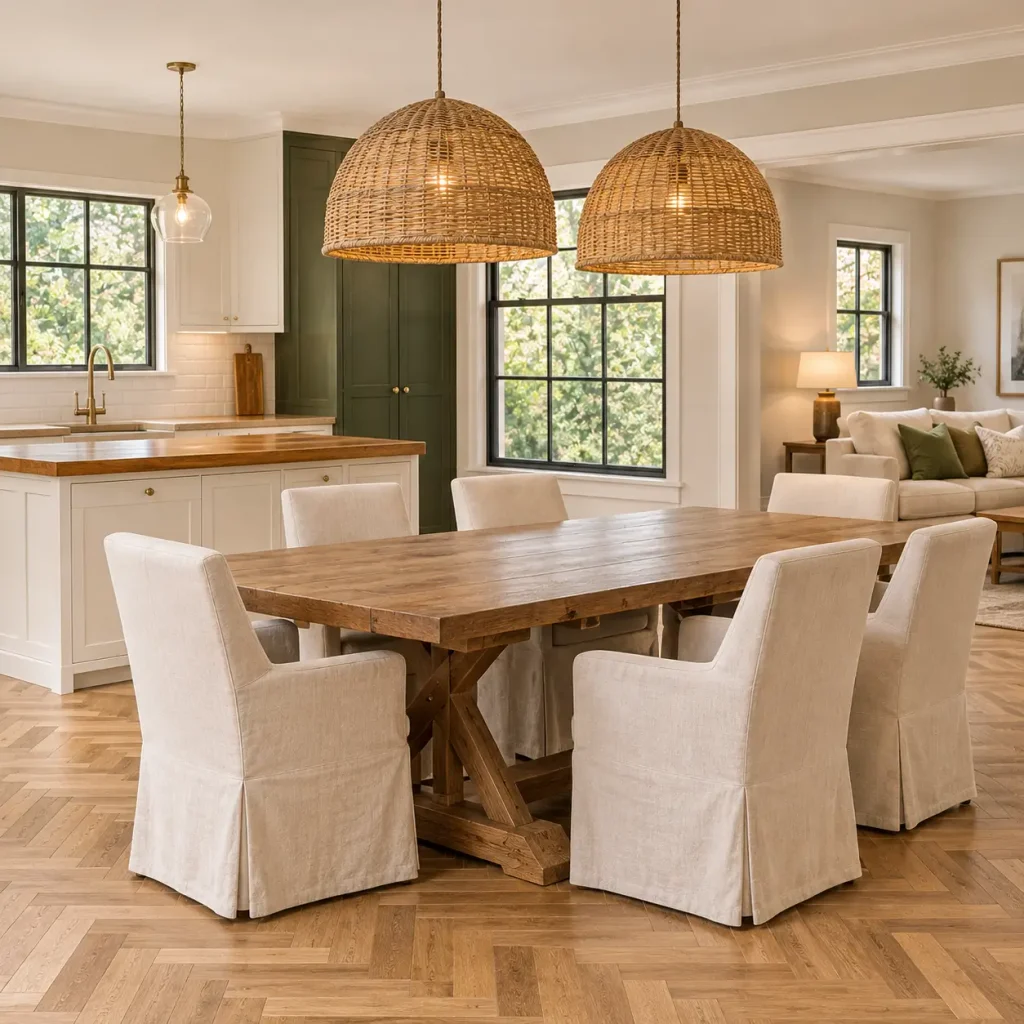
Positioned in the transitional zone between a modern kitchen and an open living area, this dining space relies on careful placement to establish its own identity.
A trestle table in reclaimed white oak matches the wood tones of the nearby kitchen island, creating subtle continuity across the open floor plan.
A pair of open-weave rattan pendant lights hangs low to visually anchor the dining zone without erecting physical barriers.
The flooring remains consistent throughout the entire level, while the choice of slipcovered linen armchairs signals a shift in function from active kitchen prep to relaxed dining.
12. A Small Farmhouse Dining Room with Thoughtful Proportions
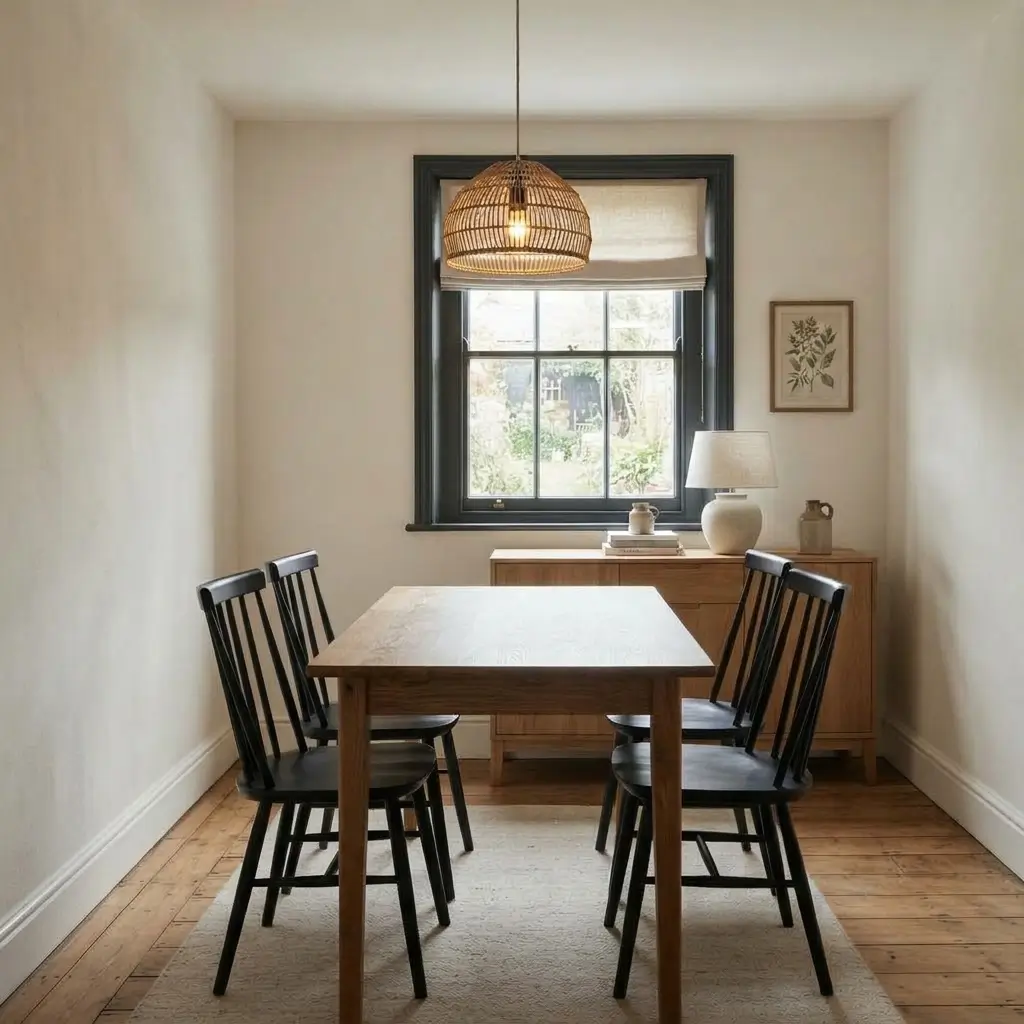
This compact dining room demonstrates how farmhouse style can remain convincing within limited square footage.
A narrow rectangular table seats four comfortably without overwhelming circulation routes along the walls.
Dining chairs feature slimmer profiles than those used in larger rooms, reducing visual congestion and improving day-to-day usability.
A shallow sideboard provides storage without projecting deeply into the room. Dark-painted trim frames the windows and introduces architectural character independent of room size.
Nothing feels undersized for the sake of appearance.
The furniture suits the dimensions of the space, preserving both functionality and recognizable farmhouse character through material choice, proportion, and thoughtful placement.
Making Your Farmhouse Dining Room Work
Adapting these concepts to an existing home begins with evaluating the room’s actual proportions, natural light sources, and daily functional demands.
Rather than attempting to replicate a complete design teardown, identify which single element – whether it is table geometry, lighting scale, wall texture, or seating style – will have the most transformative impact on the space.
Prioritize durable materials that withstand regular use, and ensure that furniture placement always preserves comfortable pathways for movement.
A successful farmhouse dining room feels grounded in practical purpose, offering a welcoming atmosphere that accommodates both quiet family dinners and larger gatherings with equal ease.
Small-Space Considerations for Farmhouse Dining
Designing a farmhouse dining area in a compact footprint requires careful attention to scale, clearance, and visual weight.
Bulky trestle bases and oversized chairs can quickly overwhelm a small room, whereas pedestal tables, benches that tuck entirely under tabletops, and wall-mounted lighting preserve essential floor area.
Mirrors placed opposite windows can amplify natural daylight, while light-reflecting plaster or pale wood finishes prevent tight corners from feeling cramped.
Selecting multi-functional or expandable furniture ensures the dining space remains adaptable to changing needs without sacrificing the honest, unpretentious character of classic farmhouse style.
Frequently Asked Questions
Q1. What defines a modern farmhouse dining room?
A modern farmhouse dining room balances traditional, rustic elements such as natural timber tables or exposed structure – with cleaner lines, contemporary lighting fixtures, restrained color palettes, and streamlined seating silhouettes.
Q2. How do I choose the right dining table shape for my room?
Rectangular tables work best in narrow or traditional rooms, while round or oval tables improve circulation and conversation in square spaces, open-plan zones, or smaller dining areas.
Q3. Can I mix different chair styles around a farmhouse table?
Yes. Combining head chairs with different side chairs, or mixing timber finishes with upholstered seating, creates a collected, layered look that avoids a rigid, showroom feel.
Q4. How do I add farmhouse character without using shiplap or distressed wood?
You can establish farmhouse character through honest natural materials like oak, stone, linen, and iron, as well as through traditional furniture proportions, architectural moldings, and simple, functional room layouts.
Conclusion
Farmhouse dining room design succeeds when practical utility and authentic material choices guide every decision.
By focusing on thoughtful furniture proportions, considered lighting, and balanced color palettes, any dining space can achieve a timeless, welcoming character that feels genuinely personal.