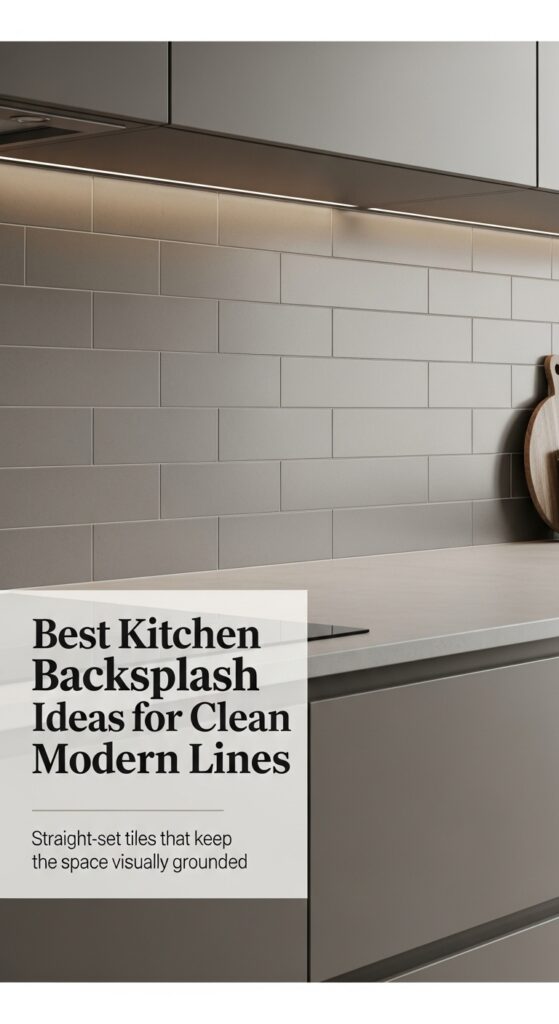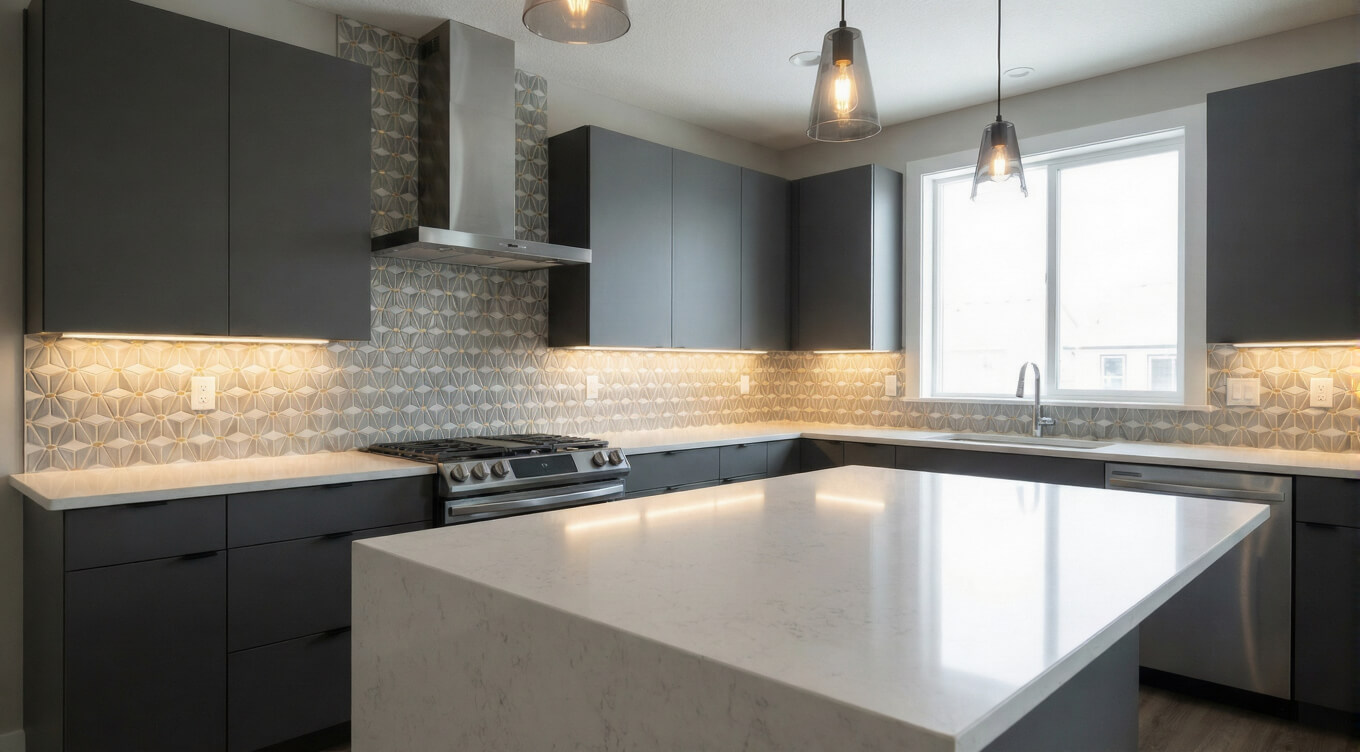
Choosing the right backsplash is one of the easiest ways to modernize a kitchen, but it’s also one of the most confusing. With so many materials, patterns, and finishes available, it’s hard to know which modern kitchen backsplash ideas actually work long-term and which ones will feel dated too quickly.
Most homeowners want a backsplash that looks clean, intentional, and current without being overly trendy or expensive. The backsplash also has to handle daily cooking messes, reflect light well, and complement cabinets and countertops already in place.
The good news is that modern doesn’t mean complicated. The best options focus on clean lines, simple materials, and thoughtful placement. This guide walks you through fresh, actionable design strategies to help you transform your kitchen into a modern masterpiece without stress.
1. Classic Subway Tiles Remain a Top Kitchen Backsplash Idea
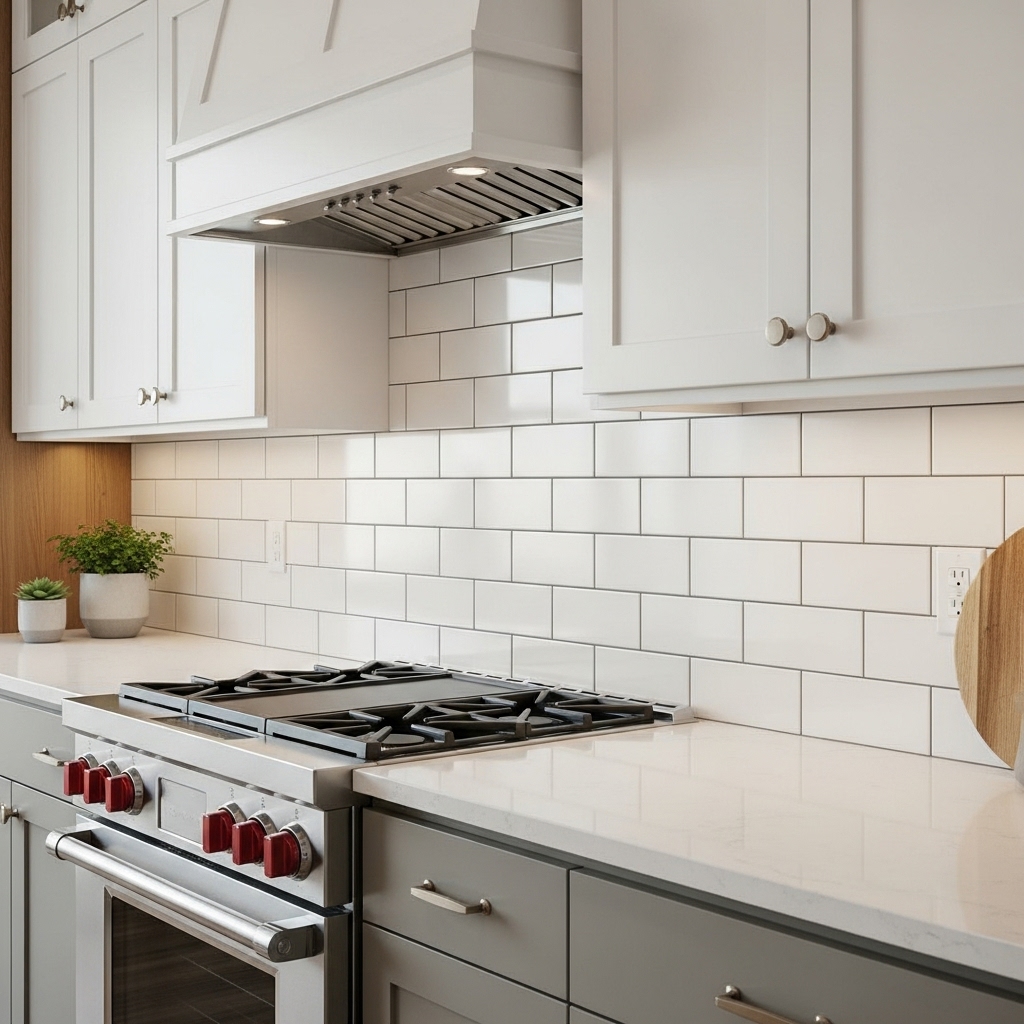
Subway tiles have graced kitchens for over a century, and their popularity shows no signs of waning.
They are arguably the most versatile option available, fitting seamlessly into industrial lofts, modern farmhouses, and contemporary apartments alike. The beauty of this material lies in its simplicity and its ability to act as a neutral backdrop for other design elements.
While white 3×6 ceramic rectangles are the traditional standard, modern iterations offer far more variety. You can update this classic look by choosing tiles with beveled edges for added dimension or opting for a handmade finish that catches the light unevenly.
Changing the grout color is another powerful way to alter the aesthetic; dark grey grout against white tile creates a graphic, vintage look that hides dirt effectively. This choice works best when you want a clean, sanitary feel without breaking the bank.
Subway tiles are generally affordable and easy to install, making them a favorite for DIY enthusiasts. If you want to keep your renovation budget in check while ensuring resale value, this remains one of the safest and most stylish bets you can make.

2. Solid Slab Stone Offers Seamless Kitchen Backsplash Ideas
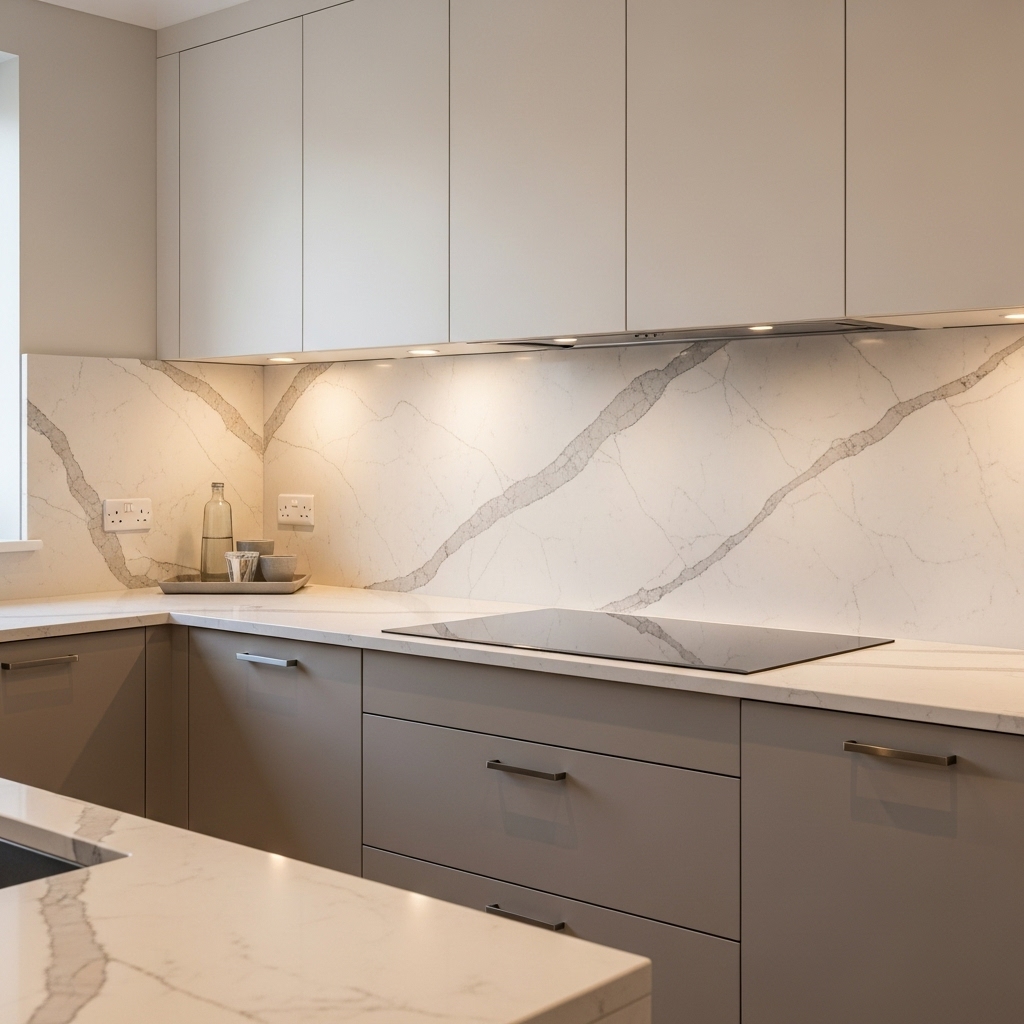
If you hate scrubbing grout lines, the solid slab backsplash is the ultimate luxury solution for your modern home. This design technique involves extending your countertop material; usually quartz, marble, or granite up the wall to the underside of the upper cabinets or even to the ceiling.
The result is a smooth, uninterrupted surface that screams high-end sophistication and creates a calming visual continuity. The visual impact of a continuous stone slab is profound, especially in smaller kitchens.
By eliminating the visual clutter of grid lines found in traditional tiling, the room feels larger and more expansive. It also highlights the natural veining and beauty of the stone, turning your wall into a piece of art rather than just a protective barrier.
Practicality is the main driver here, as cleaning involves a simple wipe-down with a damp cloth.
This approach is ideal for busy households where cooking splatters are frequent. While the material and installation costs are higher than standard tile, the durability and timeless elegance often justify the investment for homeowners looking for a permanent, low-maintenance upgrade.
3. Install Geometric Patterns for Visual Interest
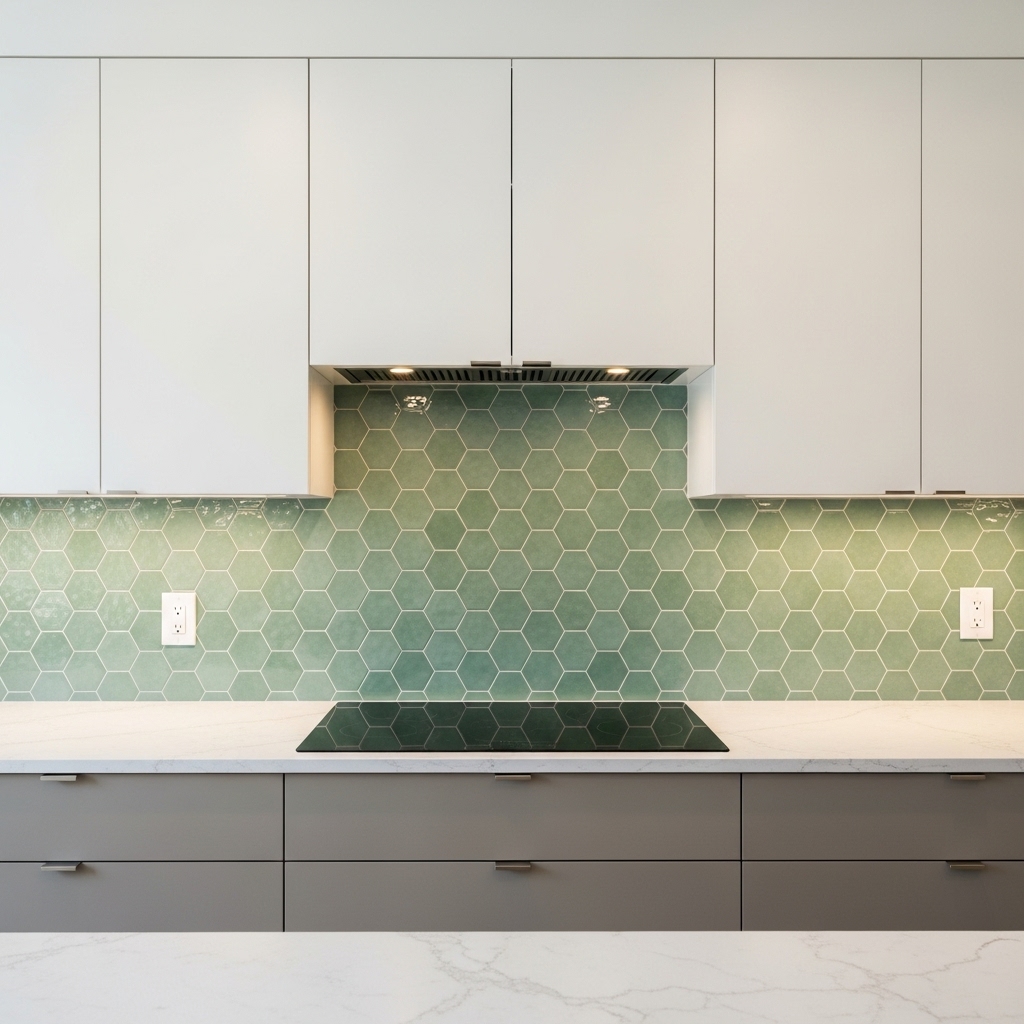
Modern design often embraces bold shapes, and geometric tiles are a fantastic way to introduce energy into a neutral kitchen. Hexagons, pickets, triangles, and diamonds offer a departure from the standard squares and rectangles.
Using these shapes creates a dynamic rhythm on the wall that draws the eye and breaks up the monotony of flat cabinet doors. You can play with this concept by using contrasting grout to emphasize the shape or by choosing tiles with subtle tonal variations.
A hexagon tile in a soft grey or moss green can add a sophisticated touch without overwhelming the space. For a more dramatic effect, consider “ombre” layouts where the tile colors fade from dark to light as they move up the wall.
This style is particularly effective in kitchens with minimalist cabinetry. When the furniture is simple, the backsplash can afford to be the star of the show.
It works beautifully behind a range hood or filling the space between open shelves, turning a functional necessity into a dedicated focal point that feels curated and intentional.
4. Handmade Zellige Tiles Elevate Kitchen Backsplash Ideas
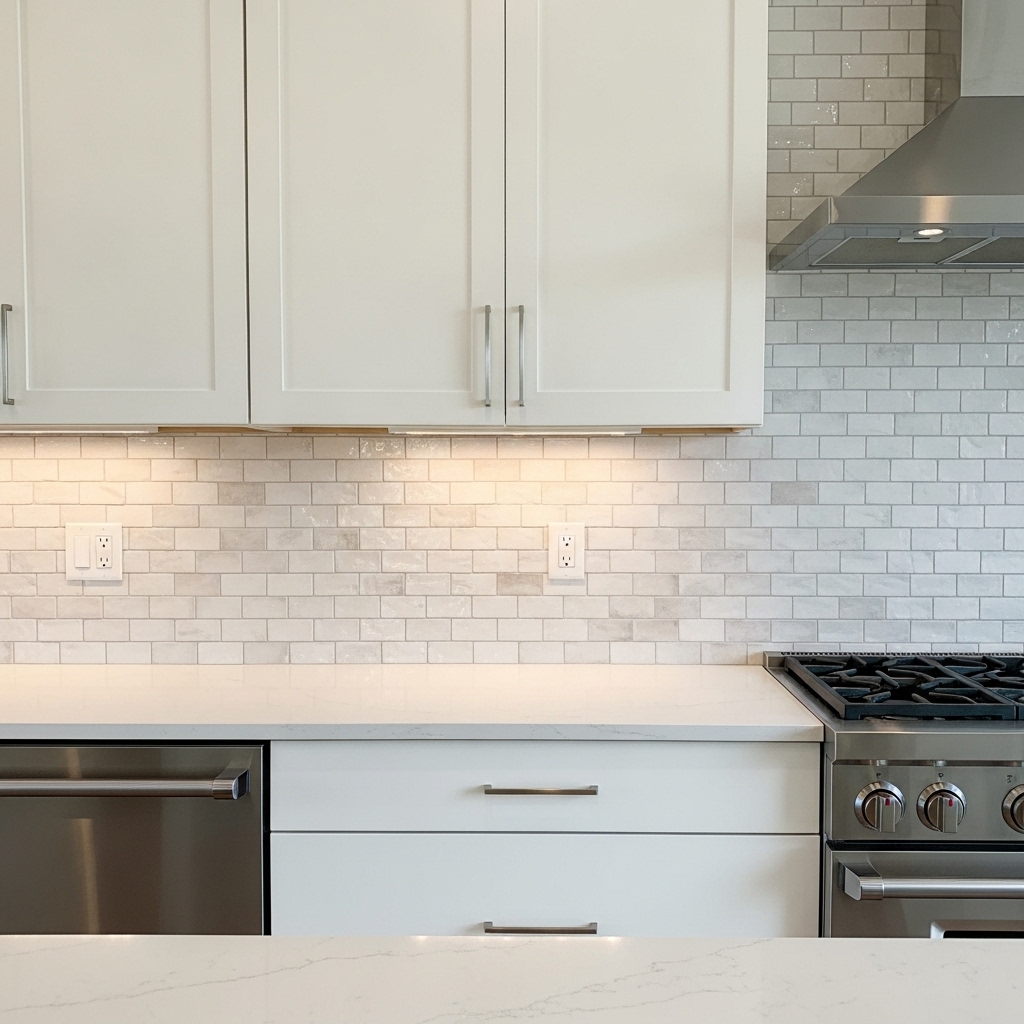
Originating from Morocco, Zellige tiles have taken the interior design world by storm, offering a perfect counterpoint to the sleekness of modern technology.
These terracotta tiles are glazed and fired in a way that produces variations in tone, shine, flatness, and size. No two tiles are exactly alike, creating a shimmering, textured surface that feels organic and incredibly warm.
The irregular surface of Zellige reflects light in different directions, adding depth and character that factory-made tiles simply cannot mimic. This “perfectly imperfect” look softens the sharp lines of stainless steel appliances and quartz countertops.
It brings a sense of history and craftsmanship into new builds, preventing them from feeling sterile or clinical. These tiles are best used when you want to add texture to a monochromatic color scheme. A white-on-white kitchen transforms into something magical with the pearlescent quality of Zellige.
Keep in mind that the uneven edges require a skilled installer to manage the minimal grout lines, but the resulting aesthetic is undeniably high-end and inviting.
5. Use Mirror or Antique Glass to Expand Space
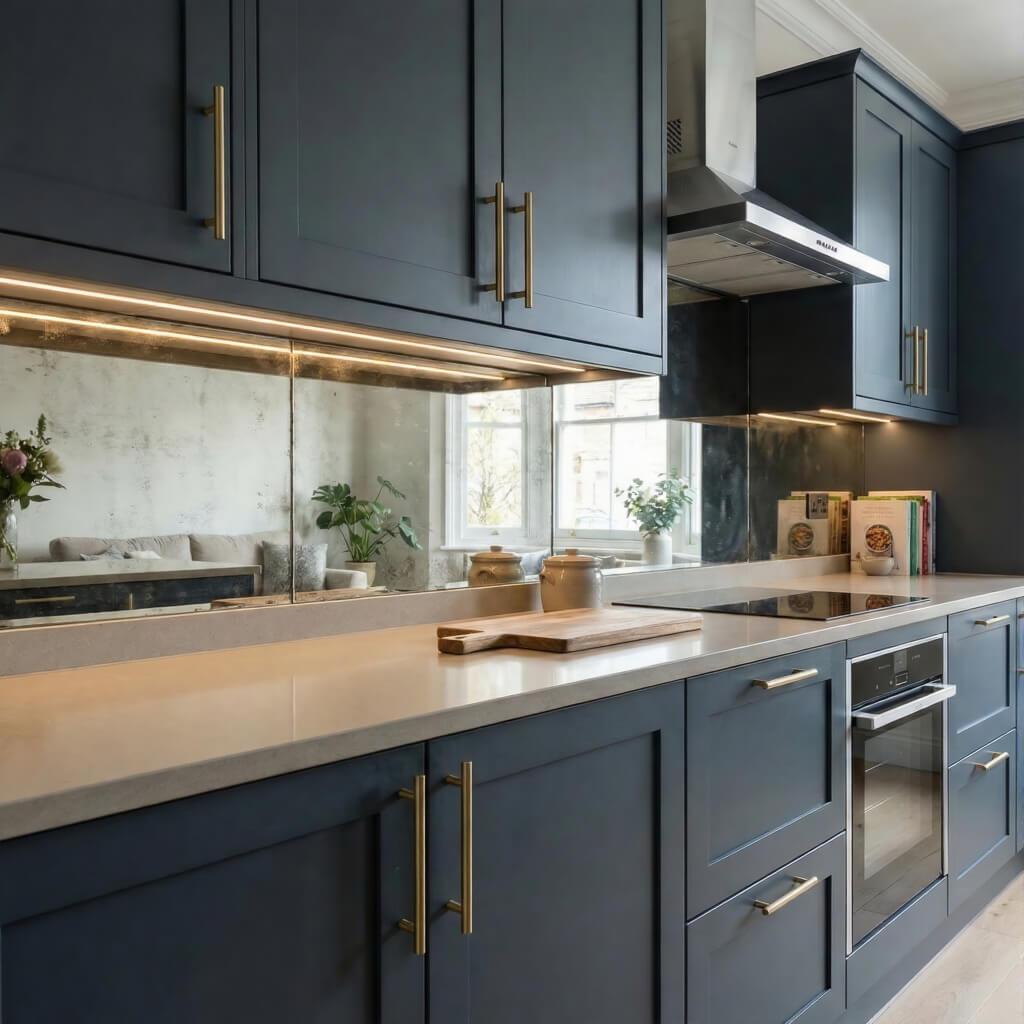
For small or dark kitchens, utilizing mirrors or antique glass as a backsplash is a brilliant optical trick. Mirrors bounce light around the room, instantly doubling the perceived depth of the space.
It connects the cook with the rest of the room and allows you to see the living area or dining space while facing the wall, which is excellent for social interaction.
Standard clear mirrors can feel a bit too crisp or “bathroom-like” for some tastes, which is why antique or smoked glass is often preferred. The distressed finish of antique glass hides splashes and streaks much better than a pristine mirror while adding a vintage, moody glamour.
It pairs exceptionally well with dark cabinetry or brass hardware. This is an excellent choice for wet bars or butler pantries, but it works equally well in the main kitchen area. It is surprisingly durable and easy to clean with standard glass cleaner.
However, it is best to avoid placing it directly behind a high-heat gas range unless the glass is tempered and rated for high temperatures, so always check safety ratings first.
6. Metallic Finishes Create Industrial Kitchen Backsplash Ideas
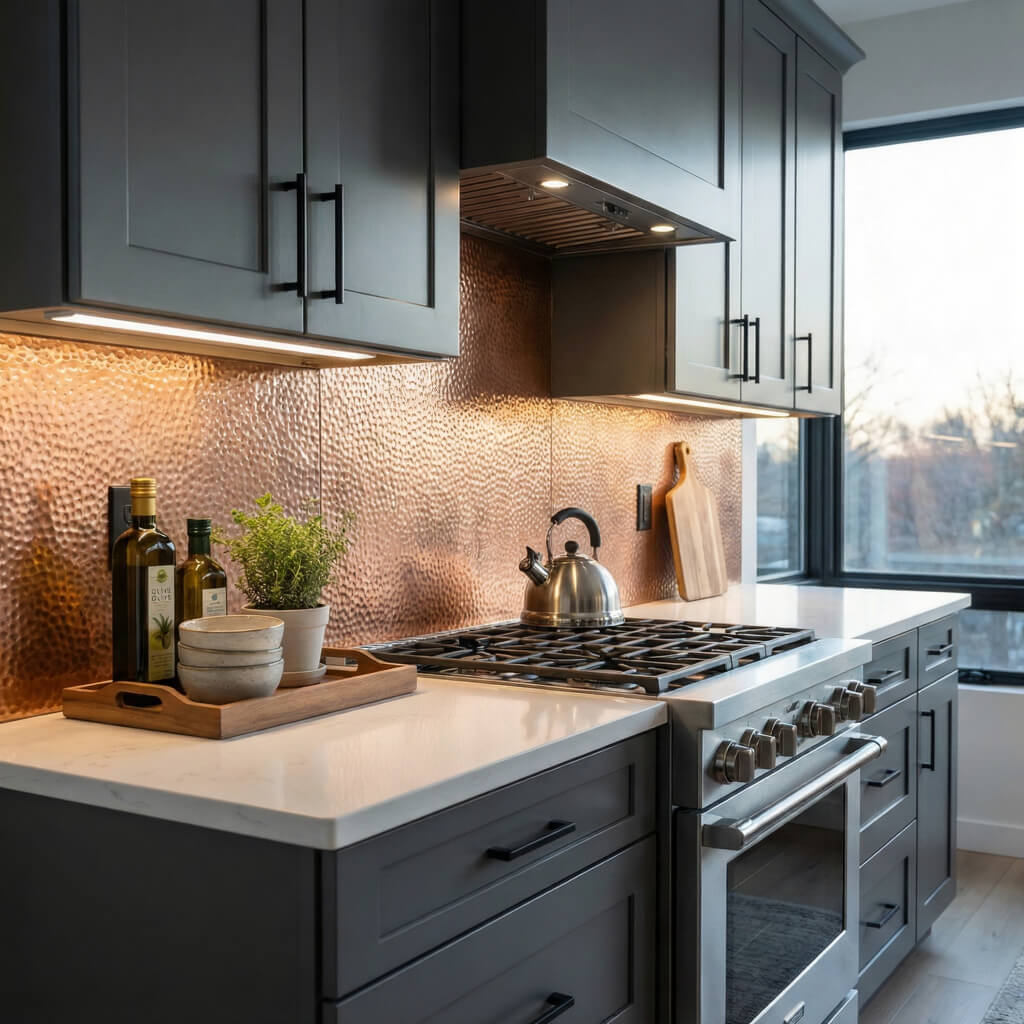
Metal backsplashes are no longer reserved for commercial kitchens; they are making a stylish entry into residential homes. Materials like stainless steel, copper, brass, and even pressed tin offer a sleek, hygienic surface that is impervious to heat and water.
Over time, living metals like copper and brass will develop a natural patina, creating a unique, evolving look. A stainless steel sheet behind the stove offers a serious, chef-inspired aesthetic that looks sharp and professional. It pairs perfectly with modern grey or black cabinetry.
For a warmer look, a hammered copper sheet adds a glow that complements wood tones and creamy whites. Textured metal tiles are also available if you want the metallic finish with added pattern and dimension. This option is incredibly practical for serious cooks.
There is no grout to stain, and grease wipes off effortlessly. It is best utilized as a feature panel behind the cooking zone rather than wrapping the entire room, as too much metal can make a kitchen feel cold. Used strategically, it adds a layer of industrial chic that is both functional and edgy.
7. Try Herringbone Layouts for a Twist on Tradition
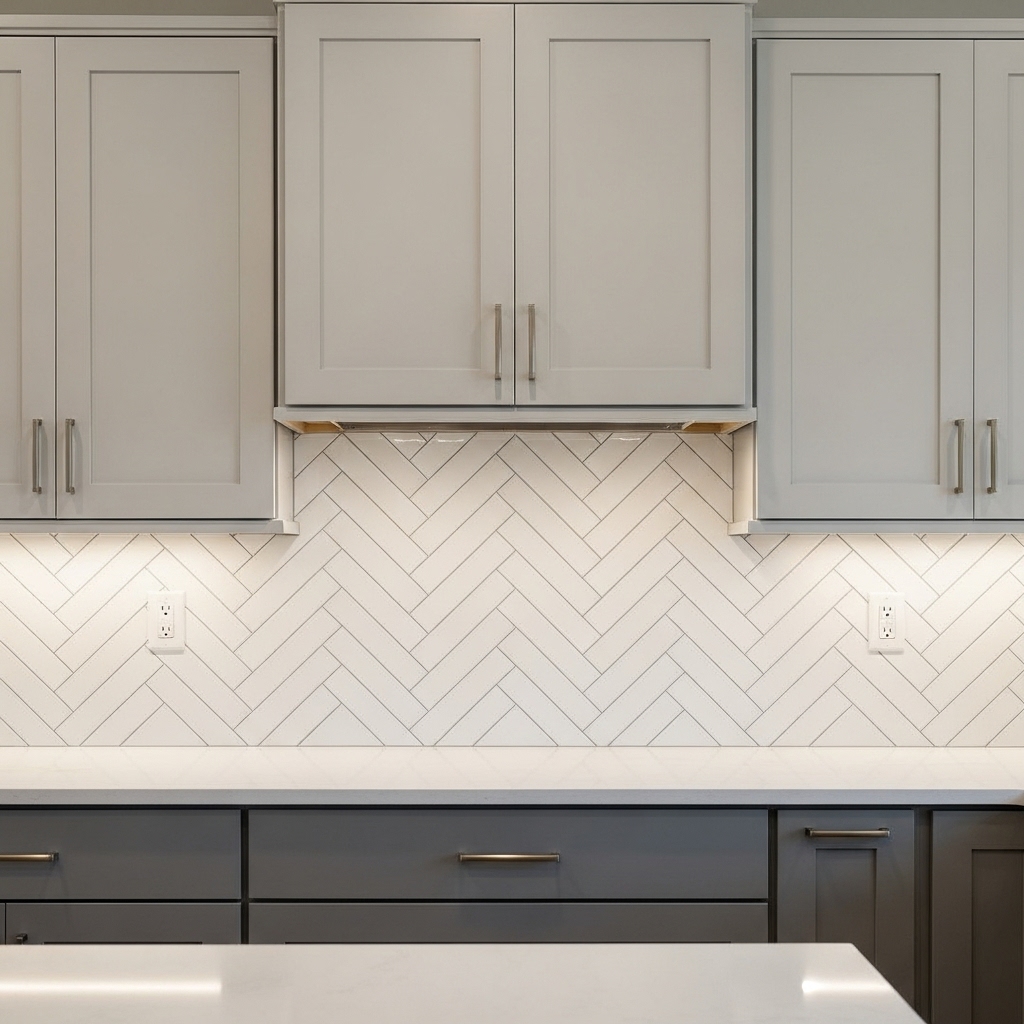
If you love the material of standard rectangular tiles but want a pattern that feels more upscale, the herringbone layout is the answer. By placing rectangular tiles at 45-degree angles in V-shapes, you create a zigzag pattern that suggests movement and energy.
This layout is classic enough to be timeless but intricate enough to feel custom and expensive. The herringbone pattern draws the eye upward, effectively making low ceilings feel higher. It works with almost any material, from ceramic subway tiles to natural marble bricks.
Because the pattern requires more cuts and careful alignment, it elevates humble materials. A simple white ceramic tile looks significantly more luxurious when laid in a herringbone pattern.
This layout works exceptionally well in transitional kitchens that blend traditional and modern elements. It requires a bit more material (usually about 20% extra for waste) and takes longer to install, but the visual payoff is substantial.
It is a sophisticated way to add complexity to your design without introducing wild colors or crazy textures.
8. Vertical Stacked Tiles Modernize Kitchen Backsplash Ideas
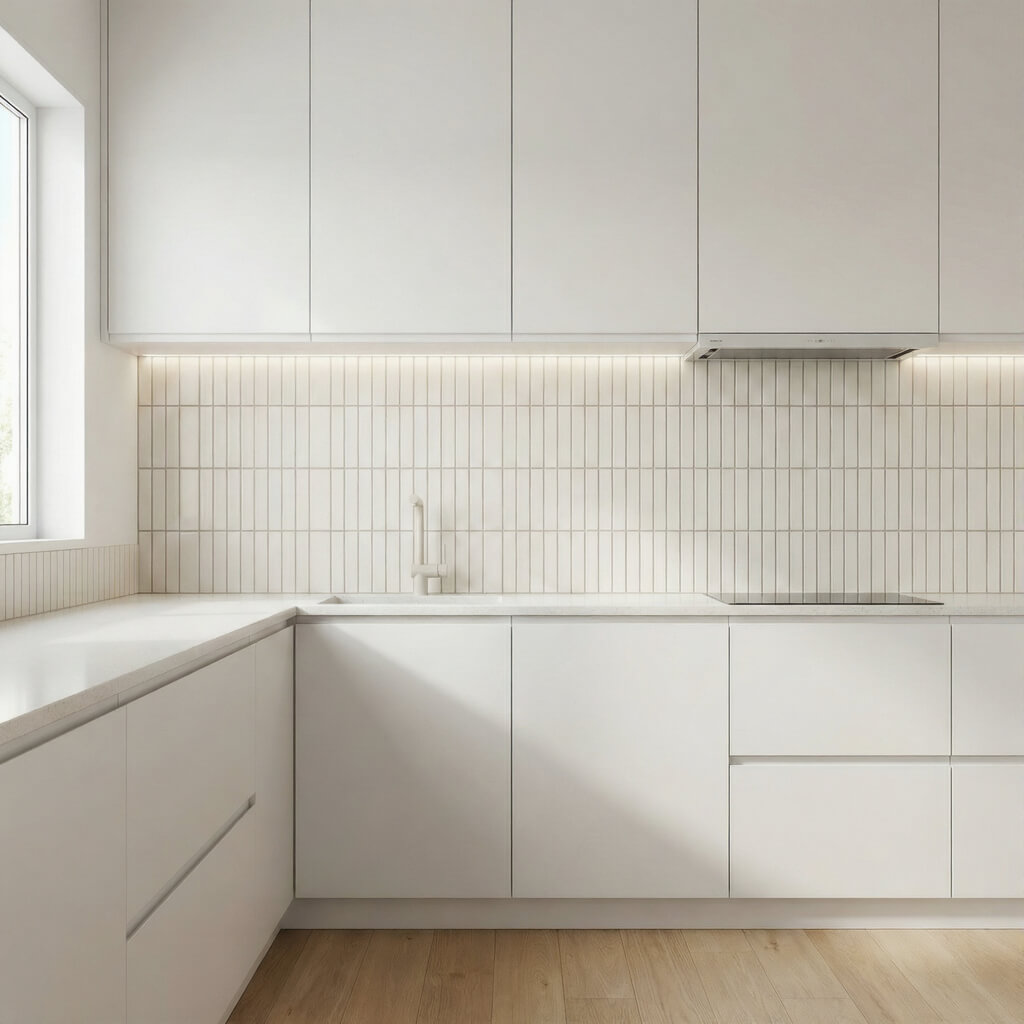
Flipping the script on traditional layouts, stacking rectangular tiles vertically is a hallmark of contemporary design. Instead of the running bond (brick) pattern, tiles are aligned in straight columns.
This emphasizes vertical lines, which can make a kitchen feel taller and more structured. It is a rigorous, grid-like look that appeals to mid-century modern and minimalist sensibilities.
This arrangement feels orderly and architectural. It works particularly well with thin, finger-like kit-kat tiles or standard subway tiles. The straight lines complement the flat-panel cabinetry often found in modern homes.
You can stack them perfectly aligned (soldier stack) or offset them vertically for a slightly different rhythm. Vertical stacking is ideal for kitchens with low ceilings or limited wall space between the counter and cabinets. It draws the vision upward, maximizing the sense of volume.
It is a subtle design choice that signals a modern aesthetic without needing loud colors or expensive materials. It proves that how you install a tile is just as important as the tile itself.
9. Incorporate a Window as a Backsplash
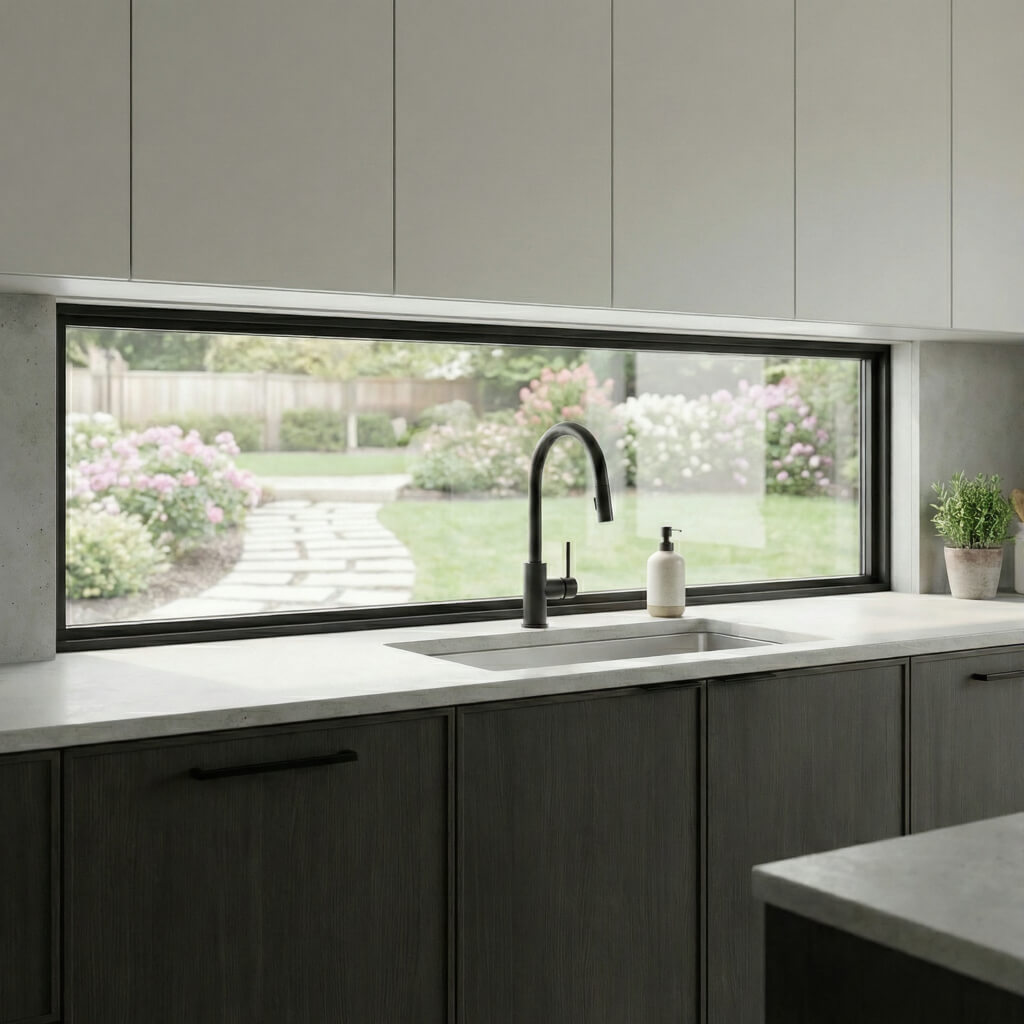
The most beautiful backsplash might not be a material at all, but a view of the outdoors. Installing a wide, short window between the countertop and the upper cabinets is a breathtaking architectural feature.
It floods the workspace with natural light during the day and opens up the kitchen to the garden or backyard. This “window splash” eliminates the need for artificial task lighting during the day and connects the interior with nature.
It is particularly effective if your kitchen faces a green space or a private patio. The changing seasons provide a constantly evolving backdrop that no tile can compete with. It also makes the countertop feel deeper and the room less confined.
While this requires significant structural work and is best planned during a renovation or new build, the result is transformative. It is best suited for the sink area or a prep zone rather than behind a cooktop, as cleaning grease off a window can be tedious.
However, for sheer “wow” factor and well-being, natural light is the ultimate luxury.
10. Embrace Warmth with Exposed Brick Veneer
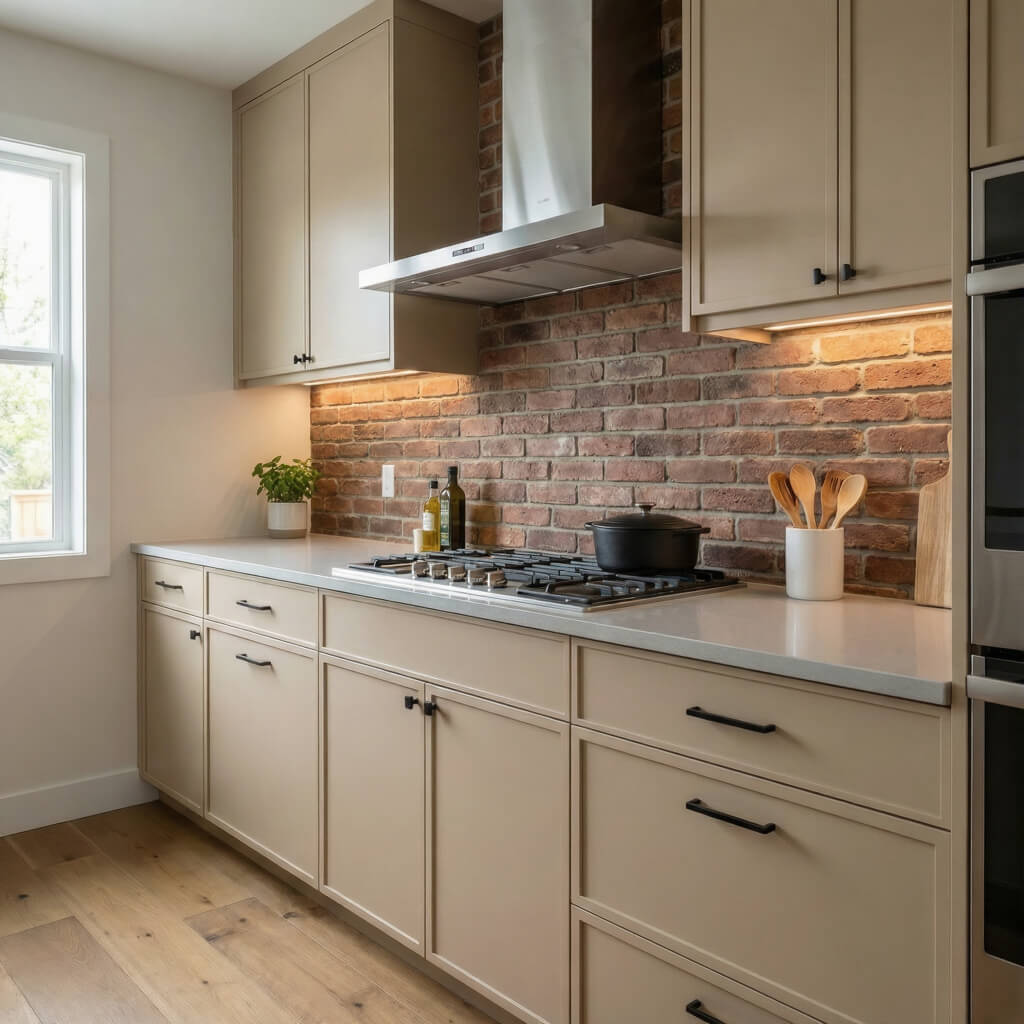
For those seeking an urban loft or rustic cottage feel, exposed brick brings undeniable warmth and texture. If your home doesn’t have existing brick walls to expose, thin brick veneers are a fantastic alternative.
These slices of real brick are installed like tile but give the authentic appearance of a solid structural wall. Brick adds a rough, tactile element that contrasts beautifully with smooth countertops and sleek appliances.
It creates a cozy, lived-in atmosphere that feels grounded. You can leave the brick in its natural red or brown tones for an industrial look, or whitewash it for a brighter, Scandinavian or farmhouse vibe.
Because brick is porous, sealing it is non-negotiable in a kitchen environment. A high-quality matte sealer will protect it from grease and tomato sauce splatters without changing its look. This idea works best on feature walls where you want to add architectural weight and history to a possibly plain drywall box.
11. Concrete and Plaster for a Minimalist Look
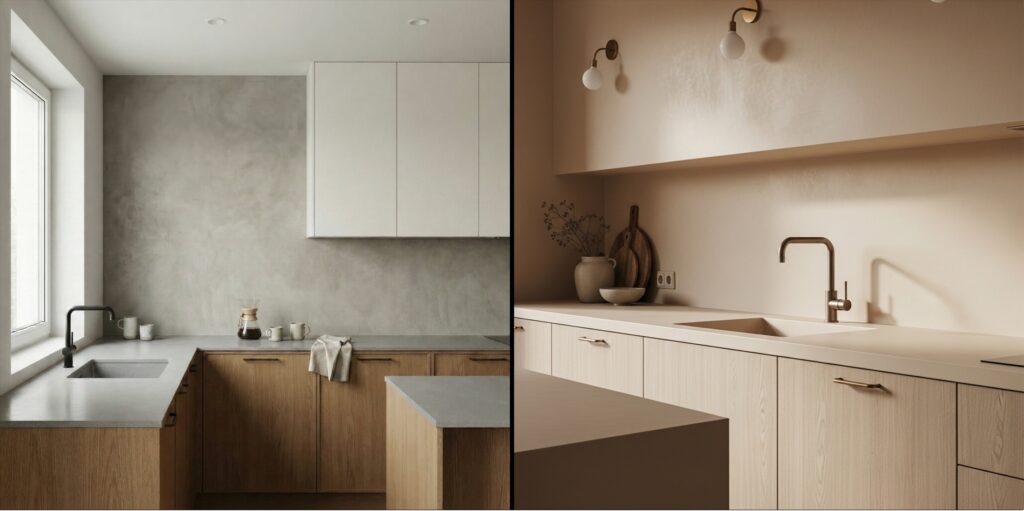
The rise of the “wabi-sabi” and minimalist aesthetic has brought materials like concrete and Tadelakt plaster into the kitchen. These materials offer a raw, earthy texture that feels serene and uncluttered. Unlike tile, there are no grout lines or repeating patterns; just a calm, monolithic surface.
Concrete backsplashes can be cast in place or installed as panels. They offer an industrial edge that pairs well with wood and matte black fixtures. Tadelakt, a waterproof Moroccan plaster technique, offers a softer, velvety finish that is seamless and organic.
Both options allow for custom color tinting to match your exact palette. These finishes are perfect for homeowners who want a spa-like, tranquil kitchen environment. They require specific maintenance; primarily regular sealing to prevent staining from acids like lemon juice or wine.
However, for a truly modern, texture-focused home, these materials provide a unique alternative to the shiny surfaces found in most kitchens.
12. Chalkboard Paint for Fun and Functionality
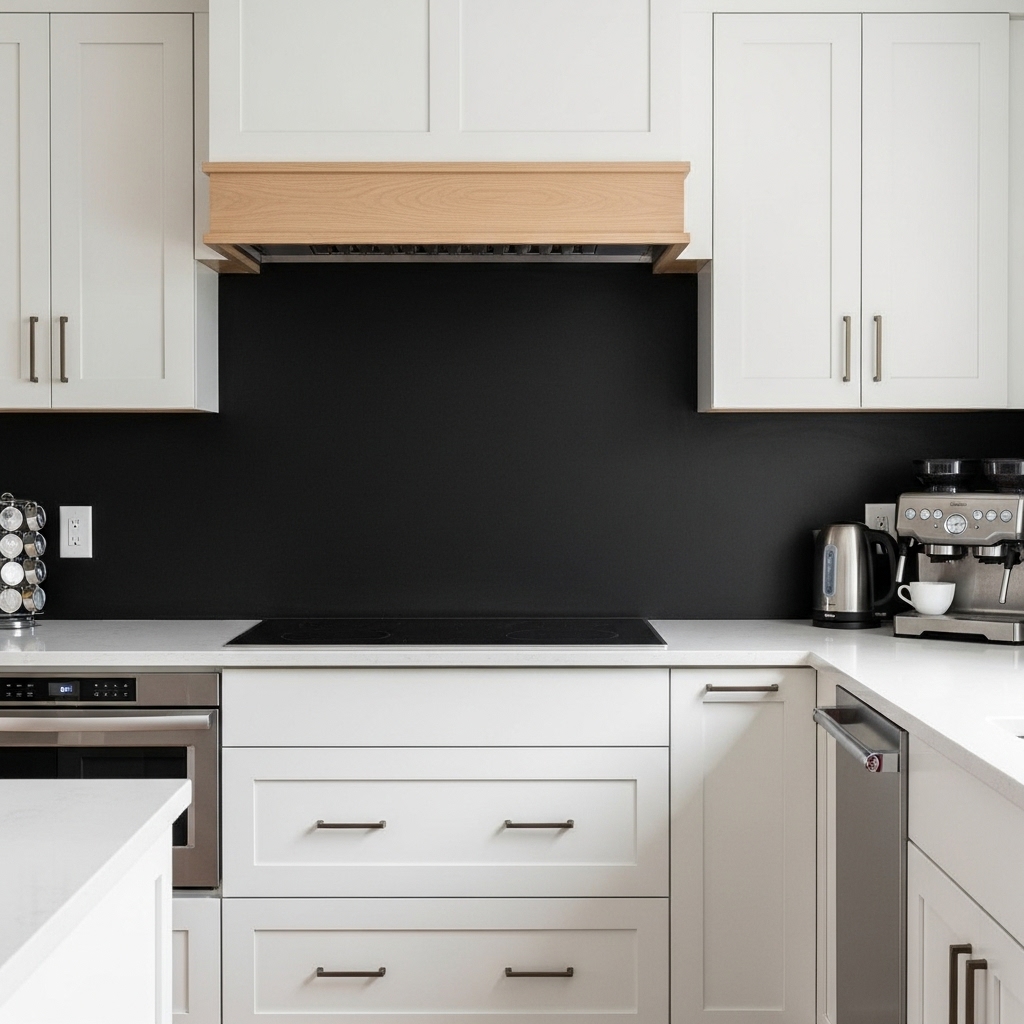
For a playful, budget-friendly, and highly functional option, chalkboard paint turns your backsplash into a canvas. This creates a matte black surface that serves as a writing pad for grocery lists, recipes, inspirational quotes, or doodles by the kids. It adds a casual, bistro-like vibe to the kitchen.
This idea is incredibly easy to execute and requires zero tiling skills. You simply prep the wall and roll on the specialty paint. It contrasts sharply with white or light wood cabinets, providing a bold anchor for the room. It is also dynamic; your backsplash changes every time you decide to erase and redraw.
This is best used in specific zones, like a coffee station or a prep area, rather than behind a high-heat stove where scrubbing might wear down the paint. It is a fantastic temporary solution for homeowners saving up for tile, or for families who want their kitchen to feel interactive and fun rather than museum-like.
13. Peel-and-Stick Options for Renter-Friendly Kitchen Backsplash Ideas
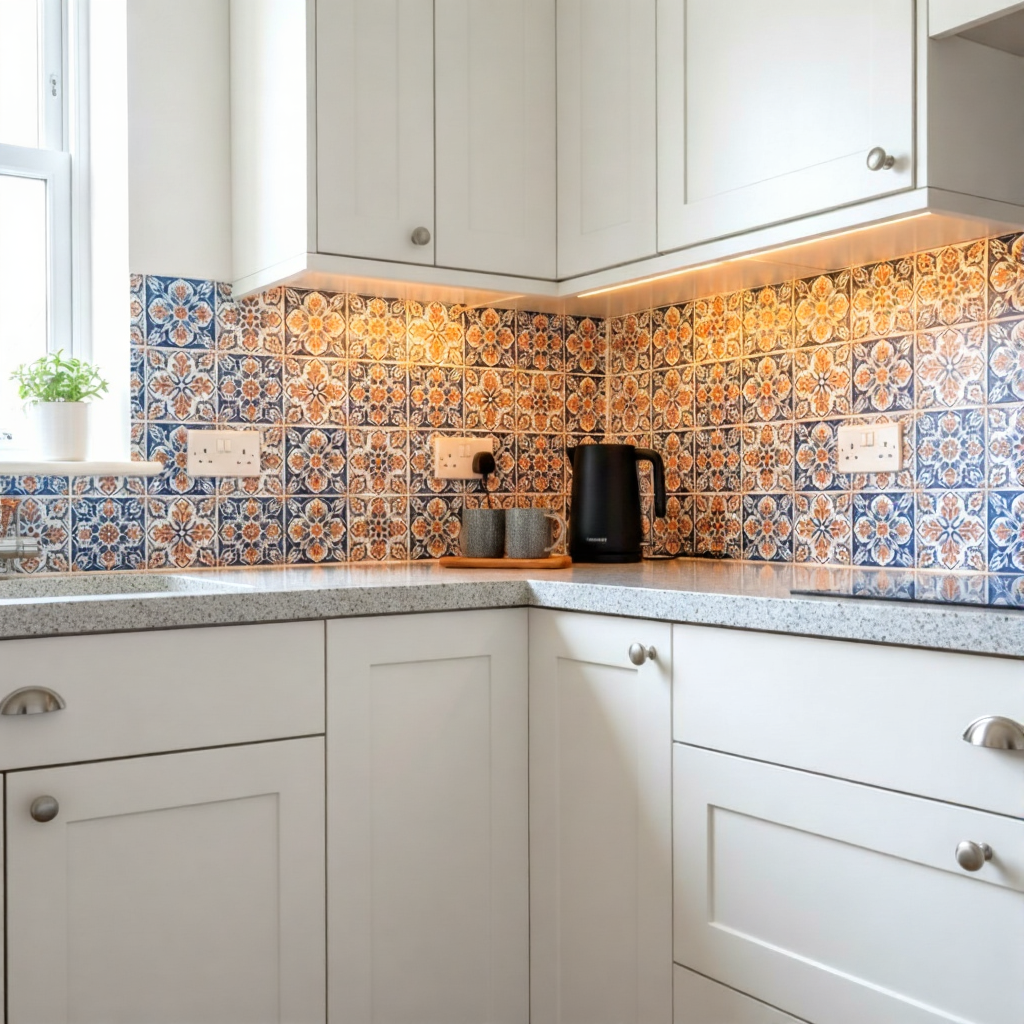
Renters and budget-conscious homeowners no longer have to settle for ugly walls. Modern peel-and-stick tiles have evolved significantly, offering realistic 3D textures and durable finishes that mimic real stone, glass, or ceramic.
These are adhesive sheets that can be applied directly over existing smooth surfaces like drywall or old linoleum. The primary advantage is reversibility. When it is time to move, you can use a hairdryer to warm the adhesive and peel the tiles off without damaging the wall.
This allows renters to personalize their space without risking their security deposit. The variety of patterns available is vast, from faux subway tile to intricate Moroccan prints.
This solution is perfect for quick weekend makeovers. It resists heat and moisture reasonably well, though it is wise to leave a small gap near high-heat areas or use a protective glass cover. It empowers you to test out bold colors or patterns without the commitment of permanent mortar and grout.
14. Beadboard Paneling for Cottage Charm
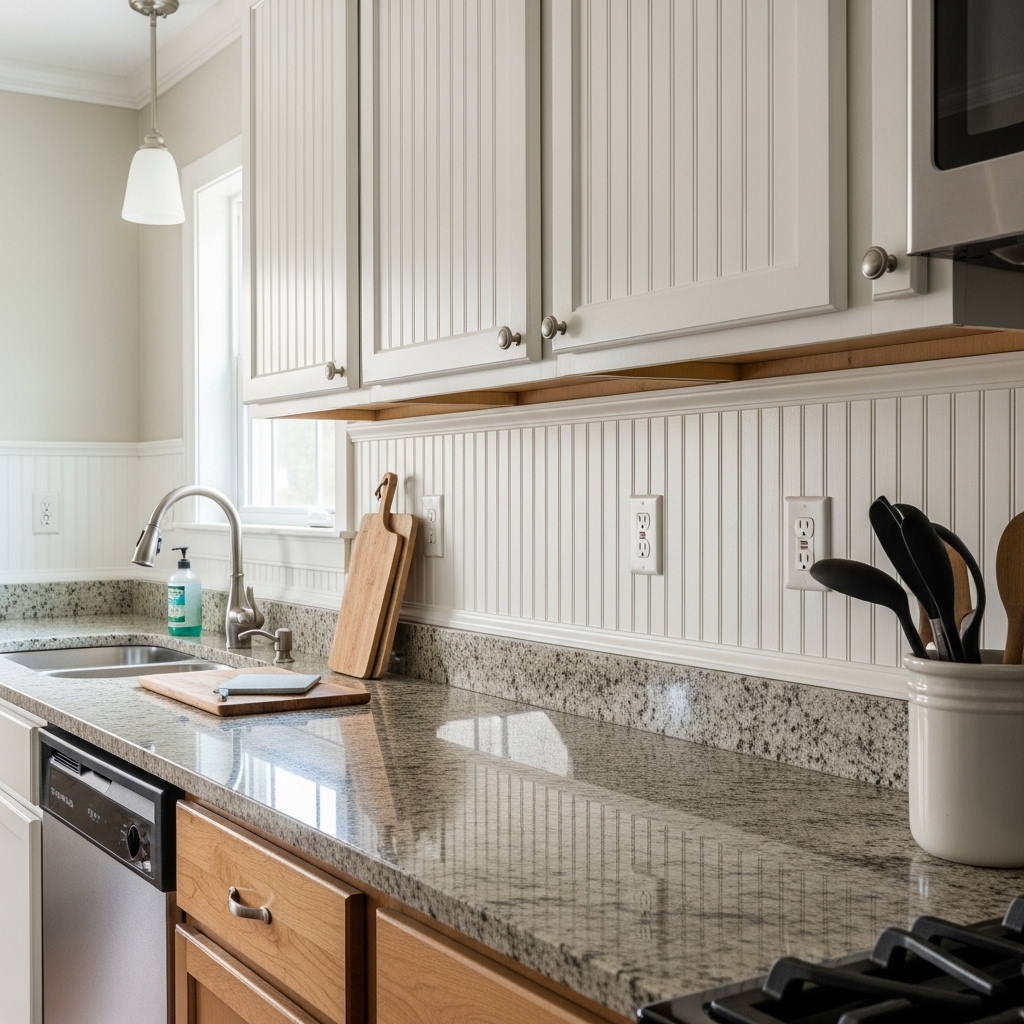
Beadboard is a classic millwork style featuring vertical grooves that adds instant charm and cottage character. It is an inexpensive material, often sold in sheets, that can be cut to size and glued or nailed to the wall. When painted in a durable semi-gloss finish, it becomes a distinct and hardy backsplash.
This look softens a kitchen and makes it feel more traditional and homey. It is widely used in coastal and farmhouse designs. The vertical lines add subtle texture without the busyness of small mosaic tiles. It can be painted any color, allowing for easy updates down the road if your taste changes.
Beadboard is best used in dry areas of the kitchen. While high-quality exterior grade paint will protect it from occasional splashes, it is not as water-tight as tile. Many homeowners use a short granite or quartz upstand (a 4-inch strip) near the sink and install beadboard above it to ensure longevity.
15. Terrazzo Brings Playful Color and Durability
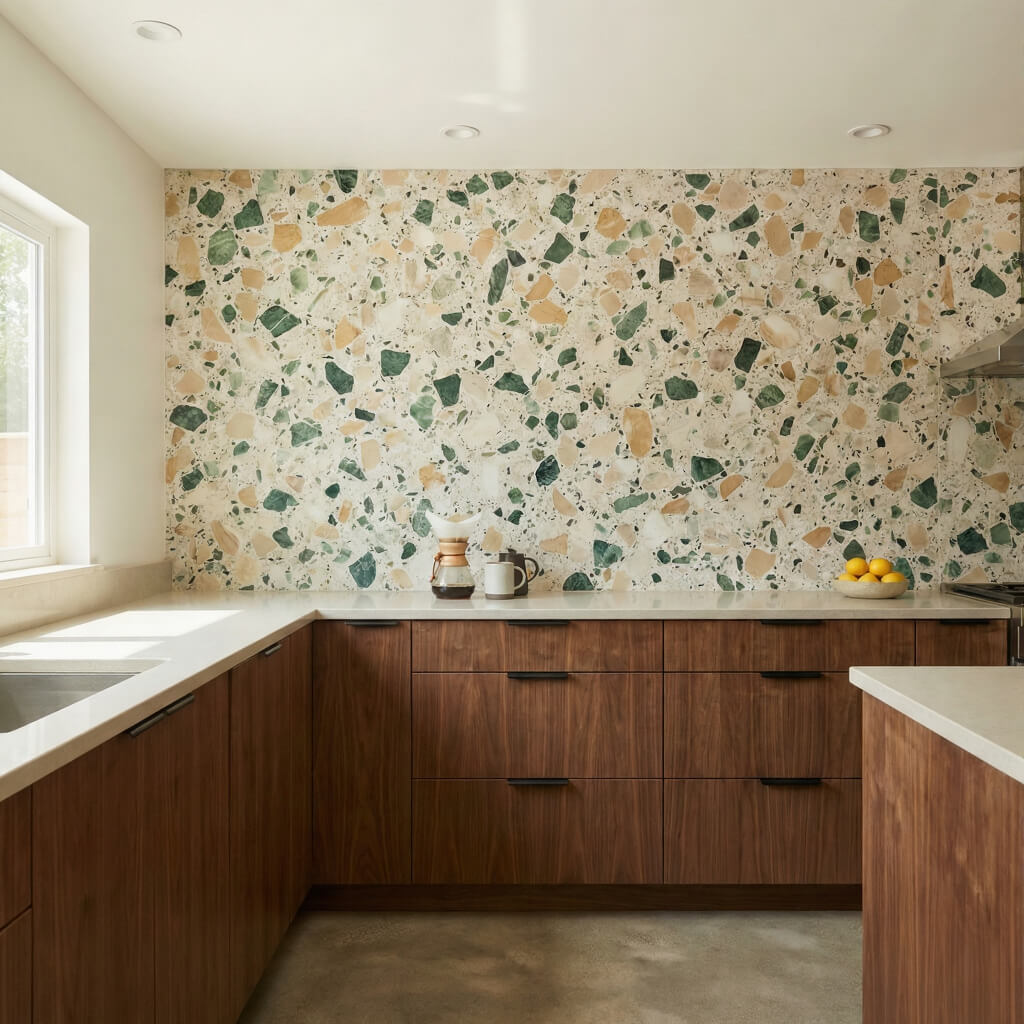
Terrazzo has made a massive comeback, transitioning from commercial floors to trendy residential surfaces.
This composite material consists of chips of marble, quartz, granite, or glass poured into a cement or resin binder. The result is a speckled, confetti-like appearance that is incredibly durable and full of personality.
A terrazzo backsplash hides crumbs and splashes better than almost any other material due to its busy pattern. It allows you to pull multiple colors together; you can pick a terrazzo with chips that match your cabinets and other chips that match your floor. It feels retro yet undeniably modern.
This is a fantastic choice for adding a pop of color to a neutral kitchen. Whether you choose a subtle micro-terrazzo or a bold slab with large aggregate chunks, it creates a surface that is hard-wearing and unique.
It pairs beautifully with flat-panel cabinets and mid-century modern furniture, bridging the gap between fun and sophisticated.
FAQs
Q1. What is the most timeless kitchen backsplash?
White subway tile is widely considered the most timeless option. Its clean lines and simple aesthetic have survived over a century of trends. To keep it from looking generic, consider using a different layout like herringbone or choosing a tile with a handmade texture, ensuring it remains a staple among the best kitchen backsplash ideas for years to come.
Q2. How do I choose a backsplash for a small kitchen?
For small kitchens, aim to reflect light and reduce visual clutter. Glossy tiles, glass, or mirrors help bounce light around the room, making it feel larger. Avoiding small, busy mosaic patterns and opting for larger format tiles or slab backsplashes can also minimize grout lines, creating a less chaotic and more expansive feel.
Q3. Can I install a backsplash over existing tiles?
In many cases, yes, provided the existing tiles are flat, secure, and clean. However, this adds thickness to the wall, which might interfere with outlets and switches. While it is a shortcut that saves on demolition mess, removing the old tile usually results in a cleaner, more professional finish and prevents issues with cabinet alignment.
Q4. Is a backsplash strictly necessary?
While not structurally required, a backsplash is highly recommended for hygiene and maintenance. It protects the drywall from moisture, grease, and food splatters that can cause staining, mold, or damage over time. Without one, you will likely find yourself repainting the wall behind the sink and stove frequently to keep it looking fresh.
Q5. What is the best backsplash for cleaning?
Solid slab backsplashes (quartz, granite, or glass) are the easiest to clean because they lack grout lines where grime collects. If you prefer tile, large-format porcelain or ceramic tiles with sealed grout are also very low maintenance. Avoid porous materials like unsealed brick or natural stone if easy cleaning is your top priority.
Conclusion
The best kitchen backsplash ideas for a modern home focus on simplicity, balance, and everyday practicality. Modern doesn’t mean cold or expensive; it means intentional choices that work with your space and lifestyle.
Start by considering how you use your kitchen, how much maintenance you want, and what materials feel right for your home. With the right backsplash, even a simple kitchen can feel polished, current, and comfortable.
If you’re exploring further, related guides on storage, layout, and material selection can help you refine the rest of your space with confidence.