If you’re trying to make a small kitchen look bigger, the frustration usually isn’t just about size; it’s about how cramped, cluttered, and inefficient the space feels day to day. Limited counter space, tight walkways, and overflowing cabinets can quickly make cooking feel stressful instead of functional.
The good news is that most small kitchens don’t need full renovations to feel more open. Strategic layout adjustments, smarter storage choices, and a few visual changes can dramatically improve how spacious your kitchen looks and functions. Small changes compound when they’re done intentionally.
The ideas below focus on realistic upgrades you can apply gradually. They work whether you own or rent, have a tight budget, or simply want your kitchen to feel calmer and more usable without tearing everything apart.
1. Stick to a Light Color Palette
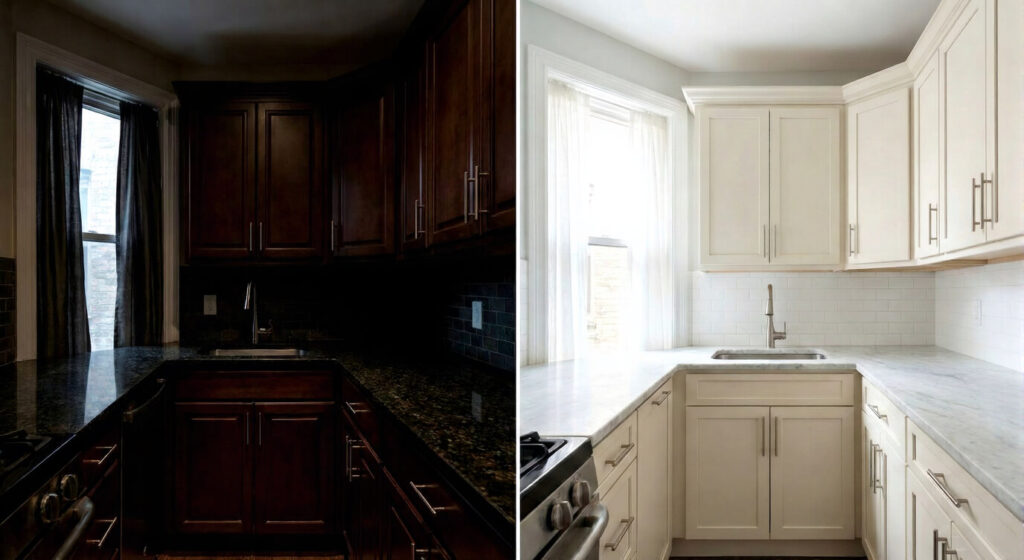
One of the oldest tricks in the interior design book is using light colors to expand a space visually. White, cream, pale gray, and soft pastels reflect light rather than absorbing it, which pushes the walls outward in the viewer’s perception.
When you paint your walls, cabinets, and even the ceiling in these airy tones, you blur the boundaries of the room, making it difficult for the eye to register where one surface ends and another begins. This seamless integration helps make a small kitchen look bigger by eliminating the visual breaks that dark colors create.
If an all-white kitchen feels too sterile for your taste, you can layer different shades of white or warm creams to add depth without closing the space in. The goal is to keep the contrast low; high-contrast colors stop the eye, whereas monochromatic palettes allow the gaze to travel uninterrupted.
This approach is best used in rooms with limited natural light, as the pale surfaces will amplify whatever illumination is available. You can introduce personality through textures like a white brick backsplash or marble countertops rather than relying on bold, space-shrinking colors.
It creates a serene, sophisticated backdrop that feels significantly more spacious than it actually is.
2. Install Open Shelving for an Airy Feel
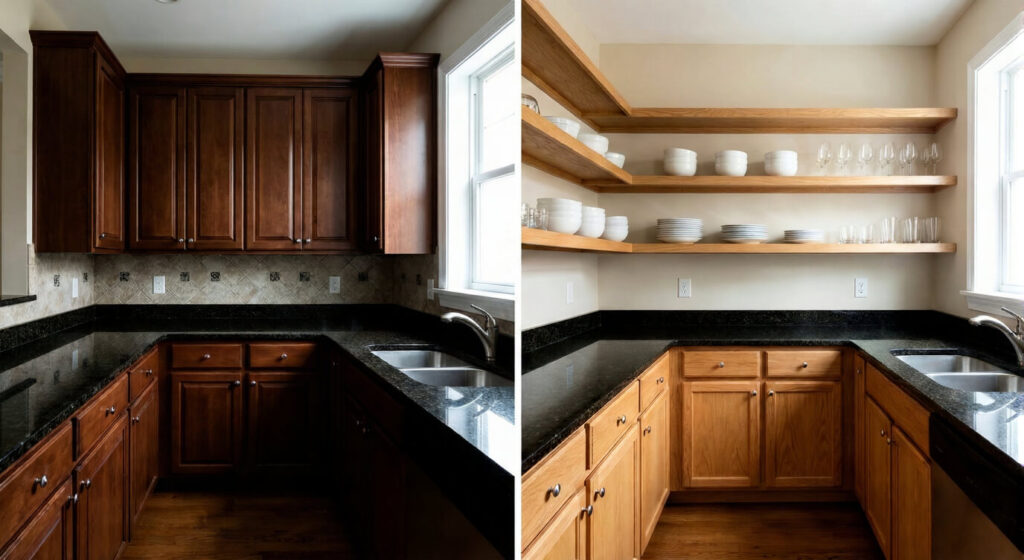
Replacing heavy upper cabinets with open shelving is a dramatic move that pays off by adding significant visual depth. Bulky box cabinets can make a narrow kitchen feel like a tunnel, imposing on your headspace and blocking sightlines.
Open shelves, on the other hand, allow you to see all the way to the wall, which tricks the brain into perceiving the room as wider and more open. This method requires a commitment to organization, as clutter on open shelves will have the opposite effect.
However, when curated with matching dishware or neat stacks of glasses, it creates a breezy, casual atmosphere. It transforms storage into display, forcing you to edit your belongings down to the essentials you actually use.
If you aren’t ready to remove all your upper cabinets, try swapping just one section near the sink or a window. This breaks up the monotony of solid doors and lets the room breathe.
It is a fantastic opportunity to display beautiful ceramics or plants, adding life to the kitchen without weighing down the walls with heavy carpentry.
3. Use Glossy Finishes
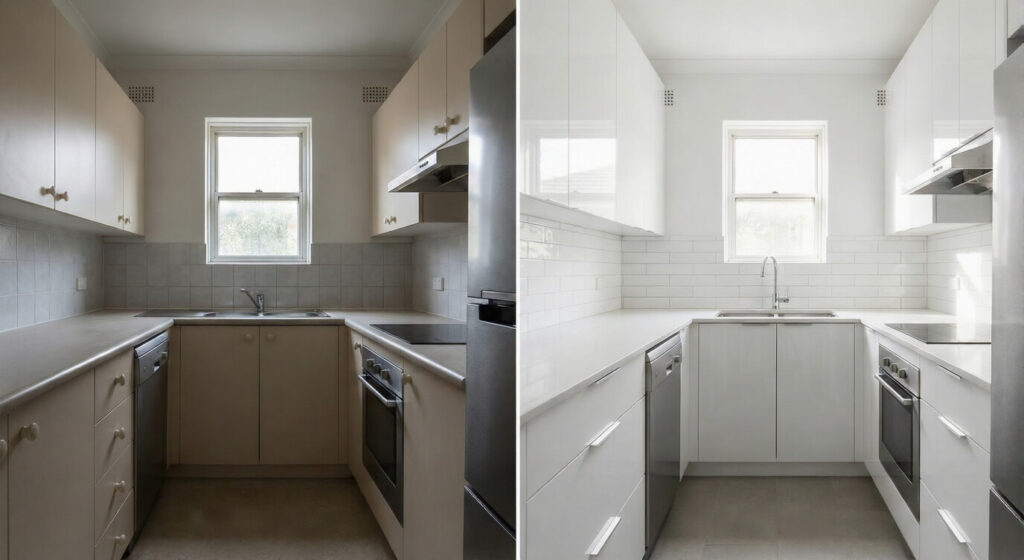
Surfaces that reflect light act like mirrors, bouncing illumination around the room and creating a sense of expansiveness. High-gloss cabinetry, shiny subway tiles, or stainless steel appliances contribute to this effect beautifully.
When light hits these surfaces, it scatters, brightening dark corners and making the entire room feel more dynamic and less static.
This strategy works similarly to hanging a mirror but is more subtle and integrated into the architecture of the room. A lacquer finish on cabinets or a polished quartz countertop can add a layer of sophistication while serving a functional purpose.
The reflection creates phantom depth, suggesting that the space extends further than the physical wall. This is particularly effective in modern or contemporary homes where sleek lines are already part of the aesthetic.
Keep in mind that glossy finishes can show fingerprints more easily than matte ones, so they might require a quick wipe-down more often. However, the trade-off is a luminous, jewel-box effect that helps make a small kitchen look bigger and brighter.
4. Maximize Natural Light with Minimal Treatments
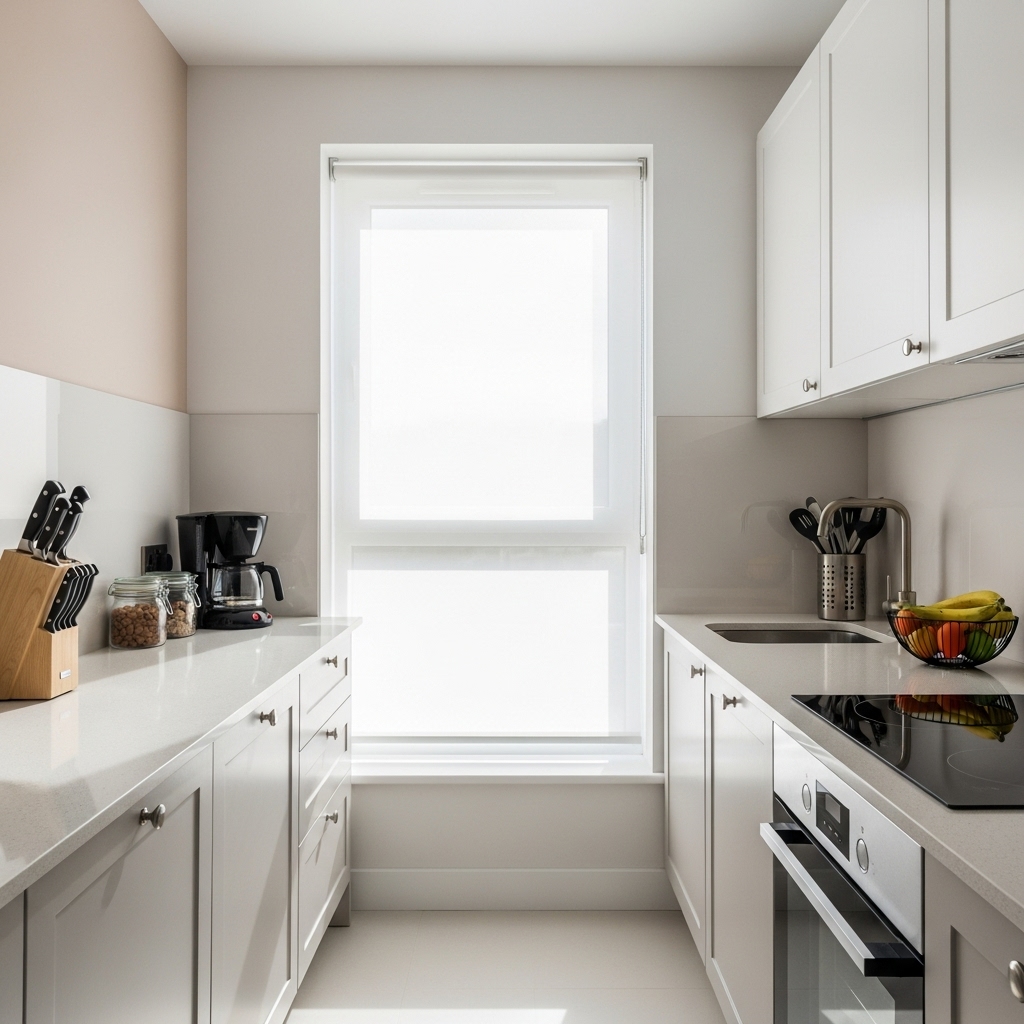
Natural light is the ultimate space enhancer. If your kitchen has a window, your priority should be to let in as much sunshine as possible. Heavy curtains, thick blinds, or valances block light and add visual weight to the wall, making the window look smaller and the room darker.
Removing these obstacles connects the interior with the outdoors, extending your sightline beyond the glass. If privacy is a concern, opt for sheer roller blinds or frosted window film that allows light to filter through while obscuring the view from outside.
In many cases, leaving the window completely bare is the best option for maximizing the airy feel. A well-lit room always feels more spacious than a dim one because shadows tend to close a space in. This approach works best alongside other reflective surfaces discussed earlier.
When sunlight pours in and hits a glossy backsplash or a pale countertop, the entire kitchen glows. It is a free upgrade that requires nothing more than a screwdriver to remove old hardware, yet it delivers one of the most immediate transformations available.
5. Leverage Vertical Storage
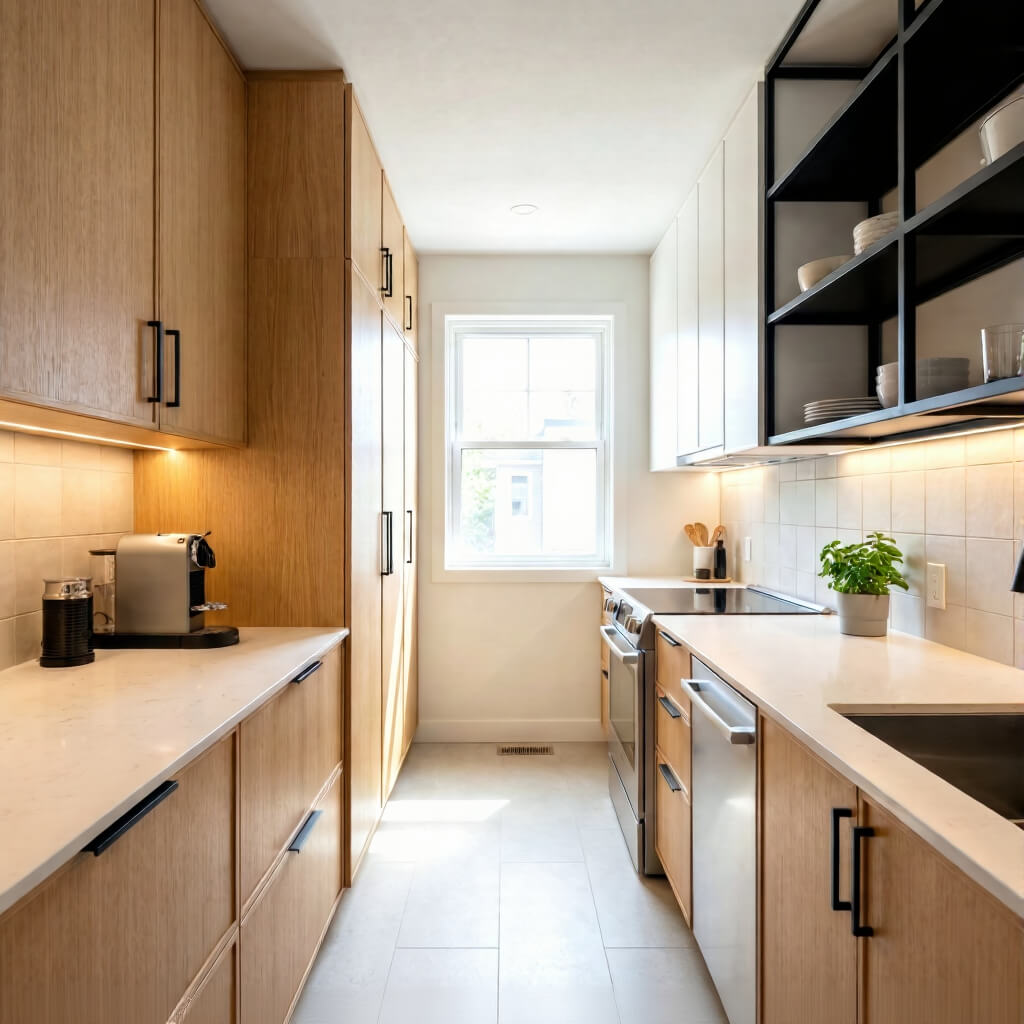
When floor space is limited, vertical space becomes your greatest asset. Taking cabinets closer to the ceiling draws the eye upward, which makes the entire kitchen appear taller and more spacious. Because of this visual trick, even narrow kitchens benefit from added height.
In practice, you can extend existing cabinets with matching upper units or add open shelving above them. For example, storing rarely used items higher up frees everyday storage below, reducing clutter where it matters most.
As a result, countertops stay clearer, and the kitchen feels less crowded. If full-height cabinets aren’t possible, tall pantry units or stacked shelving still achieve a similar vertical effect.
6. Incorporate Glass Cabinet Doors
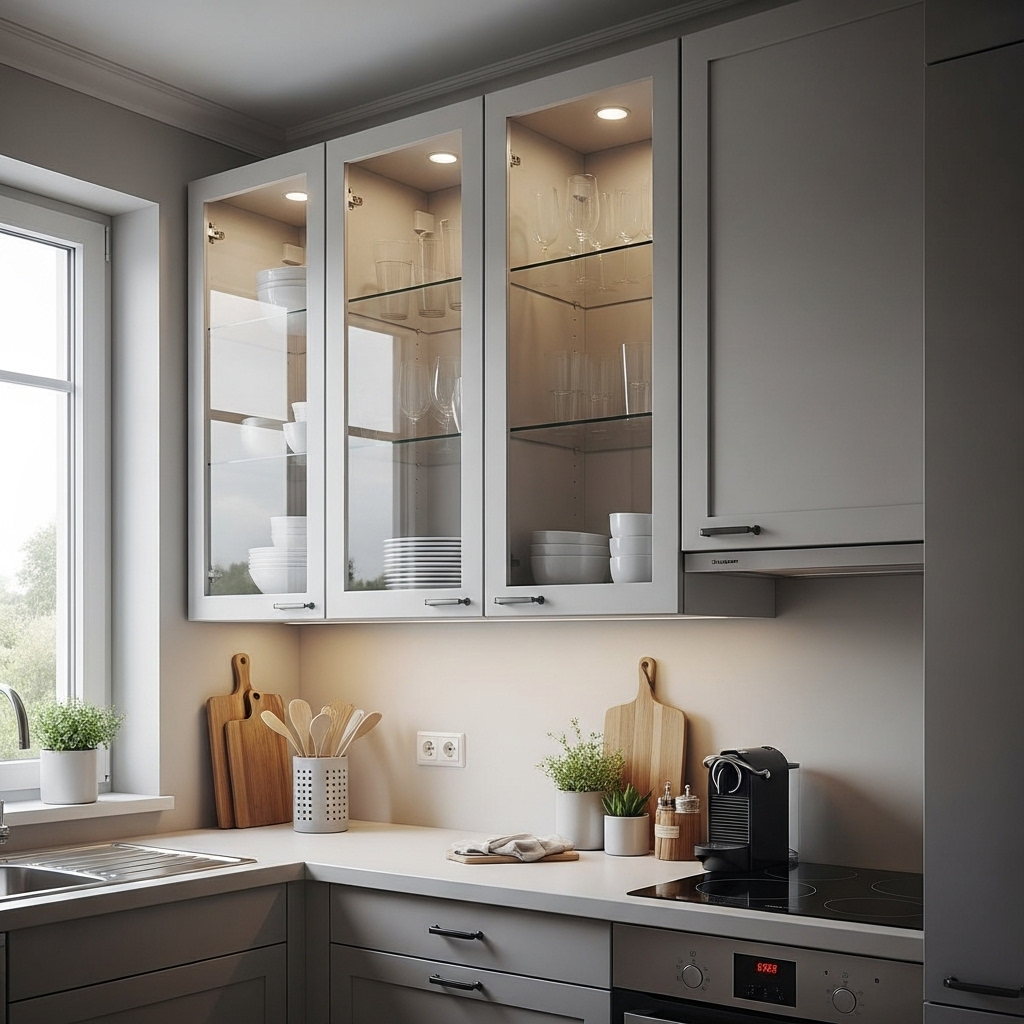
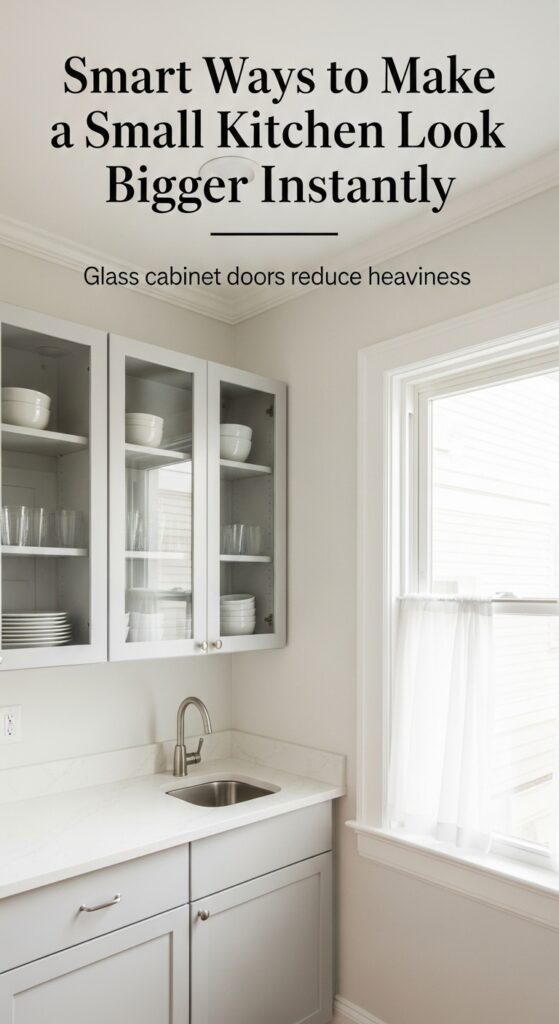
If open shelving feels too messy for your lifestyle, glass-front cabinet doors offer a perfect middle ground. They provide the dust protection of traditional cabinets while offering the visual depth of open shelves.
Because you can see through the doors to the back of the cabinet, the eye is not stopped abruptly at the cabinet face, which adds a few precious feet to the perceived size of the room.
This technique is effective for breaking up a solid wall of wood or laminate, which can feel heavy and imposing in a tight space. It works exceptionally well on upper cabinets, especially if you paint the interior of the cabinets a light color or install interior lighting.
The glow from within the cabinet adds warmth and ambiance.
Use glass doors for cabinets where you store your best glassware or white dishes. Textured or seeded glass can obscure the contents slightly if you are worried about perfect organization, still offering that light, airy quality. It is a classic design choice that suits traditional, transitional, and modern kitchens alike.
7. Declutter Countertops Ruthlessly
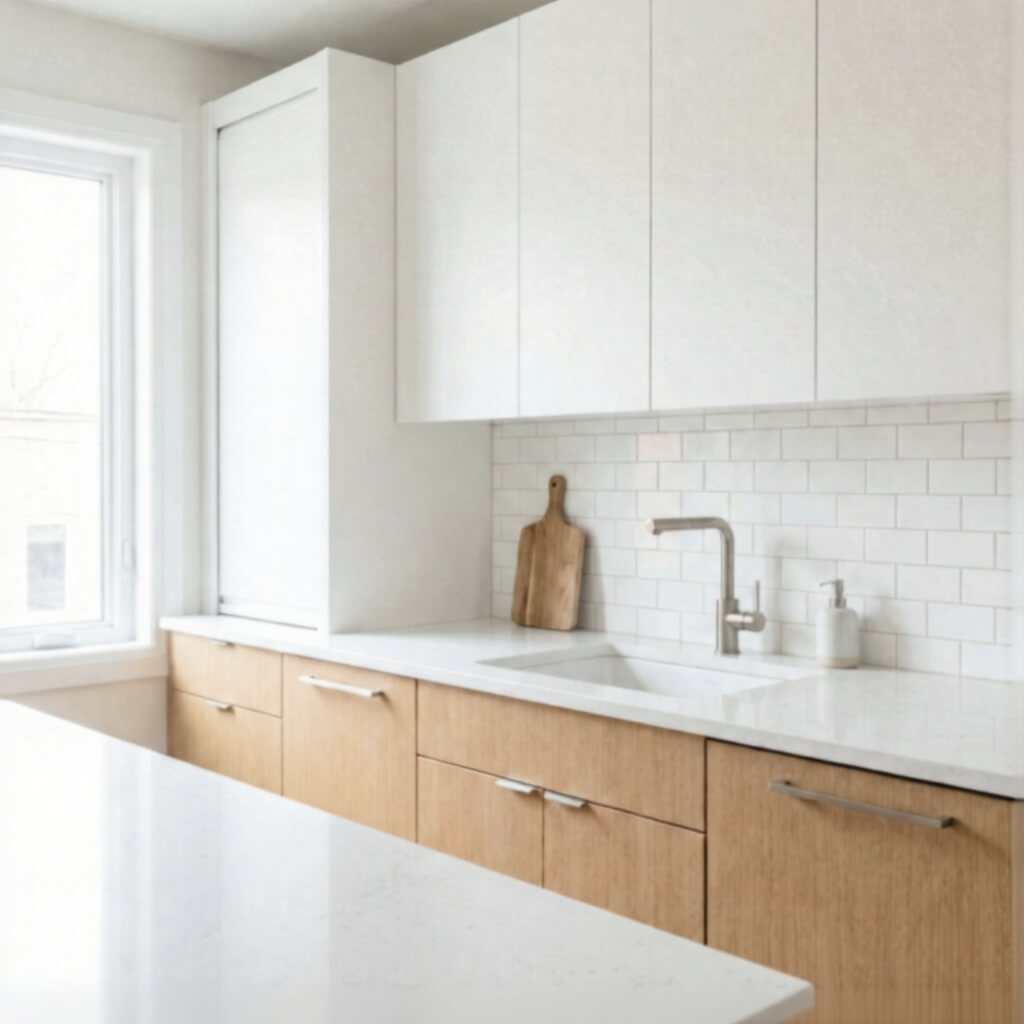
Nothing shrinks a room faster than clutter. In a small kitchen, every appliance, utensil jar, and mail stack on the counter eats up visual space and makes the work surface look cramped. To counteract this, adopt a minimalist approach to your countertops.
Store toasters, blenders, and coffee makers inside cabinets or deep drawers when they are not in use.
The concept of an “appliance garage”— a dedicated cabinet at counter level is perfect for hiding these items while keeping them accessible. When the countertops are clear, the horizontal lines of the kitchen are uninterrupted.
This continuity is soothing to the eye and suggests that there is ample space for preparation and cooking. This discipline forces you to evaluate what you really need. If you only use that stand mixer once a month, it does not deserve a permanent spot on the counter.
By clearing the decks, you allow the materials of your countertops and backsplash to shine, helping to make a small kitchen look bigger through the sheer power of negative space.
8. Choose Slimline and Floating Furniture
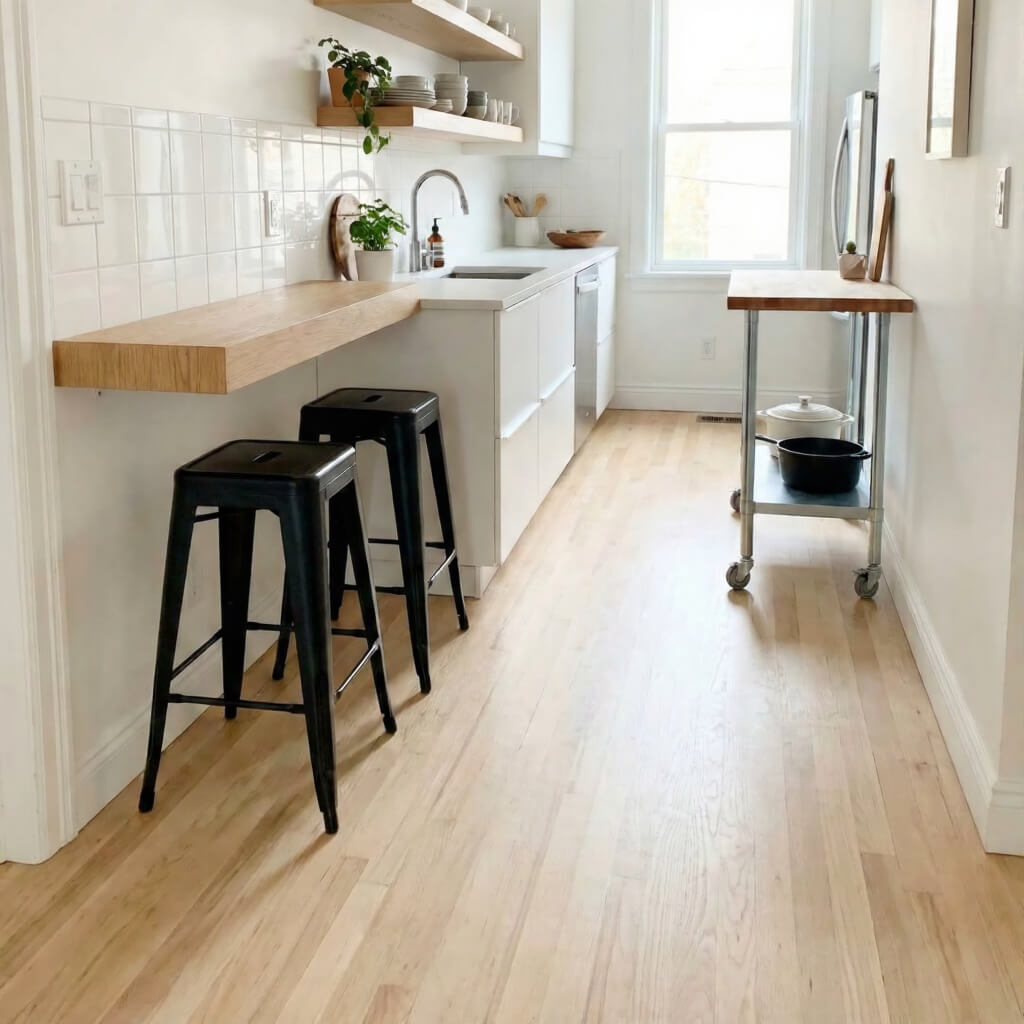
In a compact kitchen, bulky furniture acts as a roadblock. Oversized islands, thick-legged tables, and heavy chairs consume floor space and block light. Instead, opt for slimline designs or floating furniture that keeps the floor visible.
A floating breakfast bar attached to the wall, for instance, provides dining space without the footprint of a table legs. Furniture with slender legs or open bases allows you to see the flooring underneath, which tricks the brain into thinking the floor area is larger than it is.
Backless stools that can be tucked completely under the counter when not in use are excellent for maintaining clear pathways. This approach works especially well alongside small kitchen storage solutions that remove the need for freestanding standalone units.
Look for drop-leaf tables that can be folded down against the wall or mobile islands on wheels that can be pushed aside. Flexibility is key; your furniture should adapt to the space, not dominate it.
9. Install Under-Cabinet and Layered Lighting
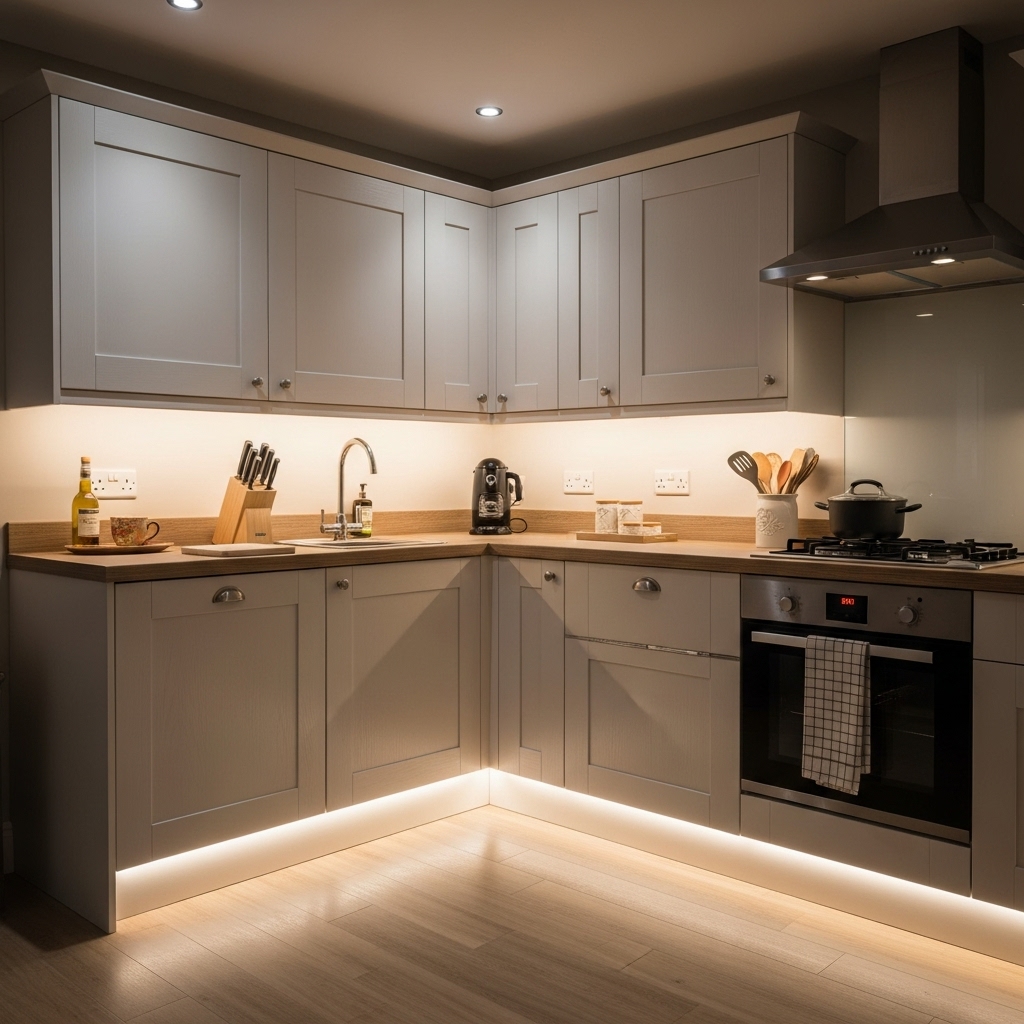
Shadows are the enemy of small spaces. A single overhead fixture often leaves the corners of the kitchen dark and creates shadows over the countertops where you work. To expand the room visually, you need to layer your lighting.
This involves combining ambient overhead light with task lighting and accent lighting. Under-cabinet LED strips are particularly effective. They illuminate the work surface and eliminate the shadows cast by the upper cabinets, making the backsplash area feel brighter and deeper.
Plinth lighting (lights along the toe kick of the base cabinets) can also make the floor appear to float, adding a futuristic and spacious feel.
Proper illumination ensures that every corner of the room is visible, which naturally helps make a small kitchen look bigger. When walls are washed with light, they appear to recede.
Consider using dimmers to control the mood; a bright, well-lit kitchen feels energetic and spacious during the day, while softer lighting can make it feel cozy; not cramped at night.
10. Use Optical Illusions with Rugs
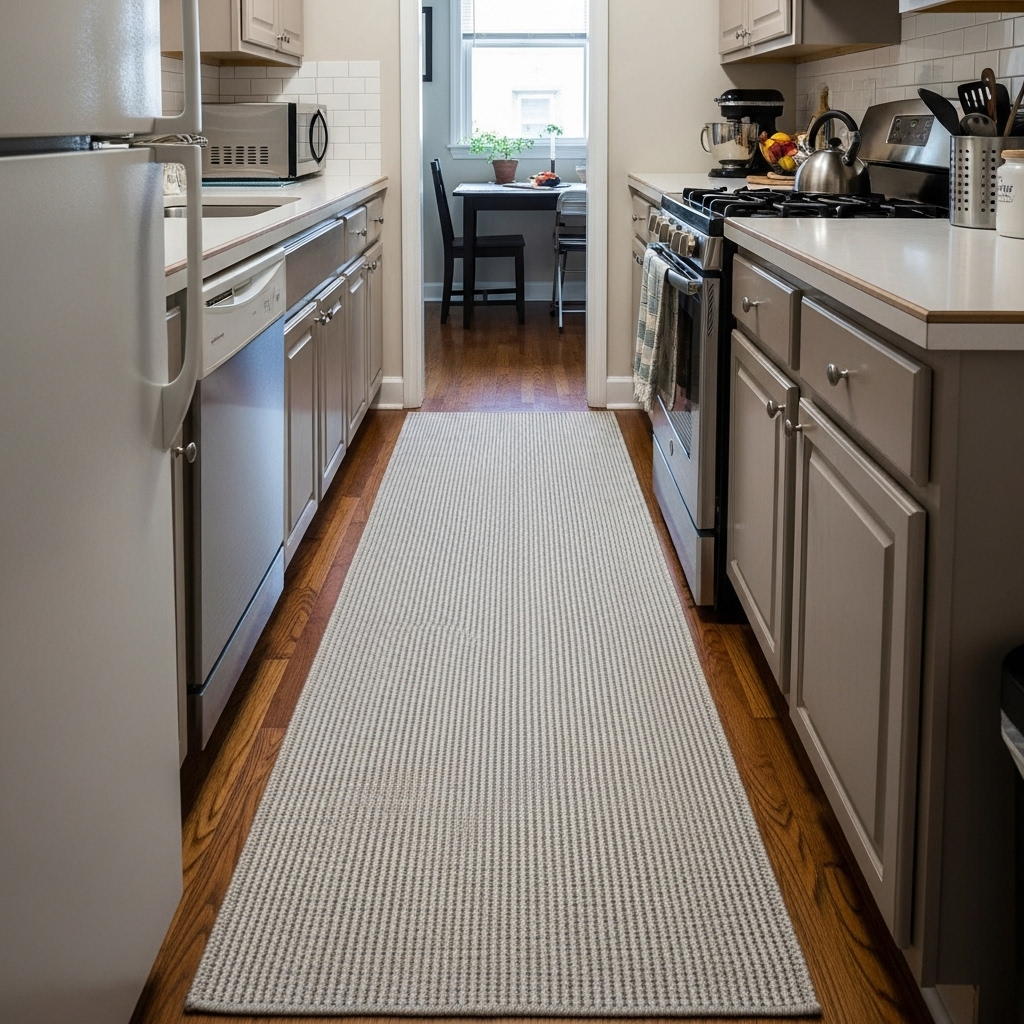
Flooring plays a massive role in how we perceive the size of a room. A runner rug with vertical stripes can elongate a narrow galley kitchen, drawing the eye down the length of the room and exaggerating the distance.
The lines act like arrows, directing the gaze and creating a sense of movement that prevents the space from feeling static. Alternatively, a vintage or patterned rug can anchor the room and distract from the small dimensions by adding a layer of interest.
However, be careful not to choose a pattern that is too busy or chaotic. Geometric patterns with larger repeats tend to work better than tiny, intricate designs which can feel cluttered.
This is a low-commitment way to test how patterns affect your space. If you have a neutral kitchen, a rug is the perfect place to add a splash of color without painting the walls. It adds texture and warmth, making the kitchen feel lived-in and styled rather than just small and functional.
11. Select Integrated or Compact Appliances
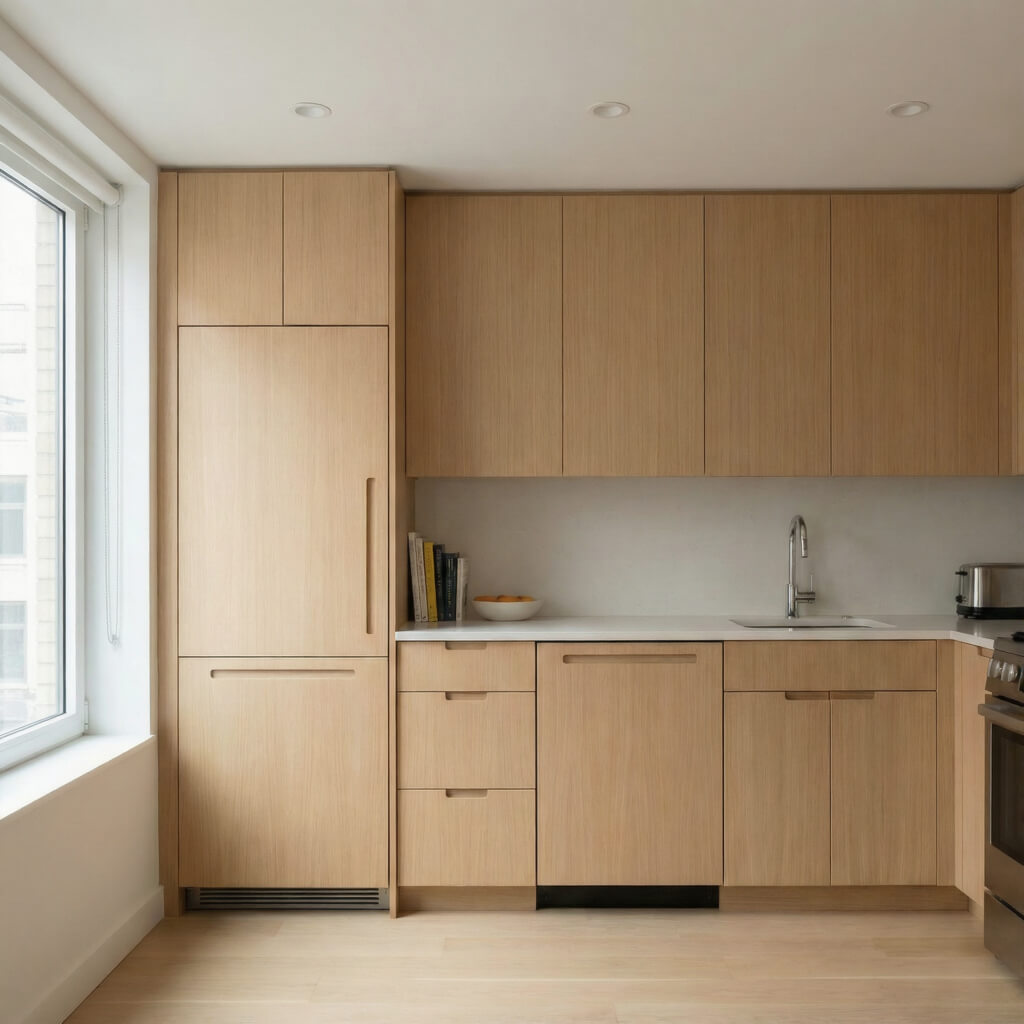
Large, protruding appliances break up the clean lines of cabinetry and can make a walkway feel dangerously narrow. Integrated appliances, which are concealed behind cabinet panels, disappear into the joinery, creating a seamless, uniform look.
When the dishwasher and fridge match the cabinets, the eye glides over them, perceiving a continuous wall rather than a collection of machines. If panel-ready appliances are outside your budget, consider compact or “apartment-sized” models.
A 24-inch refrigerator or an 18-inch dishwasher can save precious inches that can be reallocated to cabinet storage. Manufacturers now produce sleek, high-end compact appliances that don’t compromise on performance.
This strategy is vital for maintaining a streamlined aesthetic. It reduces visual noise, which is essential when trying to make a small kitchen look bigger. The less “machine-like” your kitchen looks, the more it feels like an extension of your living space, which is often desirable in open-plan apartments.
12. Utilize Corners with Smart Hardware
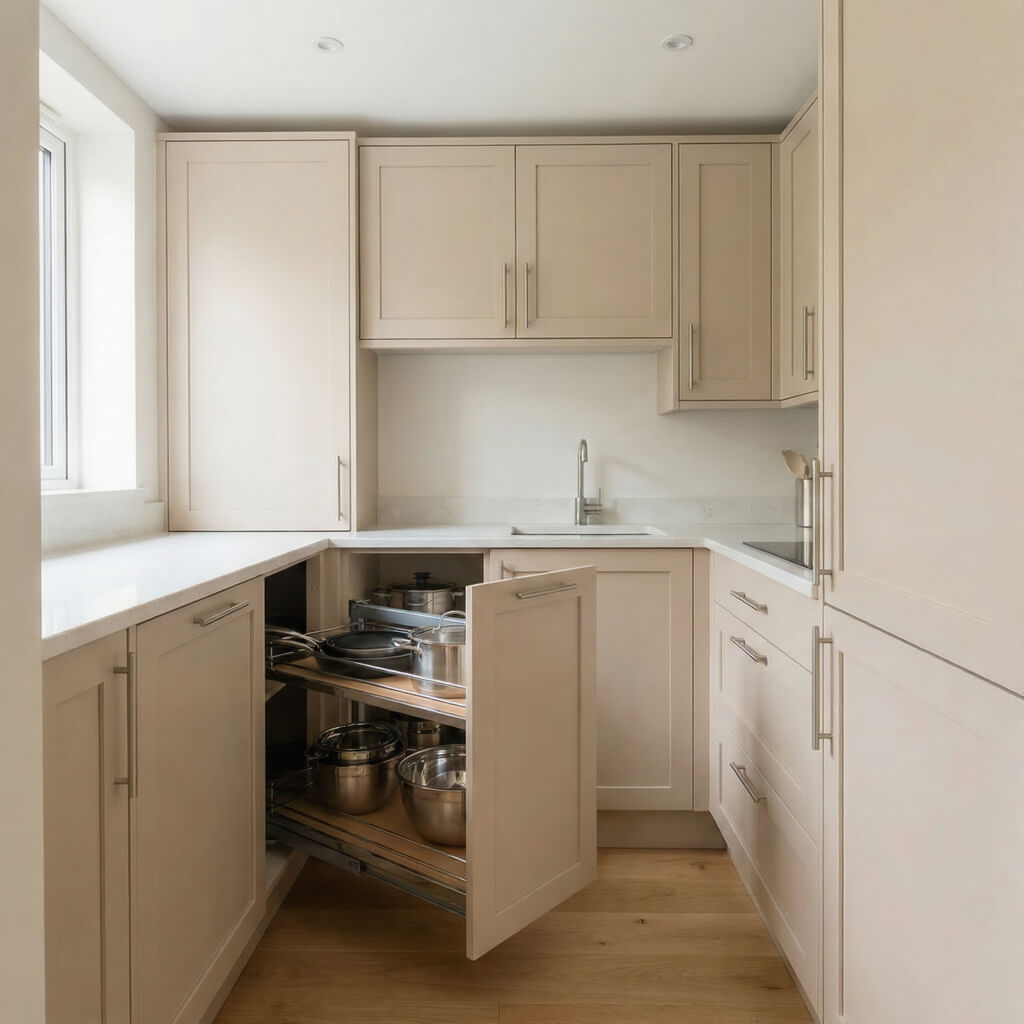
Corner cabinets are notorious space-wasters in kitchen design. In a small layout, you cannot afford to have “dead zones” where items are thrown into a dark abyss.
Installing smart internal hardware, like Lazy Susans, swing-out shelving, or specialized corner drawers, ensures that every cubic inch of these corners is usable.
These mechanisms bring the contents of the cabinet out to you, eliminating the need to crawl halfway inside to find a pot lid. By maximizing the efficiency of your existing cabinets, you reduce the need for additional storage units on the countertops or floor.
Efficient storage leads to cleaner surfaces. When everything has a designated, accessible home inside a cabinet, it doesn’t end up sitting out on the counter. This approach aligns with the goal of decluttering to make a small kitchen look bigger, proving that functionality and aesthetics go hand in hand.
13. Unified Flooring Helps Make a Small Kitchen Look Bigger
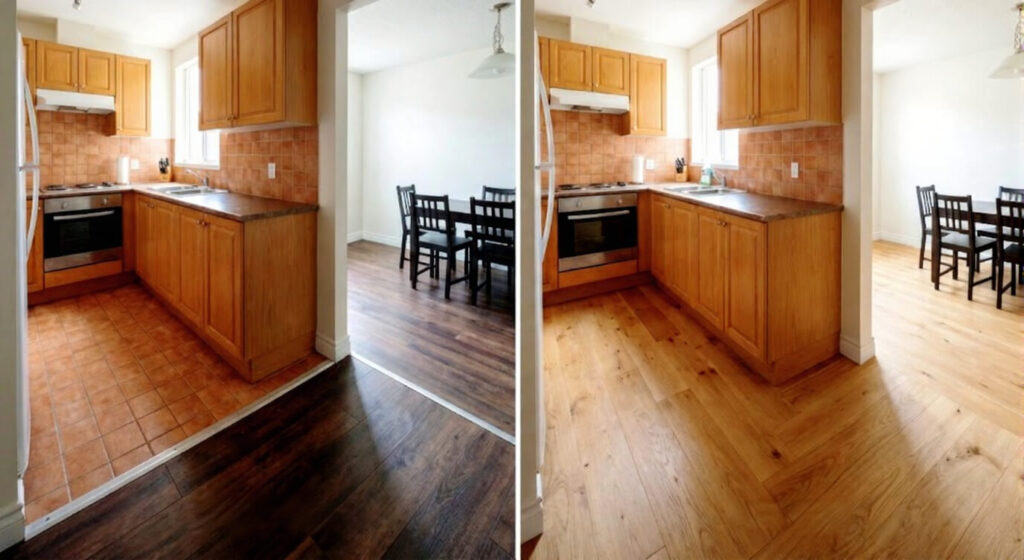
Visual breaks on the floor effectively chop a room into smaller boxes. If your kitchen flooring is different from the adjacent living or dining area, it reinforces the small boundary of the kitchen.
Running the same flooring material continuously throughout the entire level of the home blurs these lines, making the kitchen feel like part of a much larger whole.
If changing the floor isn’t an option, choose a material for the kitchen that closely matches the tone of the adjacent room. Avoid using wide transition strips if possible. Additionally, consider the size of the tiles or planks within the kitchen itself.
Ironically, using larger tiles in a small room can make it feel bigger because there are fewer grout lines to distract the eye. Installing planks diagonally or parallel to the longest wall also stretches the visual dimensions.
It is a subtle architectural trick that changes the subconscious perception of the room’s area.
14. Opt for a Deep Single-Bowl Sink
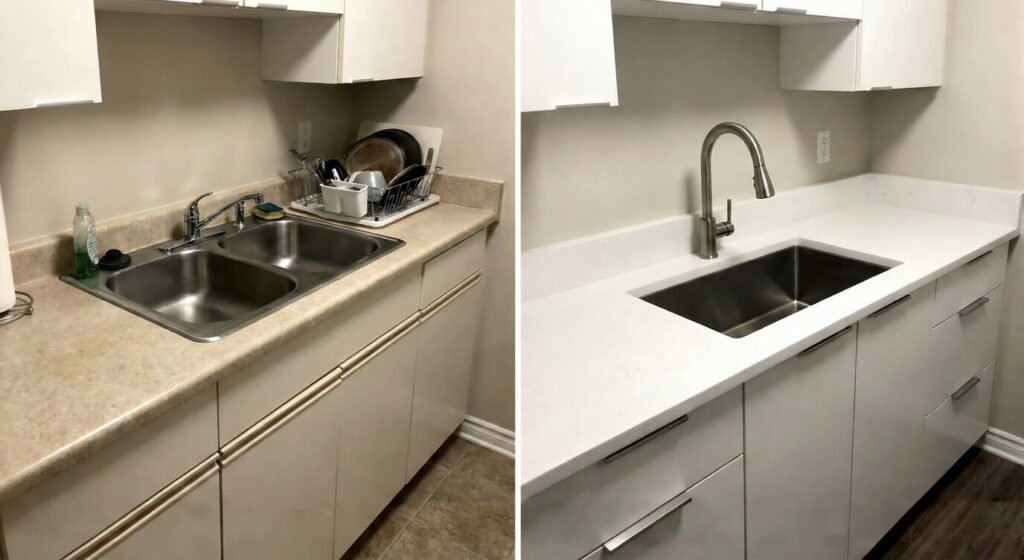
Double-bowl sinks are standard in many homes, but they can dominate a small countertop and limit your workspace. Swapping to a deep, single-bowl sink is a practical upgrade that saves counter space while actually making it easier to wash large items like baking sheets and stockpots.
A single basin often requires a smaller cabinet base, freeing up inches for adjacent drawers or storage. Undermounting the sink (attaching it beneath the countertop) eliminates the rim, allowing you to wipe crumbs directly into the basin and creating a smoother, continuous counter surface.
This choice supports the minimalist aesthetic that helps make a small kitchen look bigger. It reduces visual clutter around the wet zone and provides a cleaner look. You can pair it with a high-arc faucet to make filling pots easier, adding a touch of vertical elegance to the sink area.
15. Choose Minimalist Hardware
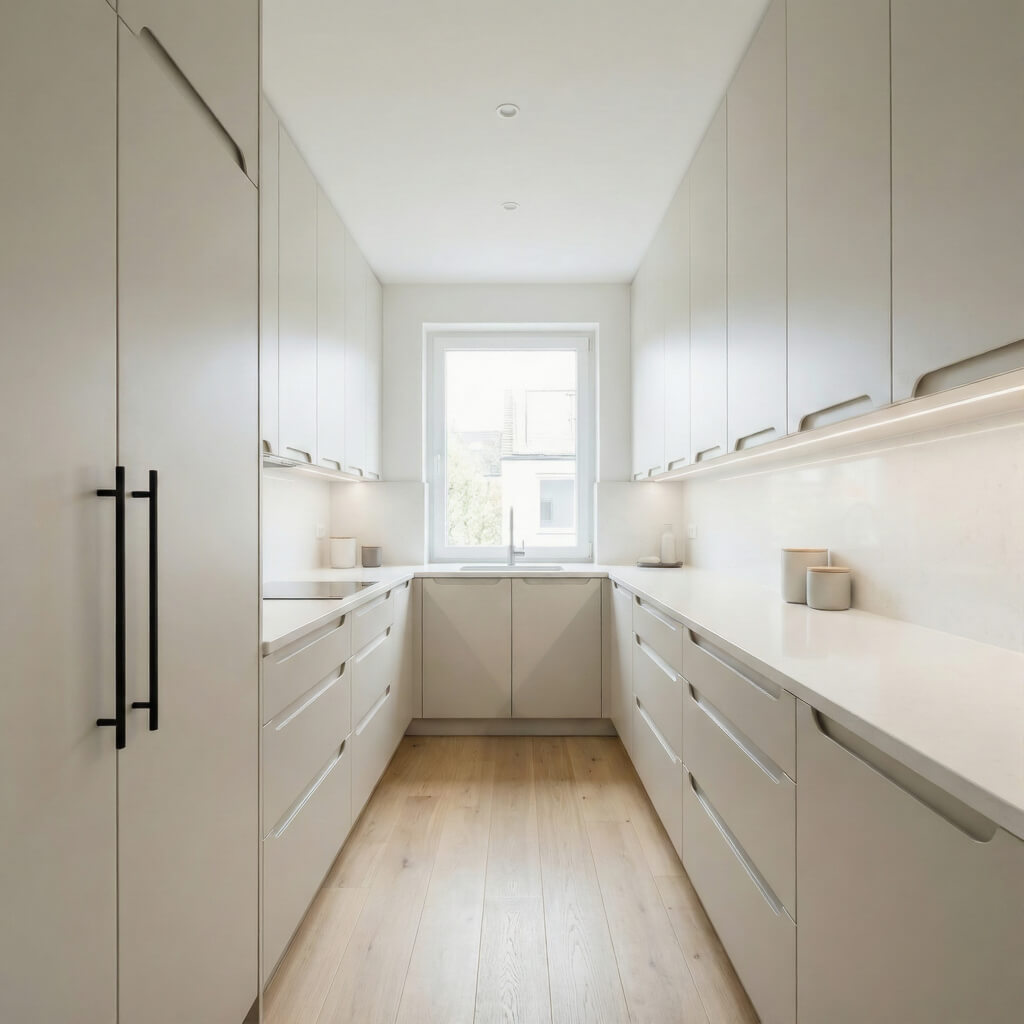
Bulky knobs and ornate handles can protrude into your physical space, catching on clothing and interrupting the visual flow of the cabinetry. In a tight galley kitchen, these inches matter. Switching to sleek, minimalist pulls, or even “touch-to-open” latches that require no hardware at all, creates a smoother profile.
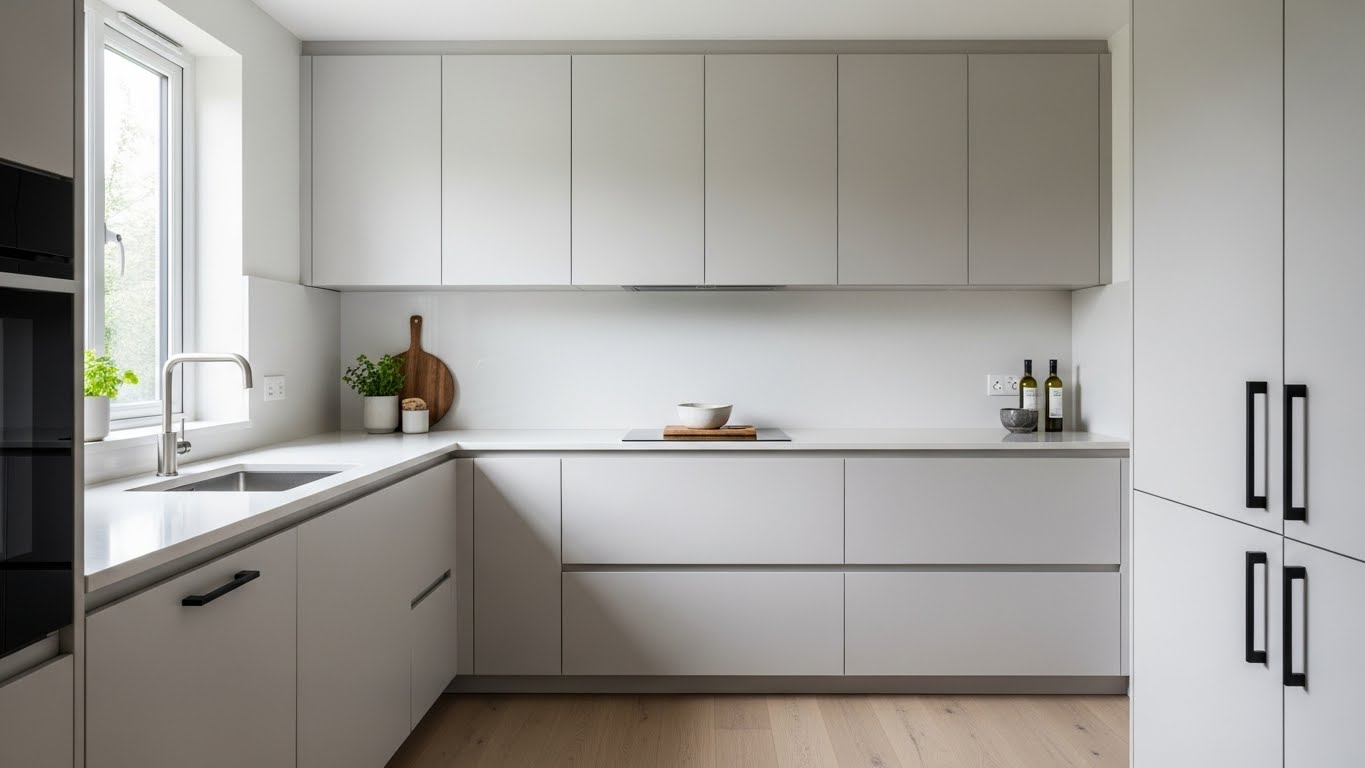
Integrated J-pull handles carved into the cabinet door itself offer a totally flat surface. This lack of visual interruption allows the eye to sweep across the cabinets without stopping at every door. It creates a sleek, modern look that is very effective in small spaces.
If you prefer handles, opt for long, slender bars installed horizontally on drawers and vertically on doors. This reinforces the lines of the room. Small details like hardware might seem insignificant, but collectively, they have a massive impact on whether a room feels cluttered or curated enough.
FAQs
Q1. What colors make a small kitchen look bigger?
Light and neutral colors are the most effective for expanding a space visually. Shades of white, cream, off-white, and light grey reflect the most light, pushing the walls outward. Cool colors like soft blue or mint green can also make walls appear to recede, adding to the feeling of spaciousness.
Q2. How can I add storage without crowding the kitchen?
Focus on vertical storage solutions to maximize capacity without using floor space. Install shelves above door frames, use the tops of cabinets for baskets, and mount magnetic strips or rails on the backsplash for utensils. utilizing the inside of cabinet doors for spice racks or pot lids is another hidden storage trick.
Q3. Is an island a bad idea for a small kitchen?
Not necessarily, but it depends on the layout. A fixed, bulky island can block flow in a tiny kitchen. However, a narrow, mobile island on wheels can provide excellent versatility, serving as a prep station when needed and rolling away when you need open floor space.
Q4. Does a patterned floor help make a small kitchen look bigger?
Yes, if used correctly. A striped floor runner can elongate a room, while large-format tiles with minimal grout lines make the floor area feel less busy and more expansive. Avoid tiny, intricate mosaic patterns on the floor as they can create visual clutter.
Q5. How do mirrors help in a kitchen?
Mirrors are fantastic for small kitchens because they double the visual space and bounce light into dark corners. You can install a mirrored backsplash, use mirrored cabinet doors, or simply hang a decorative mirror on a wall opposite a window to amplify the natural light.
Conclusion
So, how do you make your small kitchen look bigger? By working with light, flow, and smart storage rather than against the space you have. You don’t need a full renovation; just thoughtful choices that improve how the kitchen looks and functions every day.
Start with the simplest changes, build gradually, and focus on what makes your space easier to use. Small kitchens can feel open, calm, and efficient with the right approach. If you’d like more ideas, explore related guides on layout planning, storage solutions, and design upgrades that help small spaces work smarter.