Why Choosing the Right Curtains Matters
Curtains are often treated as an afterthought in bedroom design, yet they have the power to make or break the entire look and feel of your space. They’re not just decorative fabric hanging by the windows; they influence privacy, light control, energy efficiency, and even the quality of your sleep.
The wrong curtains can make a room feel mismatched or unfinished, while the right ones add warmth, balance, and character. Beyond their function, curtains also shape the mood of your retreat.
Blackout drapes can promote deeper rest, sheer fabrics invite soft daylight for a fresh and uplifting feel, and layered designs allow you to adapt your space throughout the day.
Thinking about curtains as both a lifestyle choice and a design feature ensures that what you select goes beyond looks to create comfort and functionality. In this guide, you’ll find a step-by-step breakdown of how to choose bedroom curtains from fabric and light control to length, color psychology, and styling.
Key Factors to Consider When Choosing Bedroom Curtains
Before jumping into exact steps, it helps to understand the foundational elements that guide your decision.
1. Light Control and Privacy
Curtains serve as your first line of defense against unwanted light and prying eyes. For sun-facing bedrooms, blackout curtains are essential, blocking harsh morning rays and creating a restful atmosphere.
If you prefer waking up to gentle daylight, lighter fabrics like voile or sheer cotton filter brightness while still protecting your privacy. Bedrooms that face busy streets benefit from double layers; sheer by day, blackout by night for maximum flexibility.
2. Fabric Choice
The fabric you choose determines not only how your curtains look but how they perform. Heavy fabrics such as velvet, silk, or brocade are perfect for insulation and luxury but may feel overwhelming in a small space.
Lighter fabrics like linen or cotton create an airy and relaxed vibe, offering casual elegance with easier maintenance.
3. Curtain Length and Size
Proportions matter. Curtains that are too short instantly cheapen a space, while floor-length panels create sophistication and elongate walls. For added drama, some homeowners let their curtains “puddle” slightly on the floor, while a clean, just-above-the-floor length offers a crisp finish.
Width is equally important; curtains should extend beyond the window frame for fullness and complete coverage.
4. Colors and Patterns
Colors set the emotional tone of your bedroom. Soft neutrals such as beige, cream, and dove gray bring tranquility, while bold shades like navy, emerald, or deep burgundy add richness and personality. Patterns can be transformative too.
From florals to stripes to bolder looks like geometric patterned bedroom curtain, design can shift your curtains from background detail to centerpiece.
5. Hardware and Accessories
Small details like rods, rings, and tiebacks have a big impact on the finished look. A sleek black rod may complement a modern space, while antique brass adds warmth to traditional designs. Accessories also affect function.
Magnetic tiebacks, for instance, let you adjust your curtains effortlessly throughout the day.
6. Style Compatibility
Curtains should feel like a natural extension of your bedroom’s style. Minimalist spaces work best with plain, neutral fabrics, while eclectic or bohemian bedrooms benefit from layered treatments and colorful prints.
For inspiration that transcends trends, browse our list of modern bedroom curtain designs, which blend timeless elegance with contemporary comfort.
Step-by-Step Guide to Choosing the Perfect Curtains
Now that you know the core factors, let’s walk through the process step by step.
1. Assess Your Room’s Natural Lighting
Observe how sunlight interacts with your bedroom throughout the day. South-facing rooms are typically brighter and may need thicker, insulating fabrics, while north-facing rooms benefit from lighter materials that amplify available daylight.
The amount of natural light should guide your decision on whether to prioritize blackout, sheer, or layered treatments.
2. Define Your Privacy Needs
Bedrooms that face neighboring houses, city streets, or apartment courtyards require thoughtful privacy solutions. Sheer curtains alone might not suffice here. Instead, consider double-layer systems—a translucent layer for daytime and a heavier blackout layer for nighttime.
Rural or secluded bedrooms, however, can get away with single-layer sheers that let you enjoy nature while keeping things airy.
3. Choose Fabrics That Balance Form and Function
The feel of your curtains should match the feel of your room. Velvet conveys richness, linen suggests casual ease, and cotton delivers versatility for nearly any setting. Silk is particularly effective for bedrooms where you want both elegance and soft light diffusion, our guide on silk bedroom curtains covers this fabric in depth.
Texture also matters: smooth finishes are sleek, while woven or embroidered fabrics add subtle depth.
4. Select Colors That Match Mood and Design
Color is more than decoration; it’s emotional psychology. Cool hues like gray or sage green calm the senses, warm shades like terracotta or mustard energize, and bold contrasts like navy against white walls create drama. Not sure where to begin?
Explore our comprehensive guide on bedroom curtain color ideas to see which palettes pair best with different bedroom designs.
5. Measure for Precision
One of the most common mistakes in curtain buying is guessing sizes. Always measure both height and width of your windows, then add extra to allow for proper drape. Extend rods 4–6 inches beyond the frame so curtains can stack neatly when open.
For floor-to-ceiling drama, mount rods closer to the ceiling instead of directly above the frame.
6. Pick Heading Styles That Suit Functionality
Heading styles influence how your curtains hang and move. Grommet curtains are modern and slide easily, while pinch pleats bring structure to formal interiors. Tab tops are casual but less practical for frequent adjustments.
The choice should align with how often you’ll open and close your curtains daily.
7. Layer Curtains for Flexibility
Layering is one of the best ways to achieve both beauty and practicality. Combine sheer panels with blackout curtains to adapt between airy daylight and total darkness. This approach also adds visual depth and texture.
If you’d like to experiment further, check out our ideas for sheer layered curtains that balance elegance with versatility.
8. Consider Maintenance and Longevity
Curtains are long-term investments. Cotton and polyester blends are machine washable and easy to care for, while delicate fabrics like silk or velvet often require professional cleaning. Sun-facing windows may fade fabrics over time, so choosing lined or UV-protected curtains can extend their lifespan.
Common Mistakes to Avoid
Even with careful planning, many homeowners stumble on small details. Here are frequent mistakes to sidestep:
- Wrong measurements: Curtains that fall too short or don’t fully close instantly undermine your room’s polish.
- Overlooking function: Choosing sheer curtains for a sun-blasted, street-facing window sacrifices both privacy and comfort.
- Chasing trends: A bold print may look exciting today but feel outdated tomorrow. Instead, aim for timeless appeal.
- Ignoring energy efficiency: Lightweight curtains in drafty rooms lead to heat loss and higher bills. Thick, insulated fabrics solve this problem.
FAQs About Choosing Bedroom Curtains
Q1. What type of curtains are best for bedrooms?
Blackout curtains are excellent for sleepers who value darkness, while layered options (sheer + blackout) provide the most flexibility. Sheers alone work best in airy, private settings.
Q2. How do I choose curtain colors for my bedroom?
Match your curtain color to your wall, bedding, or accent palette. Neutrals create harmony, bold shades add contrast, and complementary tones bring balance. For more inspiration, see our full guide on bedroom curtain color ideas.
Q3. Should curtains be lighter or darker than walls?
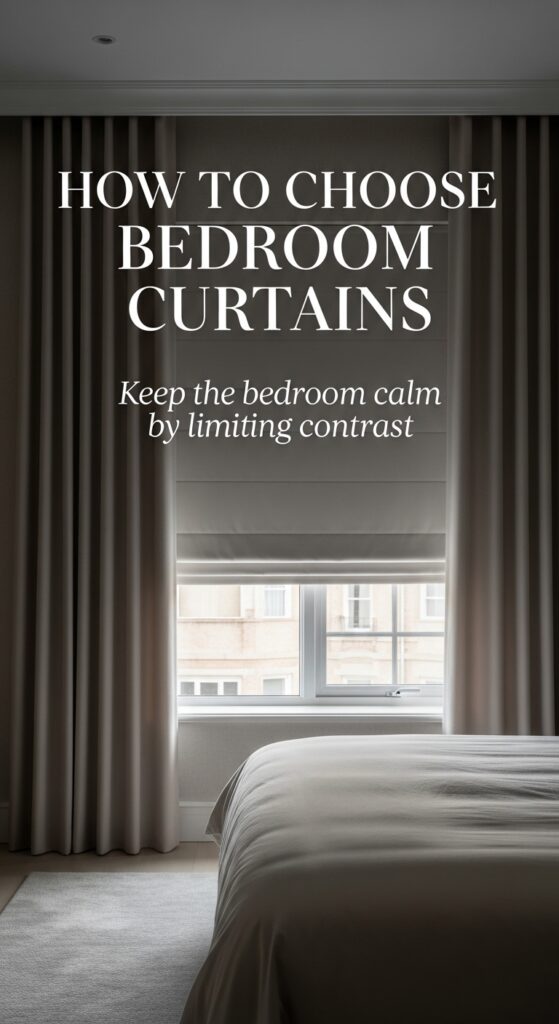
Either works, depending on your goal. Lighter curtains blend seamlessly for an airy effect, while darker curtains ground the room and add contrast.
Q4. What’s the best length for bedroom curtains?
Floor-length is universally flattering. For formality, let them puddle slightly; for modern minimalism, keep them just brushing the floor.
Q5. Can I mix blinds with curtains in a bedroom?
Yes. Blinds offer precision light control, while curtains add softness and depth. This combination is ideal for modern and transitional styles.
Conclusion
Choosing bedroom curtains isn’t about grabbing the first set you find in the store. It’s a thoughtful process that balances light control, privacy, color psychology, and overall style. From measuring properly to selecting fabrics and layering for flexibility, each decision contributes to how your space looks and feels.
With the right choice, your bedroom curtains won’t just cover windows, they’ll complete your sanctuary.