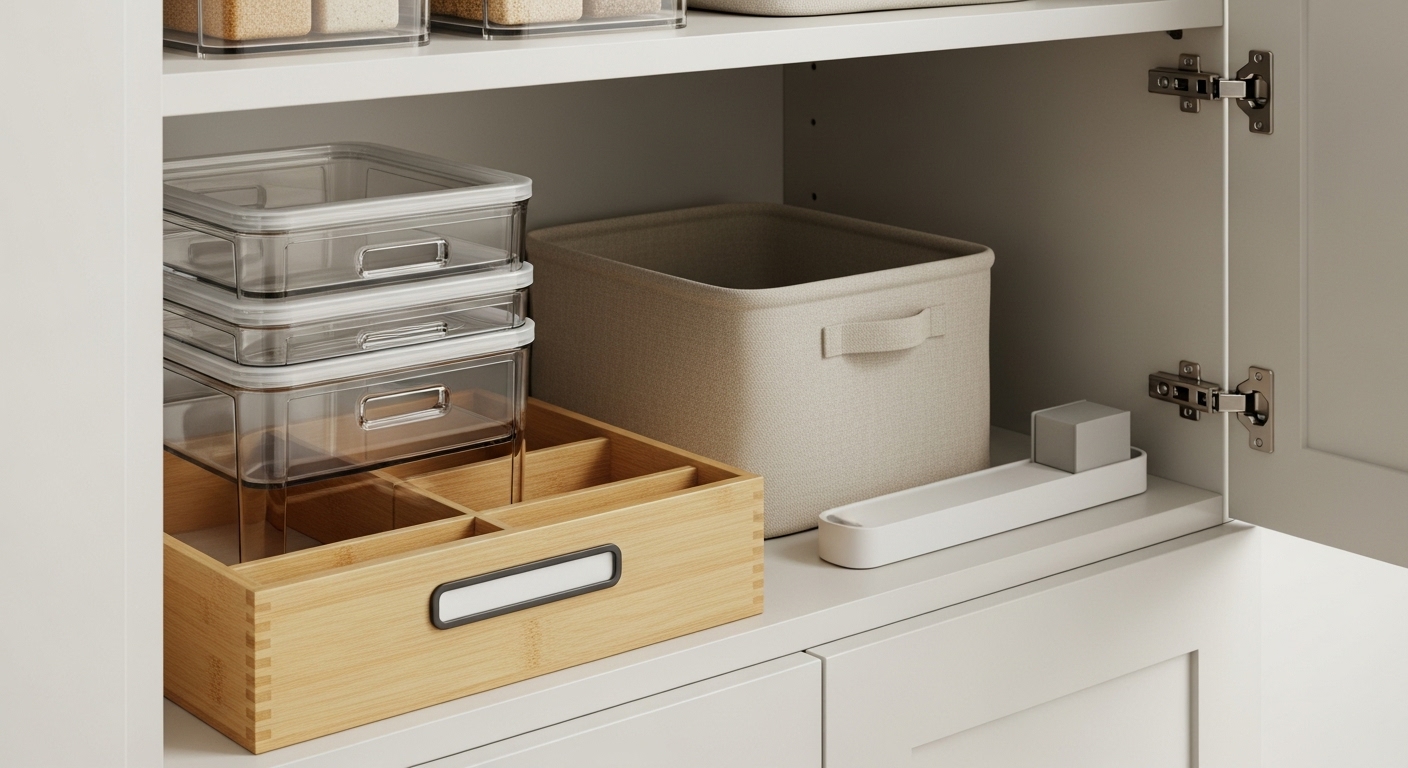
The line between a sanctuary and a storage unit is often thinner than we’d like to admit. Most of us have stood in the middle of a cluttered room, overwhelmed by the visual noise of “stuff,” only to end up in a checkout line with a cart full of plastic bins that we hope will solve the problem.
The friction usually arises because we buy for the space we wish we had, rather than the life we actually lead. The truth is that not every organizing gadget is a miracle worker. Finding home organization products that genuinely add value requires shifting from a “more is better” mindset to one of intentionality.
It is about identifying the specific bottlenecks in your daily routine; the junk drawer that jams or the closet where sweaters go to vanish; and applying solutions that feel as natural as they are functional.
1. The Strategic Power of Clear Acrylic Bins
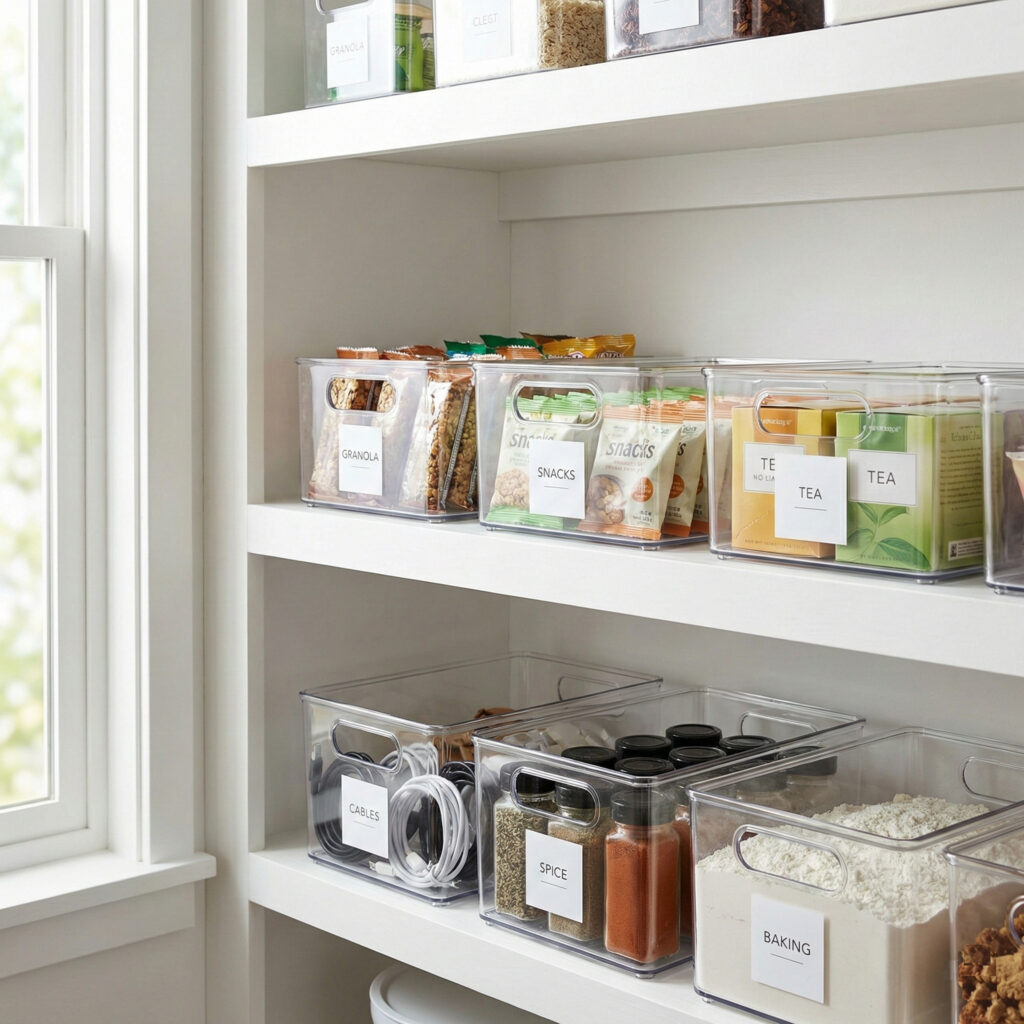
In the world of high-trust organizing, visibility is the ultimate deterrent to clutter. Clear acrylic bins have become a staple for professional organizers not because they look “Pinterest-perfect,” but because they solve the “out of sight, out of mind” dilemma.
When you can see exactly how many granola bars are left or which charging cable is which, you stop overbuying and start using what you have.
These bins work exceptionally well in pantries and bathroom vanities where items are small and easily lost. Imagine opening your fridge to find neatly categorized zones of fruit and dairy, rather than a jumble of half-open bags.
The smooth, cool texture of the acrylic provides a clean, sterile feel that encourages maintenance. It is a psychological cue: when the container looks pristine, you are far more likely to put things back where they belong.

2. Why Drawer Dividers Are Non-Negotiable
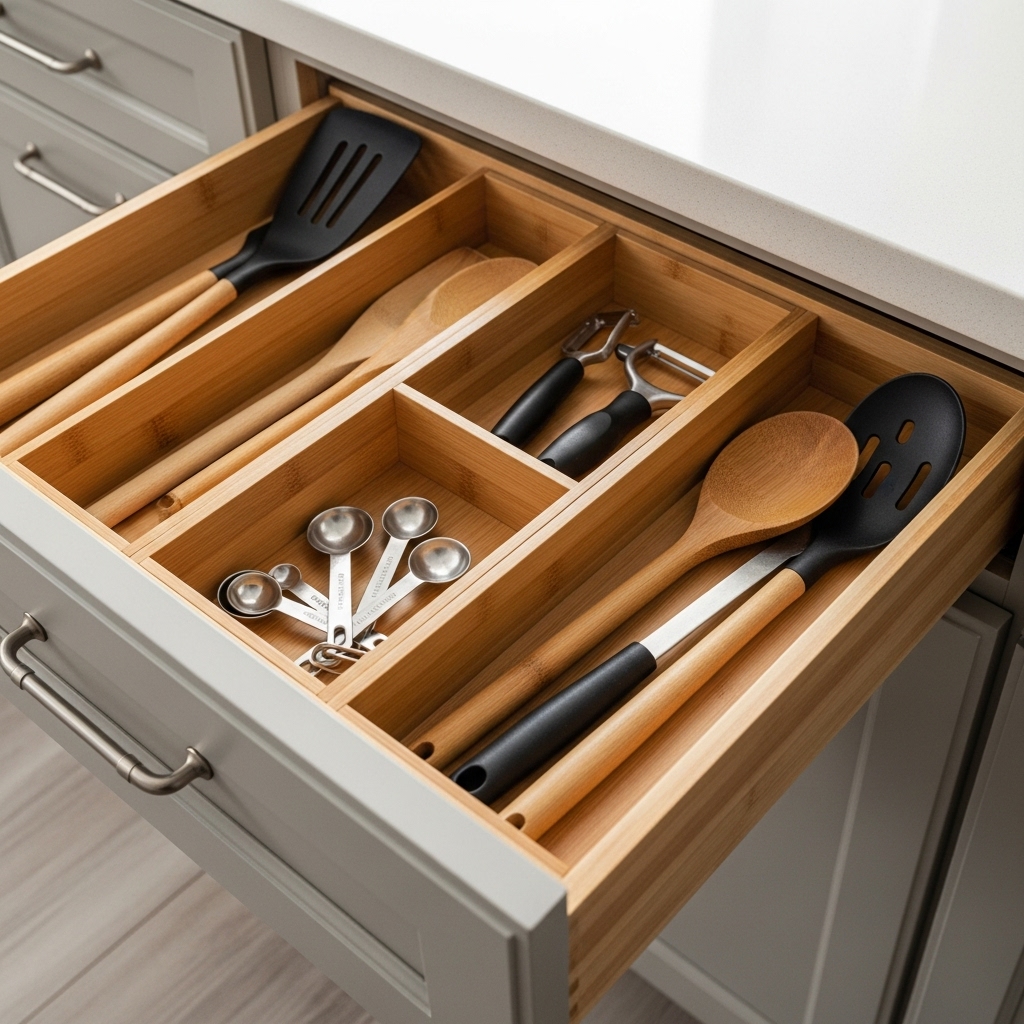
The “junk drawer” is a universal symptom of a home without a system. Adjustable drawer dividers are perhaps the most underrated tool for restoring order because they provide rigid boundaries for flexible needs.
Whether it’s in the kitchen for spatulas or the bedroom for hosiery, dividers prevent the inevitable sliding and overlapping that occurs every time a drawer is opened.
Bamboo or tension-style dividers offer a sturdy, integrated look that feels like custom cabinetry without the permanent price tag. Using them creates a tactile “home” for every object. When a spatula has a dedicated slot, the friction of tidying disappears.
It’s no longer a chore to organize; it’s simply a matter of returning an item to its slot. This subtle change in geometry transforms a chaotic catch-all into a disciplined, high-functioning storage space.
3. Embracing the Versatility of the Lazy Susan
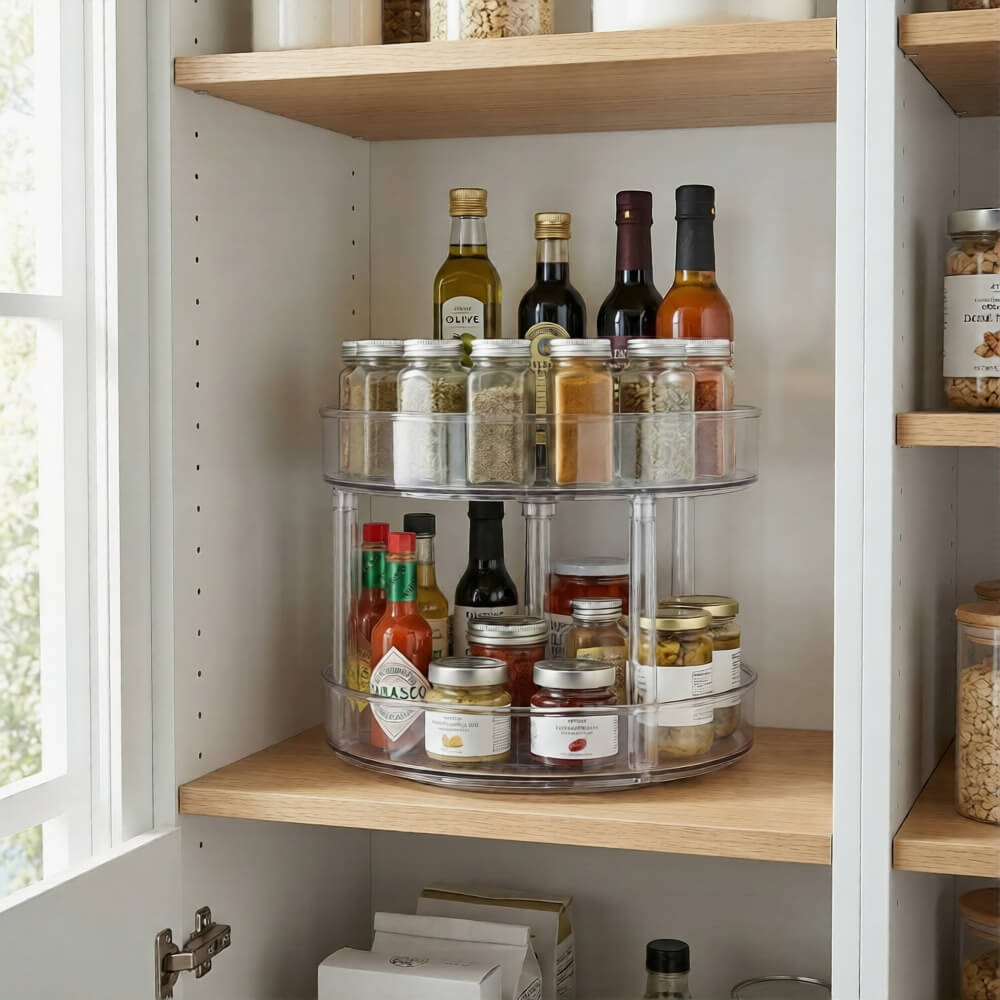
Turntables, or Lazy Susans, are a masterclass in accessibility for deep, awkward spaces. Most corner cabinets or high pantry shelves become “black holes” where jars go to expire. A rotating organizer brings the back of the cabinet to the front with a simple flick of the wrist, ensuring nothing is ever truly hidden.
In a modern kitchen, a tiered turntable can house a dozen spices in the footprint of four. The mechanical satisfaction of a smooth, ball-bearing swivel adds a layer of efficiency to cooking. Beyond the kitchen, these work wonders under bathroom sinks for hair products or on a craft desk for markers.
By utilizing the circular motion, you reclaim the corners that would otherwise be wasted real estate.
4. Maximizing the Vertical Real Estate of Doors
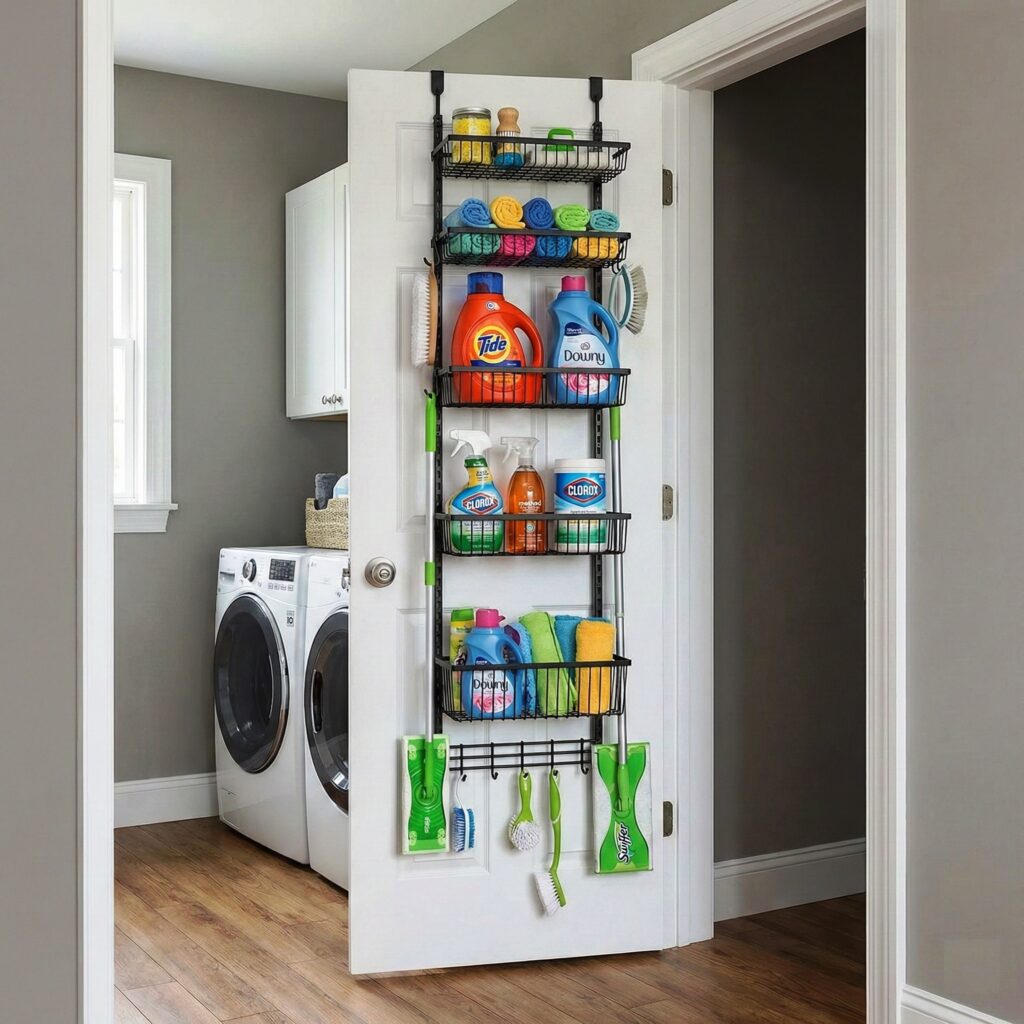
In smaller homes, the back of a door is an untapped goldmine of storage. Over-the-door rack systems; specifically those with adjustable metal baskets – can effectively replace an entire small closet.
These aren’t the flimsy plastic pockets of the past; modern versions are heavy-duty and designed to hold everything from cleaning supplies to heavy pantry jars.
Installing a rack on a laundry room door creates a “command center” for detergents and mops, keeping the floor clear and the room feeling larger. Visually, this keeps the “visual weight” of your belongings tucked away until the door is closed.
It’s a practical way to expand your home’s footprint without doing a single bit of construction, turning a flat surface into a multi-layered vertical pantry.
5. The Longevity of Modular Shelving Systems
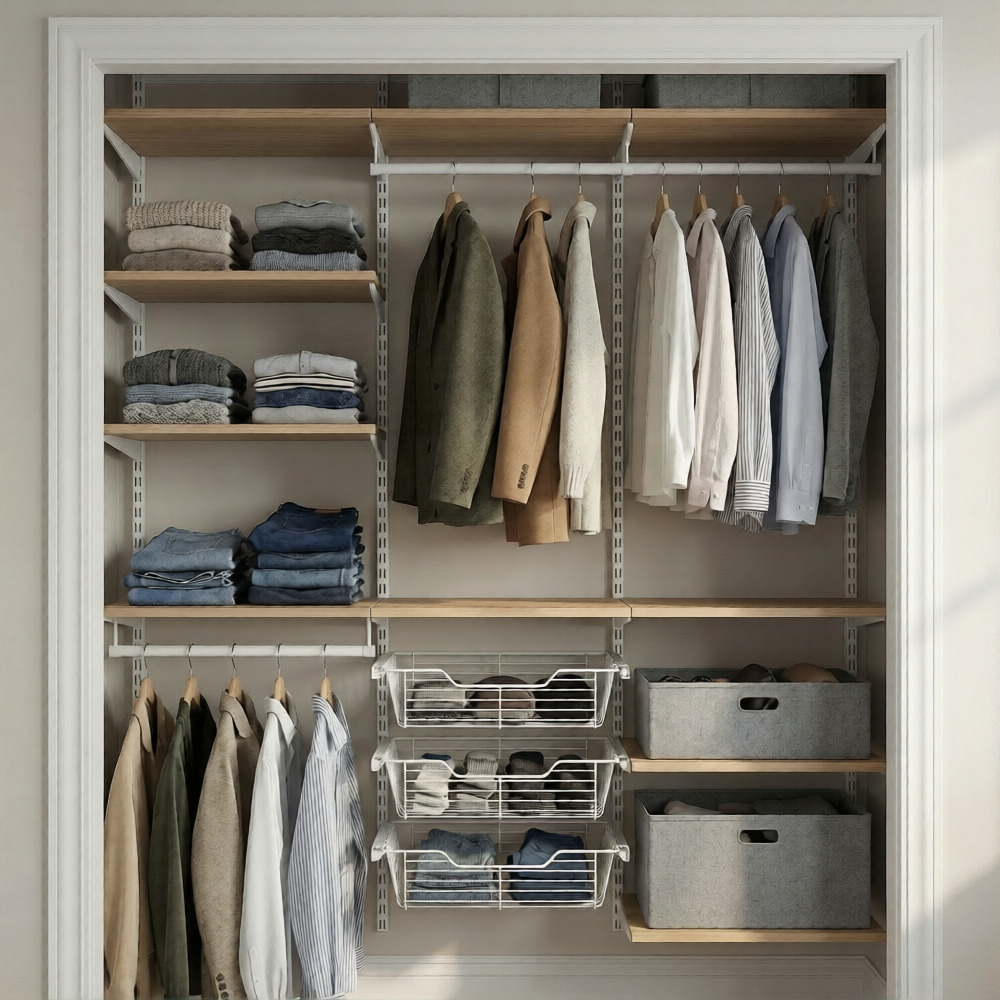
Standard, fixed shelving often leaves huge gaps of “dead air” between stacks of clothes or books. Modular, adjustable shelving systems allow you to customize the height of every surface to match the items you actually own.
This is particularly critical in reach-in closets where every inch of height matters for hanging space and folded stacks. Steel or high-quality wood tracks allow you to add bins, drawers, and extra rods as your needs change.
If you transition from a wardrobe of bulky winter coats to summer dresses, the system adapts with you. This flexibility is what makes it worth the investment. It isn’t just a product; it’s a living framework that evolves, preventing the need for a total organizational overhaul every few years.
6. Sorting with Woven and Fabric Baskets
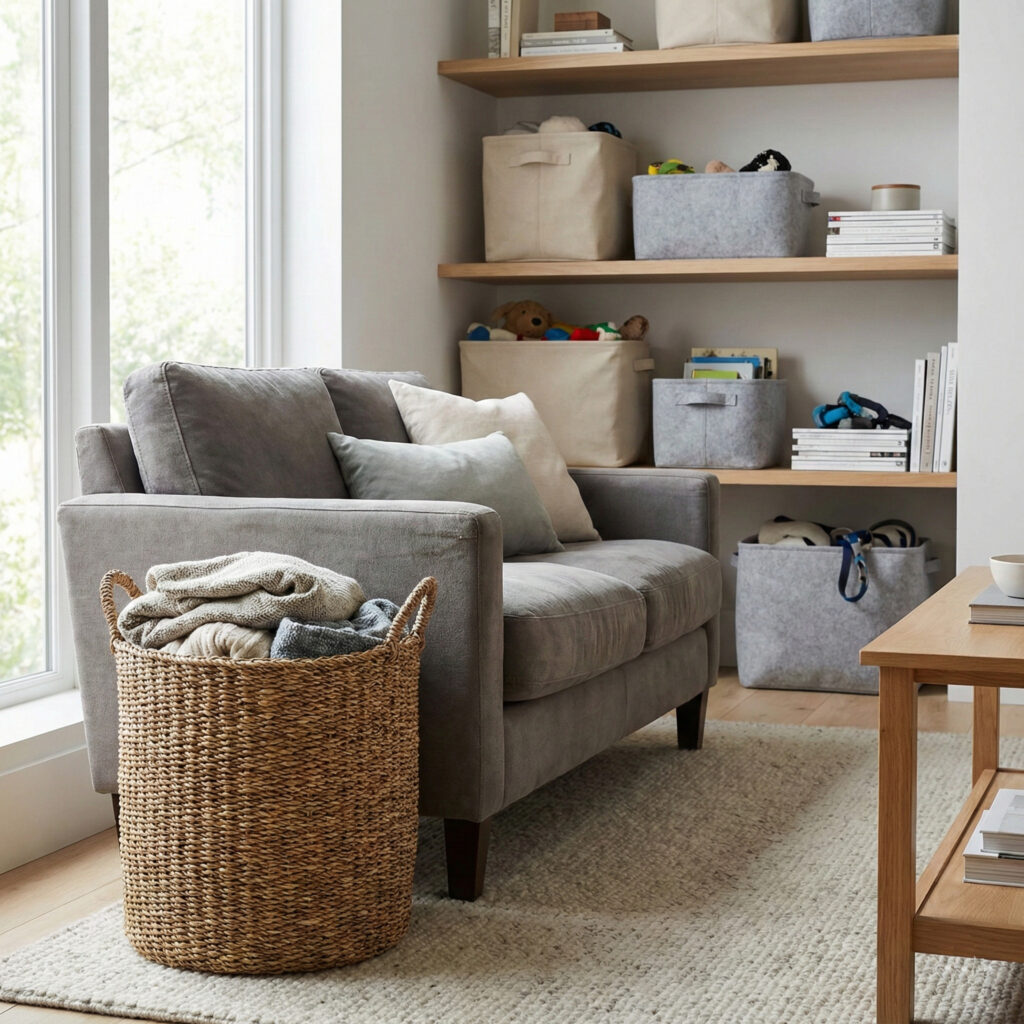
While clear bins are for visibility, opaque woven or fabric baskets are for “calming the chaos.” These are ideal for open shelving or living areas where you want to hide bulky, unattractive items like throw blankets, toys, or dog leashes.
The natural texture of seagrass or the soft matte finish of gray felt adds warmth to a room while serving a purely utilitarian purpose.
Using these baskets creates a “containment zone” that feels intentional rather than messy. A large basket by the sofa for extra pillows prevents them from ending up on the floor, maintaining the room’s visual balance.
It’s a sensory win; the scratchy, organic feel of the fiber reminds you that the home is a lived-in space, while the hidden contents keep the surface-level clutter at bay.
7. Solving the Closet Gap with Slim Hangers
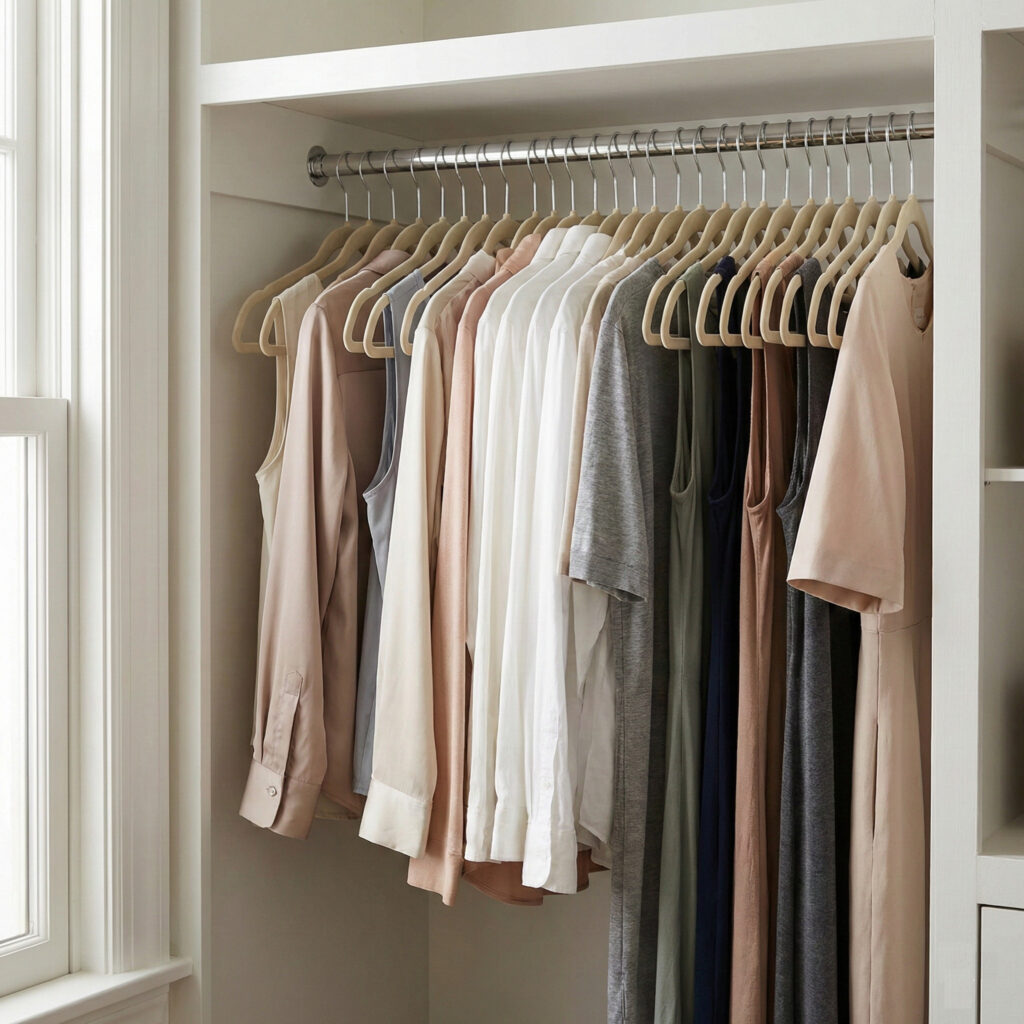
If your closet feels like it’s bursting at the seams, the problem might be your hangers, not your clothes. Traditional plastic or wooden hangers are unnecessarily thick, eating up inches of rod space with every garment.
Slim, non-slip velvet hangers can increase your hanging capacity by up to 30 percent almost instantly. The velvet texture provides a subtle grip that prevents silk blouses from sliding off into a heap at the bottom of the closet.
When all your hangers match, it creates a uniform, boutique-like look that reduces the visual stress of getting dressed. It is a small, relatively inexpensive swap that has a massive impact on the daily flow of your morning routine, making your wardrobe feel curated rather than crowded.
8. The Under-Sink Revolution with Pull-Out Drawers
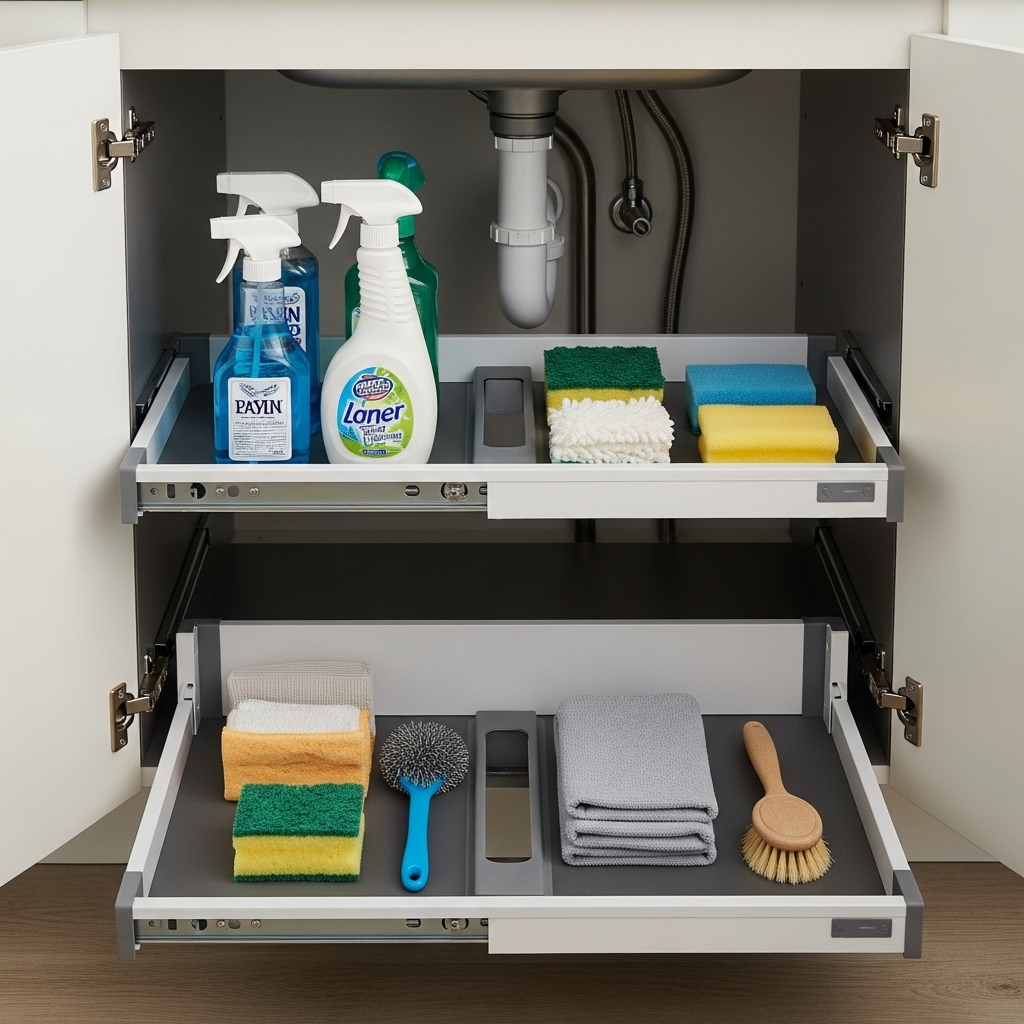
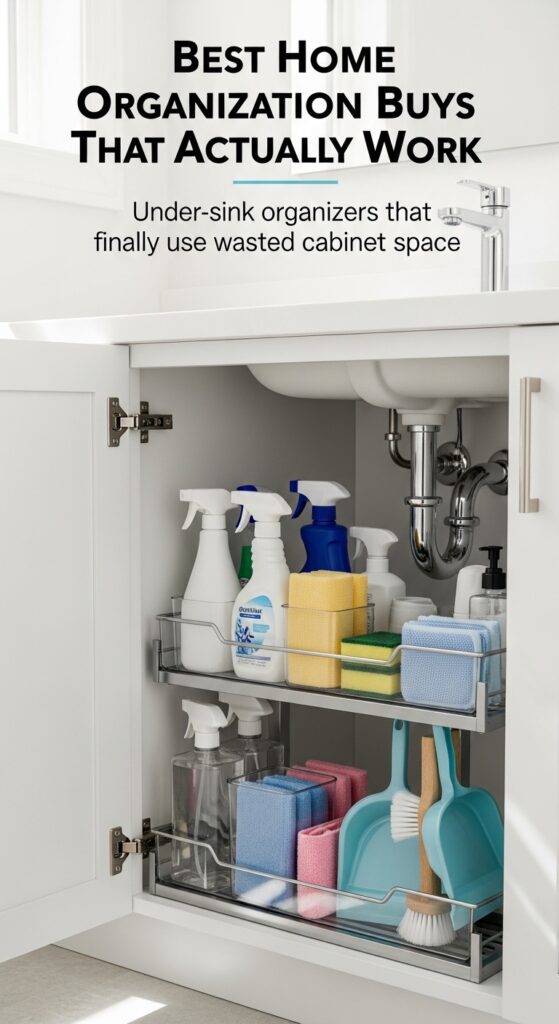
The plumbing under a kitchen or bathroom sink usually makes organization a nightmare. Two-tier pull-out drawers are designed to navigate around these pipes, providing drawers that slide out so you don’t have to get on your hands and knees to find a sponge.
These units capitalize on the depth of the cabinet while making the items in the back just as accessible as the front. Most modern versions are made of durable metal or heavy-duty plastic that can withstand the occasional leak or damp sponge.
Seeing a tidy row of cleaning supplies arranged on a sliding track feels incredibly organized. It turns a traditionally “gross” or neglected part of the house into a high-functioning zone where every spray bottle has a permanent, easy-to-reach home.
9. Organizing the Digital and Physical Paper Trail
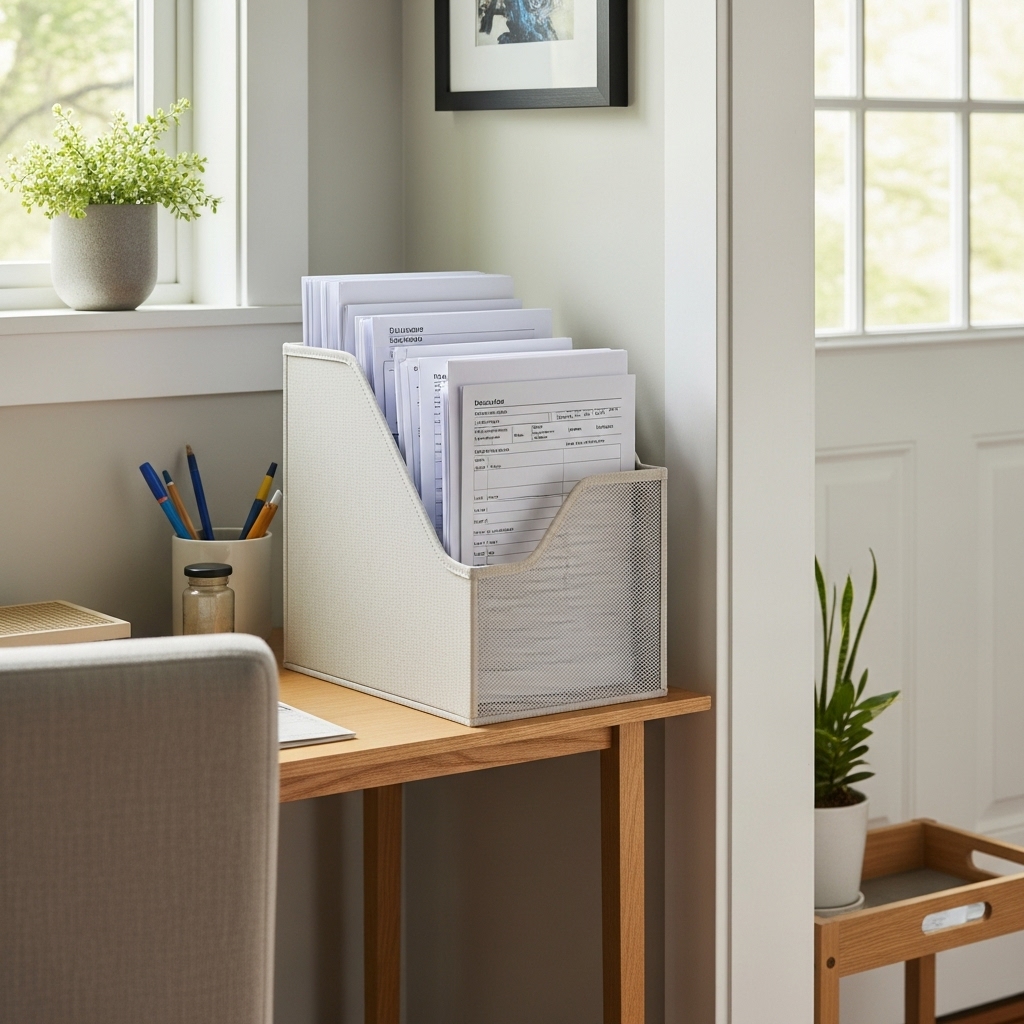
Paper clutter is often the most persistent form of household mess. A simple, aesthetically pleasing desktop file box or a “tickler file” system acts as a landing strip for mail, school forms, and bills. Instead of piles on the kitchen counter, these papers are filed vertically, making them easier to sort and process.
This system works best when placed in a high-traffic transition area, like an entryway or a home office. Using a linen-wrapped box or a sleek mesh file makes the “boring” task of paper management feel a bit more elevated.
The goal is to catch the paper before it has a chance to settle and multiply. Once the surface is clear, the entire room feels lighter and more managed.
10. The Utility of Command Hooks and Wall Clips
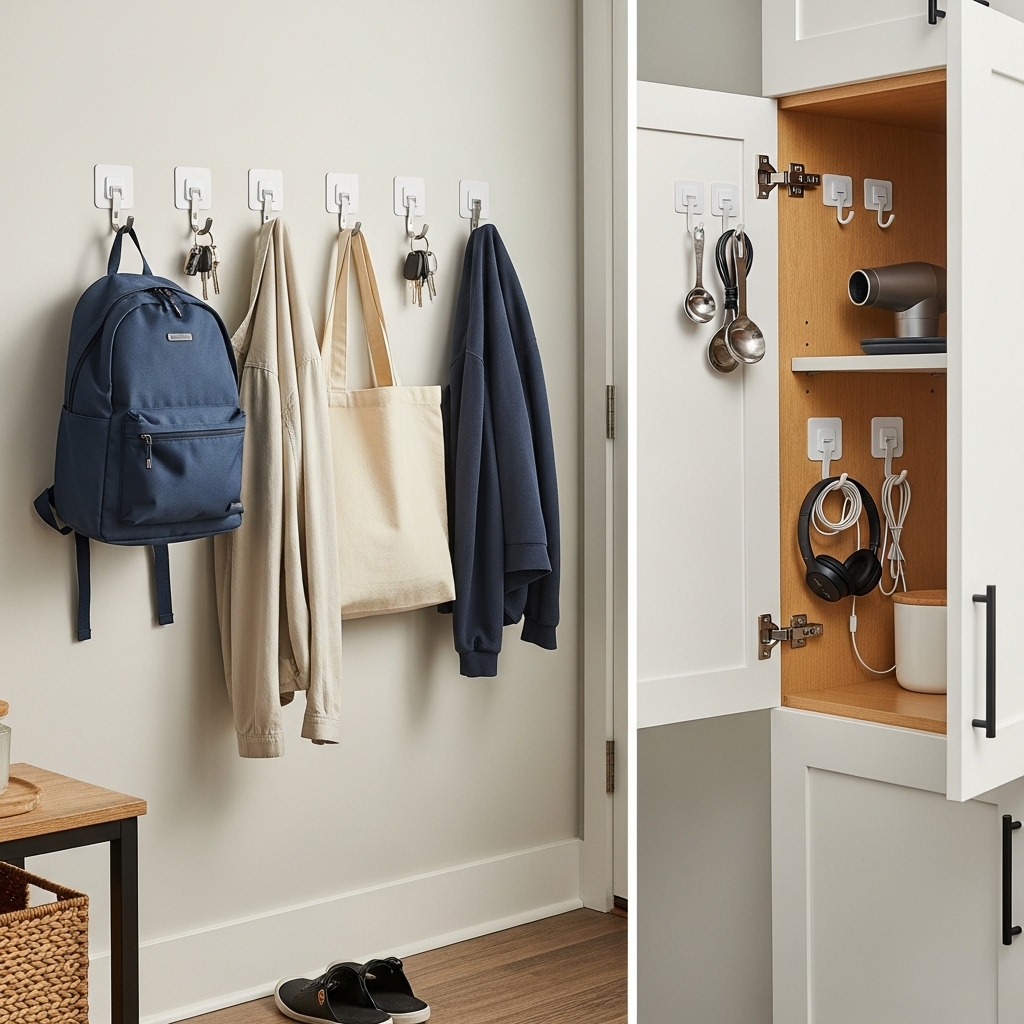
The “power of the hook” cannot be overstated in a functional home.
Adhesive or screw-in hooks provide instant storage for the items we use most: keys, headphones, aprons, and towels. By getting these objects off the surfaces and onto the walls, you reclaim your countertops and tabletops for their intended purposes.
Command hooks are particularly valuable because they can be placed on the inside of cabinet doors to hold measuring spoons or hair tools. In a mudroom, a row of sturdy metal hooks for backpacks ensures that the floor remains a walkway rather than a tripping hazard.
It’s a simple, rhythmic solution; see a hook, hang the bag – that builds a habit of tidiness without requiring a complex system.
11. Investing in Long-Term Food Storage Containers
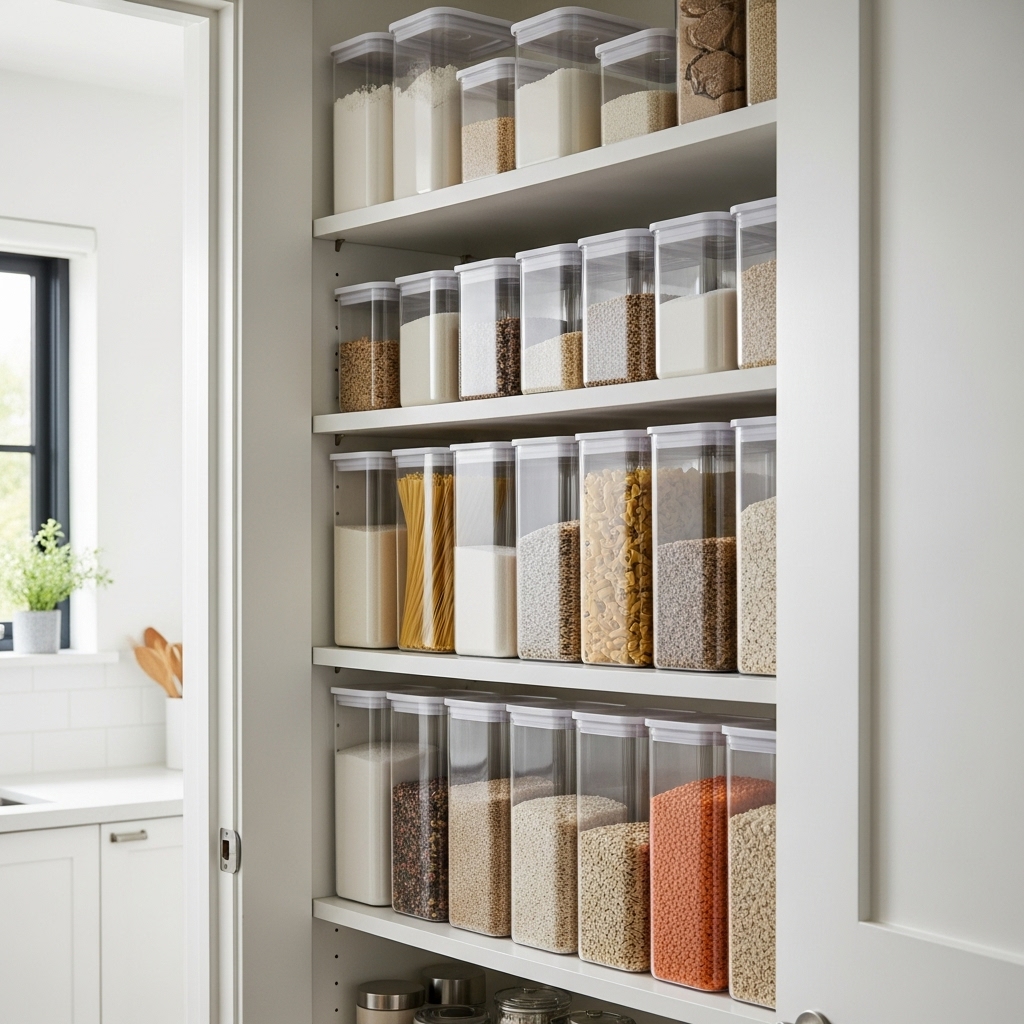
Decanting dry goods into airtight glass or BPA-free plastic containers is more than just a visual trend; it’s a way to preserve the lifespan of your pantry staples. Boxes and bags are designed for shipping, not for storage.
They leak, they tip over, and they make it impossible to see how much flour you have left. Uniform containers allow you to stack items efficiently, utilizing the full height of your shelves. The satisfying “pop” of an airtight seal provides a sensory cue of freshness.
When your pantry looks like a curated market, you feel more inspired to cook and less stressed by the prospect of meal planning. It transforms a utilitarian chore into a more pleasant, streamlined experience.
12. The Functional Beauty of Storage Ottomans
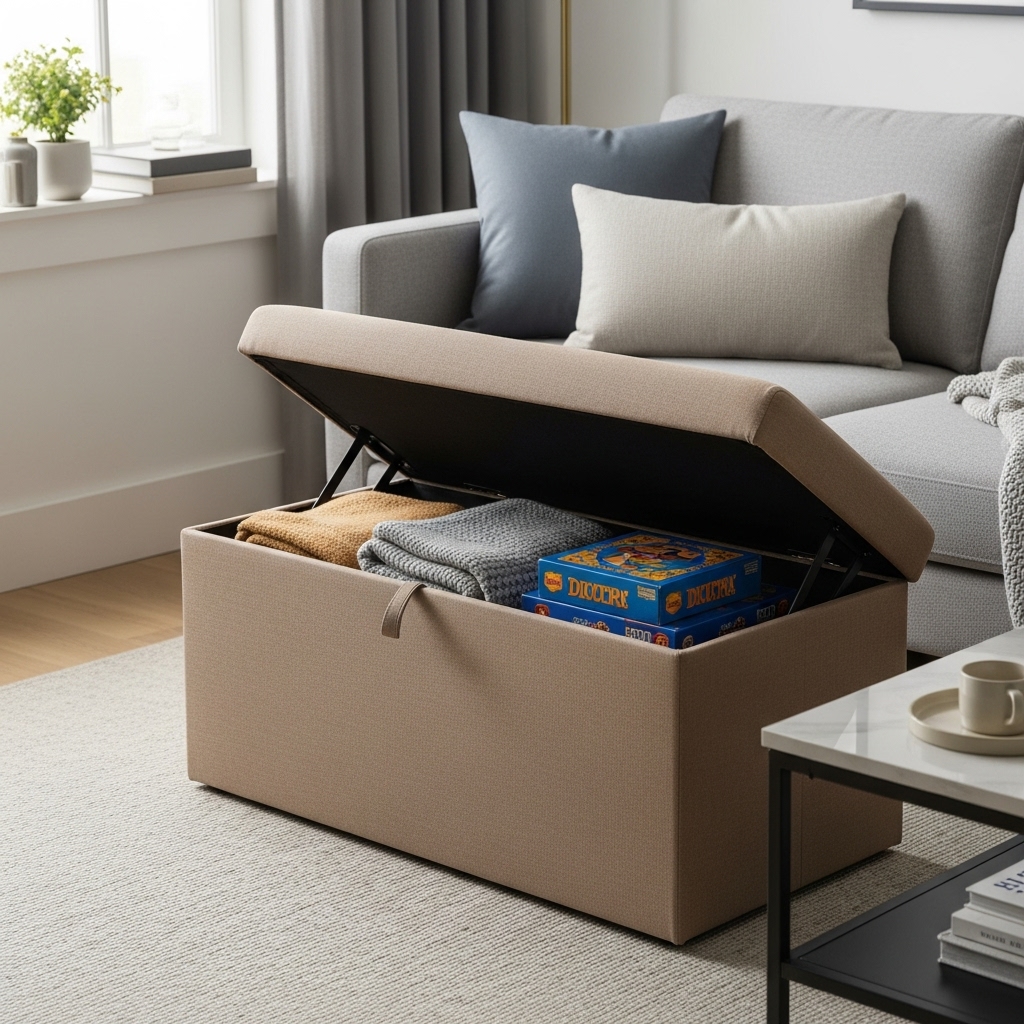
In multi-use spaces like the living room, furniture that “doubles up” is the smartest investment you can make. A storage ottoman serves as a footrest or extra seating while hiding a cavernous interior for board games, blankets, or even seasonal décor. It is the ultimate stealth storage solution.
For those in small apartments, having a piece of furniture that performs two roles is essential for maintaining a sense of space. A leather or upholstered ottoman adds a soft, tactile element to the room, contrasting with the harder lines of a coffee table.
It’s a piece that hides the “real life” clutter of a family home behind a facade of polished interior design.
13. Command Centers for Entryway Efficiency
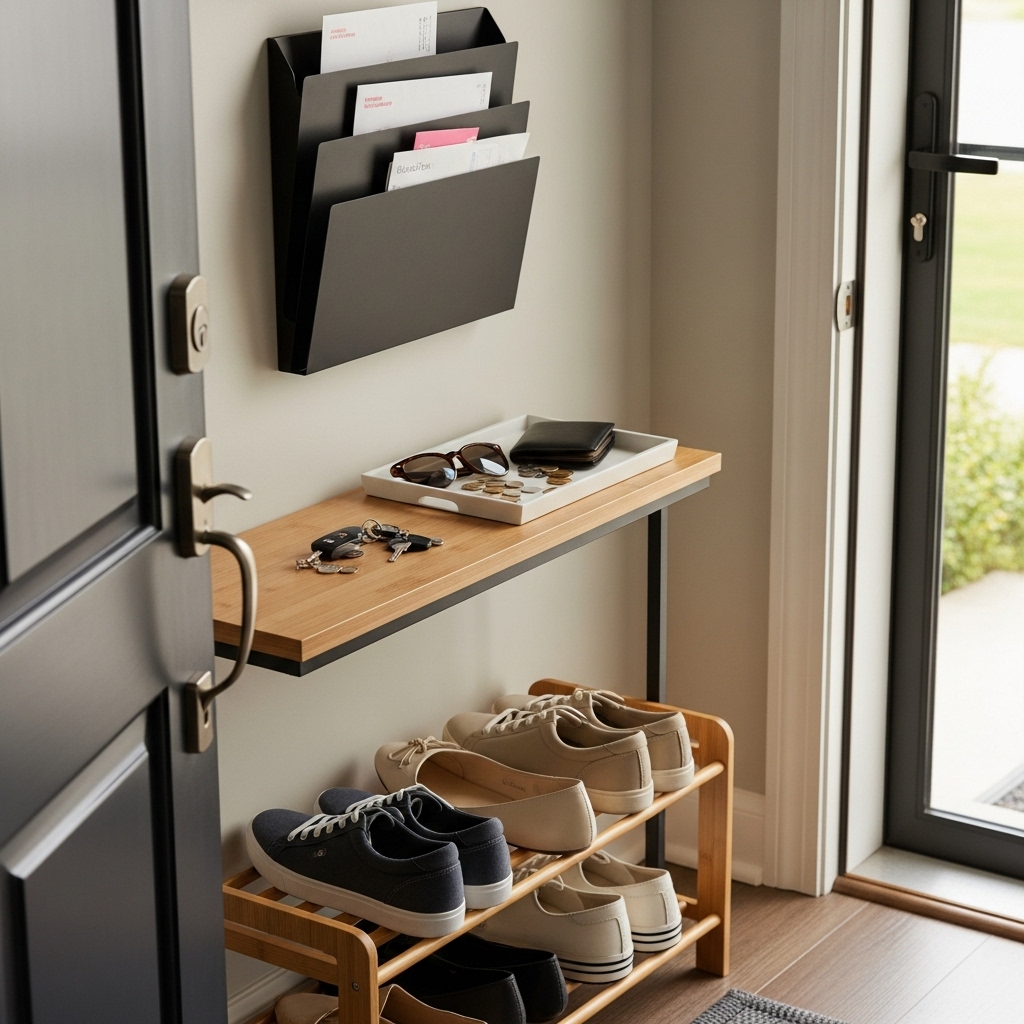
The first five feet of your home usually dictate the mood of the rest of the house. An entryway “command center” – usually consisting of a small tray for keys, a mail sorter, and a shoe rack; prevents the “drop and dash” clutter that plagues most entryways.
By creating a specific landing zone, you stop the spread of mess before it enters the living area. A bamboo shoe rack with a slim profile keeps the floor clear while providing a sturdy place for daily footwear.
Adding a small tray on a console table for “pocket dump” items like coins and sunglasses keeps the surface looking intentional. It is about creating a boundary: the outside world stops here, and the organized home begins.
14. Utilizing the “Golden Space” Under the Bed
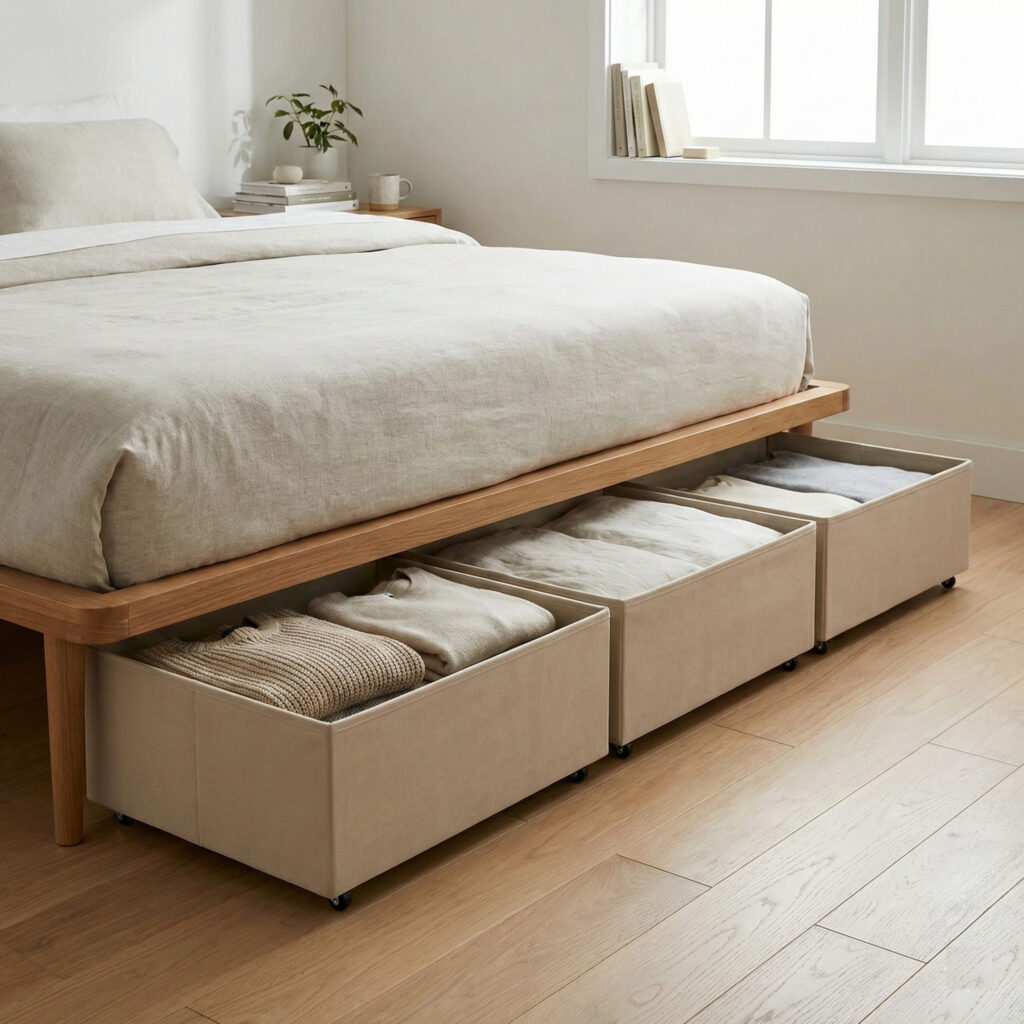
If you aren’t using the space under your bed, you are essentially wasting a closet’s worth of square footage. Long, low-profile rolling bins are perfect for seasonal clothing, extra linens, or even a collection of gift wrap.
The key is to use bins with wheels and handles so that accessing them isn’t a physical struggle. Using fabric or wicker-fronted bins under the bed allows the storage to blend in with the room’s décor if they happen to peek out from the bed frame.
It’s a great way to “hide” the things you only need once or twice a year. By moving these bulky items out of your main closet, you give your daily wardrobe room to breathe, making the entire bedroom feel more serene.
15. Labeling as the Final Organizational Seal
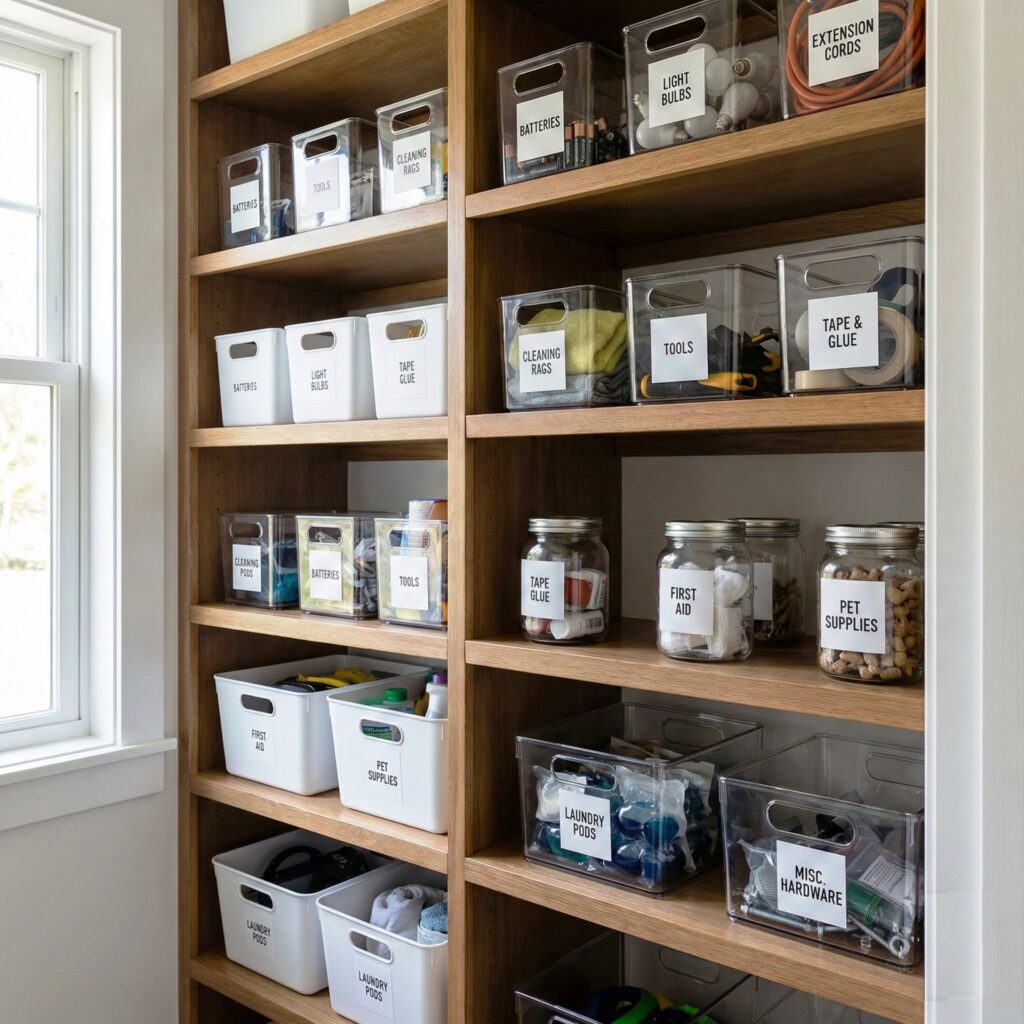
Even the best storage system will eventually fail without labels. Labels act as the “GPS” for your home, telling everyone; including guests and children, exactly where items belong. It removes the mental load of remembering which bin holds the batteries and which one holds the lightbulbs.
Whether you use a high-tech label maker, chalk pens, or simple wooden tags, the effect is the same: it solidifies the system. Labeling provides a visual finish that signals a project is complete. It is the final step that turns a temporary tidy-up into a permanent lifestyle change.
When every bin has a name, “putting things away” becomes a thoughtless, automatic action.
Frequently Asked Questions
Q1. Is it better to buy all my containers at once or as I go?
It is always better to organize first and buy second. Declutter your space entirely, group like items together, and measure your shelves before purchasing any products. Buying “as you go” often leads to a mismatched collection of bins that don’t stack well together, whereas a planned purchase ensures a cohesive, high-functioning system.
Q2. How do I know if an organizing product is “worth it”?
Ask yourself if the product solves a specific friction point. If a drawer is hard to open because it’s messy, a divider is worth it. If you have to dig for spices, a turntable is worth it. If you are buying a product just because it looks pretty but doesn’t have a clear job to do, it will likely just become more clutter.
Q3. What are the best materials for home organization?
For kitchens and bathrooms, look for moisture-resistant materials like acrylic, stainless steel, or treated bamboo. For living areas and bedrooms, natural fibers like cotton rope, seagrass, and felt add a warmer aesthetic. Sustainability is also a factor; investing in high-quality PET plastic or glass containers ensures they won’t need to be replaced for years.
Q4. Can I organize my home effectively on a budget?
Absolutely. Many “pro” organizers use everyday items like shoeboxes as drawer dividers or glass jars for pantry storage. The value of an organization product lies in its ability to categorize and contain, not its price tag. Focus on maximizing vertical space and using consistent labeling, which can be done very affordably.
Conclusion
The journey toward an organized home is rarely about achieving a state of perfection; it is about reducing the daily drag of searching for lost keys or digging through a cluttered pantry.
When you invest in home organization products that respect your habits and your space, you aren’t just buying plastic or wood, you are buying back your time and mental energy.
Start with the areas that cause the most frustration, apply a few strategic tools, and watch how a little bit of order can transform the entire atmosphere of your home.