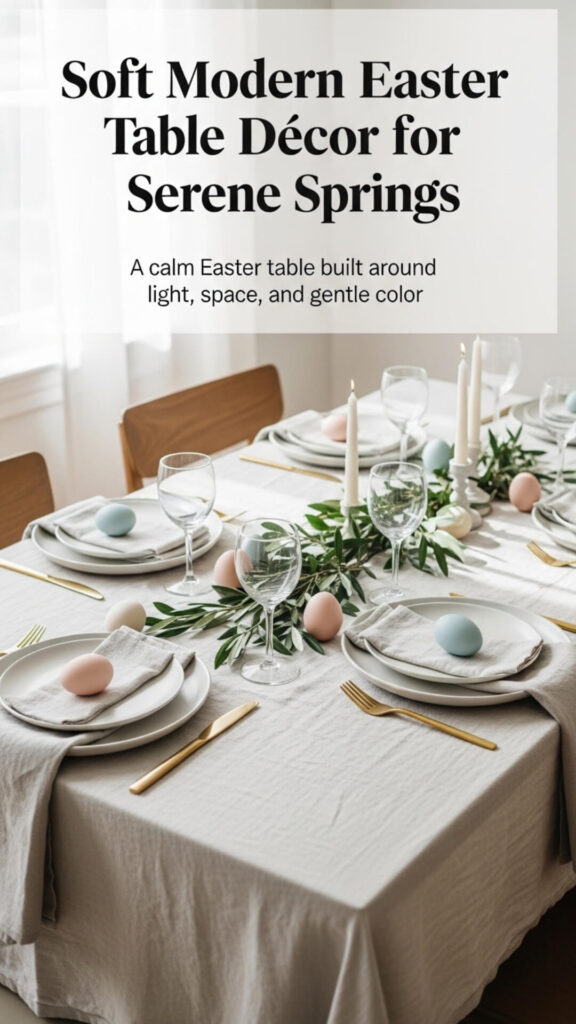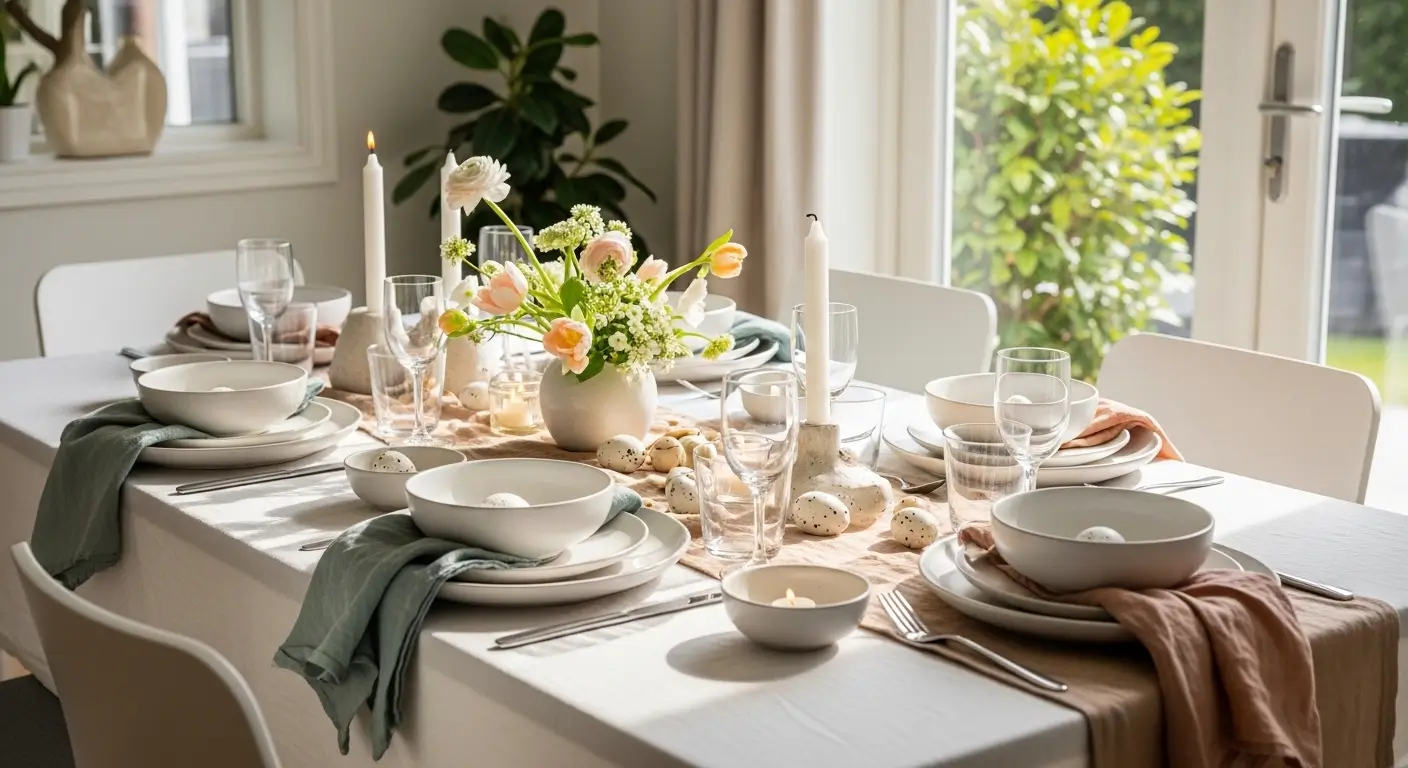
The shift into spring brings a natural desire to lighten our surroundings, clearing away the heaviness of winter to make room for something softer. When it comes to the holiday, many of us are moving toward a more edited aesthetic; one that favors texture and light over clutter.
These Easter table décor ideas are designed to help you transition your home with ease, focusing on subtle nods to the season that feel intentional rather than overwhelming.
By leaning into organic materials and a quiet palette, you can create a space that feels refreshed, welcoming, and perfectly aligned with a modern lifestyle.
1. Ethereal Linen Layers in Sand and Bone
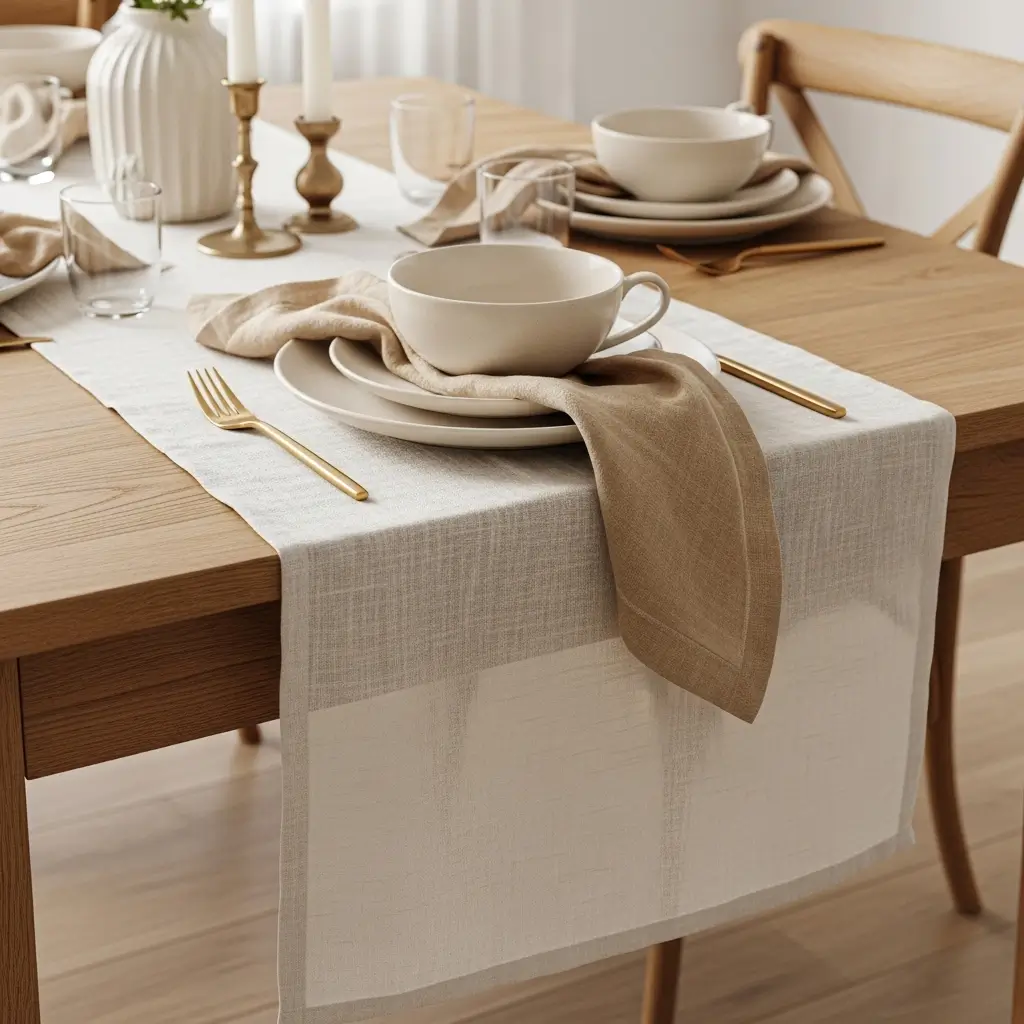
A beautiful table begins with the tactile quality of the foundation. Instead of a stiff, formal tablecloth, consider a relaxed linen runner in a warm sand or bone white.
The natural “slubs” in the fabric catch the morning light beautifully, providing an organic backdrop that feels sophisticated yet approachable. Leaving the edges of your wooden table exposed adds a layer of rustic warmth that grounds the entire setting.
To keep the look modern, avoid ironing the linen to perfection. A few soft creases contribute to a lived-in, effortless feel that encourages guests to linger.
This approach works exceptionally well in sun-drenched breakfast nooks or open-plan dining areas where the goal is a seamless flow between the kitchen and the seating space.
2. Sculptural Ceramic Bunnies in Matte Finishes
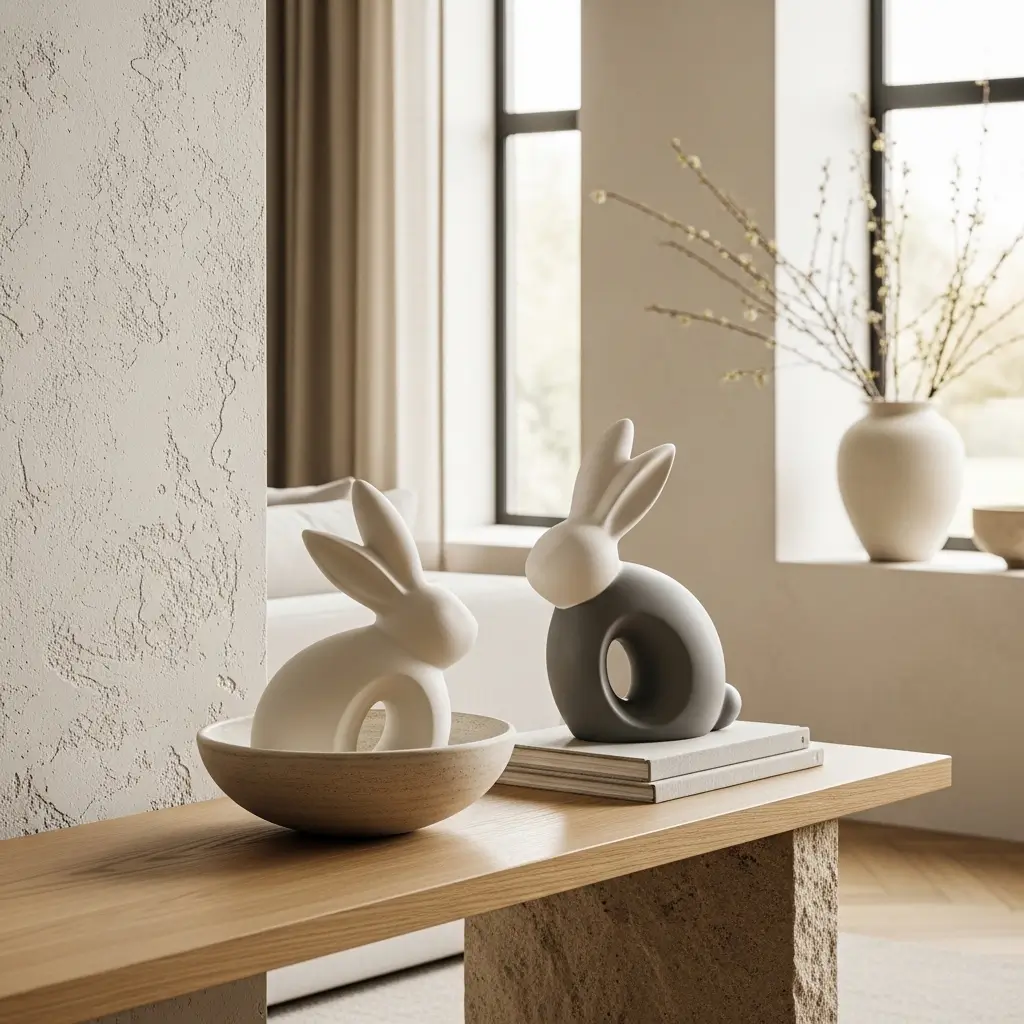
Nods to Easter don’t have to be literal or brightly colored to be effective. A pair of minimalist ceramic bunnies in a matte white or charcoal finish can act as a sophisticated centerpiece. Look for silhouettes that are smooth and abstract, emphasizing the form rather than intricate detail.
These pieces feel like art rather than holiday trinkets, allowing them to sit comfortably alongside your year-round décor. Placement is key to maintaining a minimalist feel.
Rather than a crowded cluster, try nesting one or two figures within a low-profile stoneware bowl or placing them atop a stack of linen-bound books. This keeps the table feeling airy and ensures the “Easter” elements feel like a curated part of your neutral home décor rather than an afterthought.
3. Hand-Painted Speckled Eggs in Stoneware Bowls
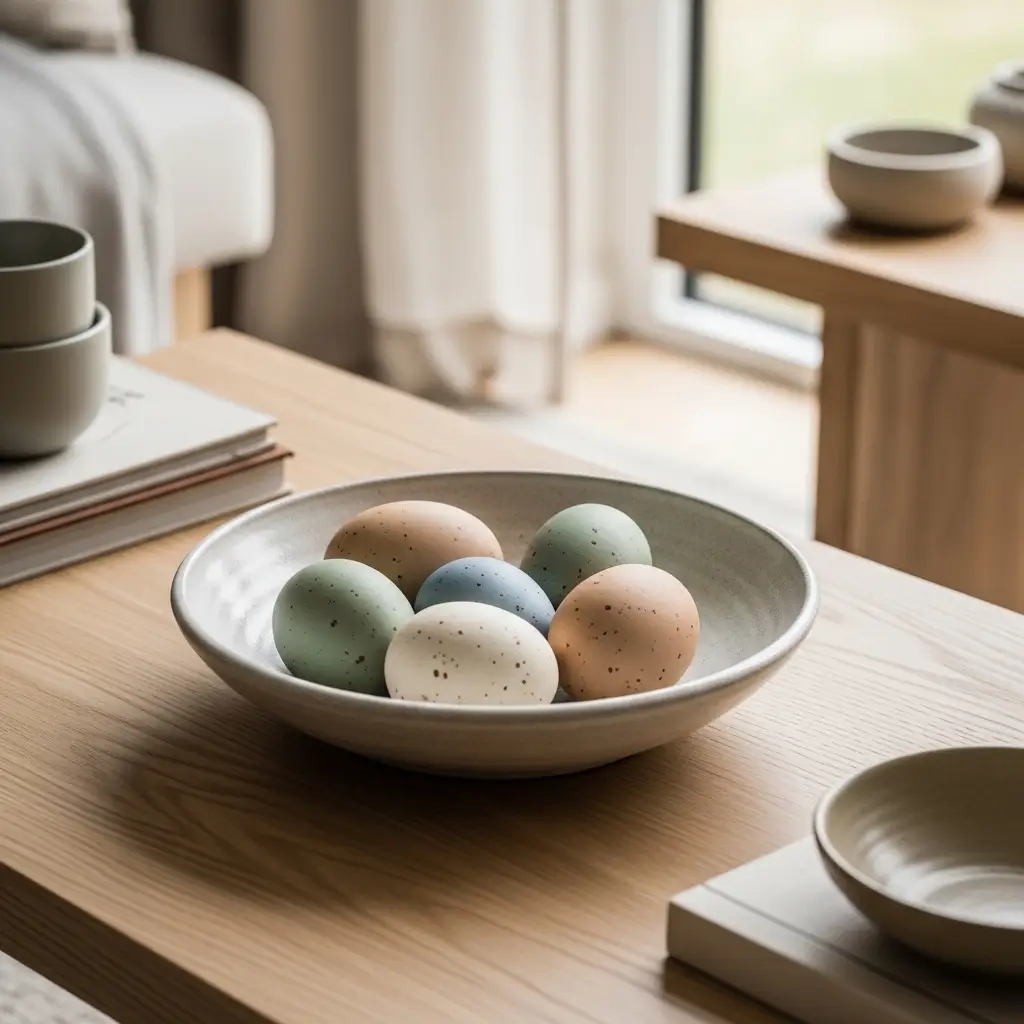
There is a quiet beauty in the organic variation of bird eggs. For a simple but high-impact detail, fill a shallow stoneware or wooden bowl with hand-painted wooden eggs in muted tones like sage, duck-egg blue, and cream.
Adding a light “speckle” with a flick of brown paint creates a realistic, nature-inspired look that feels grounded and earthy. This styling idea works perfectly as a coffee table accent or a centerpiece for a casual kitchen island.
Because the colors are pulled from a natural palette, the display feels cohesive with a spring decorating refresh. It’s a low-effort swap that brings a touch of the outdoors inside without requiring fresh flowers or maintenance.
4. Delicate Fritillaria in Bud Vases
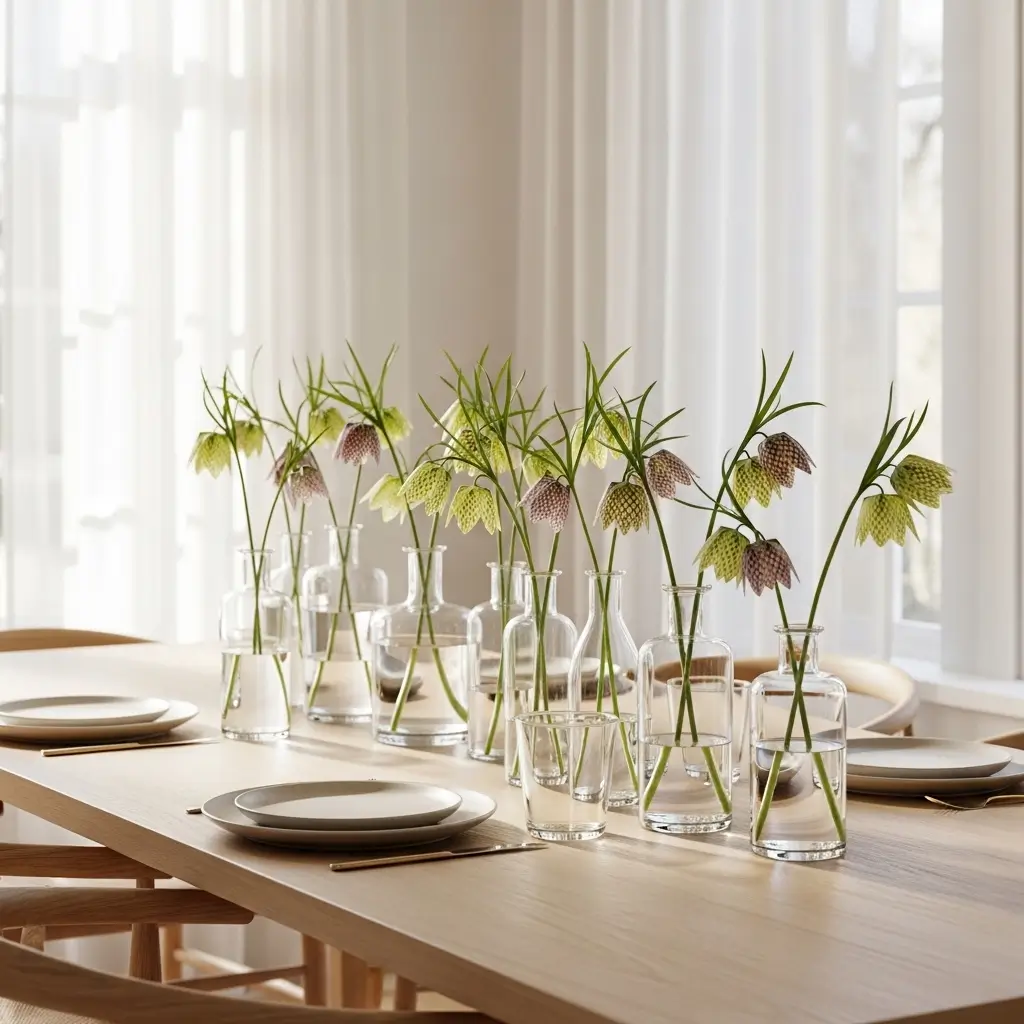
While large bouquets have their place, there is something incredibly modern about the “single stem” philosophy. Fritillaria, with their nodding heads and checkerboard patterns, offer a unique architectural element to an Easter table.
Placing individual stems in a series of mismatched clear glass bud vases creates a rhythmic, floating effect across the center of the table.
This technique allows for plenty of “white space” on the tabletop, preventing the decor from interfering with conversation or the placement of food. The transparency of the glass keeps the visual weight low, making it an ideal choice for smaller dining spaces or for those who prefer a clean, uncluttered aesthetic.
5. Woven Seagrass Placemats for Organic Texture
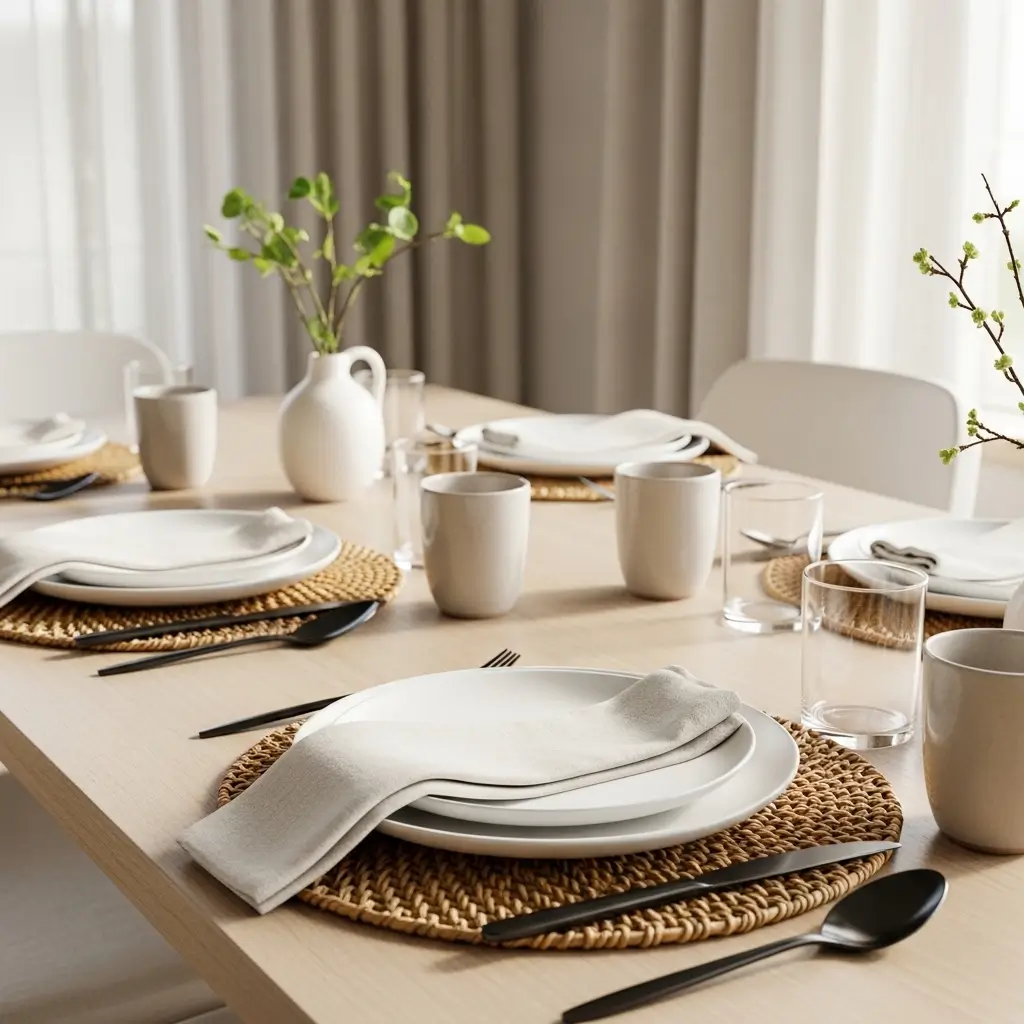
To prevent a neutral table from feeling flat, it is essential to layer in various textures. Woven seagrass or jute placemats provide a wonderful golden tone and a rugged texture that contrasts beautifully with smooth ceramic plates.
This combination feels inherently like spring – reminiscent of nests and gardens, without being overly thematic. These woven elements are practical for a holiday brunch, as they are durable and easy to clean. Pair them with simple white dinnerware and matte black flatware to sharpen the look.
The result is a table that feels balanced: warm and tactile from the natural fibers, but crisp and contemporary from the monochromatic accents.
6. Pussy Willow Branches in Oversized Glass
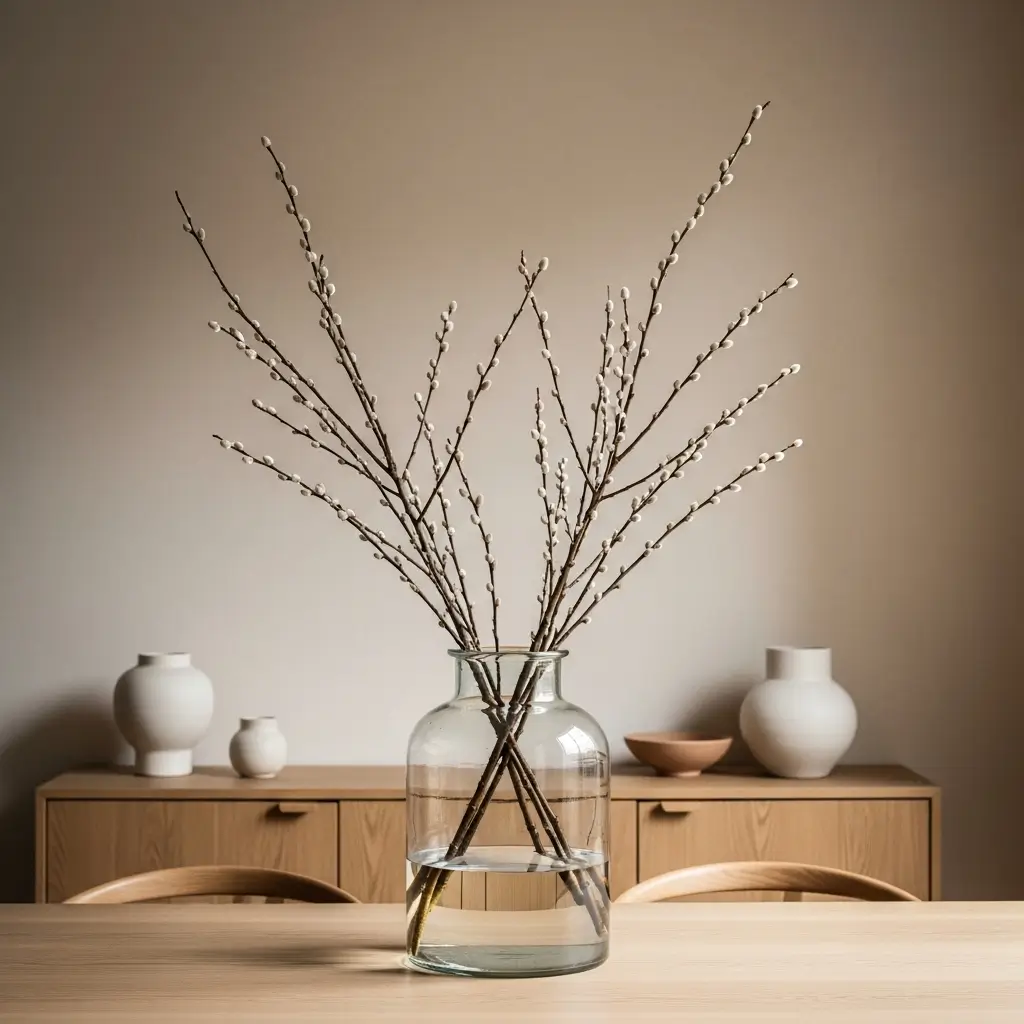
Height can completely transform the energy of a room. A tall, heavy-bottomed glass vase filled with architectural pussy willow branches makes a striking statement on a sideboard or the center of a large dining table.
The soft, silver-grey buds provide a tactile element that signals the very beginning of the spring season. The beauty of pussy willows lies in their longevity; they can last for weeks without much attention. To style them, keep the water clear and the branches sparse.
The graphic lines of the stems against a neutral wall create a calm, gallery-like feel that suits a minimalist home perfectly.
7. Taper Candles in Soft Terracotta and Moss
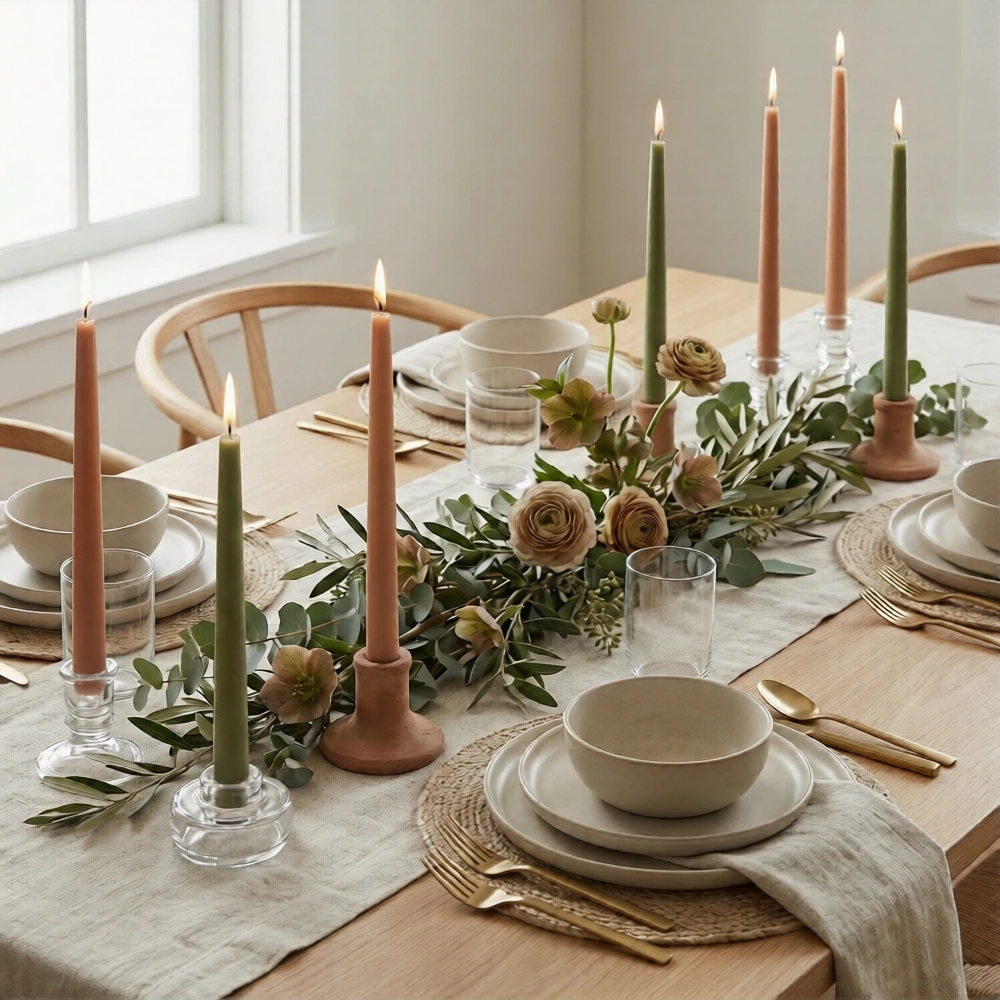
Lighting is the quickest way to set a mood, even for a daytime Easter lunch. Instead of standard white tapers, choose candles in subtle, earthy tones like terracotta, moss green, or pale mustard. These colors pull from a spring landscape and add a soft warmth to the table as they burn down.
Group the candles in simple glass or clay holders of varying heights. The flicker of a flame against a backdrop of spring greenery creates an inviting, cozy atmosphere. This is a simple way to introduce color into a neutral space without committing to permanent accents or vibrant patterns.
8. Dried Grasses and Bleached Ruscus
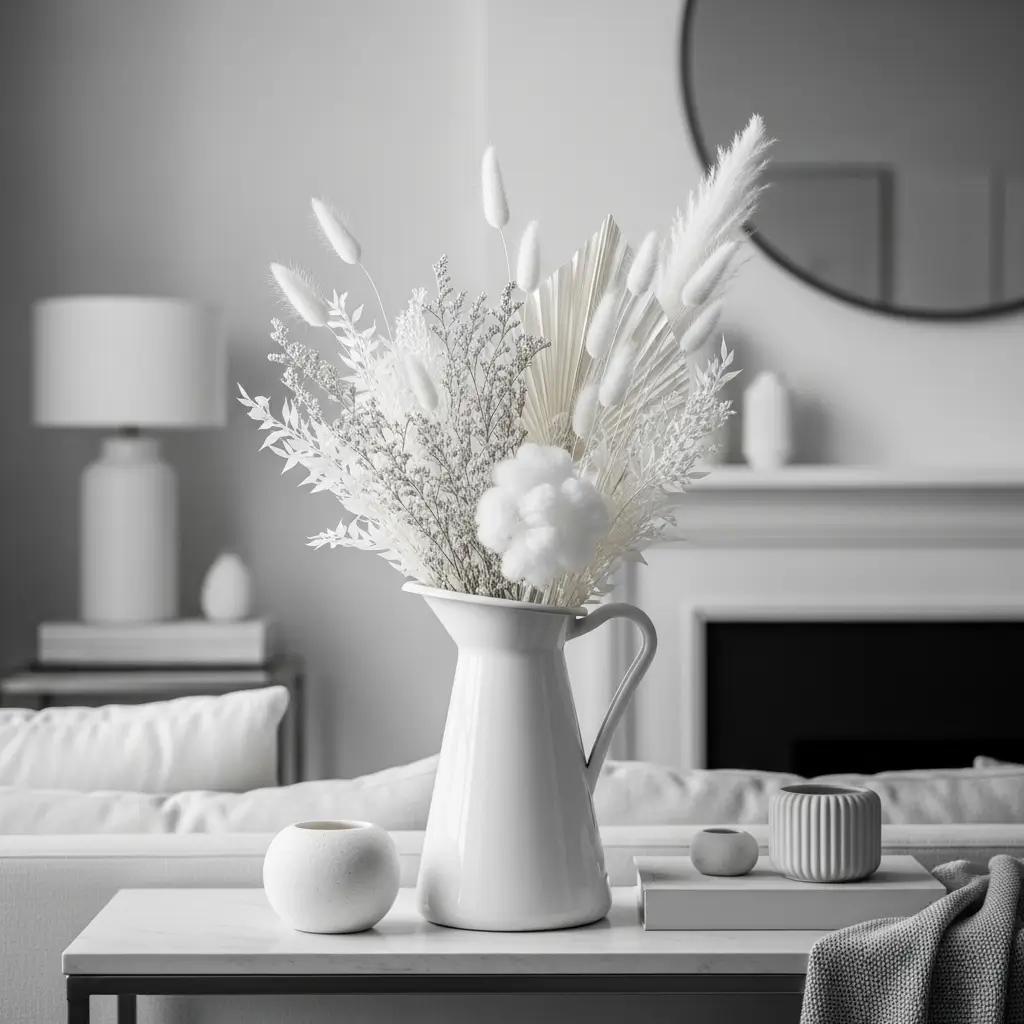
For those who prefer a palette that stays strictly within the whites and creams, dried botanicals are an excellent alternative to fresh blooms. Bleached ruscus or fluffy lagurus (bunny tails) offer a soft, cloud-like texture that feels incredibly ethereal.
Arranged in a white ceramic pitcher, these dried elements create a monochrome look that is high in texture. This styling works beautifully on a mantel or a console table in an entryway.
Because the botanicals are dried, they can be prepared well in advance of the holiday, taking the stress out of last-minute decorating. It’s a sophisticated way to embrace the “bunny tail” theme of Easter in a way that feels grown-up and design-conscious.
9. Natural Wood Tongs and Serving Pieces
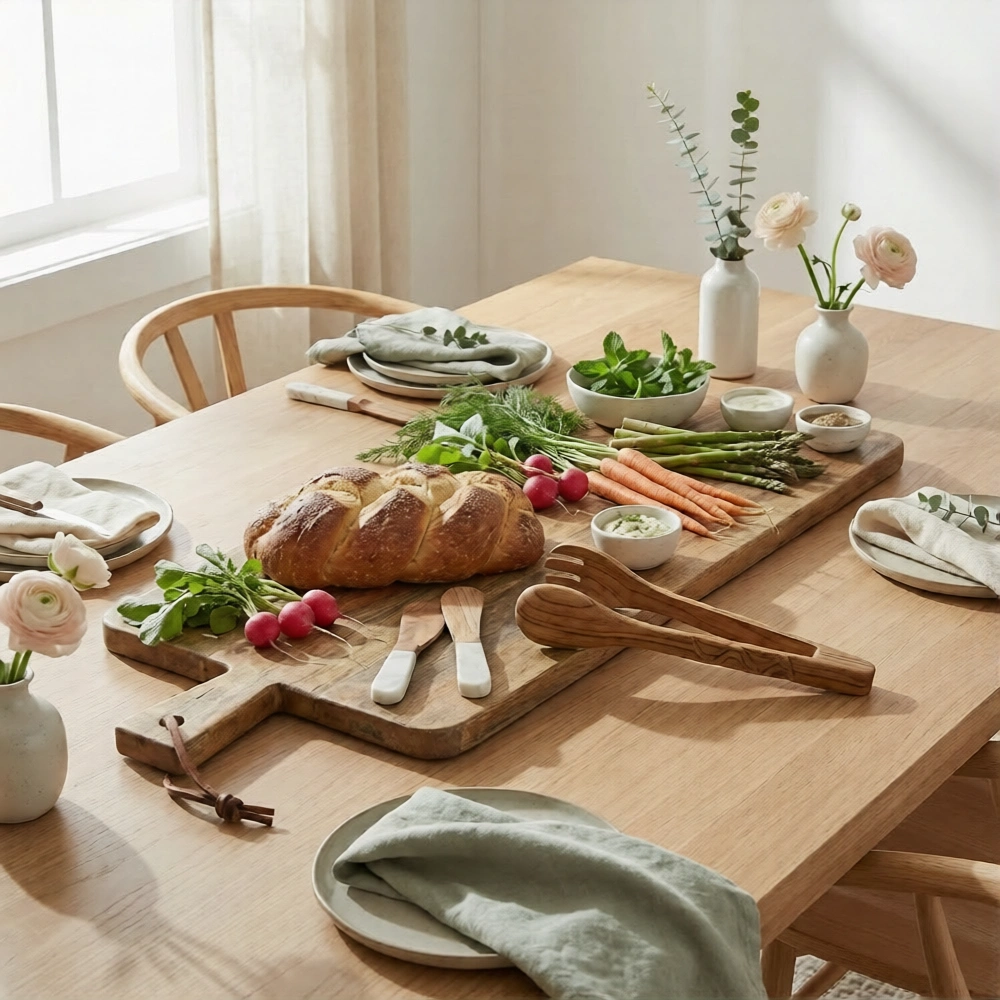
The items we use to serve food are just as much a part of the decor as the centerpieces. Swapping out metal serving spoons for carved wooden tongs or marble-handled spreaders adds an artisanal quality to the table.
These natural materials feel warm to the touch and contribute to the overall sense of a grounded, peaceful home. Using a large wooden board as a focal point for an Easter spread; perhaps for a seasonal crudité or artisanal breads creates a communal, relaxed vibe.
It encourages a “help yourself” style of dining that is perfect for a calm family gathering where the focus is on connection rather than formality.
10. Embroidered Napkins with Botanical Outlines
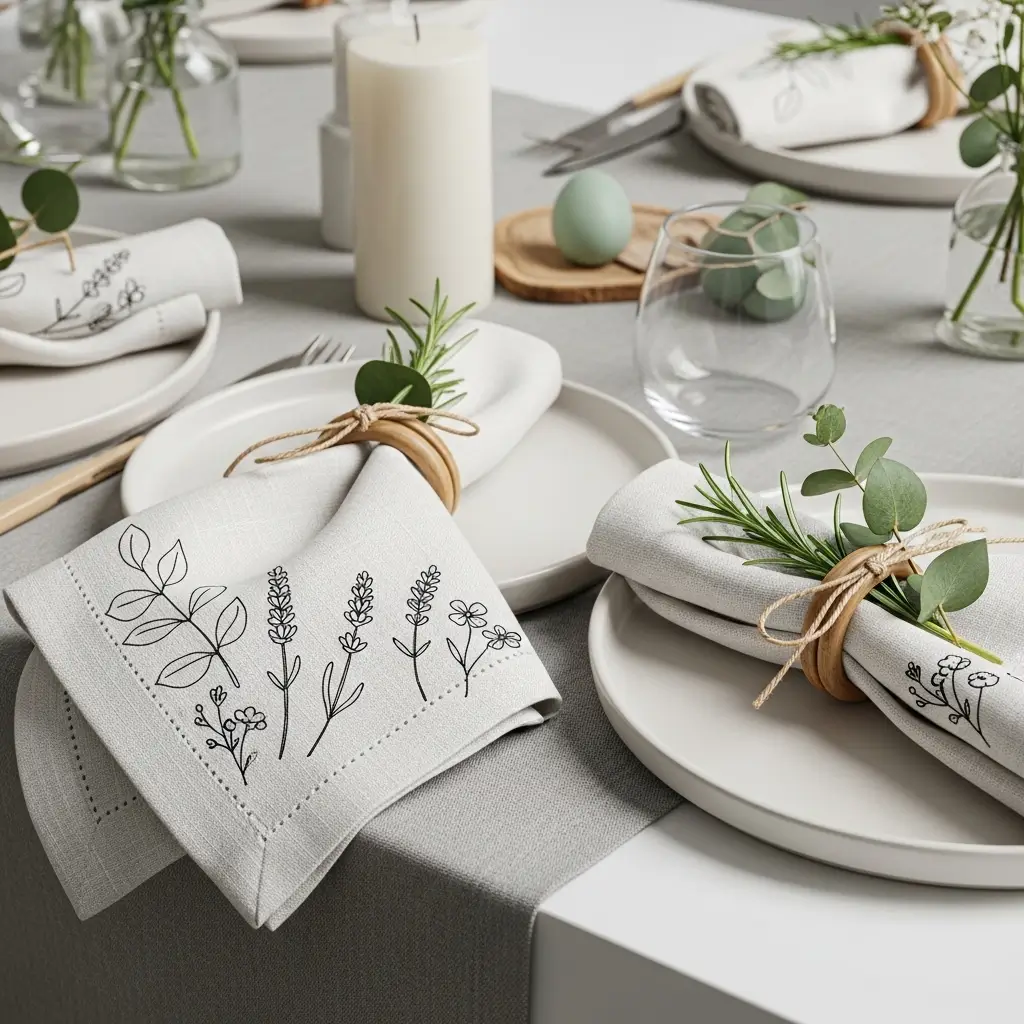
A subtle way to add a touch of personality to your Easter table is through linen napkins featuring delicate, single-color embroidery. Think simple line drawings of a single leaf, a sprig of lavender, or a tiny wildflower. This tiny detail feels like a hidden treasure for guests to discover as they sit down.
Roll the napkins loosely and secure them with a piece of twine or a simple wooden ring. Tucking a small sprig of fresh rosemary or eucalyptus into the fold adds a light, natural scent to the place setting. This small gesture makes the meal feel special without requiring a complex or expensive setup.
11. Concrete and Stone Accents
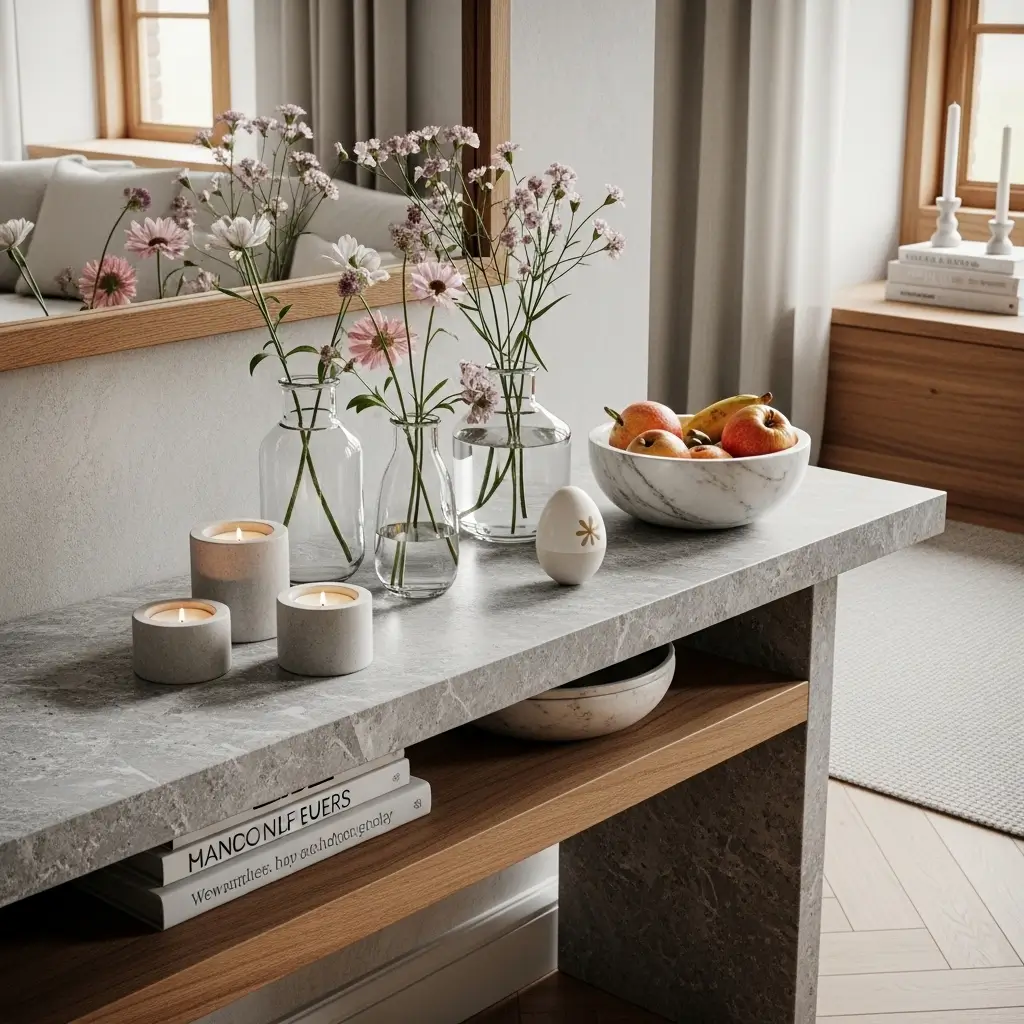
To ground the softer elements like linen and flowers, introduce a few “harder” materials like concrete or stone. A set of small concrete tealight holders or a marble fruit bowl adds a modern, industrial edge to the spring table.
The cool grey tones of stone pair beautifully with the warmth of wood and the softness of pastels. This juxtaposition of hard and soft is a hallmark of modern design. It prevents the Easter theme from feeling too “sweet” or precious.
A stone-topped console table styled with a few simple glass vases and a single ceramic egg is a perfect example of how to balance these textures for a sophisticated seasonal look.
12. Suspended Branches with Minimalist Ornaments
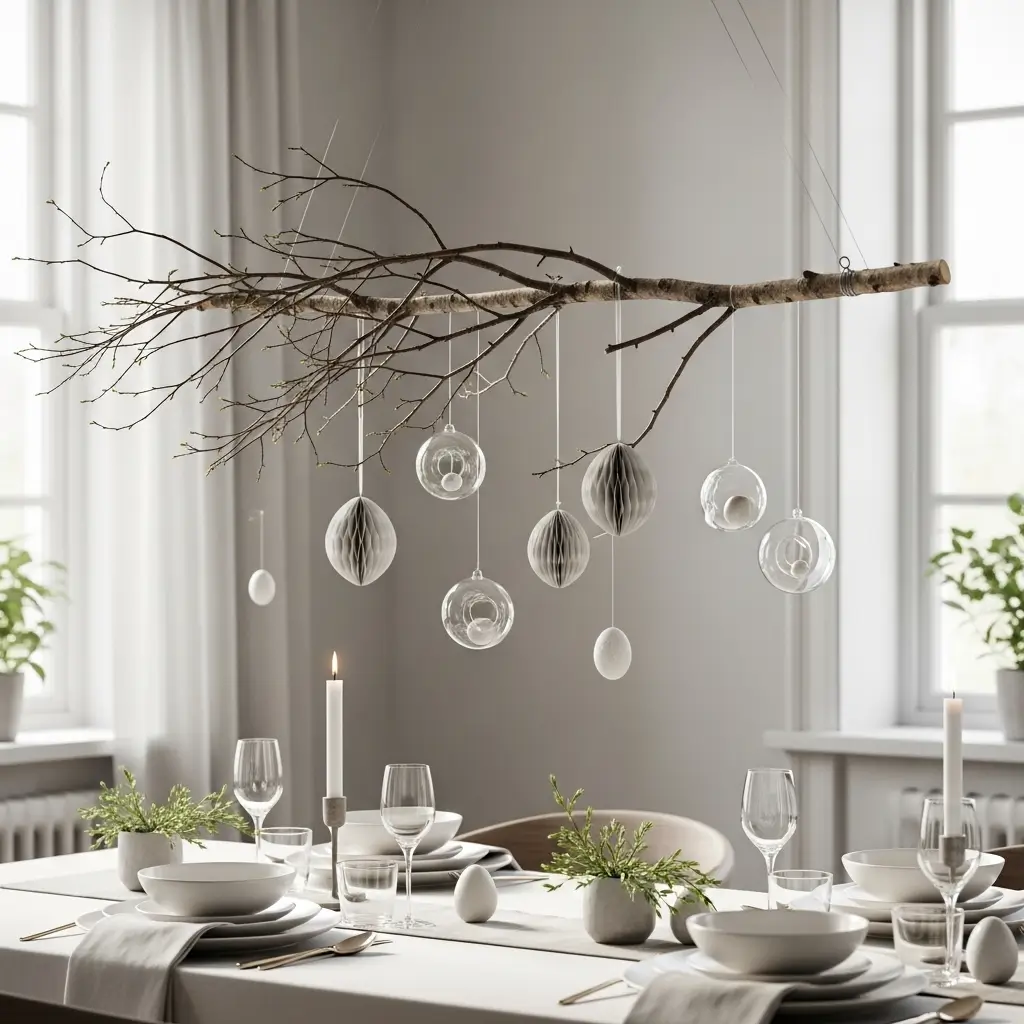
If you want to free up table space entirely, look upward. Suspending a single, sturdy branch (like birch or manzanita) over the table using clear fishing wire creates a stunning focal point. You can then hang a few lightweight, paper-mache eggs or clear glass globes from the branch at varying heights.
This creates a sense of whimsy and wonder that feels very light and airy. By keeping the ornaments monochromatic – all white, for example – the look remains high-end and minimalist.
It’s a creative way to use the vertical space in your home and leaves plenty of room on the table for the main event: the food and your guests.
13. Soft Velvet Ribbons in Muted Tones
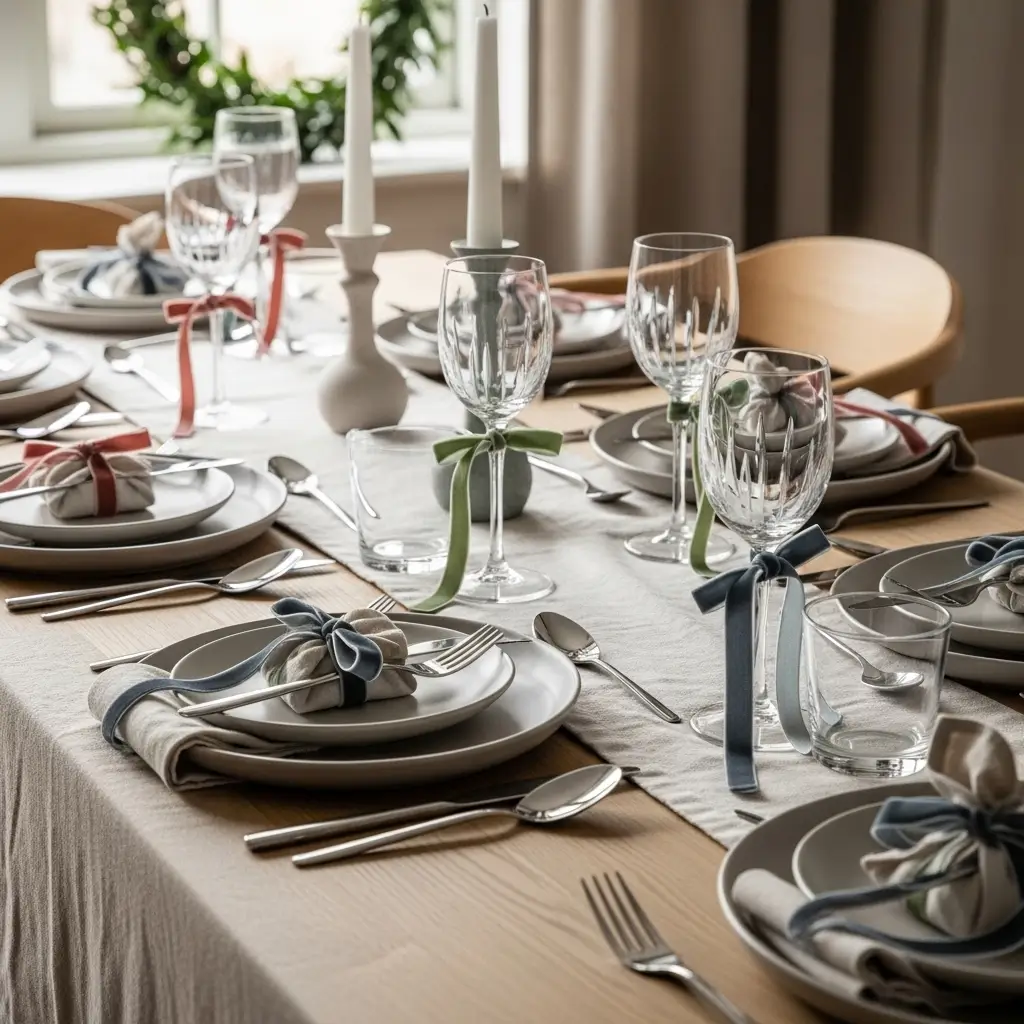
Ribbon is a simple tool that can tie a whole look together. Choose thin velvet ribbons in “muddy” spring colors – think dusty rose, sage, or slate. Tie a small bow around the stem of a wine glass or use it to bundle a set of cutlery.
The slight sheen of the velvet adds a touch of luxury to the matte textures of linen and wood. This is an incredibly low-effort way to bring a sense of cohesion to the table. You can use the same ribbon to tie around a small gift at each place setting or even to hang a wreath in a nearby window.
It’s the “final flourish” that makes a home feel thoughtfully styled for the holiday.
Frequently Asked Questions
Q1. How can I make my Easter table feel festive without using bright colors?
The secret lies in texture and symbolic shapes. By using neutral tones like cream, beige, and sage, you can create a festive atmosphere through materials like linen, woven grasses, and ceramics. Subtle nods like egg-shaped stones or minimalist bunny silhouettes signal the holiday without the need for a loud or neon palette.
Q2. What is the best way to style a small dining table for Easter?
For smaller spaces, “verticality” and “transparency” are your best friends. Use tall, thin branches in clear glass vases to add drama without taking up much surface area. Individual bud vases or a single, well-chosen centerpiece bowl will keep the table from feeling cramped, allowing the design to breathe while still feeling celebratory.
Conclusion
The beauty of a modern Easter lies in its simplicity. When we move away from the pressure of “perfect” decor and toward a more intuitive, texture-led approach, the process of refreshing our homes becomes a joy rather than a chore.
Whether it’s a single branch of pussy willow or a linen runner that will stay on your table long after the holiday has passed, these small, thoughtful choices are what make a house feel like a home. Focus on the light, the layers, and the quiet moments of connection this spring.