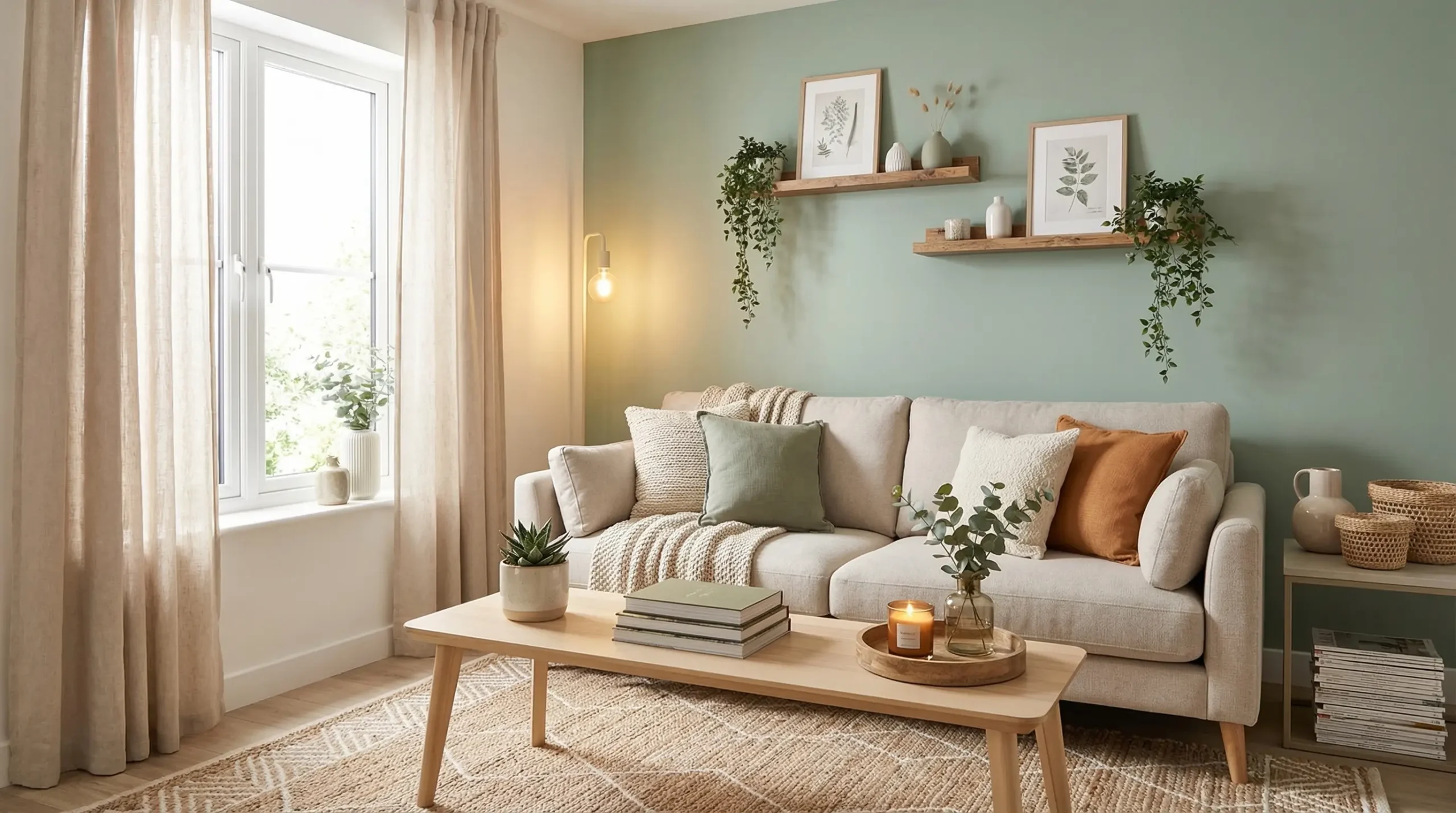
Improving your living space doesn’t require a second mortgage or a massive construction crew. Many homeowners find themselves staring at dated fixtures or scuffed walls, wondering what budget-friendly home upgrades make the biggest difference without draining their savings.
The reality is that the most impactful changes often focus on high-traffic areas, lighting, and tactile surfaces that you interact with every single day.
By focusing on “high-yield” DIY projects, you can refresh the aesthetic and functionality of your home for a fraction of the cost of a professional remodel.
This guide breaks down the most effective ways to modernize your environment, whether you are preparing to sell or simply want to enjoy your sanctuary more. From the kitchen to the entryway, these practical solutions prove that style and comfort are accessible on any budget.
1. The Power of a Fresh Coat of Paint
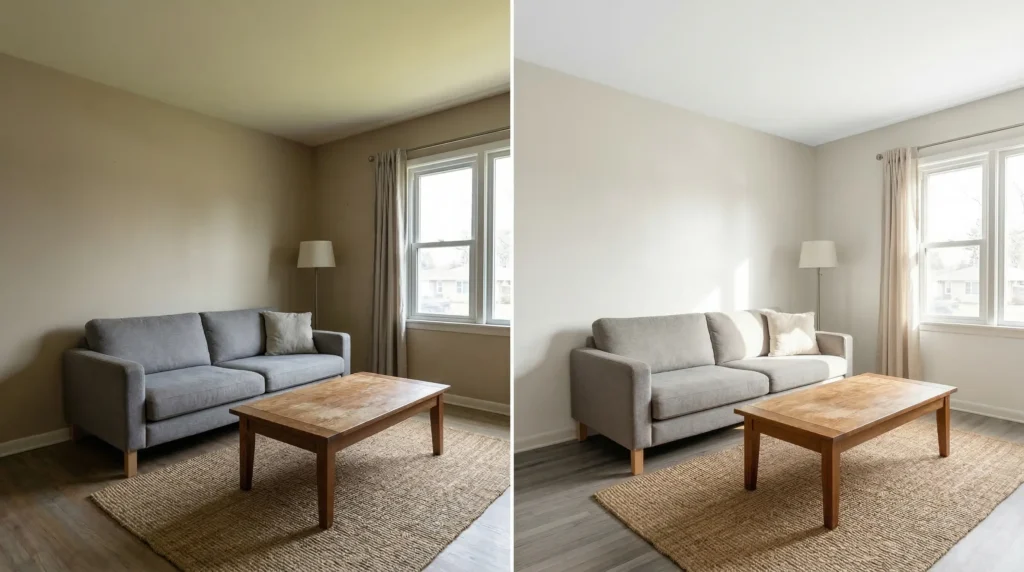
Paint is arguably the most effective tool in your renovation arsenal.
A new color can completely shift the mood of a room, making a cramped, dark space feel airy and expansive. When you choose a satin or eggshell finish for living areas, you gain a subtle sheen that reflects light without highlighting every imperfection in the drywall.
If you are stuck on colors, look toward a modern color palette guide to find neutrals that won’t feel cold. A warm “greige” or a soft off-white can bridge the gap between traditional and contemporary styles.
Don’t forget the ceiling; painting it a bright, crisp white can “lift” the room and make your light fixtures pop.
2. Swapping Out Dated Cabinet Hardware
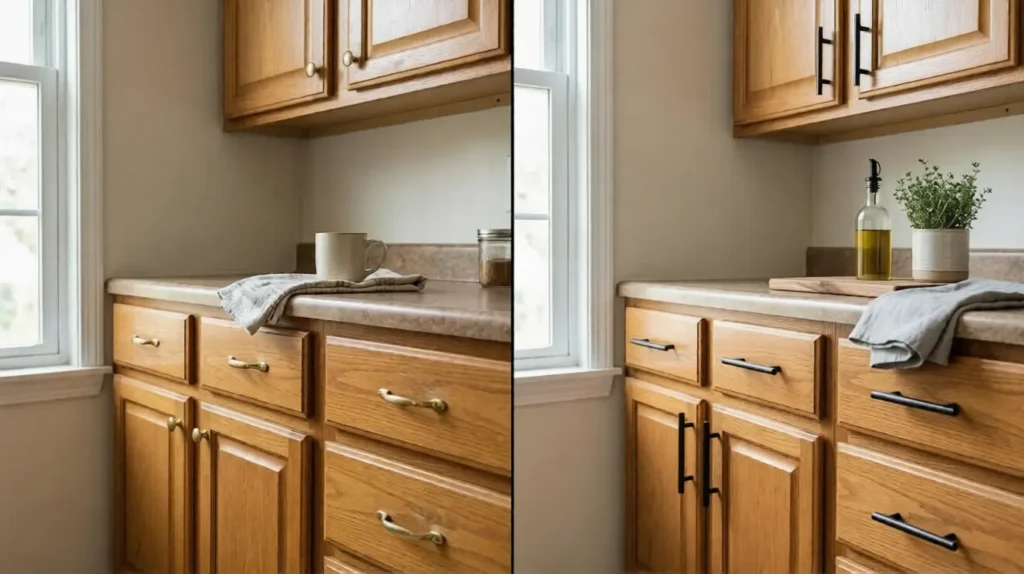
Your kitchen and bathroom cabinets take up significant visual real estate.
If the wood is in good shape but the look feels stuck in the 90s, the hardware is likely the culprit. Swapping out old brass or plastic handles for matte black or brushed nickel pulls is a twenty-minute job that yields instant results.
To make this work, measure the “center-to-center” distance between the existing screw holes so you don’t have to drill new ones. This small change creates a sense of intentionality and high-end design.
It’s one of those budget-friendly home upgrades that people notice immediately because it’s a tactile element they touch every day.
3. Upgrading Interior Door Handles and Hinges
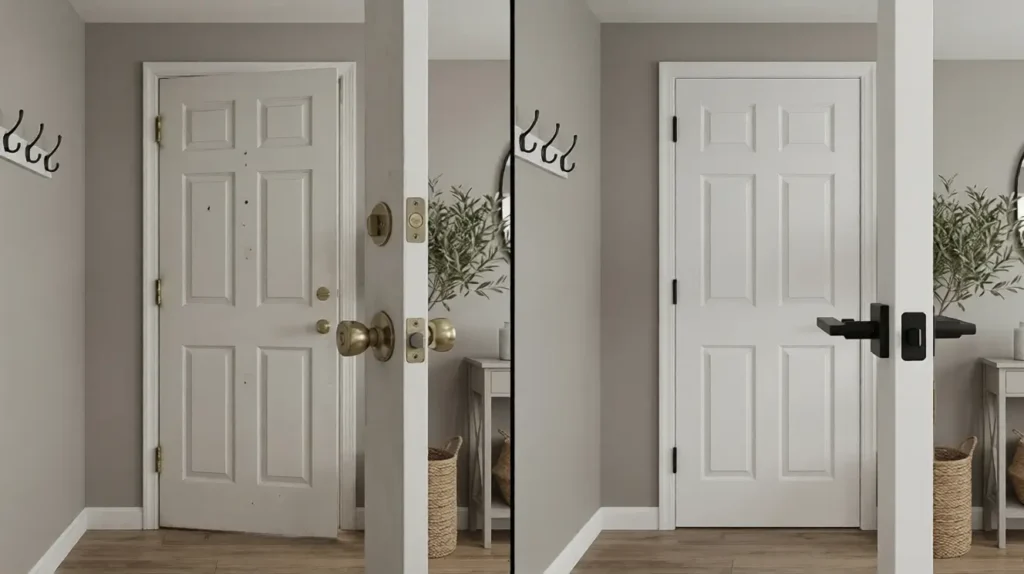
We often overlook the doors we walk through every day, but consistent hardware across your home creates a cohesive, “finished” look. Replacing shiny, gold-toned round knobs with lever-style handles in a modern finish like oil-rubbed bronze adds a touch of luxury and improves accessibility.
Don’t stop at the knobs; mismatched hinges can ruin the effect. Ensure the hinges match the new handle finish for a professional appearance. This is a great weekend project because you only need a screwdriver and a little patience to align the latches correctly.
4. Installing Under-Cabinet LED Lighting
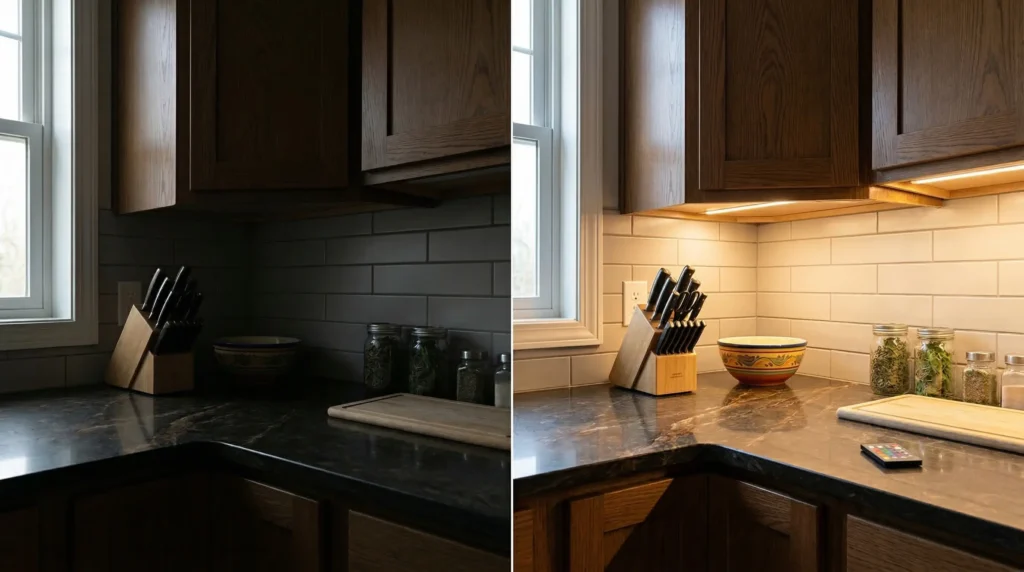
Dark shadows under kitchen cabinets can make a workspace feel gloomy and small. Adding plug-in LED light strips or battery-operated puck lights is a game-changer for both ambiance and task lighting. It illuminates your backsplash and countertops, highlighting the textures of your tile or stone.
For the best effect, place the strips toward the front edge of the cabinet underside rather than the back. This ensures the light falls directly onto your prep area. Many modern kits come with remote controls or motion sensors, giving your kitchen a high-tech feel for under $50.
5. Refreshing the Front Entryway
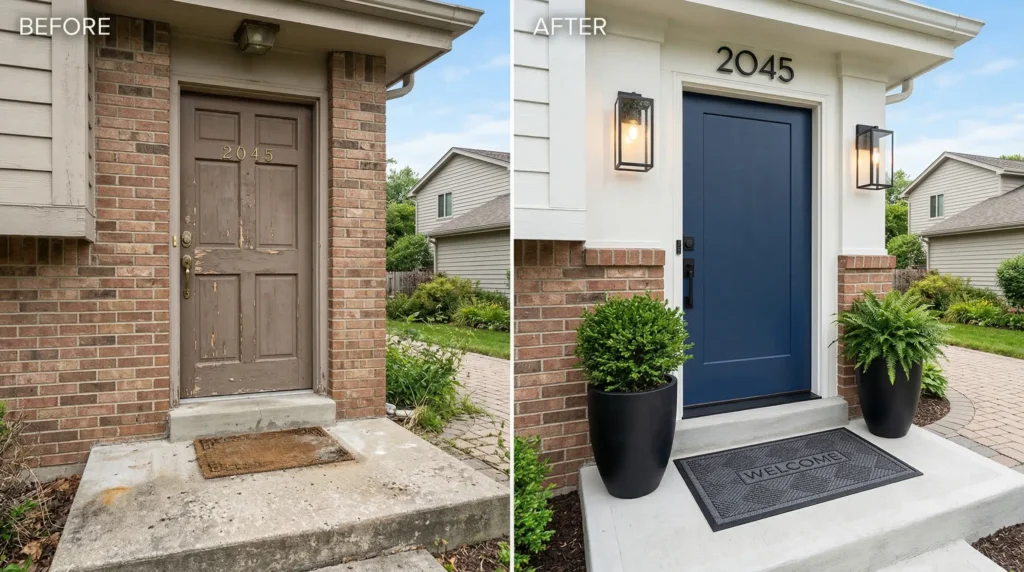
First impressions start at the curb. If your front door is fading or peeling, a quart of exterior paint in a bold color like navy blue or sage green can boost your home’s personality instantly. Pair this with a new, modern house number set and a clean doormat to define the space.
Adding a simple potted plant or a symmetrical pair of lanterns creates an inviting path for guests. This is a key area when considering what budget-friendly home upgrades make the biggest difference for resale value, as it sets the tone for the entire tour before a buyer even steps inside.
6. Deep Cleaning or Grout Refreshing
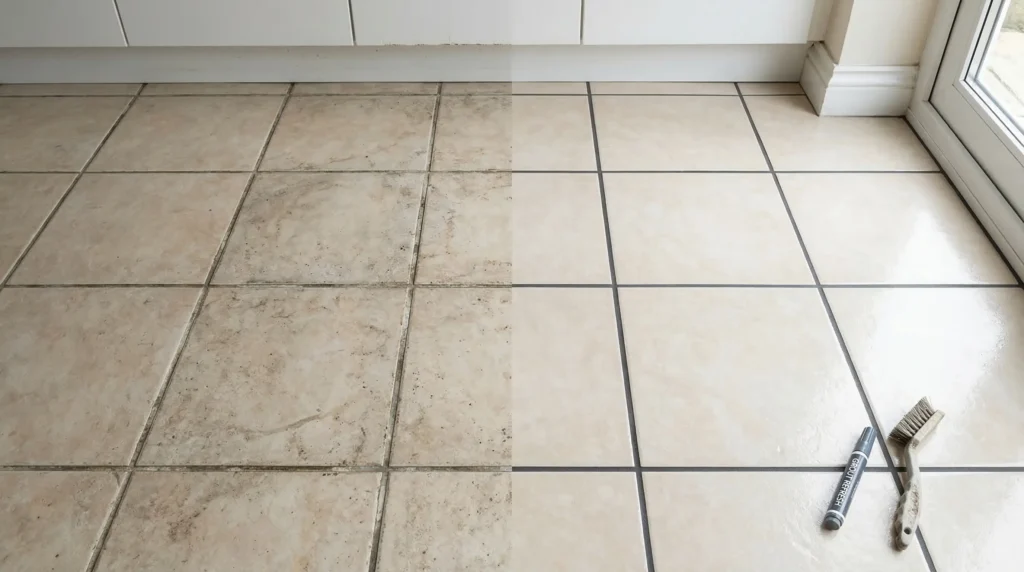
Sometimes, you don’t need new materials; you just need to reveal the ones you already have. Over time, floor grout absorbs dirt and turns a muddy gray. Using a grout pen or a dedicated heavy-duty cleaner can make a tiled floor look brand new for less than the cost of a pizza.
If your grout is permanently stained, you can use a grout sealant with a built-in tint to change the color entirely. Choosing a darker gray for floor tiles can hide future wear and tear while providing a sharp, modern contrast against lighter ceramic or porcelain.
7. Replacing Old Light Fixtures
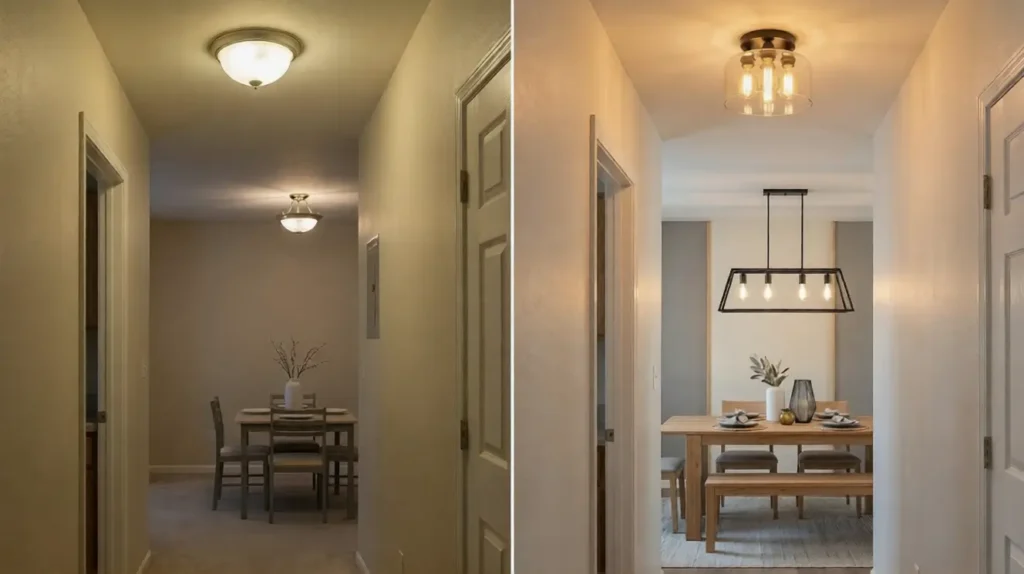
The “boob light” (that standard dome fixture found in many hallways) is a notorious design killer.
Replacing these with flush-mount Edison bulb fixtures or modern drum shades can elevate the entire hallway. In the dining room, a simple chandelier or a geometric pendant serves as a focal point.
When shopping, look for “open box” deals at home improvement stores to find high-end designs at a discount.
Even if you aren’t comfortable with electrical work, hiring an electrician for one hour to swap three or four fixtures is a worthwhile investment that fundamentally changes how your home feels at night.
8. Adding Crown Molding or Trim
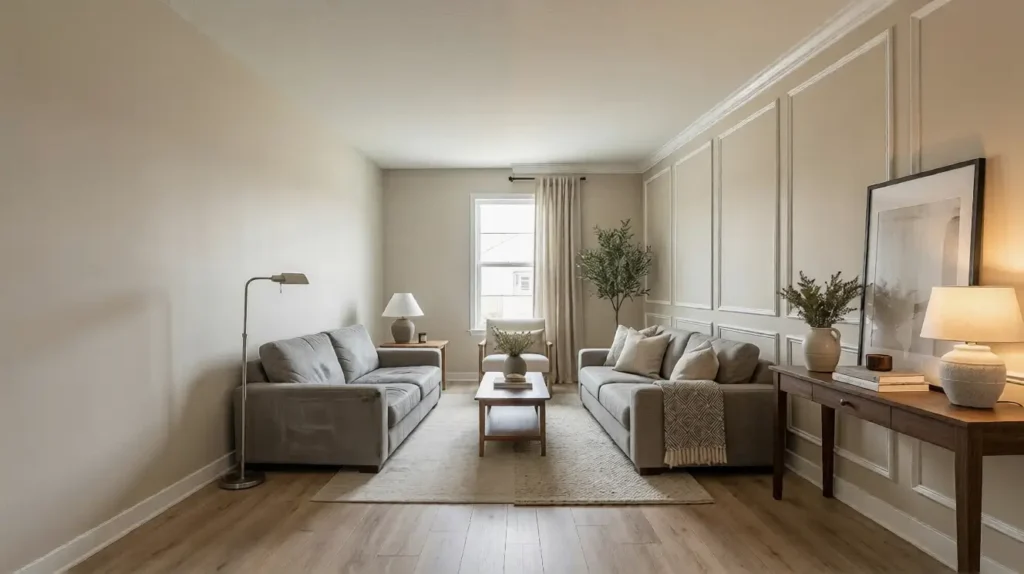
Architectural interest is what separates custom homes from builder-grade houses.
Adding crown molding or a simple chair rail adds depth and character to a flat room. If traditional wood molding feels too expensive or difficult to install, consider lightweight polyurethane options that can be glued and tacked into place.
For a modern twist, try a “box trim” or “picture frame” molding on a main living room wall. Once painted the same color as the wall, it creates a sophisticated, textured look that mimics expensive custom carpentry. It’s an excellent way to fill large, empty wall spaces without buying more furniture.
9. Organizing with Floating Shelves
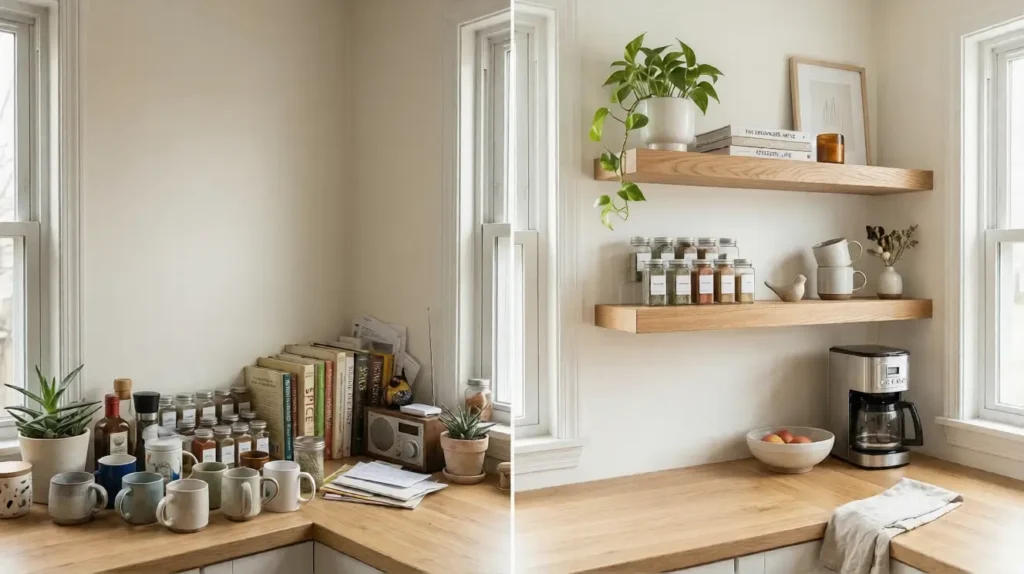
Clutter makes a home feel smaller and more stressful. Floating shelves are a functional design choice that provides storage while acting as a display for decor. In a kitchen, they can hold frequently used mugs or spices; in a living room, they break up a large wall.
Use natural wood finishes to add warmth to a white room, or go with sleek white shelves to maintain a minimalist look. This is one of those small-space storage ideas that keeps your floor clear, which naturally makes any room feel larger and more organized.
10. Updating Bathroom Faucets and Showerheads
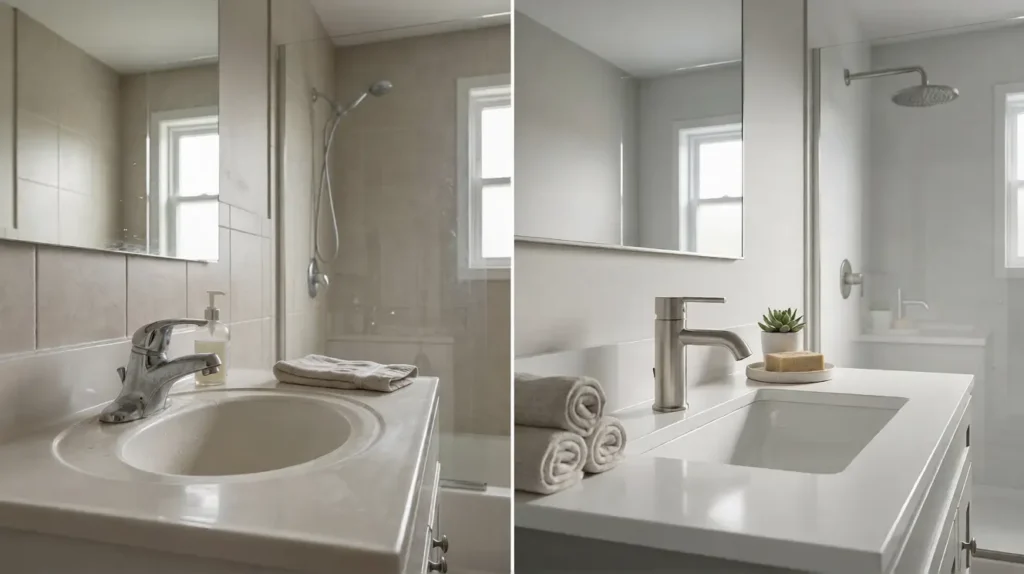
You don’t need to retile your shower to make the bathroom feel like a spa.
A high-pressure rainfall showerhead or a sleek, single-handle faucet can modernize a vanity in minutes. These fixtures are the “jewelry” of the bathroom and are relatively simple to install with a wrench and some plumber’s tape.
Look for finishes that resist water spots, such as brushed stainless steel. If your current vanity is looking tired, a new faucet paired with a fresh bead of white caulk around the sink can make the whole unit look pristine and well-maintained.
11. Smart Thermostats and Switches
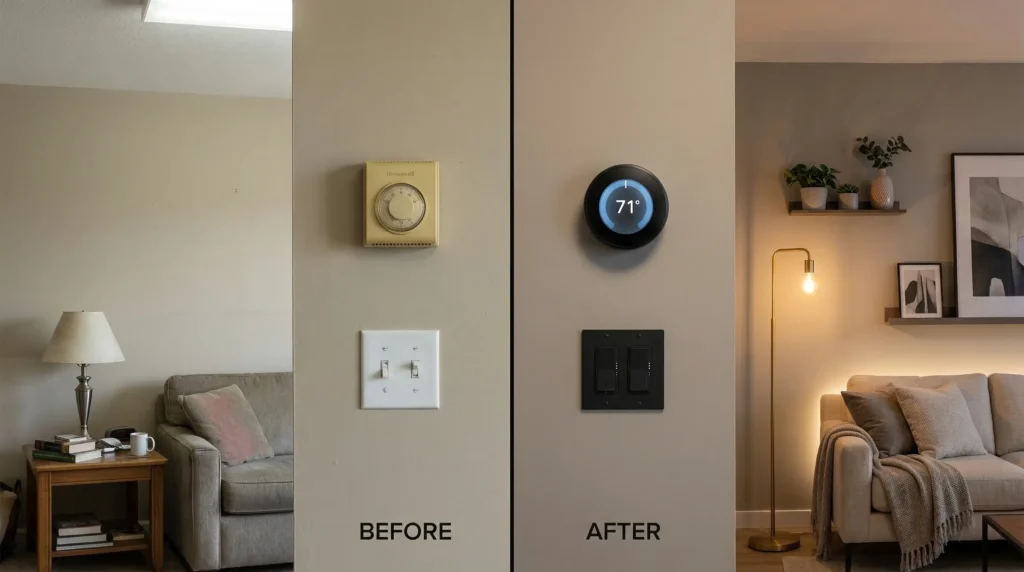
Technology can be a home upgrade, too. Installing a smart thermostat not only looks sleeker on the wall than an old analog dial but also saves you money on utility bills. Many models have customizable interfaces that can match your interior aesthetic.
Pair this with dimmer switches in the main living areas. Being able to control the intensity of your light allows you to transition a room from a bright workspace to a cozy evening retreat. It’s a functional upgrade that improves your daily quality of life while adding a modern “tech-forward” edge to the property.
12. Window Treatment Overhaul
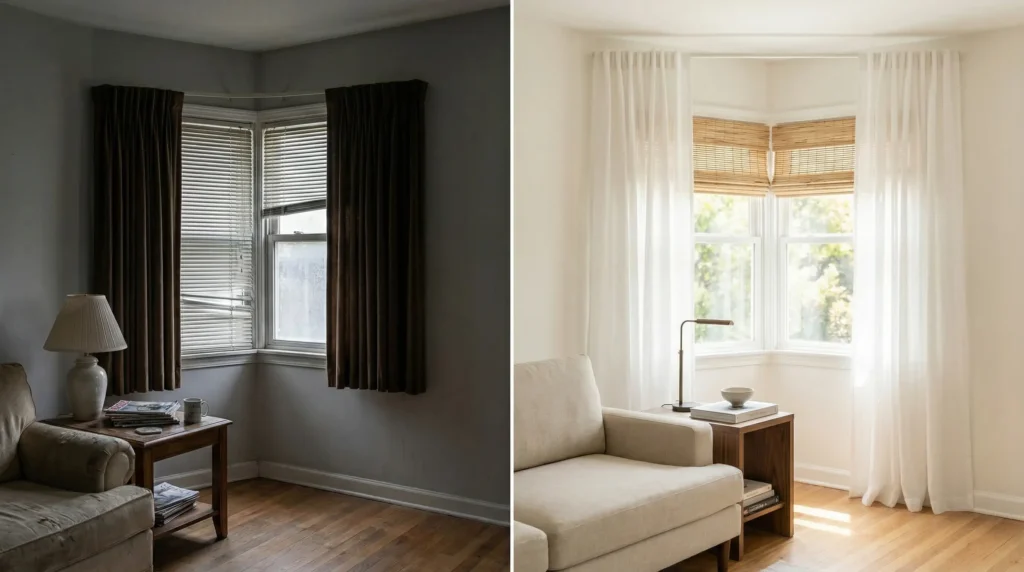
Old, bent aluminum blinds or heavy, dated drapes can block light and make a room feel dusty. Swapping them for bamboo shades or simple linen curtains hung “high and wide” (placing the rod closer to the ceiling than the window frame) makes your windows look much larger.
The goal is to maximize natural light during the day while providing privacy at night. Sheer white curtains are a budget-friendly way to soften the light coming into a room, creating a breezy, high-end feel that works with almost any furniture style.
13. Kitchen Backsplash Refresh
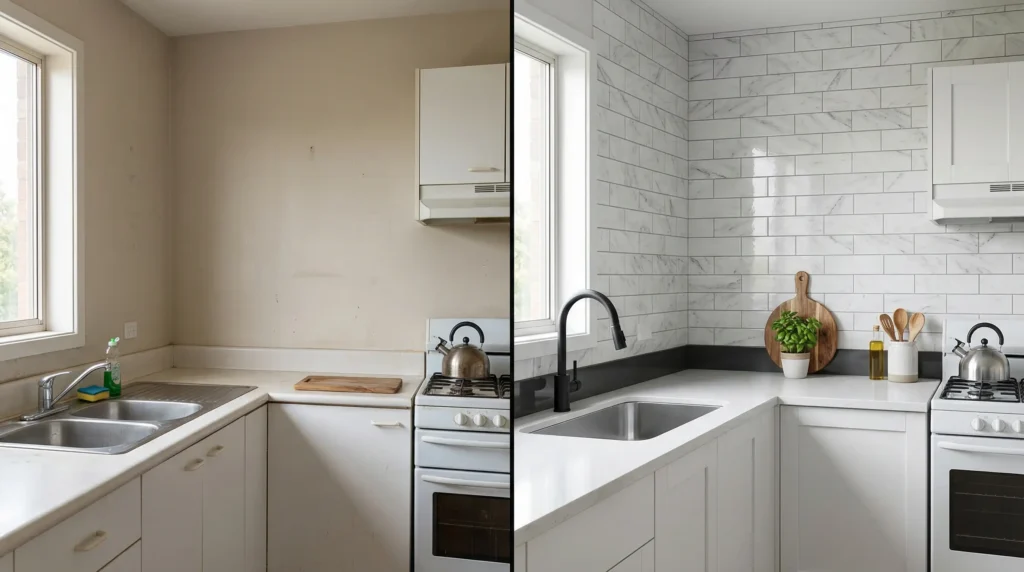
If you can’t afford a full tile job, peel-and-stick backsplash tiles have come a long way in terms of quality and realism. They offer a DIY-friendly way to add color or pattern behind your stove and sink. Most options are heat-resistant and easy to wipe clean.
Alternatively, a “four-inch” backsplash can be painted in a high-gloss enamel to contrast with your walls. This creates a waterproof barrier and a visual break that defines the kitchen area. It’s a low-risk project that can be easily changed if your tastes evolve.
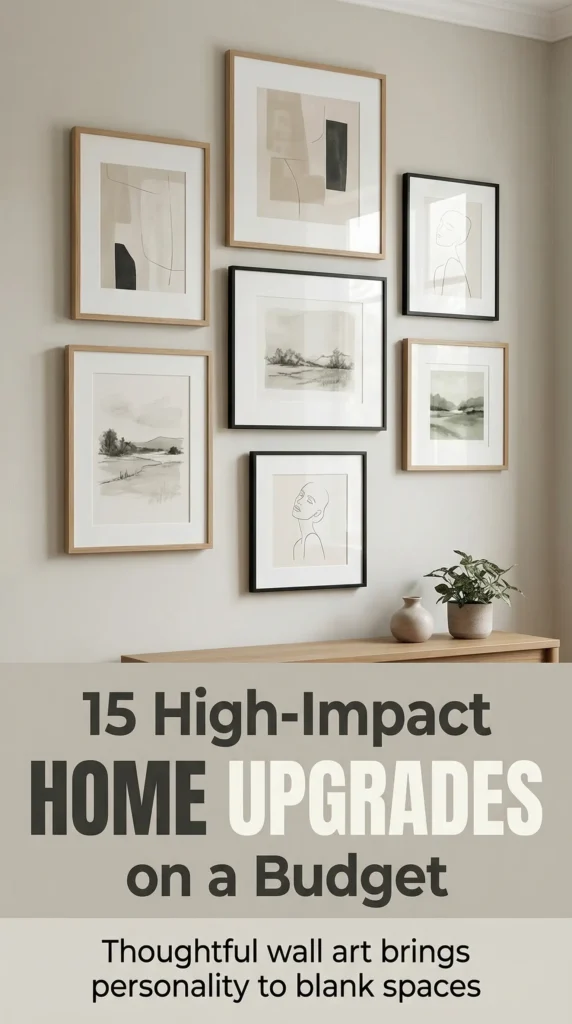
14. Adding a Gallery Wall
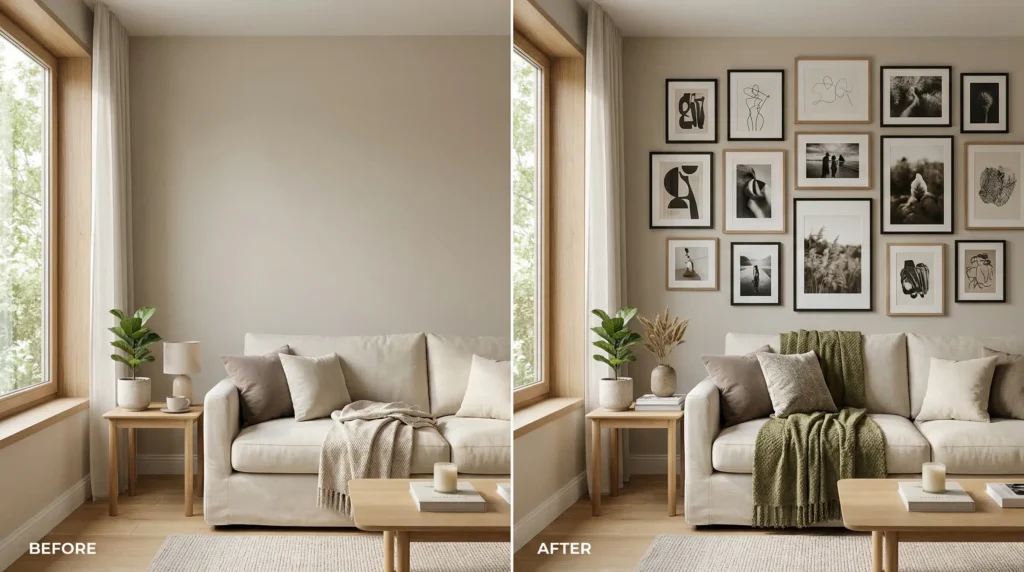
Personalization makes a house feel like a home. A gallery wall allows you to fill a large space with meaningful art, photos, and objects without spending a fortune on one large piece. The key to a professional look is uniformity in frames – using all black or all wood frames even if the art inside is varied.
Lay your frames out on the floor first to find the right arrangement before hammering any nails. This visual “anchor” in a room draws the eye and provides a conversation starter, making the space feel curated and thoughtful rather than cluttered.
15. Closet Systems and Utility Organization
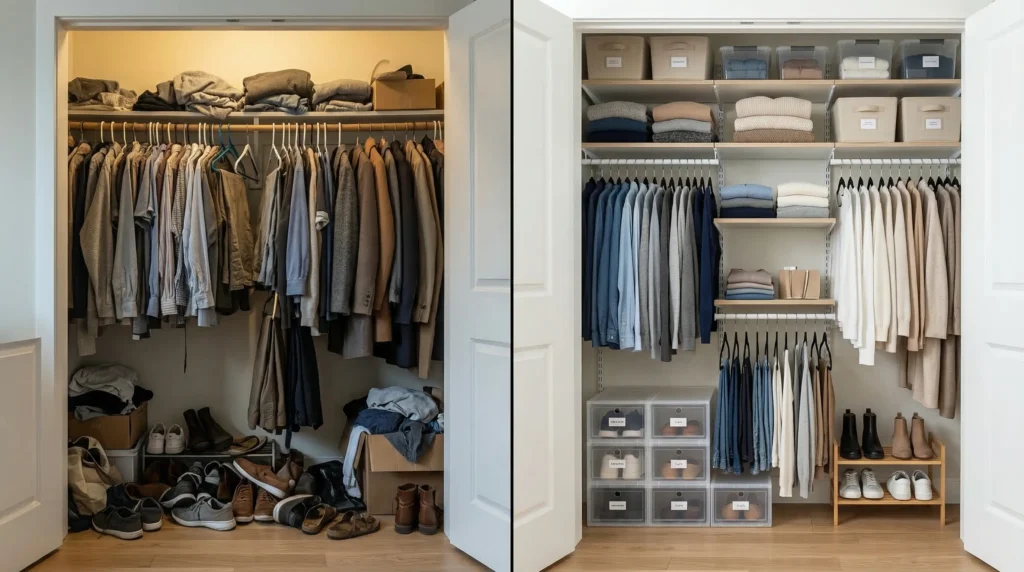
We spend a lot of time hiding our mess, but an organized closet makes every morning easier. Installing a simple wire or laminate shelving system in a pantry or bedroom closet maximizes vertical space. It’s an “invisible” upgrade that pays off in daily efficiency.
Even simple additions like matching hangers or clear bins for shoes can transform a chaotic closet into a streamlined zone. When everything has a place, your home functions better, and that sense of order radiates into the rest of your living areas.
FAQ
Q1. What budget-friendly home upgrades make the biggest difference for resale?
The entryway and the kitchen usually offer the best return. Painting the front door, updating kitchen hardware, and ensuring all light bulbs are a consistent “warm white” temperature can make a home look significantly more valuable to potential buyers.
Q2. How can I make my home look expensive on a budget?
Focus on “visual weight.” Use large-scale rugs that fit under all the furniture legs, hang your curtains near the ceiling, and remove small clutter. A few large, intentional pieces of decor look much more expensive than dozens of small knick-knacks.
Q3. Are DIY home upgrades worth it?
Yes, as long as they don’t involve complex plumbing or structural changes. Projects like painting, swapping fixtures, and basic landscaping are low-risk and high-reward. They allow you to save on labor costs, which usually make up 50% or more of a professional renovation quote.
Q4. What is the cheapest way to modernize a living room?
Rearranging the layout for better flow and painting the walls are the two cheapest methods. Adding a few new throw pillows in a modern color palette and replacing an old ceiling light fixture can finish the transformation for under $200.
Conclusion
Transforming your home doesn’t require a massive budget; it requires a focus on the details that impact your daily experience. By addressing lighting, hardware, and color, you can create a space that feels refreshed, modern, and uniquely yours.
Whether you start with a single drawer pull or a gallon of paint, these small steps lead to a significant overall change. Pick one project this weekend and see how much of a difference a small investment can make.