The compact bathroom is a unique architectural challenge. You are working within a footprint that often feels non-negotiable, dealing with fixed plumbing lines and walls that seem to inch closer every time you reach for a towel.
When the space feels dated or cramped, the instinct is often to assume a total overhaul; gutting the tile and moving the vanity is the only solution. However, high-impact transformations rarely require a five-figure investment or a sledgehammer.
By focusing on intentional, aesthetic, and functional shifts, you can reclaim your space. Small bathroom remodel ideas on a budget center on the philosophy of “micro-renovations.”
This approach prioritizes visible surface changes and clever storage solutions that alter how the room feels and functions.
Whether you are dealing with a tiny powder room or a cramped primary bath, these actionable ideas will help you create a bright, organized sanctuary that feels significantly more expensive than it actually is.
1. Refresh the Palette with Light-Enhancing Paint
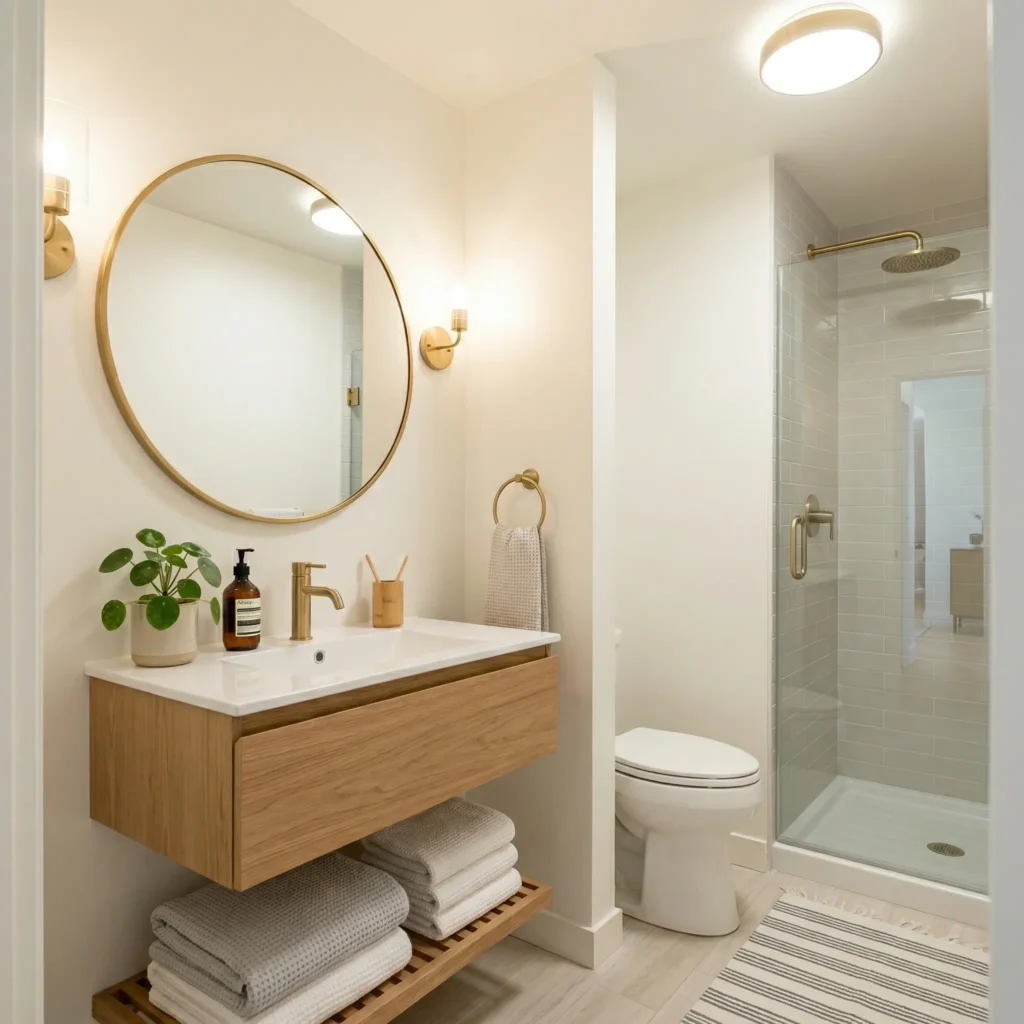
Paint is the most cost-effective tool in your remodeling kit. In a small bathroom, the goal is often to recede the walls rather than draw them in.
While dark, moody tones are trendy, they can make a windowless bathroom feel like a cave. Instead, look toward “bridging” colors – shades of off-white, soft greys, or pale blues that have high Light Reflectance Values (LRV).
A fresh coat of semi-gloss or satin finish paint does more than just change the color; it creates a clean, uniform backdrop that hides minor wall imperfections.
By painting the ceiling the same color as the walls, you can also blur the boundaries of the room, making the ceiling appear higher. This simple weekend project immediately lifts the energy of the space for the price of a few gallons of high-quality, moisture-resistant paint.
2. Elevate Surfaces with Peel-and-Stick Tiles
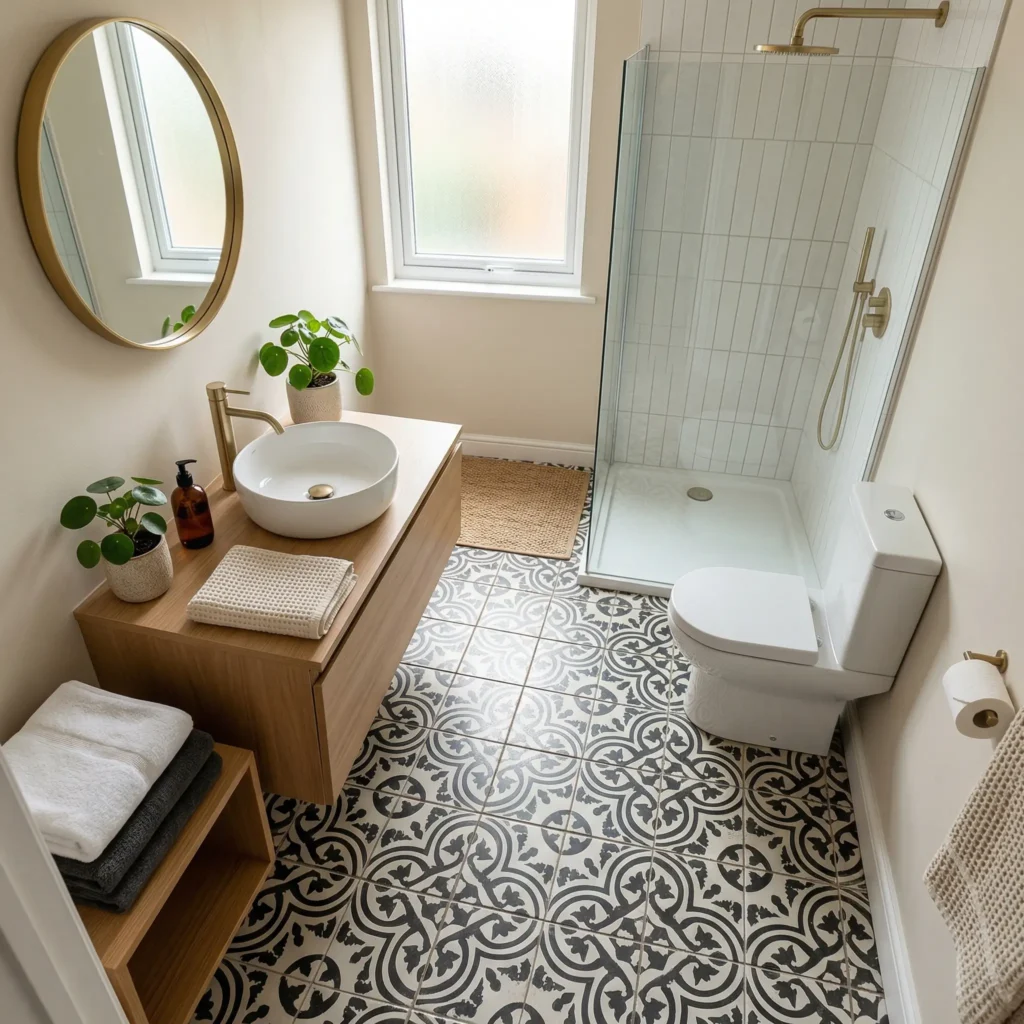
If your floor is sporting outdated linoleum or chipped ceramic, you don’t have to rip it up to get a modern look. High-quality vinyl peel-and-stick tiles have evolved significantly, offering realistic textures like slate, marble, or Moroccan patterns.
Because bathroom floors are usually small, you can cover the entire surface with just a few boxes of tile. The beauty of this upgrade is the lack of specialized tools. You simply need a utility knife and a steady hand.
These tiles are water-resistant and provide an instant stylistic pivot. A bold, geometric pattern on the floor can draw the eye downward, creating a focal point that distracts from a lack of square footage elsewhere.
It’s a temporary-friendly solution that feels remarkably permanent once installed.
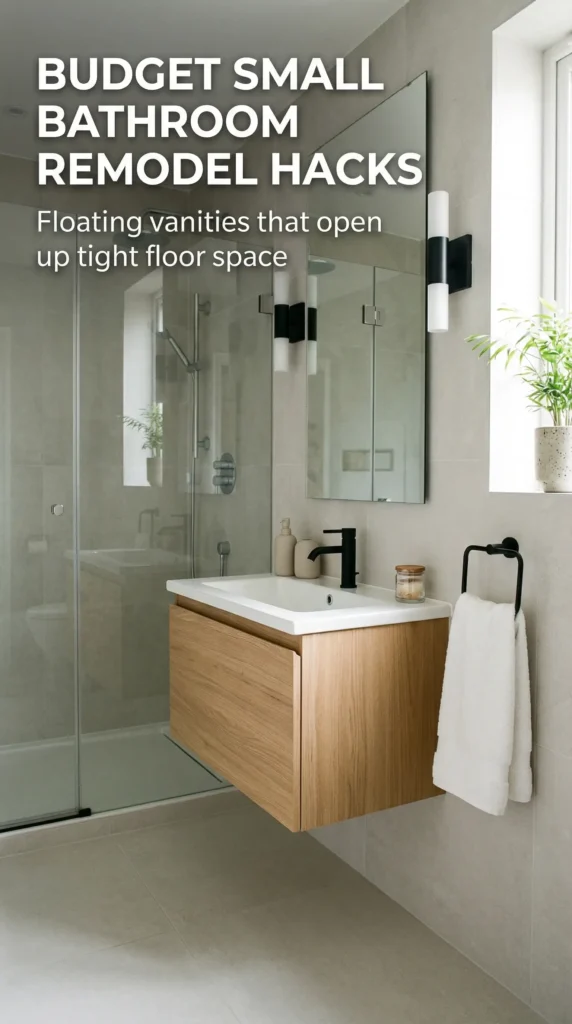
3. Swap the Vanity for a Compact or Wall-Mounted Version
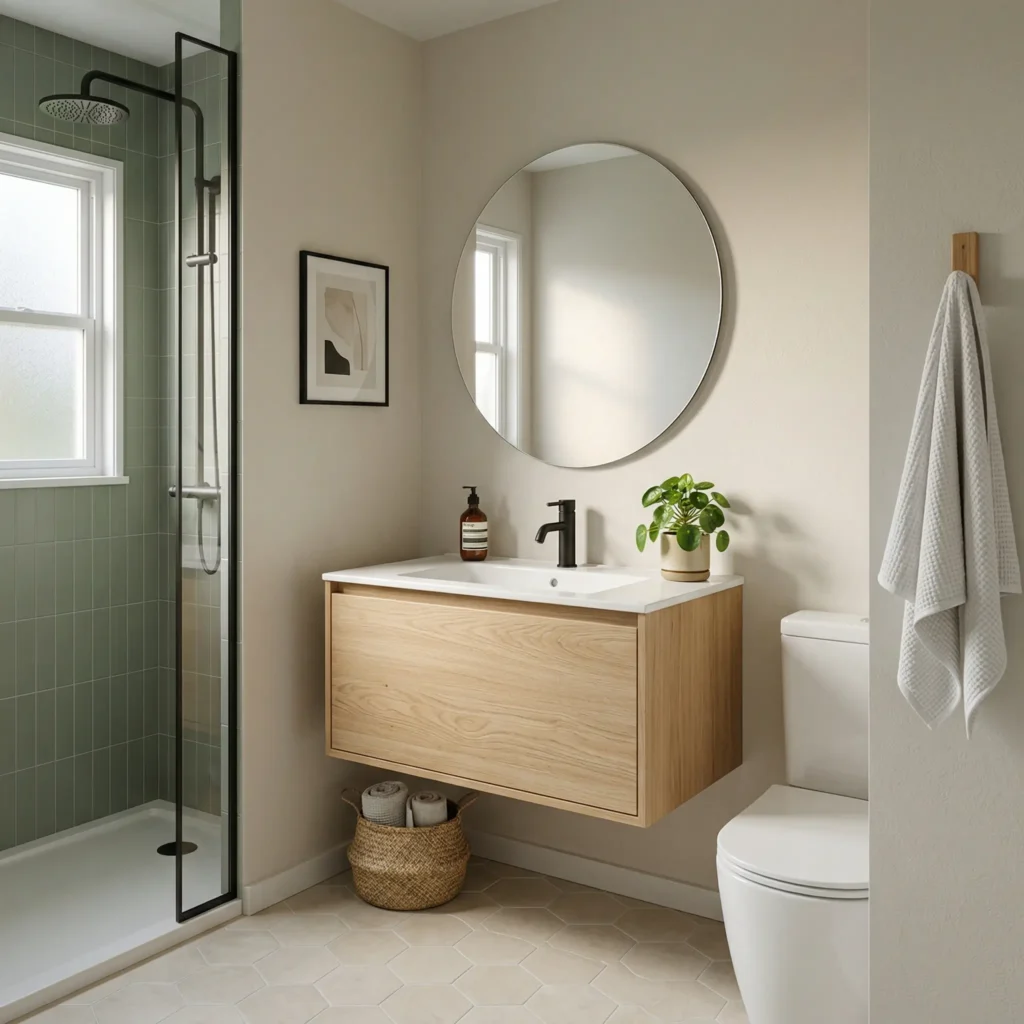
The vanity is often the largest “clutter” element in a small bathroom. Traditional floor-mounted cabinets can feel heavy and block visual floor space.
Replacing a bulky old unit with a “floating” or wall-mounted vanity creates a sense of openness by exposing the floor underneath. Even a slim-profile freestanding vanity with open legs can achieve a similar effect.
When choosing a budget-friendly replacement, look for units that come with the sink integrated. This eliminates the need to source a separate countertop. By reclaiming that extra foot of floor visibility, the entire room feels less congested.
While this requires basic plumbing knowledge to reconnect the P-trap, the visual payoff is one of the most significant changes you can make in a small footprint.
4. Modernize with New Hardware and Faucets
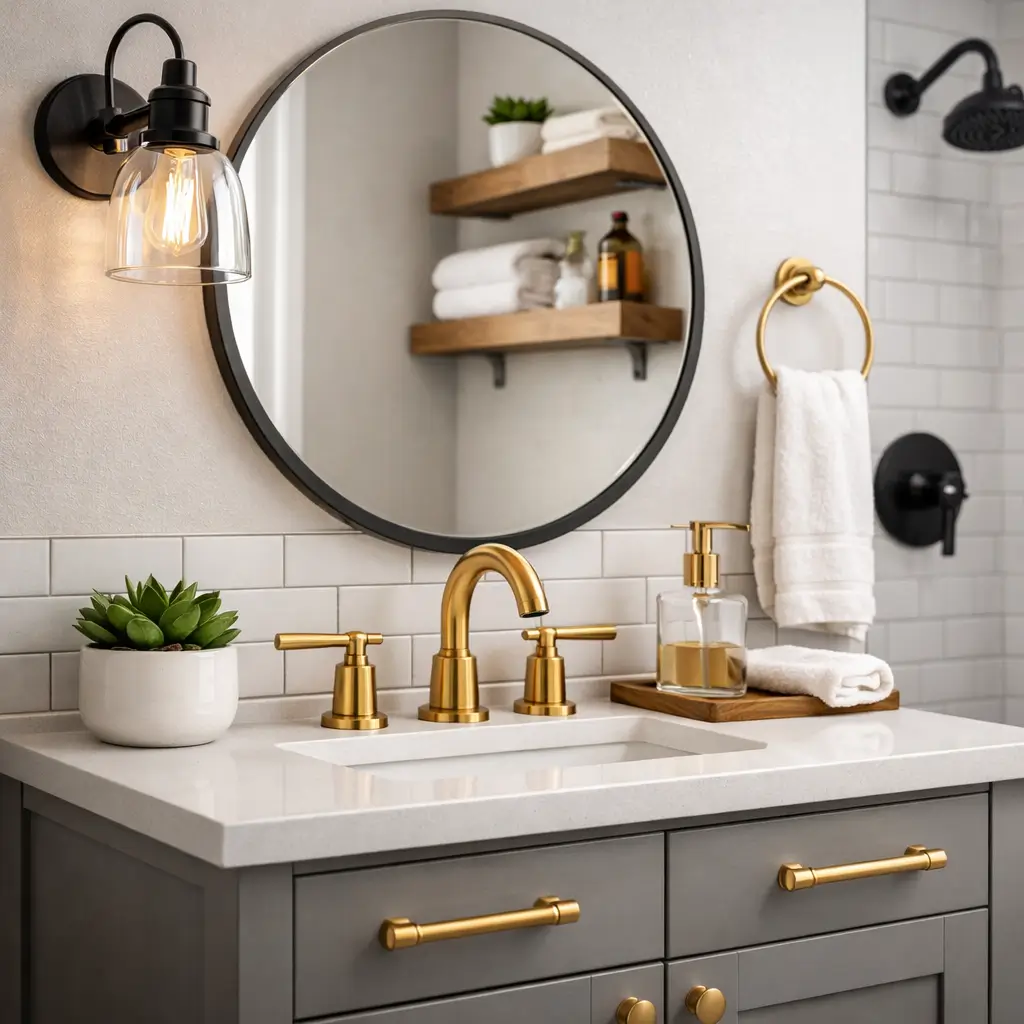
Think of hardware as the jewelry of the bathroom. Builders’ grade chrome faucets and plastic cabinet knobs can make a space feel dated and cheap. Swapping these out for matte black, brushed gold, or champagne bronze finishes can instantly align your bathroom with modern design trends.
This is a high-trust upgrade because the tactile experience changes. Every time you turn on the water or open a drawer, the room feels more premium. Look for “centerset” or “widespread” faucets that match your existing sink holes to avoid the need for a new basin.
This small investment, often under $150, provides a cohesive, polished look that ties the entire room together.
5. Expand the Horizon with Large Mirror Upgrades
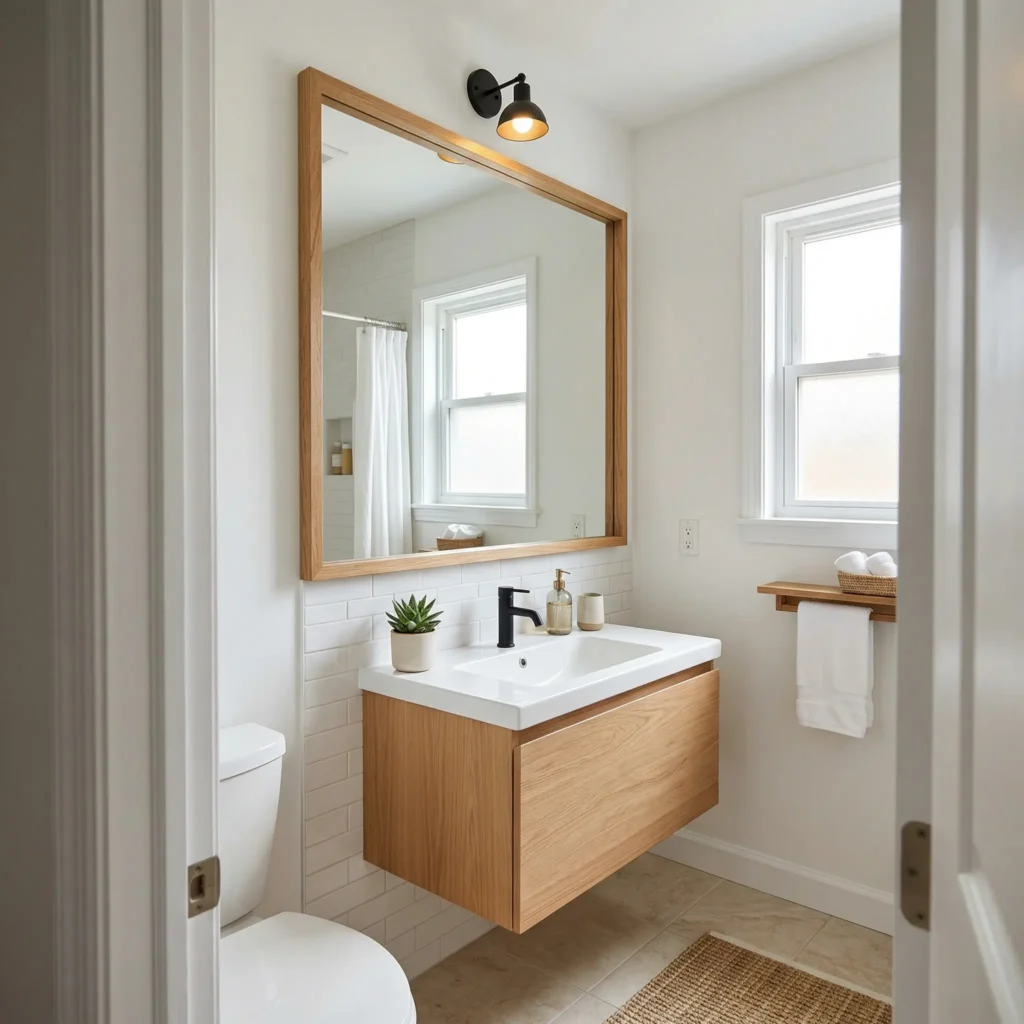
The standard, frameless plate glass mirror found in many older homes is functional but lacks character. Replacing it with a larger, framed mirror or a modern round silhouette can transform the room’s proportions.
Mirrors are essential in small spaces because they bounce light and create the illusion of depth. If you are on an extremely tight budget, you don’t even need to replace the mirror. You can “frame” your existing builder-grade mirror using pre-cut wood trim or a DIY framing kit.
Adding a frame gives the mirror a custom, furniture-like quality. By extending the mirror higher toward the ceiling or wider across the wall, you effectively double the visual volume of the room.
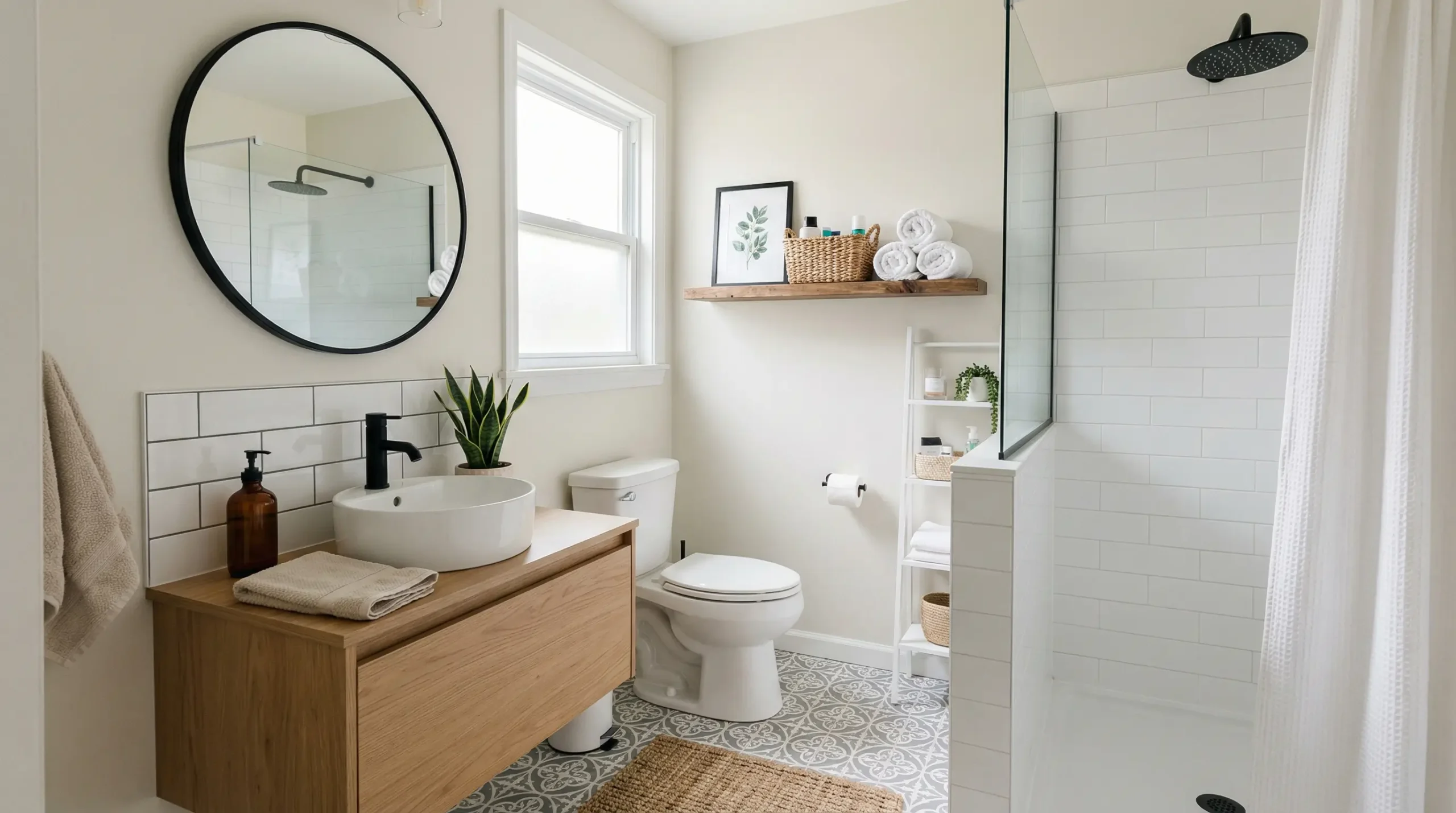
6. Optimize the “Dead Space” Over the Toilet
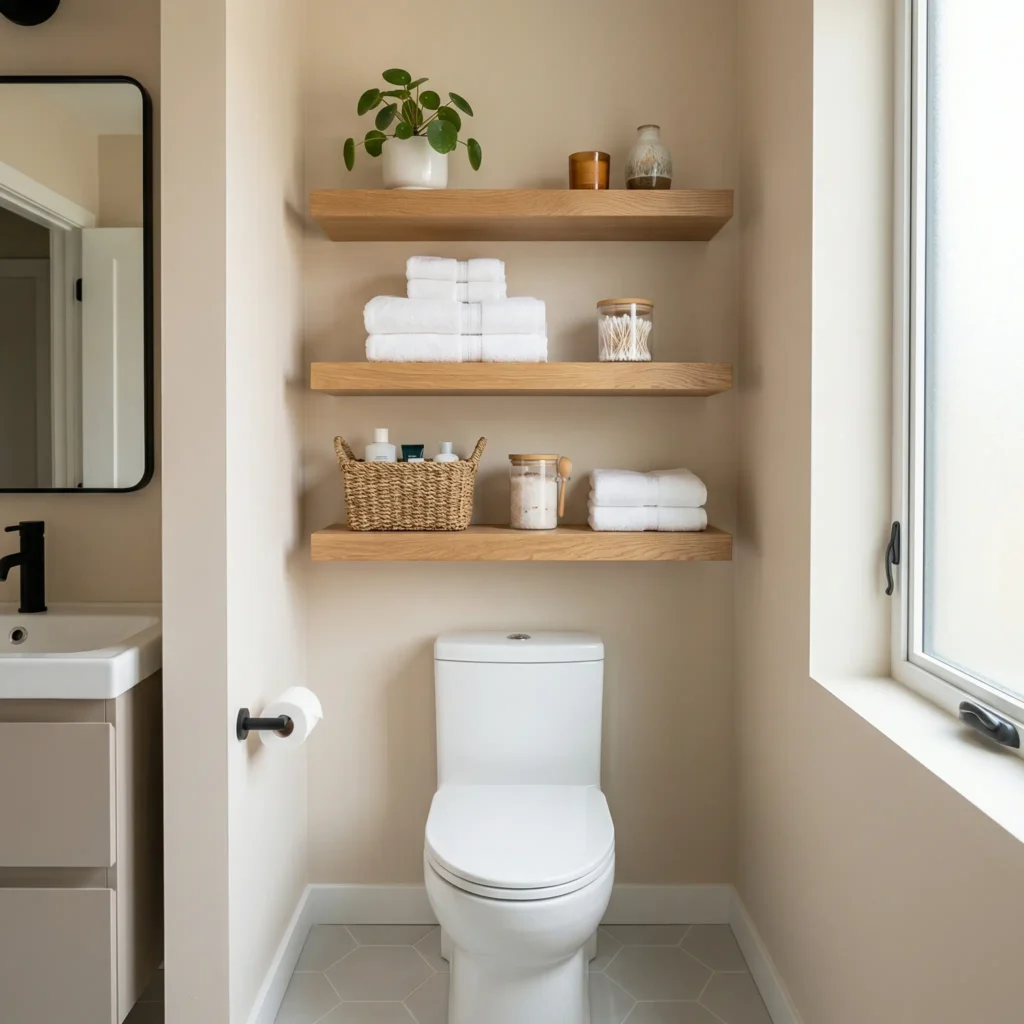
The wall space above the toilet is frequently underutilized. Instead of a basic wire rack, consider installing a set of thick wooden floating shelves or a sleek, wall-mounted cabinet.
This provides a home for essentials like extra toilet paper and towels without consuming any valuable floor space. Storage in a small bathroom should be as much about aesthetics as utility.
Use these shelves to hold glass jars for cotton swabs or a small plant to add a touch of organic texture. By keeping the floor clear and utilizing vertical height, you maintain a sense of order.
This prevents the “cluttered” feeling that often plagues small bathrooms where items end up crowded on the vanity top.
7. Install Floating Shelves for Airy Storage
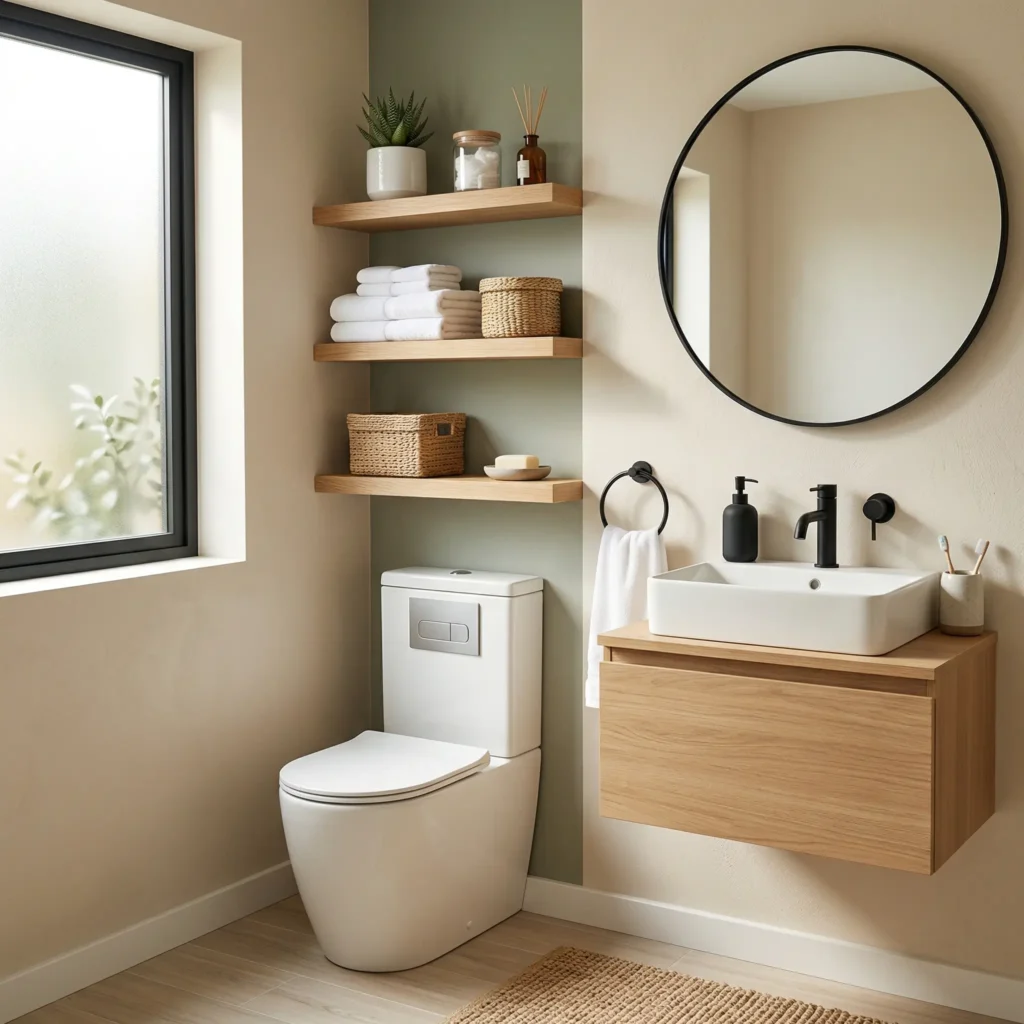
In a room where every inch counts, heavy cabinetry can feel suffocating. Floating shelves offer a minimalist alternative that provides storage while keeping the sightlines open.
By using the same wood tone as your vanity or matching the shelves to your wall color, you create a streamlined look that feels intentional. These are perfect for displaying folded hand towels or decorative baskets that hide smaller toiletries.
The lack of bulky brackets or sides allows the wall to remain visible, which is a key trick in small-space design. It’s a low-cost DIY project that adds both architectural interest and practical organization to an otherwise blank wall.
8. Upgrade Lighting for a Custom Look
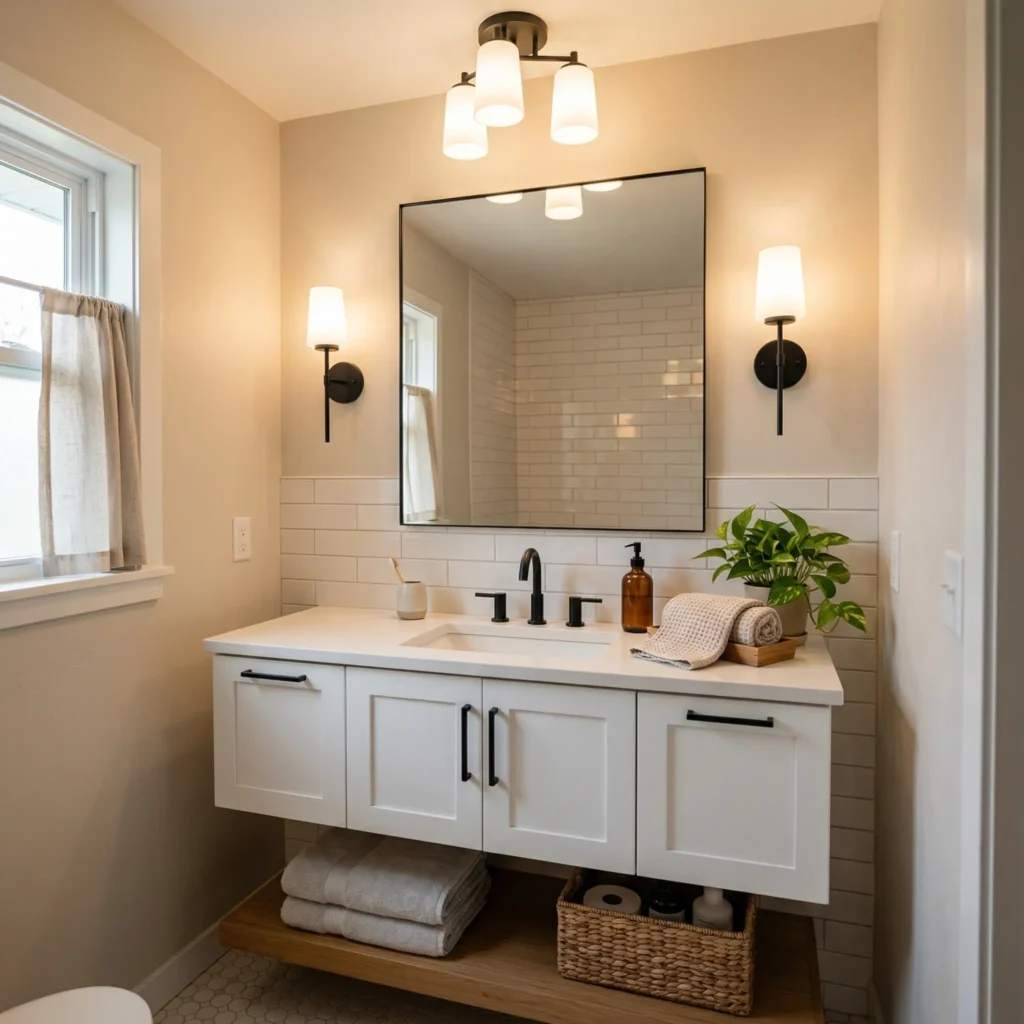
Poor lighting can make a small bathroom feel clinical or dingy. Most budget bathrooms rely on a single overhead “boob” light or a basic vanity bar.
Replacing these with a modern sconce or a stylish semi-flush mount fixture can change the entire mood of the space. Look for fixtures that allow for LED bulbs with a “warm white” temperature (around 2,700K to 3,000K).
This creates an inviting, spa-like atmosphere rather than a harsh, yellow glow. If you have the wall space, adding two sconces on either side of the mirror provides more flattering light for grooming and adds a high-end, symmetrical aesthetic that is common in luxury hotels.
9. Transition to a Clear Glass Shower Style
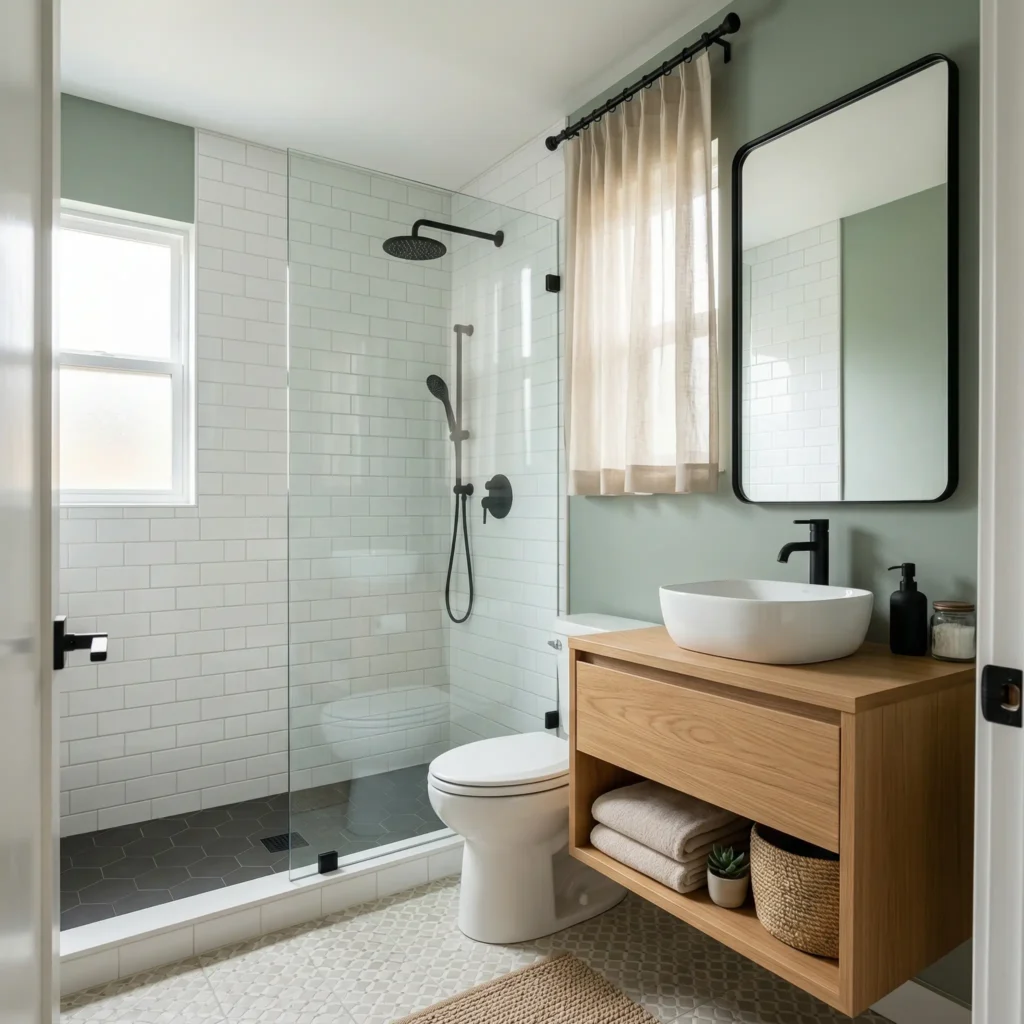
A heavy, dark shower curtain acts like a temporary wall, cutting your bathroom in half and making it feel significantly smaller.
If your budget allows for a slightly larger “small” spend, replacing a curtain with a clear glass panel or a frameless door is a game-changer. It allows the eye to travel all the way to the back wall of the shower.
For those keeping costs to a minimum, simply switching to a clear or very light-colored fabric curtain and hanging the rod higher (closer to the ceiling) can mimic this effect.
It draws the eye upward and prevents the “boxed-in” feeling. Keeping the shower area visible makes the square footage of the tub part of the room’s perceived size.
10. Integrate Multi-functional Storage Pieces
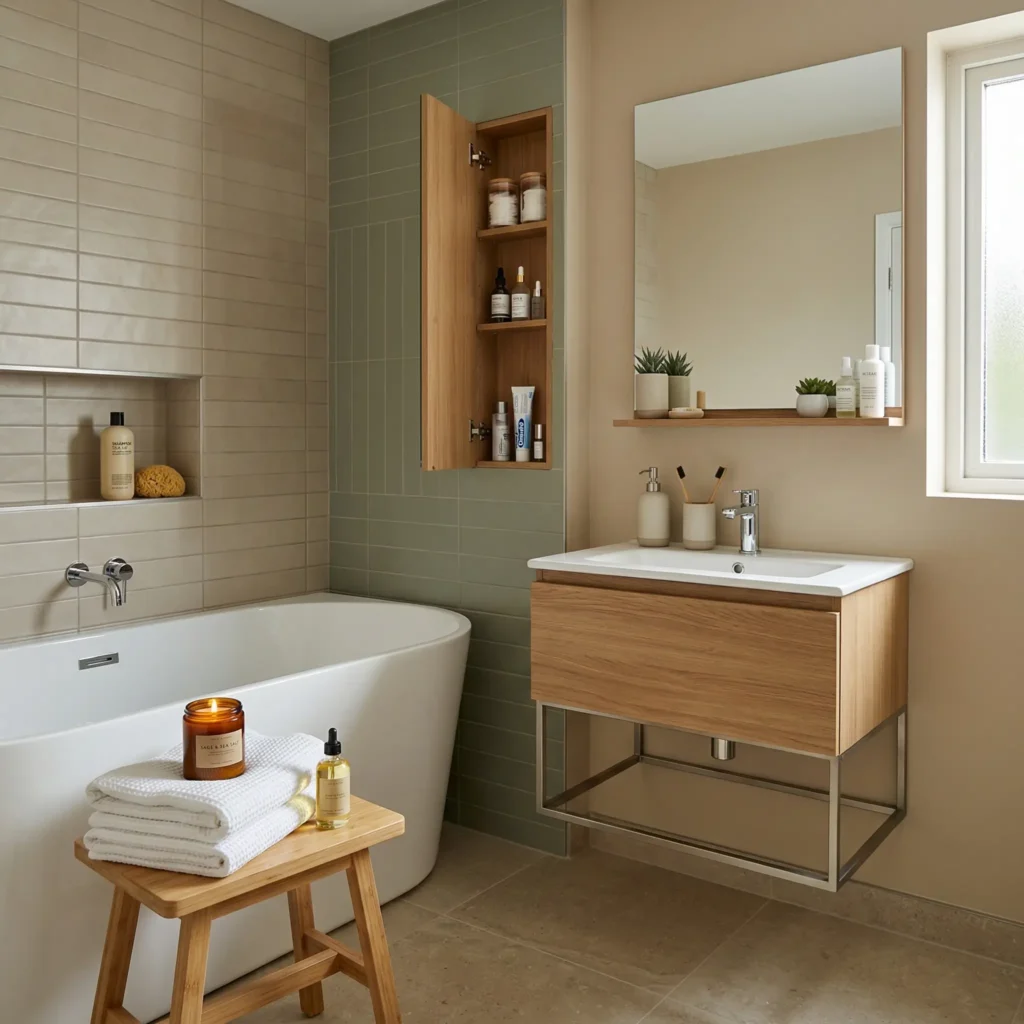
In a tight space, every item should serve two purposes if possible. A small wooden stool can act as a place to set a book or candle near the tub, but it can also hold a stack of fresh towels.
A mirror with a built-in shallow ledge or a hidden medicine cabinet provides a reflection while tucking away messy daily items like toothbrushes and prescriptions.
When looking for furniture for a small bathroom, prioritize pieces with a small footprint and “leggy” designs. Avoid anything that sits flat on the floor, as it stops the eye and makes the floor plan feel smaller.
These small, thoughtful additions enhance the lifestyle aspect of the room without requiring any permanent changes to the structure.
11. Use Paint to Refresh Old Cabinetry
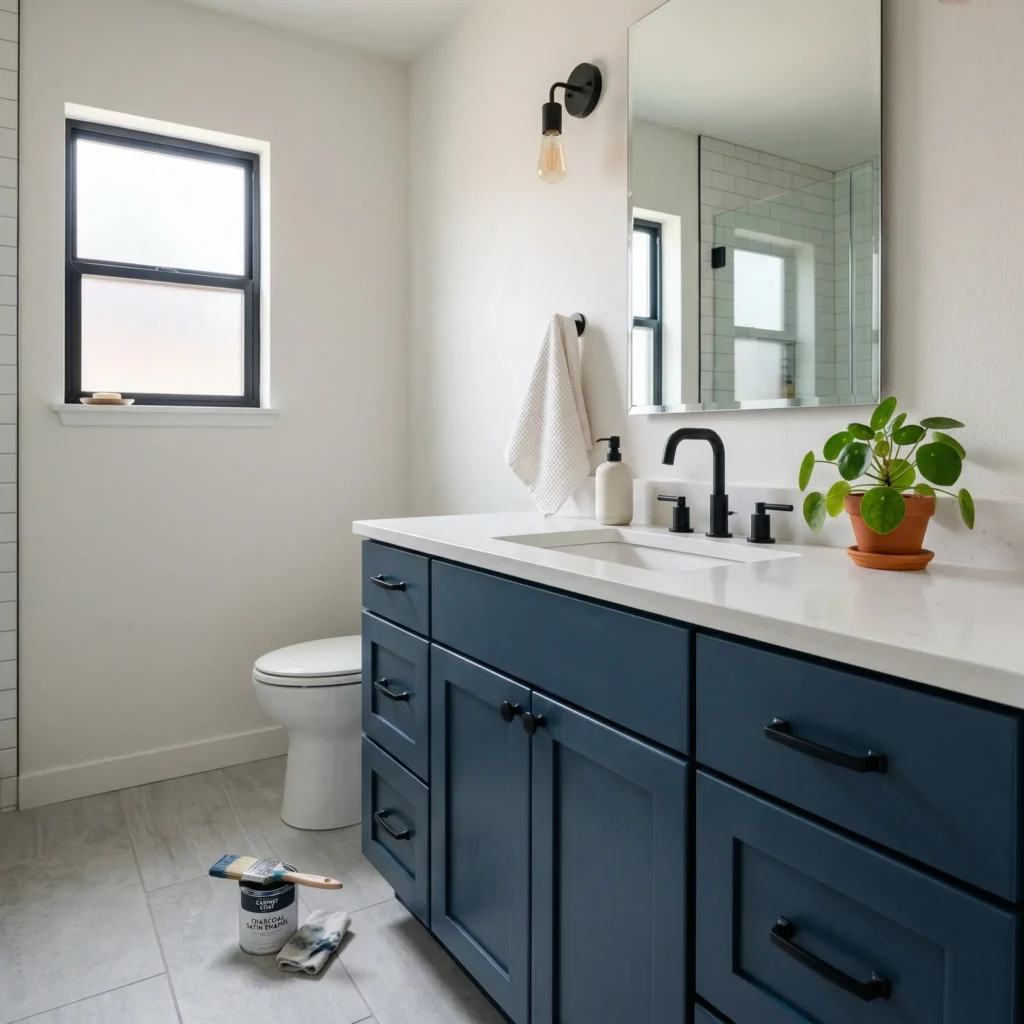
If your vanity is structurally sound but visually dated, don’t replace it; refinish it. A dark oak vanity can be transformed with a modern charcoal or a crisp navy blue paint.
This project requires a bit of sweat equity (sanding and priming), but the material cost is negligible compared to buying a new unit. When you combine a freshly painted vanity with new hardware, the result is a “new” piece of furniture.
Use a durable, water-based enamel paint designed for cabinets to ensure the finish holds up against the humidity of the bathroom. This is one of the most effective ways to change the color story of the room without calling a contractor.
12. Focus on High-Impact Minimalist Décor
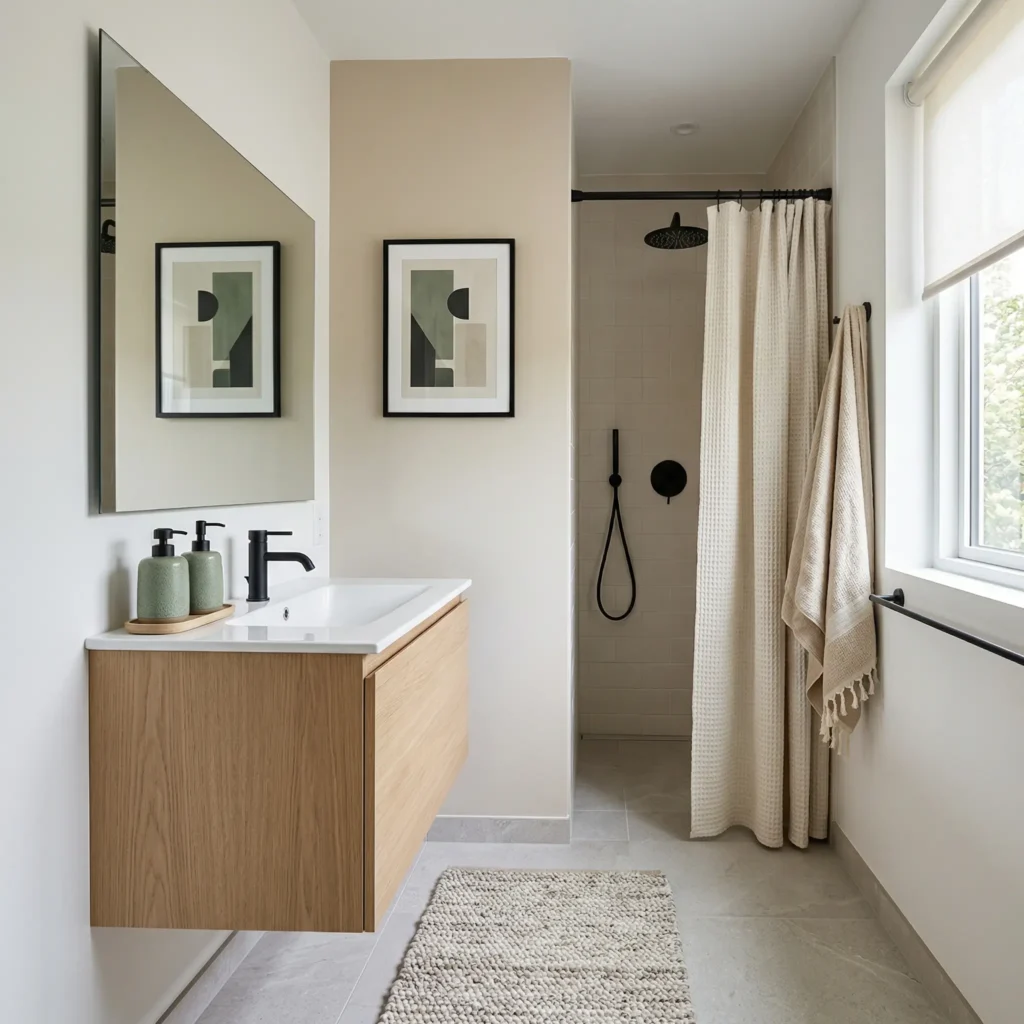
Sometimes a remodel isn’t about what you add, but what you curate.
A small bathroom can quickly become overwhelmed by too many “cute” accents. Instead, choose three high-impact items: a high-quality plush bath mat, a single piece of framed art, and a cohesive set of soap dispensers.
Minimalism is the friend of the small bathroom. By reducing visual noise, the room feels calmer and more spacious. Budget-friendly décor like a waffle-weave shower curtain or a Turkish hand towel adds texture without taking up physical space.
These final touches are what transition the room from a “utility space” to a designed environment.
Where to Start If Your Budget Is Tight
When you are working with a limited budget, the key is to prioritize the “visual real estate”—the areas that take up the most space or attract the most light.
- Declutter and Deep Clean: Before spending a dime, remove everything from the surfaces. A deep-cleaned bathroom with sparkling grout and clear countertops is the foundation for any upgrade.
- Paint First: It is the cheapest way to change the entire atmosphere. If you can only do one thing, paint the walls a light, airy color.
- Update Hardware: Swap the faucet and cabinet pulls. These are “touchpoints” that you interact with daily; making them feel premium improves your daily experience.
- Replace the Lighting: Better light makes every other upgrade look better. It eliminates shadows that make corners feel cramped.
Quick Upgrades Under $100
- New Shower Head: Upgrade to a rain-style or high-pressure handheld model for a spa feel.
- Uniform Bottles: Transfer shampoos and soaps into matching glass or plastic pumps.
- Floating Wood Shelves: Add two shelves above the toilet for vertical storage.
- Framed Mirror Kit: Add a wood border to a plain builder-grade mirror.
- Fresh Caulk: Removing old, yellowed caulk around the tub and replacing it with crisp white silicone makes the room look brand new.
FAQ
Q1. How much does a small bathroom remodel cost?
A full professional remodel can range from $5,000 to $15,000. However, a budget-focused DIY refresh using the ideas above typically costs between $300 and $1,200.
Q2. What is the cheapest way to update a bathroom?
The most affordable updates are paint, deep cleaning the grout, and replacing old hardware. These three tasks can often be completed for under $200 and offer the most dramatic visual shift for the lowest investment.
Q3. Can you remodel a bathroom on a very small budget?
Absolutely. By focusing on “surface-level” changes like peel-and-stick floor tiles, paint, and new lighting, you can completely change the room’s aesthetic without moving plumbing or changing the layout, which are the most expensive parts of a renovation.
Conclusion
Transforming a small bathroom doesn’t require a massive budget or a team of experts. By focusing on light-enhancing colors, smart vertical storage, and updated fixtures, you can turn a cramped, dated utility room into a stylish and functional retreat.
The most successful small-space updates are those that balance aesthetics with organization. Start with a fresh coat of paint or a new set of hardware, and you will see how quickly small, intentional changes can create a space that feels entirely new.